
Last updated September 24, 2026
Seasonal Insulation Care for New Braunfels: Year-Round Homeowner’s Guide
The week after Thanksgiving in 2022, New Braunfels recorded a 70-degree temperature swing in 48 hours. Homes that hadn’t had a pipe-chase or attic-hatch inspection in years saw exactly what that kind of thermal whiplash exposes: bypassed insulation planes, compressed fiberglass at duct boots, and crawl spaces that went from damp to freezing without any buffer. Most insulation advice online is written for Minnesota winters or Arizona summers. New Braunfels has both stress modes, sometimes in the same week. This guide, alongside our Complete Guide to Insulation in New Braunfels, maps a maintenance calendar built for our actual climate: the long cooling season when attic temperatures hit 140°F and drive moisture vapor inward, and the short but severe freeze window that can destroy plumbing in hours.
Quick Answer
Seasonal insulation care in New Braunfels means four checkpoints per year: a pre-summer ventilation and radiant barrier inspection in April, a mid-summer performance audit in July comparing electric bills and room temperatures to baseline, a pre-freeze pipe-chase and attic-hatch inspection in November, and a post-freeze damage assessment in February. Homes that follow this calendar avoid the two failure modes that dominate our market: summer attic heat gain that overwhelms HVAC systems, and winter freeze damage at uninsulated penetrations.
Table of Contents
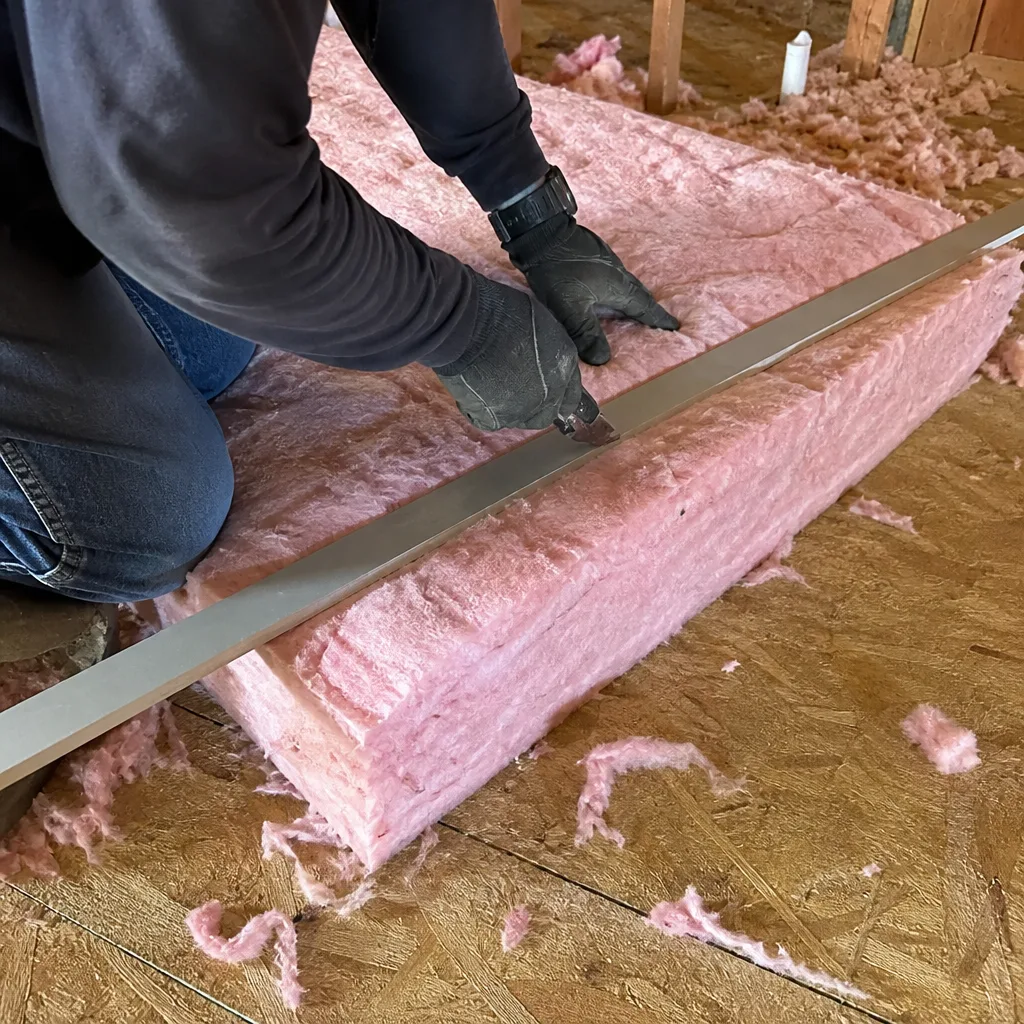
- Why New Braunfels Needs Its Own Calendar
- Pre-Summer Checklist: April
- Mid-Summer Performance Check: July
- Pre-Freeze Checklist: November
- Post-Freeze Inspection: February
- Annual Documentation Habit
- Common Mistakes to Avoid
- When to Call a Professional
- Frequently Asked Questions
- The Bottom Line
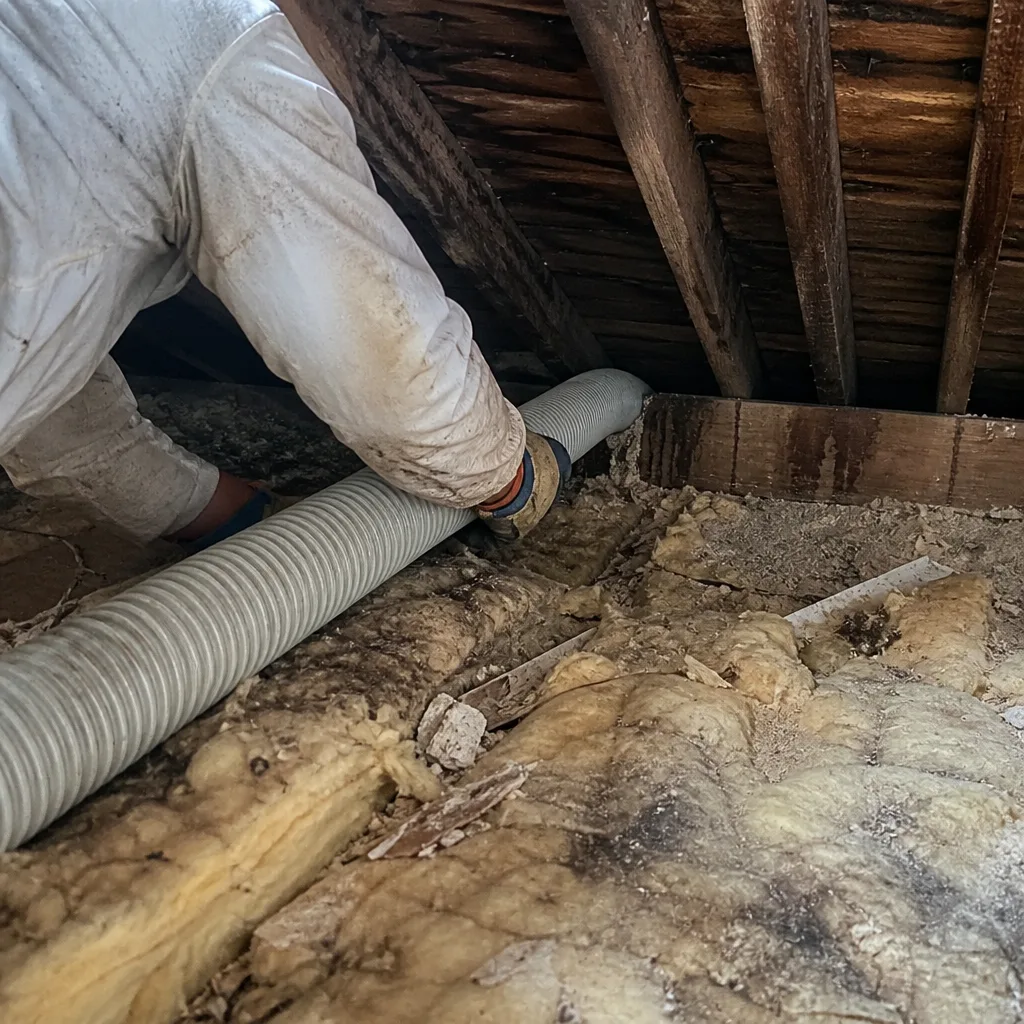 Before
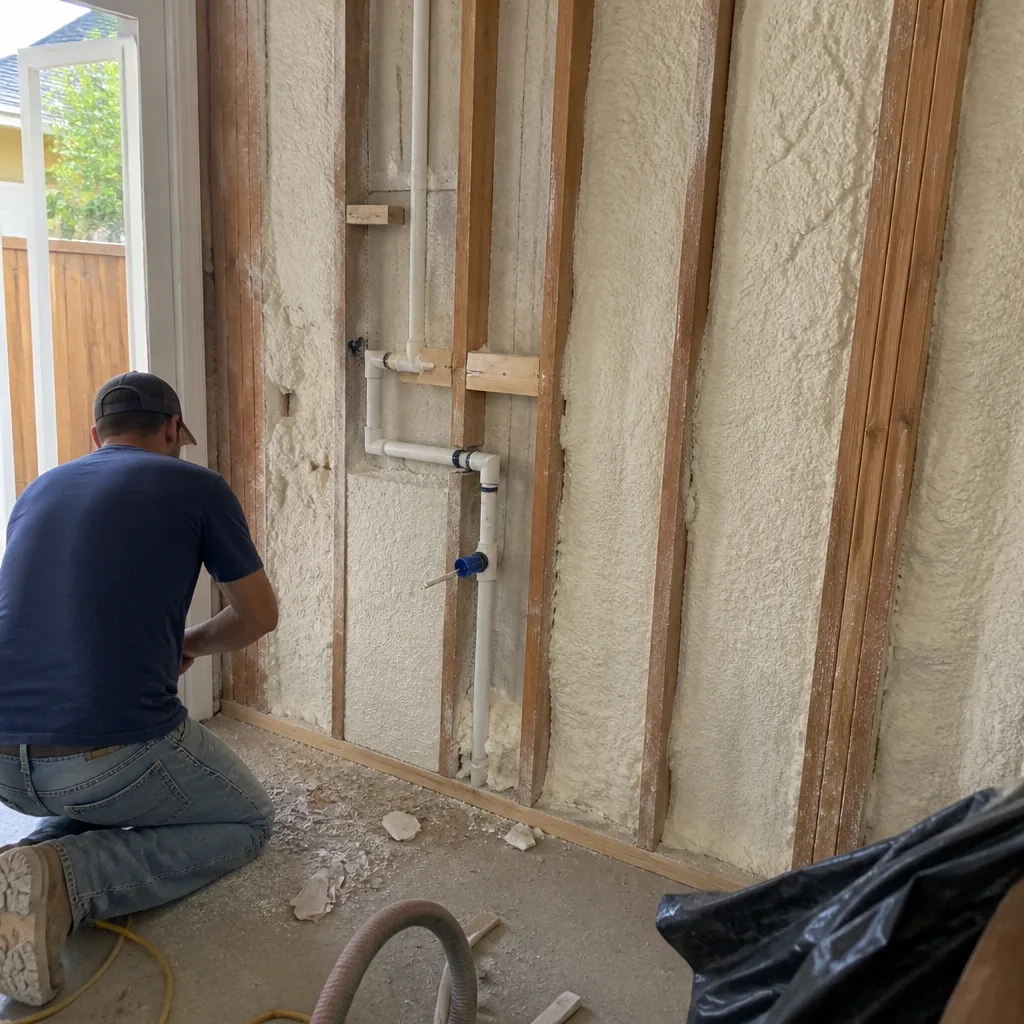 After
AfterWhy New Braunfels Needs Its Own Calendar
Generic insulation advice assumes a single dominant season. That assumption fails here.
Our cooling season runs from late March through mid-November, eight months where attic temperatures in unventilated or under-insulated spaces routinely reach 130°F to 150°F. That heat doesn’t just make the second floor uncomfortable. It drives moisture vapor from the attic downward through ceiling penetrations, it thermally cycles duct boots until they separate from the insulation plane, and it degrades radiant barrier facing through oxidation and dust accumulation.
Our heating season is short but violent. Winter Storm Uri in February 2021 proved that New Braunfels homes built to 2012 IECC standards, with their minimal crawl space insulation and unsealed pipe chases, could freeze solid in 12 hours when temperatures dropped below 10°F. The Comal County area saw hundreds of burst pipes in homes that had never frozen before, many in neighborhoods like Gruene, Old Town, and the River Chase subdivisions where slab-on-grade construction with exterior hose bibs created direct thermal bridges.
The 2022 Thanksgiving temperature swing, 70 degrees in 48 hours, is not an anomaly. It’s a preview. Thermal shock, the rapid expansion and contraction of materials across wide temperature ranges, separates mastic from ducts, cracks batt insulation at studs, and opens gaps in weatherstripping that were tight in October.
A maintenance calendar for New Braunfels has to address both modes with equal seriousness. The homeowner who seals and insulates only for summer comfort will still face freeze damage. The homeowner who winterizes only for pipe protection will still pay 30% more on July electric bills than necessary.
Our approach at Topside Attic Insulation New Braunfels home is built on this dual-season reality. Every job we complete includes a written scope that specifies which season each measure addresses, and on applicable jobs we provide before-and-after blower-door numbers, a pressurization reading that shows, in one figure, how much conditioned air your building envelope was losing before and after our work.
Pre-Summer Checklist: April
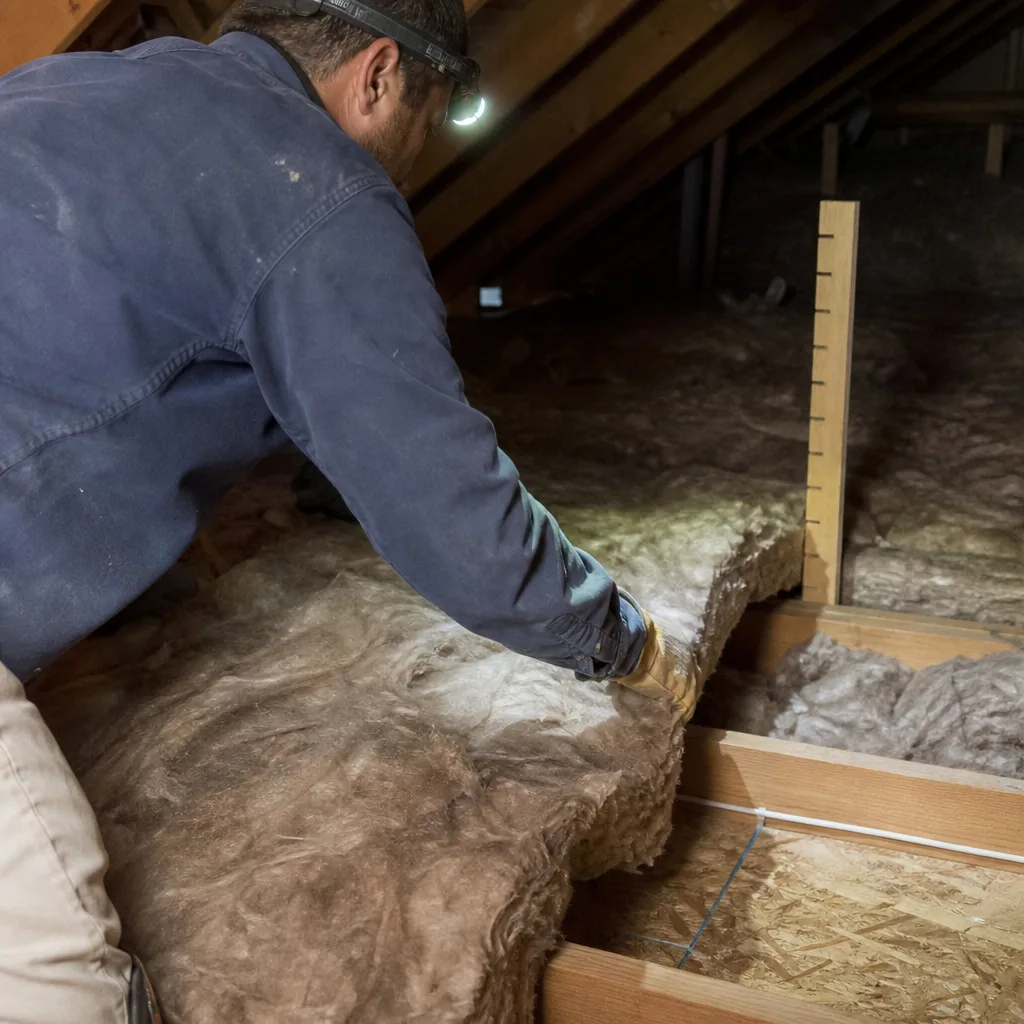
April is the last comfortable month in an unventilated New Braunfels attic. By May, roof deck temperatures make detailed inspection work hazardous. Use this window to complete three specific tasks that determine summer performance.
1. Attic Ventilation Inspection
Check soffit vents for blockage. In New Braunfels, pollen season peaks in March and April, and cottonwood seed, oak catkin, and grass pollen can mat across soffit screens, reducing intake airflow by 40% or more. Look for:
- Visible pollen matting on soffit screens or vent strips
- Insulation baffles that have shifted and now block the vent channel
- Ridge vents with internal baffles collapsed from heat cycling in previous summers
- Gable vents whose louvers are stuck closed from paint or corrosion
Attic ventilation in our climate is not about moisture removal, the way it is in humid coastal or cold northern zones. It’s about heat removal. A properly ventilated attic in New Braunfels runs 20°F to 30°F cooler than an unventilated one. That difference translates directly to HVAC runtime, shingle life, and the thermal stress on any ductwork routed through the attic.
We use Owens Corning and Johns Manville ventilation products rated for our temperature extremes, and we verify airflow with a smoke pencil or anemometer, not by eye.
2. Radiant Barrier Integrity Check
Radiant barrier, whether foil-faced sheathing or draped foil, loses effectiveness through three mechanisms common in New Braunfels: dust accumulation on horizontal surfaces, oxidation of the aluminum layer from attic heat and humidity, and physical damage from contractors or homeowners walking across attic framing.
Inspect from the attic hatch outward. Look for:
- Foil facing that has turned dull or chalky, indicating oxidation
- Tears or punctures larger than a quarter, which create convective bypasses
- Sagging or detached sections, especially near the ridge where summer stack effect is strongest
Radiant barrier does not replace insulation. It reduces radiant heat transfer across the attic airspace. In New Braunfels, where roof decks absorb solar radiation for eight hours daily from May through September, a properly installed radiant barrier can reduce attic heat gain by 20% to 35%. But only if it’s intact and properly oriented.
Spray foam insulation in New Braunfels can eliminate the need for separate radiant barrier by creating a conditioned attic, but that is a full-system upgrade, not a maintenance item.
3. HVAC Duct Boot Seating Verification
This is the inspection most homeowners skip, and the one that causes the most comfort complaints by July.
Duct boots, the sheet metal transitions between ceiling registers and flexible ductwork, are sealed to the drywall or plaster ceiling with mastic or tape, then surrounded by insulation. Over a winter of heating, the metal expands and contracts. The insulation, typically fiberglass batt or loose fill, does not move with it. By spring, a gap often opens between the boot flange and the insulation plane.
Conditioned air leaks into the attic. The room loses pressure. The HVAC system runs longer. Electric bills rise without any change in thermostat setting.
To check: remove the ceiling register. Look for visible gaps between the boot flange and the surrounding insulation. Shine a flashlight at an angle; any light leak is an air leak. The fix is reseating the insulation and applying new mastic or foil tape rated for the temperature range.
At Topside Attic Insulation New Braunfels, we document this condition with photos on every attic inspection. Our Documented Photo Record, included on every visit, shows the homeowner exactly what we found and exactly what we did.
Mid-Summer Performance Check: July
By mid-July, your home’s insulation and air sealing are under maximum stress. This is the moment to measure performance, not guess at it.
Reading Electric Bills Against Baseline
Pull your July 2024 electric bill. Compare kilowatt-hour usage to July 2023, adjusted for any rate changes from your provider, likely CPS Energy or a co-op in the outlying Comal County areas. If usage is up more than 10% year-over-year with no change in occupancy, thermostat setting, or major appliance addition, you have an envelope performance problem.
Common causes we see in New Braunfels during this check:
- Attic insulation settling below the R-38 minimum specified in current Texas energy code
- Duct leakage increased from thermal cycling damage not caught in April
- Radiant barrier degradation accelerated by the particularly dusty spring of 2024
- Thermal bypass at recessed can lights, especially IC-rated fixtures whose gaskets have hardened
Room Temperature Drift as Diagnostic Tool
Walk your house at 3 PM on a sunny July day with the HVAC running. Use an infrared thermometer or even a handheld kitchen thermometer held in each room’s center for two minutes. Note any room that reads more than 3°F above the thermostat setpoint.
This is not normal variation. In a properly sealed and insulated home, room-to-room temperature variation should stay within 2°F. A 3°F or greater drift indicates a localized failure: a disconnected duct, a missing insulation patch above a ceiling, a thermal bridge at a framing junction, or a window or door seal that has failed.
In neighborhoods like Vintage Oaks or the newer builds along FM 306, we see this pattern frequently in bonus rooms above garages, where kneewall insulation is often installed without proper air barrier continuity, and in rooms with west-facing windows where radiant heat gain overwhelms the cooling capacity.
The July check is diagnostic, not cosmetic. You’re identifying where the envelope is failing so you can target repair before August, the most expensive cooling month.
Pre-Freeze Checklist: November
New Braunfels freezes are short but mathematically severe. A single night at 15°F with 15 mph wind can freeze an uninsulated pipe chase in four hours. Winter Storm Uri delivered three consecutive nights below 10°F. The damage was not in homes with poor central heating. It was in homes with specific, identifiable bypasses at pipe penetrations and attic access points.
1. Pipe Chase Insulation Verification
Pipe chases, the vertical or horizontal cavities that carry plumbing from crawl space to living space or from wall to wall, are often left uninsulated during original construction. The plumber ran the pipe. The insulator never got back to fill the chase. In New Braunfels slab-on-grade construction, this is especially common at kitchen islands, exterior hose bibs, and washing machine boxes.
Inspect from both sides where accessible:
- From the interior: remove escutcheon plates around pipe penetrations. Look for visible daylight or uninsulated cavity. Any gap larger than 1/4 inch is a freeze risk.
- From the crawl space or exterior: trace the pipe path and confirm insulation continuity. Spray foam, properly applied, is the most reliable sealant for irregular chase geometries.
- At exterior hose bibs: verify that the bib is a frost-proof model with the valve seat inside the conditioned envelope, and that the penetration is sealed with expanding foam, not stuffed with fiberglass that allows convection.
During Uri, we saw dozens of homes in the Meyer Ranch and Oak Run areas lose hose bibs because the penetration was sealed with caulk that had cracked in summer heat, creating a direct thermal bridge to the exterior.
2. Attic Hatch Weatherstripping
The attic hatch is the largest uninsulated surface in most homes, and the most frequent source of freeze damage to ceiling-mounted fixtures.
Check the weatherstripping for compression set, the permanent deformation that occurs when foam or bulb seals are compressed for months. Replace if the seal no longer rebounds to original thickness. Verify that the hatch has rigid insulation attached to its upper surface, minimum R-19, and that the insulation is intact, not sagging or moisture-stained.
We use Demilec spray foam for irregular hatch geometries where standard weatherstripping cannot maintain seal continuity, and we specify compression-resistant bulb seals for homes with frequent attic access.
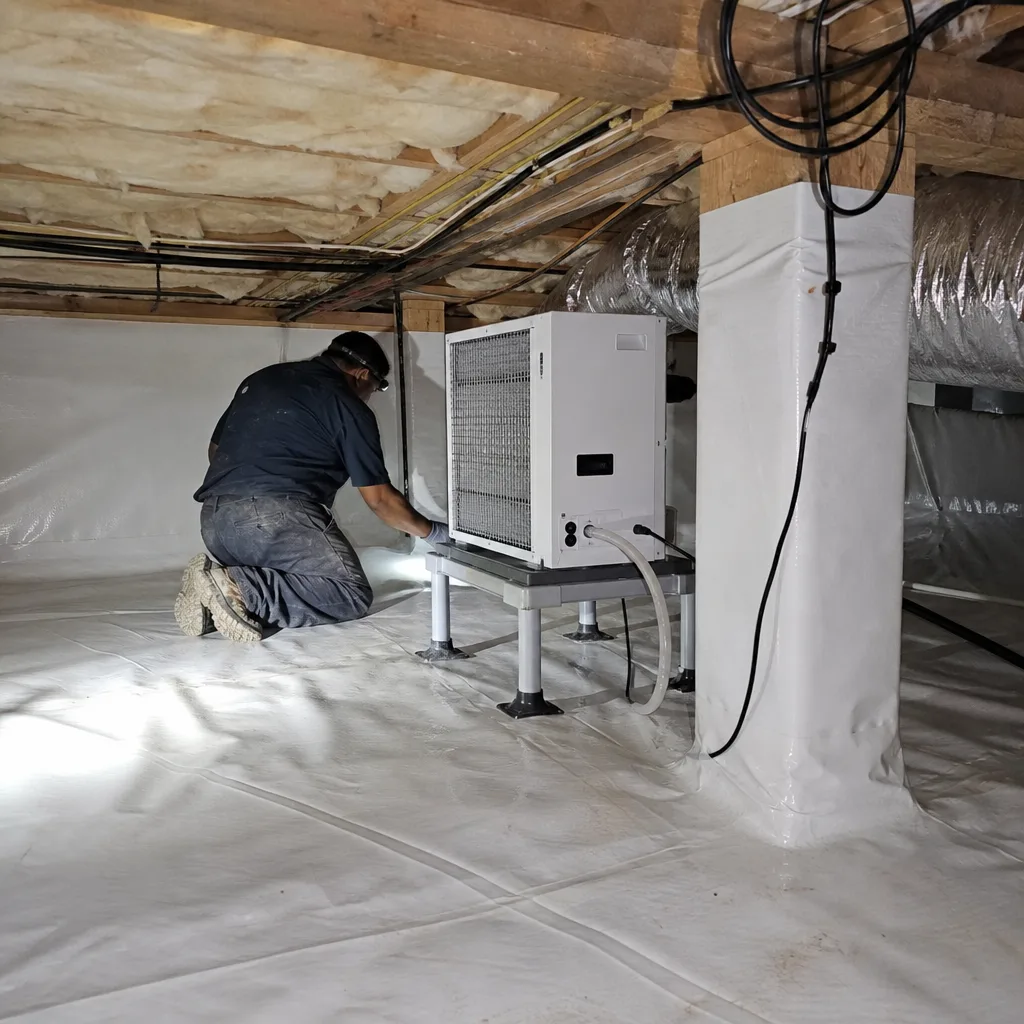
Crawl space encapsulation and vapor barrier in New Braunfels addresses the other major freeze vulnerability: unsealed crawl spaces where plumbing runs are exposed to outside air through foundation vents.
3. Foundation Vent Management
New Braunfels homes with crawl spaces typically have manual foundation vents. The standard advice, close them in winter, is incomplete. In our climate, closed vents with no vapor barrier create a moisture trap that leads to mold and wood rot. Open vents in a freeze allow direct cold air contact with plumbing.
The correct approach is sealed crawl space with continuous vapor barrier, mechanical dehumidification, and no vents. This is a construction upgrade, not a seasonal task. If you have open-vent crawl spaces, the November checklist is: close vents when temperatures are forecast below 32°F, but monitor humidity with a remote sensor and reopen promptly when temperatures rise. Better yet, schedule encapsulation before the next freeze season.
Post-Freeze Inspection: February
The emergency measures homeowners take during freezes, leaving cabinet doors open, running space heaters in crawl spaces, dripping faucets, can themselves damage insulation and air sealing. February is the month to assess that damage before spring pollen and summer heat arrive.
Identifying Insulation Compression
When homeowners run portable heaters in crawl spaces or leave attic access hatches open for pipe warming, the resulting airflow can displace loose-fill insulation. Walk your attic and look for:
- Bare spots on the attic floor where insulation has been blown or washed away
- Compression paths where someone walked across joists without a plank
- Fiberglass batts that have been pulled aside for pipe access and never replaced
Compressed fiberglass loses up to 50% of its R-value. A 6-inch batt compressed to 4 inches performs like a 4-inch batt, not like a 6-inch batt with some reduction. The loss is nonlinear.
Vapor Barrier Displacement
In crawl spaces, emergency heating and the resulting temperature differential can cause polyethylene vapor barriers to lift, tear, or pull away from piers. Look for:
- Standing water on top of the vapor barrier, indicating a breach or improper slope
- Tears at pier penetrations, common when heaters or extension cords were routed underneath
- Edges that have pulled back from foundation walls, allowing ground moisture direct access to floor framing
Attic insulation in New Braunfels and crawl space systems work as integrated assemblies. Damage to one affects the performance of the other through stack pressure and moisture migration.
Documenting for Insurance and Warranty
If you experienced freeze damage, document insulation displacement before repairing it. Photos with date stamps, measurements of compressed or displaced material, and notes on emergency measures taken will support insurance claims and warranty requests. Our Documented Photo Record protocol, included on every visit, provides this documentation as standard practice.
Annual Documentation Habit
The most effective insulation maintenance tool is also the simplest: a photographic record taken from fixed reference points.
Three Fixed Reference Points
Choose three locations in your attic that are:
- Near the attic hatch, where access is easy and you’ll actually do the measurement
- At the midpoint between hatch and ridge, where settling is typically most visible
- Near a duct boot or other penetration, where disturbance from trades is most likely
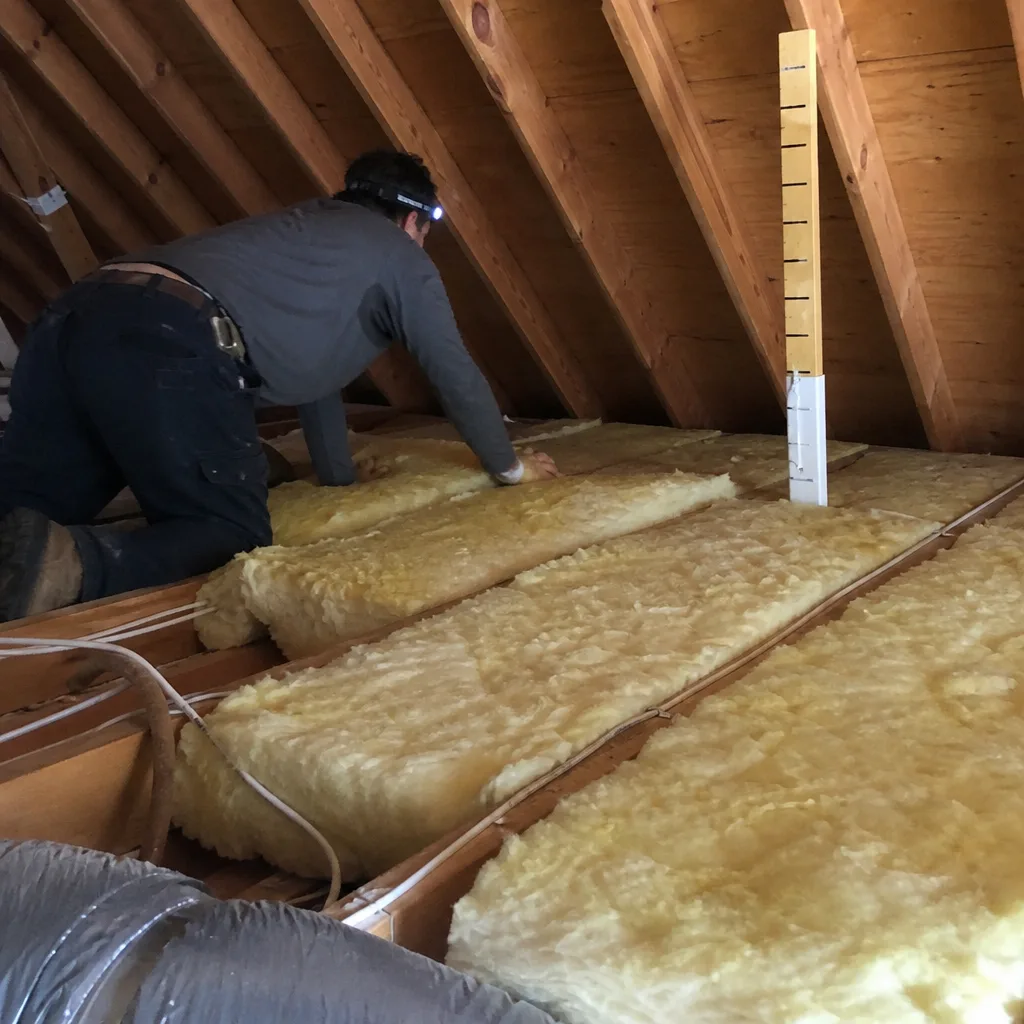
At each point, drive a nail or screw into the joist top, leaving 1/2 inch exposed. Tie a string to it and let it hang to the insulation surface. Photograph the string length above insulation each April. Over years, you’ll see settling quantitatively, without needing a ruler or professional measurement.
For loose-fill cellulose, like GreenFiber products we install, expect 5% to 10% settling in year one, then 1% to 2% annually. Find more guides & resources on our blog. For fiberglass batts, settling should be minimal unless walked on or disturbed. For spray foam, no settling occurs, but UV degradation at exposed edges is visible as yellowing and surface chalking.
This habit takes 15 minutes annually. It provides evidence for warranty claims, timing for top-off decisions, and documentation for home sale disclosures. Under Haven Standard Clause 1, we provide a written price before any work starts, including top-off or replacement; having your own year-over-year photos makes that conversation specific and efficient.
Common Mistakes to Avoid
- Adding insulation without air sealing first. In New Braunfels, blowing new fiberglass over an unsealed attic floor simply buries the leaks. The conditioned air still escapes; it just has farther to travel. We see this in homes where homeowners or handymen have added insulation without addressing top plates, can lights, or duct boots. The electric bills don’t improve.
- Using R-value as the only metric. R-value measures conductive heat flow through a material at steady state. It does not account for air leakage, radiant heat gain, or thermal bridging. A home with R-38 and continuous air sealing outperforms one with R-60 and bypasses.
- Ignoring the attic hatch. A 1% uninsulated area in an otherwise R-38 ceiling reduces effective performance by 5% or more. The attic hatch, typically 5 to 10 square feet, is often completely uninsulated or poorly sealed. This is the cheapest fix with the fastest payback.
- Winterizing only the pipes, not the envelope. Dripping faucets and open cabinets are emergency measures, not prevention. The homes that survived Uri without damage were those with sealed pipe chases, insulated attic hatches, and no thermal bypasses at exterior walls.
- Assuming new construction is properly sealed. Texas energy code enforcement varies by jurisdiction and inspector. We’ve found significant bypasses in homes built in 2020 and later in Comal County, particularly at dropped soffits, bathtub surrounds, and fireplace chases. Age of home is not a reliable indicator of envelope quality.
- Waiting for a problem to inspect. By the time you notice high electric bills or a frozen pipe, the damage is done. The calendar in this guide is designed to catch degradation before it becomes failure.
- Using the wrong insulation for the application. Fiberglass in a damp crawl space becomes a moisture sponge. Cellulose against a roof deck without ventilation risks mold. Spray foam in a poorly ventilated attic without combustion safety verification can create backdrafting hazards. Each location has correct and incorrect material choices.
When to Call a Professional
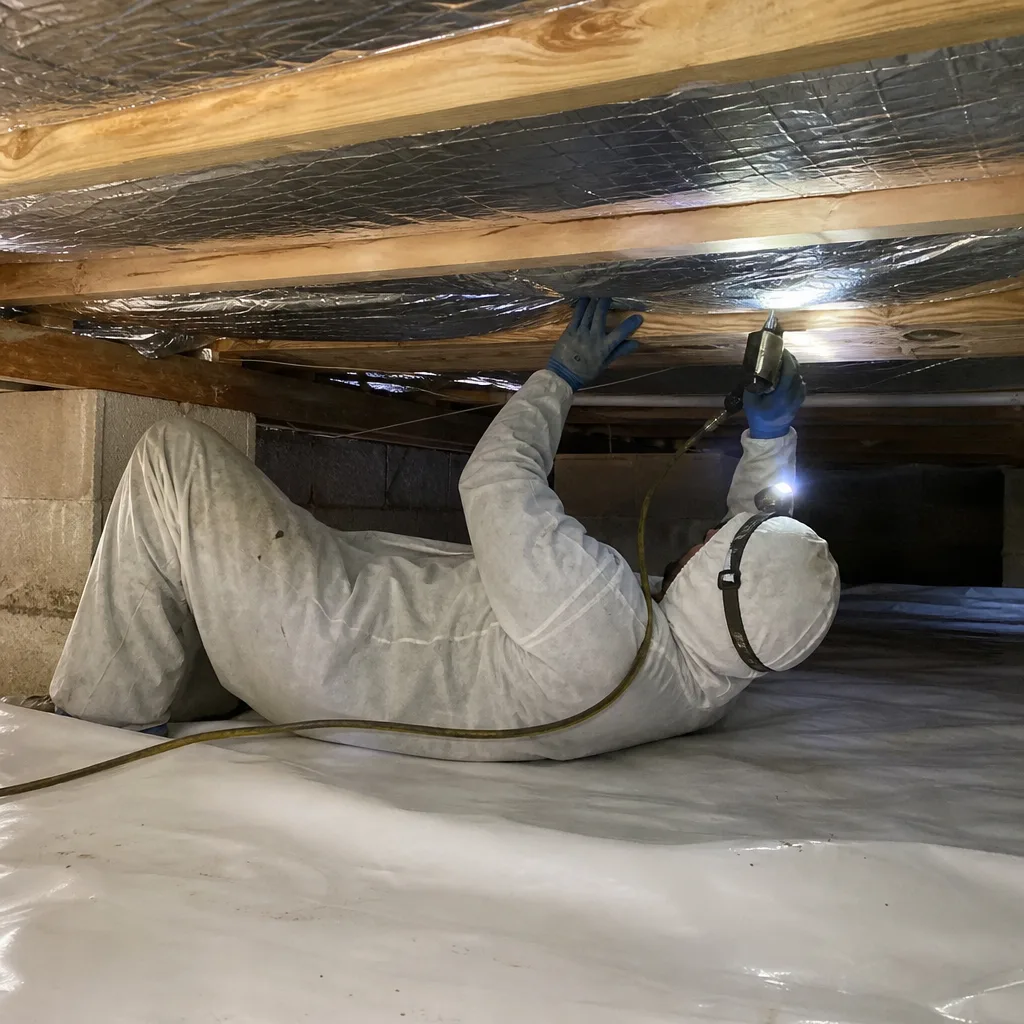
Some conditions require trained assessment. Call for professional evaluation if you find moisture staining on insulation or framing, if your blower-door test (or utility bill analysis) shows performance degradation you cannot explain, if you suspect vermin contamination in attic or crawl space insulation, or if you’re considering any insulation upgrade and want to verify that air sealing is addressed as a prerequisite.
Topside Attic Insulation New Braunfels offers free estimates in New Braunfels. We begin every job with a written price before any work starts, backed by Haven Standard Clause 1, and we close with a Documented Photo Record and, on applicable jobs, before-and-after blower-door numbers. Call (830) 243-6352 to schedule. A live person answers 24/7.
Frequently Asked Questions
Most attic insulation jobs in a typical 1,800 to 2,400 square foot New Braunfels home run between $2,200 and $4,800, depending on existing insulation condition, access difficulty, and whether air sealing is included as a prerequisite. We provide a written price before any work starts, always, with no obligation. Call (830) 243-6352 for a specific quote for your home.
Properly installed insulation at pipe chases, attic hatches, and crawl space penetrations is the most reliable freeze prevention, more effective than dripping faucets or space heaters. During Winter Storm Uri, homes with sealed pipe chases and continuous insulation at exterior walls experienced minimal or no freeze damage. Emergency measures help, but envelope integrity is the actual protection.
Cellulose and fiberglass insulation in a properly ventilated, uninfested New Braunfels attic lasts 20 to 30 years. However, performance degrades long before material failure due to settling, compression, moisture contamination, or disturbance from trades. We recommend the annual photographic documentation described in this guide; replacement or top-off is indicated when settled depth falls below 80% of original installed depth, or when R-value at any point drops below current code minimum.
Spray foam, whether open-cell or closed-cell, provides both insulation and air sealing in one application. In New Braunfels, where air conditioning dominates energy use and attic ductwork is common, the air-sealing benefit often justifies the premium for homeowners planning to stay 10 years or more. Closed-cell foam adds structural rigidity and moisture resistance, valuable in flood-prone areas near the Guadalupe or Comal rivers. We use Demilec and other specified products with no proprietary lock-in, and we always provide a written price comparison against fiberglass or cellulose options for the same scope.
In New Braunfels, this is almost always a combination of attic heat gain and duct leakage, not simply “heat rises.” A 140°F attic with disconnected or poorly sealed duct boots pressurizes the ceiling plane with radiant heat and leaks conditioned air directly into the attic. The downstairs, with shorter duct runs and less ceiling exposure, maintains temperature while the upstairs fights both heat gain and air loss. The fix is attic air sealing, duct sealing, and verification with a blower-door test, not simply adding more insulation.
Mold on insulation indicates a moisture source that must be identified and eliminated before any replacement. Do not simply cover or replace the insulation. Common sources in New Braunfels include roof leaks at valleys or penetrations, bathroom exhaust fans vented into attic space, and crawl space moisture migration through floor framing. We provide insulation removal and replacement as part of our service line, but only after moisture source identification and remediation. Call (830) 243-6352 for assessment; estimates are free.
The Bottom Line
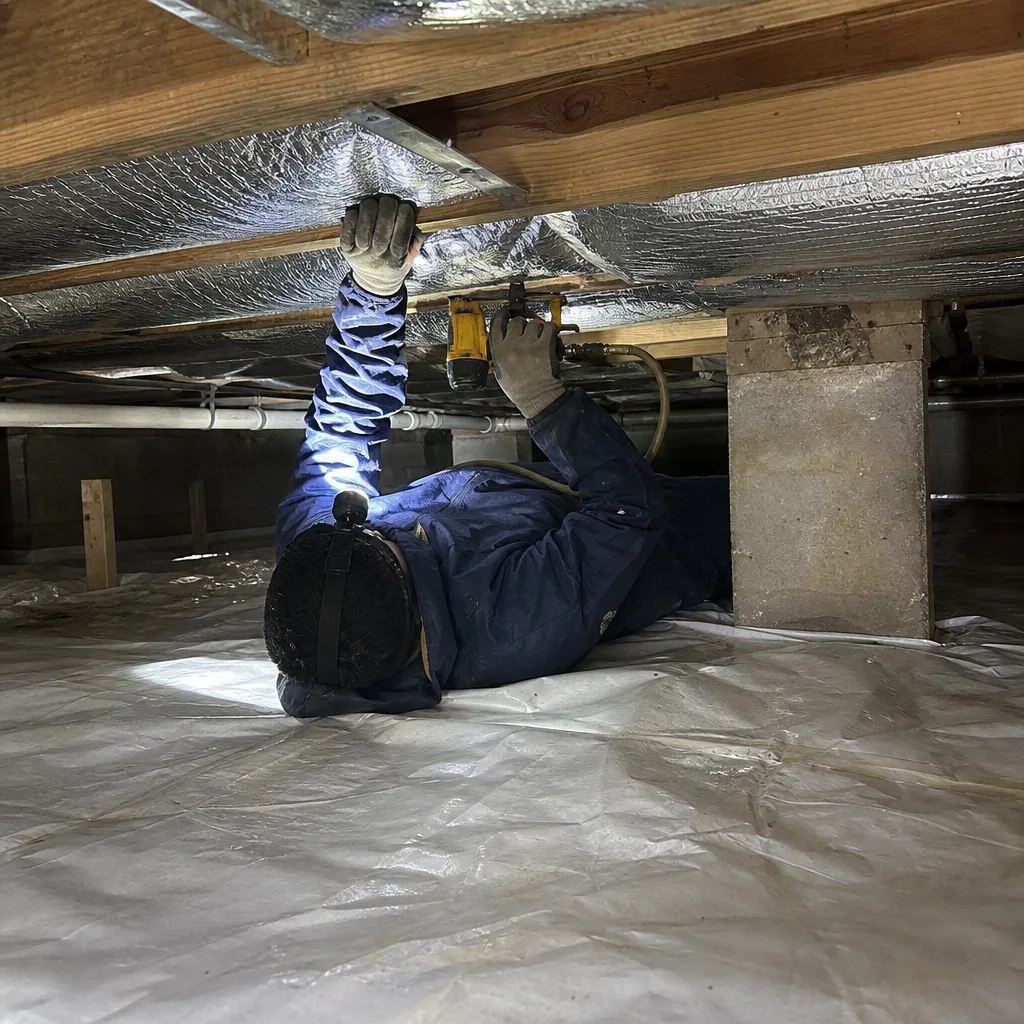
New Braunfels insulation maintenance is not a single winter prep task. It’s a four-point annual calendar: April ventilation and radiant barrier inspection, July performance measurement against baseline, November pipe chase and hatch sealing before freeze season, and February damage assessment after any emergency measures. The homeowners who follow this calendar avoid the two dominant failure modes in our market: summer HVAC overload from attic heat gain, and winter freeze damage at unsealed penetrations. Documentation, the photographic habit of tracking insulation depth at fixed points, turns maintenance from guesswork into evidence. And every insulation decision should begin with air sealing, because unsealed insulation is merely buried leakage.
Written by Wes Okafor, Owner at Topside Attic Insulation New Braunfels, serving New Braunfels since 2016.