
Last updated September 24, 2026
DIY vs Professional Insulation: The New Braunfels Homeowner’s Decision Guide
Rental blowers for DIY blown fiberglass sit on the floor at the New Braunfels Home Depot for under $100 a day, and the material feeds through the hose like garden mulch. We’ve been in attics across Comal County where that same blower was used to bury a layer of fresh insulation over top plates still leaking like a sieve, can lights pumping conditioned air into the roof deck, and a chimney chase open to the soffit. The homeowner got the depth they paid for. They did not get the performance. In Zone 2 mixed-humid climate, where summer attic temperatures in New Braunfels regularly hit 140°F and winter humidity swings drive condensation into every gap, the question isn’t whether you can rent equipment. It’s whether you can seal the envelope first.
Quick Answer
DIY insulation in New Braunfels makes sense only when you’re adding blown fiberglass depth over an attic floor that’s already been professionally air-sealed and contains at least 4 inches of existing insulation. Every other scenario - unsealed top plates, recessed lights, chase gaps, or any spray foam application - requires professional equipment, fire-rated materials, and a blower-door test to verify results. The cost gap between DIY and professional narrows dramatically once you account for proper air sealing, and some outcomes (permit compliance, insulation certificates, documented CFM50 reduction) are simply unavailable to homeowners working alone. For a detailed look at what professional work costs and why, see our Insulation Cost Breakdown: The New Braunfels Homeowner’s Reference for 2026.
Table of Contents
- Why Air Sealing First Is Non-Negotiable in New Braunfels
- What DIY Insulation Actually Looks Like
- The Air-Sealing Tasks That Disqualify Most DIY Attempts
- Spray Foam: The Hard Professional-Only Line
- What DIY Cannot Produce: Permits, Certificates, and Blower-Door Numbers
- Four Questions to Route Your Project
- The Real Cost Comparison in New Braunfels
- When DIY Is Genuinely Appropriate
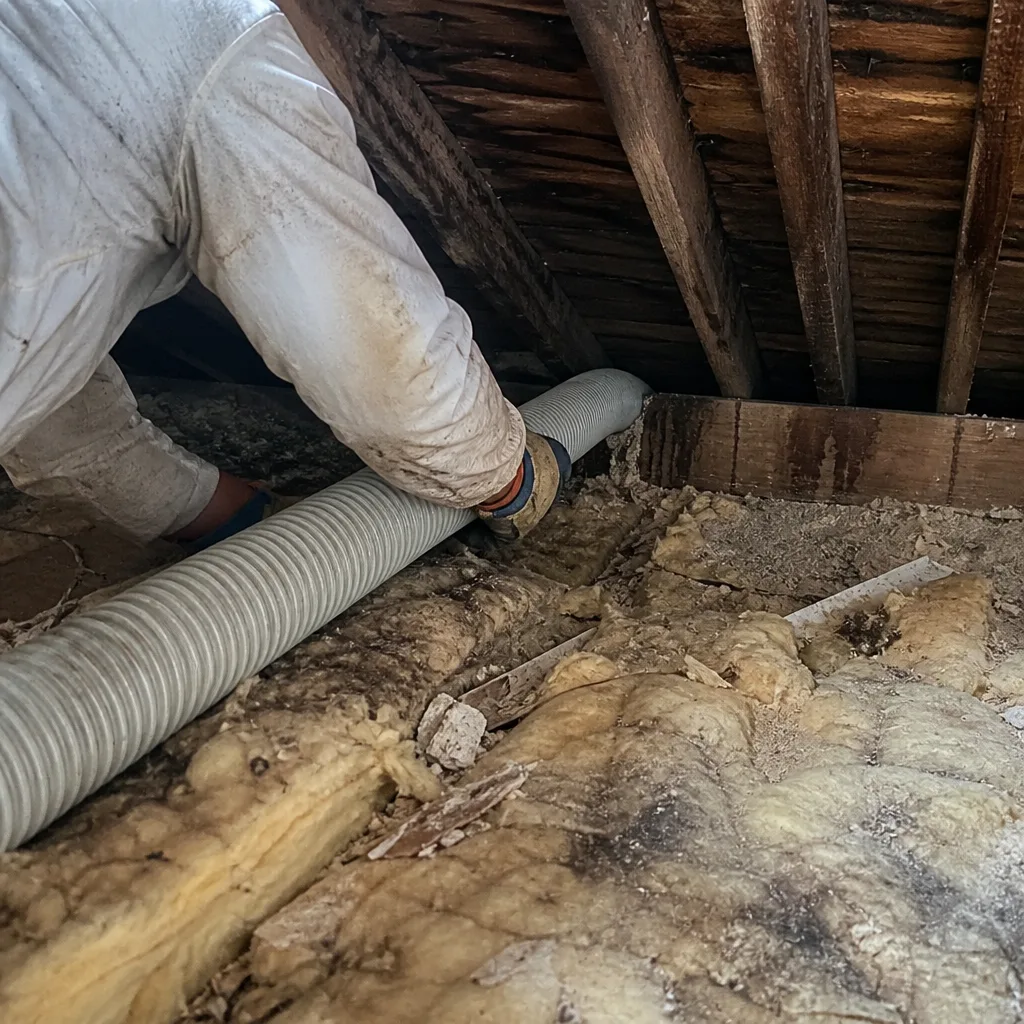 Before
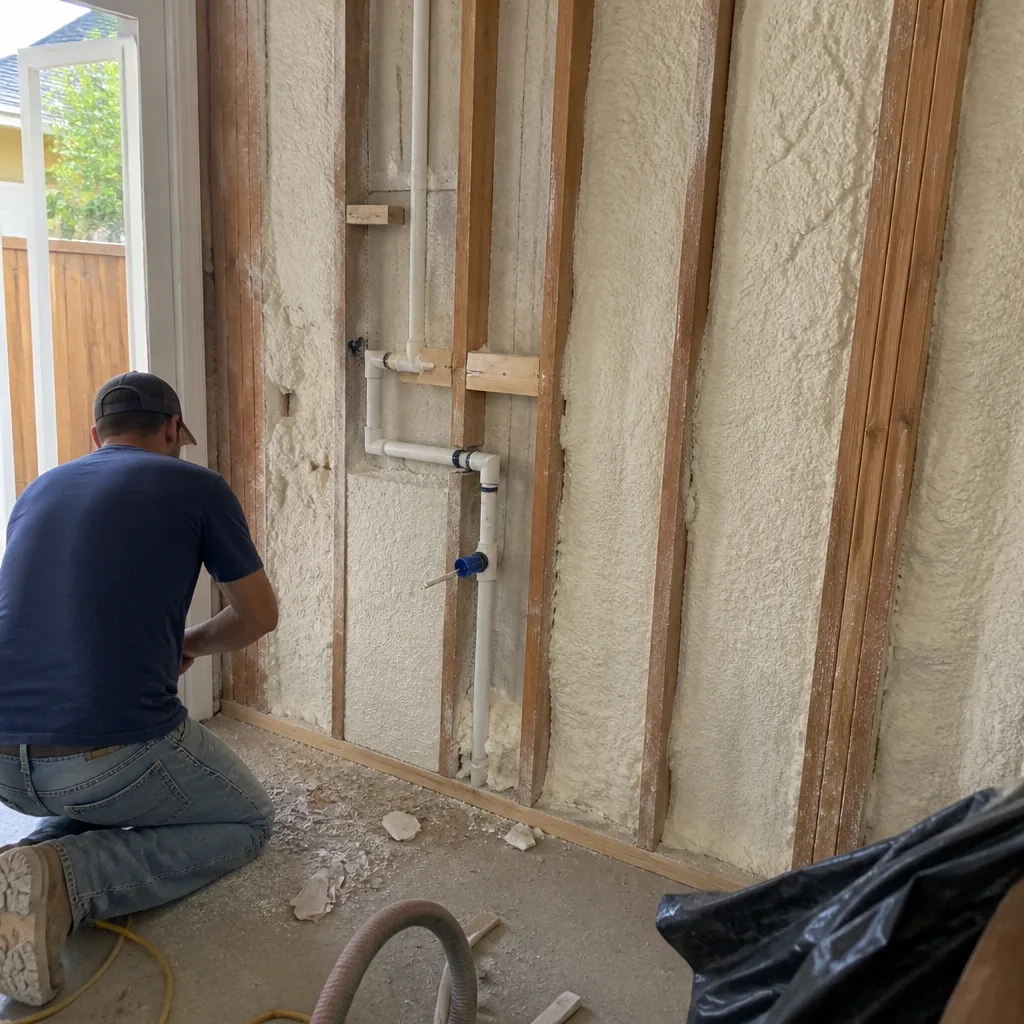 After
AfterWhy Air Sealing First Is Non-Negotiable in New Braunfels
New Braunfels sits in IECC Climate Zone 2, a mixed-humid designation that means your attic is a pressure cooker in July and a dew-point calculator in January. The 2021 IECC code adopted by Texas requires specific air-sealing measures before insulation is installed in any new construction or substantial renovation. Retrofit work isn’t always inspected to current code, but the physics don’t care about permit dates.
Here’s what happens when you add insulation over an unsealed attic floor: the new layer creates a thermal blanket, yes, but it also hides every leak. Conditioned air escapes faster through the path of least resistance, and because the insulation now covers the bypasses, you can’t find them without removing material. We’ve pulled back batts in River Chase homes where the homeowner added 12 inches of blown fiberglass two years prior and saw zero utility reduction. The blower-door test told the story - 3,800 CFM50 before, 3,600 after. The insulation was performing. The envelope was not.
The sequence matters. Air sealing addresses the pressure boundary; insulation addresses the thermal boundary. In most New Braunfels homes built between 1980 and 2010, these boundaries don’t align. The drywall ceiling is your air barrier, but it’s punctured by dozens of penetrations. The insulation sits on top, displaced by wiring and light fixtures, creating thermal bypasses that carry moisture and conditioned air directly into the attic space.
Our approach at Topside Attic Insulation New Braunfels home follows the same sequence on every job: seal first, then insulate. We don’t blow material over an unsealed floor. The Haven Standard requires it, and the blower-door numbers prove why.
What DIY Insulation Actually Looks Like
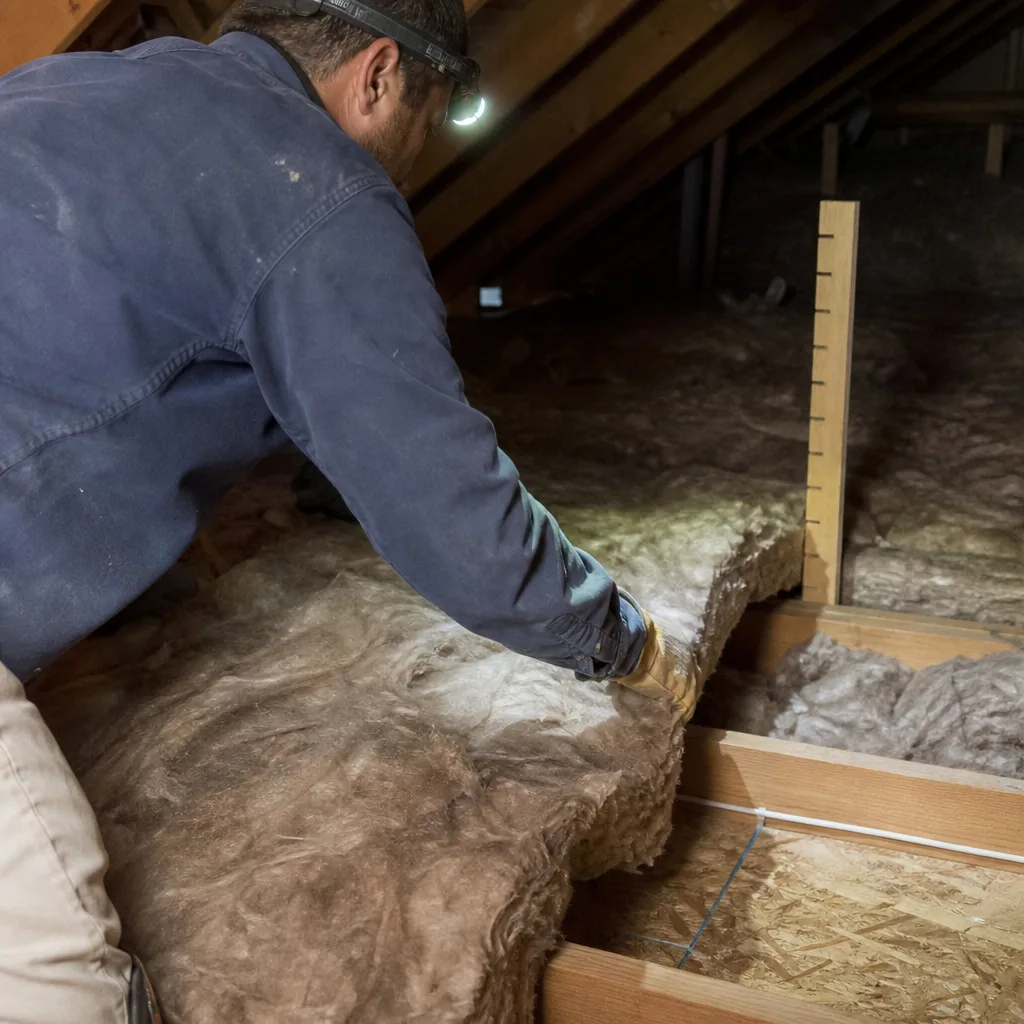
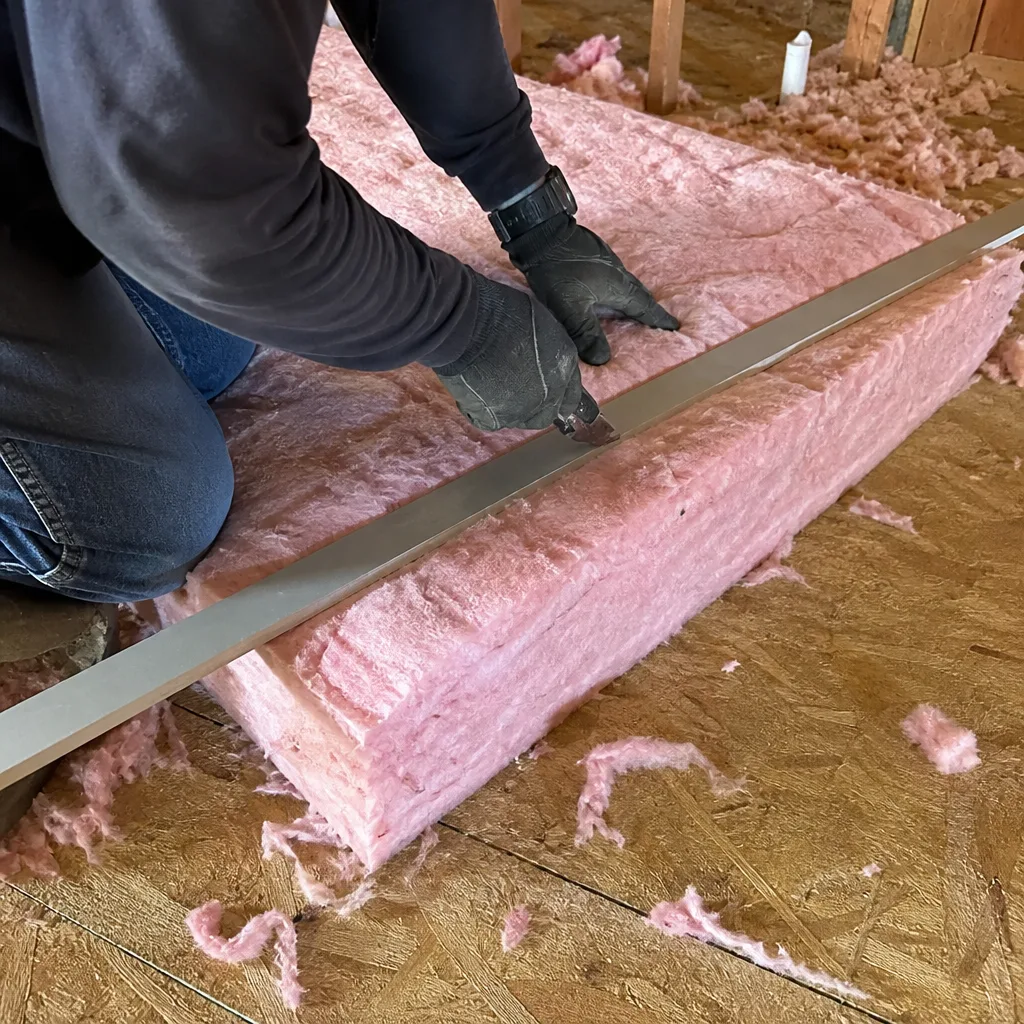
The rental-blower model is built around a specific homeowner profile: someone with clear attic access, existing insulation that’s settled but not contaminated, and a willingness to wear a respirator for four hours on a Saturday. The economics are straightforward. A machine rental runs $75-$100 per day at Home Depot or Sunbelt Rentals in New Braunfels. Blown fiberglass, typically Owens Corning AttiCat or Johns Manville Climate Pro, costs $0.40-$0.60 per square foot at R-38 depth. For a 1,500-square-foot attic, you’re looking at roughly $600-$900 in material plus the rental.
What the rental counter doesn’t provide: a smoke pencil to find leaks, fire-rated foam for top plates, intumescent caulk for electrical penetrations, or a blower door to verify your work. The instruction sheet shows how to feed the machine and keep the hose moving. It does not show how to identify a top plate, why a recessed light housing needs an airtight cover, or what to do when you find a bathroom fan dumping into the insulation.
We’ve documented the results of DIY jobs across New Braunfels, from established neighborhoods like Gruene to newer construction in Veramendi. The pattern is consistent: even insulation depth, good coverage around the perimeter, and complete omission of air sealing. The homeowner achieved the visual they expected. They did not achieve the performance they paid for.
That doesn’t mean DIY is never appropriate. It means DIY has a narrow application window that most marketing obscures.
The Air-Sealing Tasks That Disqualify Most DIY Attempts
These are the specific tasks that must precede insulation installation in a typical New Braunfels attic. Each one carries safety, code, or verification requirements that exceed DIY scope.
- Top-plate sealing with fire-rated foam. The top plate is the horizontal framing member where your wall studs meet the ceiling drywall. In most homes, this joint is unsealed, creating a continuous gap between conditioned space and attic. Sealing it requires two-component polyurethane foam rated for fire exposure, applied with a foam gun in a confined space. The foam must meet ASTM E84 Class A or equivalent. Consumer cans of “great stuff” are not fire-rated and will not pass inspection if your work is ever reviewed.
- Recessed light encapsulation. IC-rated (insulation contact) can lights still leak air. Non-IC cans create both a fire hazard and a thermal bypass. Proper encapsulation requires pre-formed airtight boxes or site-built covers from fire-rated material, sealed with caulk around the base. Working around live electrical in a 140°F attic with limited headroom is not a weekend project for most homeowners.
- Chase capping. Chimney chases, plumbing chases, and duct chases create vertical shafts that connect conditioned space to attic. Capping them requires rigid material (typically plywood or OSB with a fire-stop where required), cut to fit irregular openings, sealed with fire-rated caulk, and secured to framing. In New Braunfels, where many homes have masonry fireplaces with framed chases, this work often involves working near hot flue surfaces.
- Duct boot and register sealing. The connection between your ductwork and ceiling register is a common leak point. Sealing it requires access above and below, mastic or foil tape rated for duct application, and often repair of disconnected flex duct. If your ducts are in the attic - common in New Braunfels slab construction - this work is essential and technically demanding.
- Blower-door directed sealing. A blower door is a calibrated fan that depressurizes your home to measure air leakage in CFM50 - cubic feet per minute at 50 Pascals of pressure. We run this test before and after sealing to find leaks and verify results. No rental option exists for homeowners, and without it, you’re sealing blind.
Three of these five tasks - top-plate foam, light encapsulation, and chase capping - involve working in confined spaces with fire-rated materials near electrical or combustion sources. The safety threshold alone disqualifies most DIY attempts, before you even consider the verification gap.
Spray Foam: The Hard Professional-Only Line
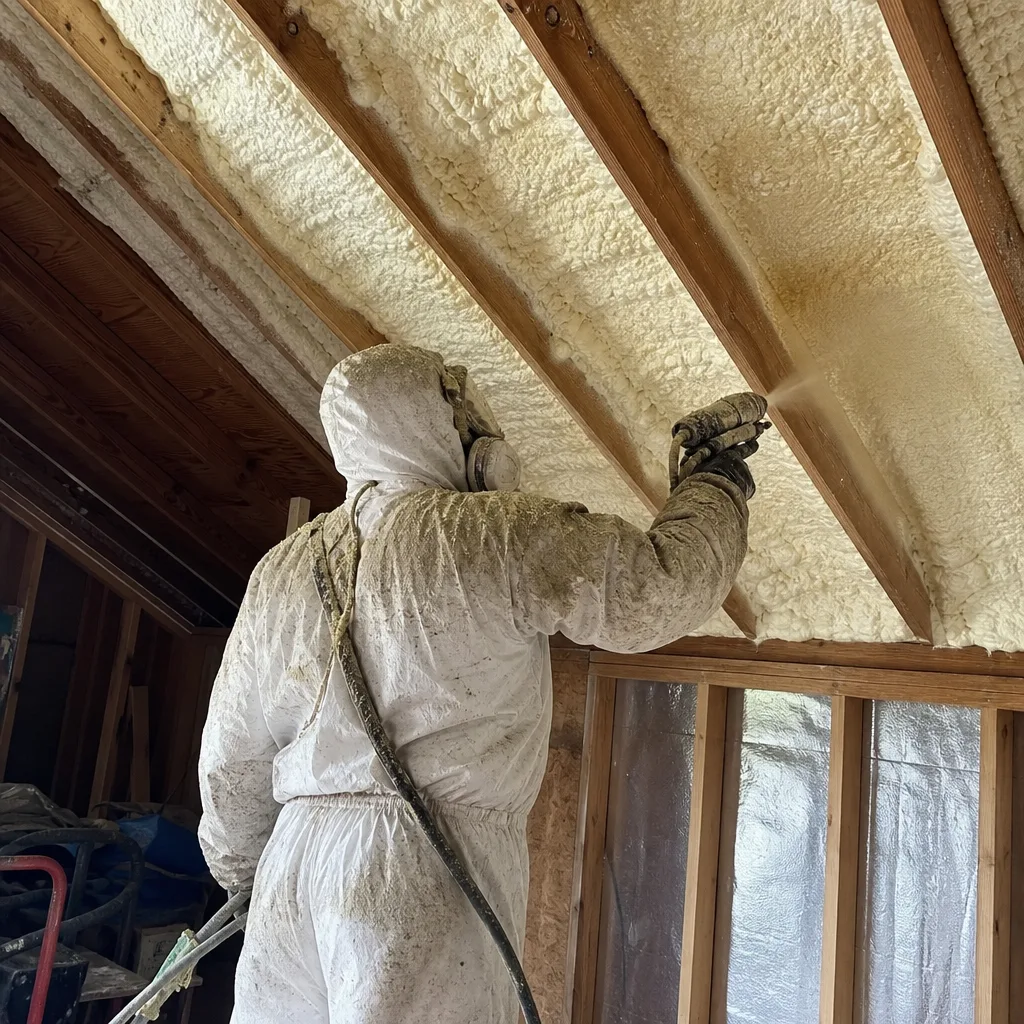
DIY spray foam kits, sold in two-component tanks at hardware stores, occupy a curious market position. They’re marketed as professional-grade, but they lack the controls that make professional application reliable. Here’s the technical reality.
Spray foam is created by mixing two chemicals - an isocyanate (A-side) and a polyol resin blend (B-side) - at precise temperature, pressure, and ratio. Professional rigs heat materials to 110-140°F, maintain 800-1,000 PSI at the gun, and mix at a 1:1 ratio by volume with real-time monitoring. DIY kits operate at ambient temperature, variable pressure, and no ratio verification.
Off-ratio mixing produces foam with 30-50% lower R-value than specified, poor adhesion, and incomplete cure. The result looks like foam. It is not performing like foam. Worse, there’s no consumer-accessible test for cure quality. Professional applicators use touch, visual inspection, and core samples; homeowners have none of these tools.
The material brands we use - Icynene, Demilec, and others - are applied by trained technicians with manufacturer certification. The warranty is void if applied by uncertified personnel. For spray foam insulation in New Braunfels, this is a hard line: DIY is not a cost-saving option. It’s a performance and warranty risk with no upside.
We’ve removed failed DIY spray foam from attics in Canyon Lake and Solms. The material was crumbly, poorly adhered, and in one case had trapped moisture against the roof deck, accelerating shingle failure. The homeowner saved $800 on installation. The remediation cost $4,200.
What DIY Cannot Produce: Permits, Certificates, and Blower-Door Numbers
This is where the DIY vs. professional distinction becomes structural, not just preferential. Certain documents affect home value, insurance claims, and legal disclosure. DIY insulation cannot produce them.
- Permit compliance. In New Braunfels, attic insulation upgrades that involve air sealing or spray foam application require a permit through the Development Services Department. The permit triggers inspection, and the inspection requires documented compliance with IECC air-sealing standards. A homeowner can pull their own permit, but the inspection will fail without proper materials, methods, and a blower-door test.
- Insulation certificate. RESNET and BPI protocols require a certified rater or auditor to issue an insulation certificate documenting R-value, coverage, and air-sealing performance. This certificate is increasingly requested by buyers, insurers, and energy-efficiency programs. No DIY process generates it.
- Blower-door numbers. The CFM50 reading is a single figure that encapsulates your home’s airtightness. We publish before-and-after numbers on every applicable job because they tell the truth that insulation depth cannot. A typical unsealed New Braunfels home of 2,000 square feet tests at 3,500-5,000 CFM50. After professional air sealing, we regularly see 1,800-2,500 CFM50. That reduction translates directly to energy savings, comfort, and indoor air quality. DIY has no access to this metric.
- Documented photo record. Under the Haven Standard, every job closes with a photo record showing conditions before, during, and after. This documentation protects the homeowner in warranty claims, home sales, and insurance disputes. It’s included on every job, not available on request.
If you’re planning to sell your home in the next five years, these documents matter. New Braunfels is growing fast, and buyers are increasingly savvy about energy costs. A documented 40% reduction in air leakage is a selling point. Twelve inches of uneven blown fiberglass with no verification is not.
Four Questions to Route Your Project
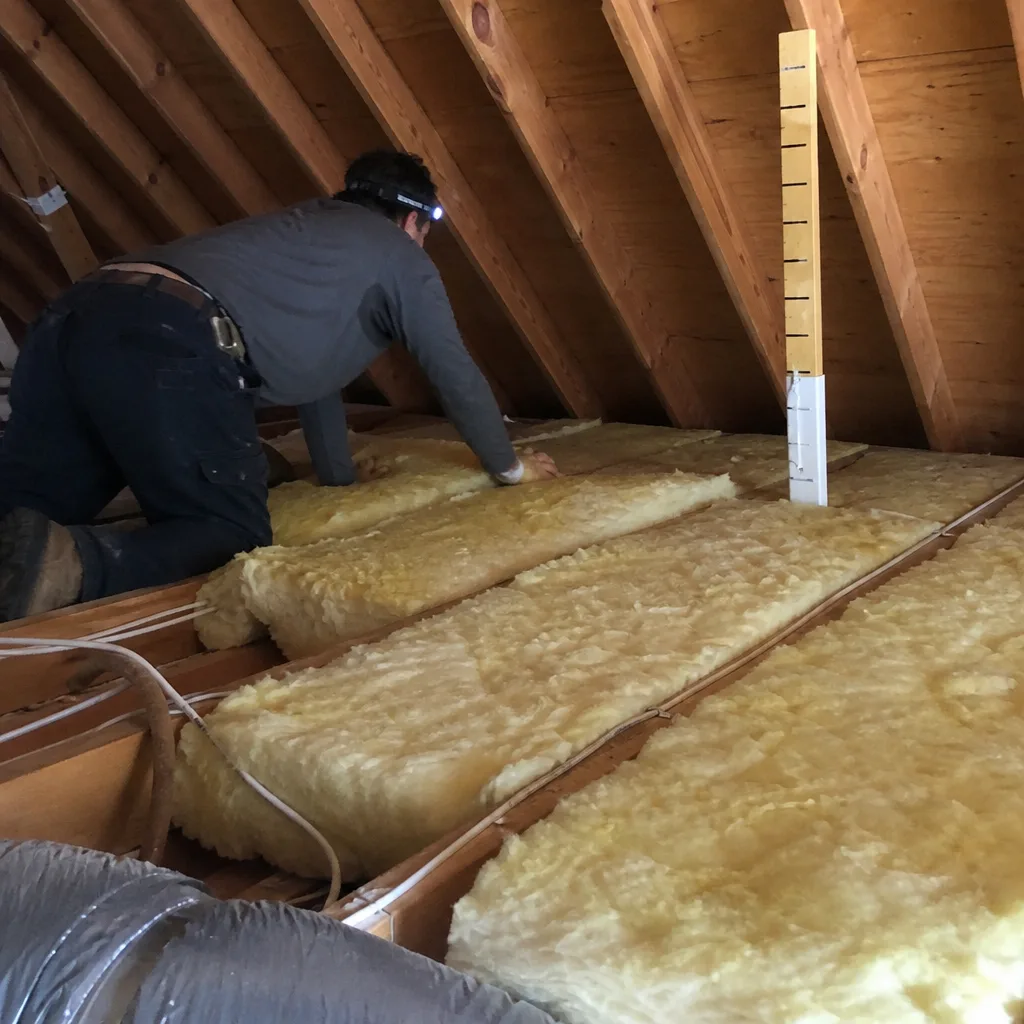
Use this matrix to determine whether your situation fits DIY, hybrid, or full-professional scope. Answer honestly. The cost of misjudging is material that doesn’t perform and leaks that remain hidden.
| Question | DIY Appropriate | Hybrid: DIY + Professional Prep | Full Professional |
|---|---|---|---|
| Is your attic floor already air-sealed with documented blower-door results? | Yes - adding depth over sealed floor with 4+ inches existing insulation | No - hire professional sealing first, then DIY the blow-in | No - and you need documentation for sale or insurance |
| Do you have recessed lights, chimney chases, or ductwork in the attic? | No penetrations, open floor plan | Minor penetrations you can cap with store-bought covers | Multiple lights, active chase, or complex duct layout |
| Is your goal comfort, energy savings, or documentation for a future sale? | Comfort only, short-term occupancy | Energy savings, medium-term occupancy | All three, or any sale within 5 years |
| Can you verify your work with a blower-door test? | No need - not verifying | Plan to hire post-DIY test | Required - part of professional scope |
The hybrid option - professional air sealing followed by DIY blow-in - is underdiscussed and often optimal. We perform the sealing, run the blower door, and hand you a sealed attic ready for material. You rent the blower, add the depth, and know the envelope is tight. This splits the cost difference while preserving the critical performance step.
We’ve offered this path to homeowners in Oak Run and Morningside who were capable and motivated but realistic about the sealing work. The Haven Standard allows it because the sealing is documented and verified. The insulation depth is visible and measurable. Both matter, but only one requires professional execution.
The Real Cost Comparison in New Braunfels
Let’s name numbers. In the New Braunfels market, as of 2024-2025:
- DIY blown fiberglass (1,500 sq ft attic, R-38): $600-$900 material + $100 blower rental = $700-$1,000 total. No air sealing, no verification.
- Professional blown fiberglass with air sealing (same specs): $2,400-$3,800. Includes top-plate foam, light covers, chase caps, blower-door before/after, permit if required, documented photo record, and 365-Day Done Right Promise.
- Hybrid (professional sealing + DIY blow-in): $1,800-$2,600 for sealing, then $700-$1,000 for DIY material. Total $2,500-$3,600 with verification.
- Spray foam (open cell, roof deck, 1,500 sq ft): $4,500-$7,200. No DIY equivalent that produces warrantied, code-compliant results.
The DIY “savings” of $1,400-$2,800 disappears when you account for:
- Energy savings not realized due to unsealed leaks. A typical New Braunfels home with unsealed attic bypasses loses 25-40% of conditioned air through the ceiling plane. Insulation doesn’t stop air movement. Air sealing does.
- Remediation costs when moisture enters through hidden gaps. In humid climates, unsealed can lights and top plates allow warm, moist attic air to meet cool conditioned surfaces. Condensation leads to mold, drywall repair, and in severe cases, structural remediation.
- Re-sale discount or disclosure liability. Texas property disclosure requires known defects in insulation and energy systems. A failed DIY job, discovered in inspection, becomes a negotiation point.
Most attic insulation jobs in a home of 1,500-2,500 square feet in New Braunfels run between $2,400 and $4,200 when properly air-sealed and documented. The written price comes before any work starts - Haven Standard Clause 1 - so you know the full scope before committing.
When DIY Is Genuinely Appropriate
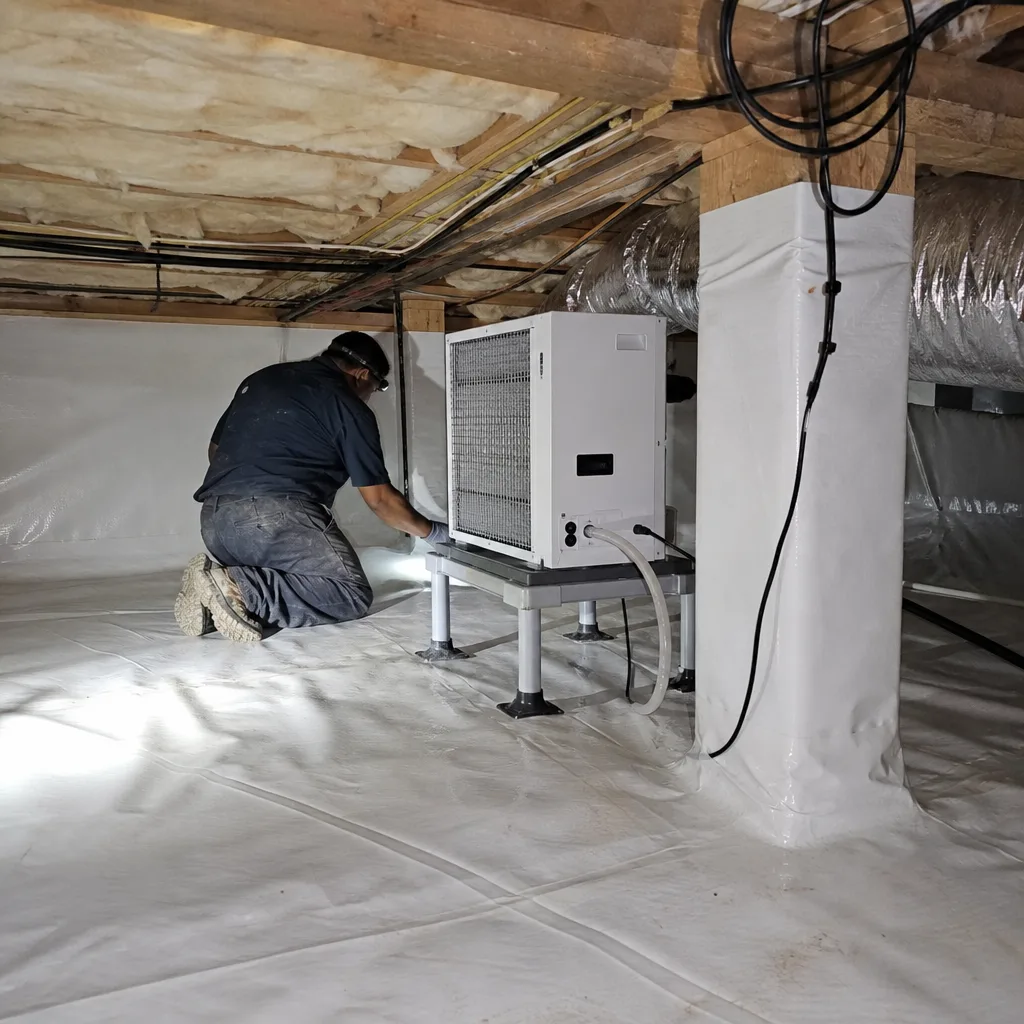
There is a narrow window where DIY insulation is the right call, and it looks like this:
Your attic was professionally air-sealed within the last five years, with blower-door documentation showing under 2,500 CFM50 for your home size. You have at least 4 inches of existing blown fiberglass or Rockwool, evenly distributed, not compacted or contaminated. Your attic has no recessed lights, no chimney chase, no ductwork, and safe access via pull-down stairs or a permanent staircase. You’re adding R-value, not fixing performance.
In this scenario, the rental blower is a tool that matches the task. The envelope is tight. The material is straightforward. The risk is low. We’ve advised homeowners in this exact position to handle the blow-in themselves, and we’ve provided the blower-door baseline so they can verify no degradation has occurred.
What we won’t do - what the Haven Standard prohibits - is blow insulation over an unsealed floor and call it complete. The visual of full coverage is not the metric of performance. The CFM50 number is.
For attic insulation in New Braunfels that requires sealing, spray foam, or documentation, professional scope is the only path to a verified result.
Common Mistakes to Avoid
- Blowing insulation over recessed lights without IC rating or airtight covers. In New Braunfels, where summer attic temperatures exceed 140°F, this creates both a fire hazard and a thermal bypass that negates your energy savings. Non-IC cans require a minimum 3-inch clearance to insulation that DIYers often miss in tight quarters.
- Using unfaced batts in attic floors. Vapor drive in our mixed-humid climate moves inward in summer and outward in winter. Unfaced batts allow moisture migration that leads to mold on the attic side of drywall. Proper material selection - blown fiberglass or certain mineral wool applications - requires understanding seasonal humidity patterns specific to Central Texas.
- Blocking soffit vents with insulation. Attic ventilation in New Braunfels is critical for shingle life and moisture management. DIY blow-in often drifts into soffit cavities, choking intake vents and creating stagnant, hot attics. Baffles must be installed before blowing, a step frequently omitted in rental-blower instruction sheets.
- Ignoring rodent contamination in existing insulation. Homes near the Guadalupe River or in older Gruene neighborhoods often have attic rodent activity. Blowing new material over contaminated old insulation traps pathogens, odors, and pheromones that attract new pests. Removal and sanitization must precede new material.
- Assuming more R-value equals better performance regardless of air sealing. R-60 over unsealed bypasses performs worse than R-38 over a tight envelope. We’ve tested this in side-by-side New Braunfels homes. The sealed R-38 home had lower utility bills and more even room temperatures.
- Skipping permit requirements for spray foam or extensive air sealing. New Braunfels Development Services requires permits for spray foam application and for insulation upgrades that involve structural modification or combustion appliance interaction. Unpermitted work complicates insurance claims and home sales.
- Using consumer spray foam kits for anything larger than a small crack seal. The off-ratio risk, the noxious off-gassing from improper cure, and the irreversibility of failed application make these kits unsuitable for attic insulation. Professional rigs have temperature control, ratio monitoring, and technician certification that consumer kits cannot replicate.
When to Call a Professional
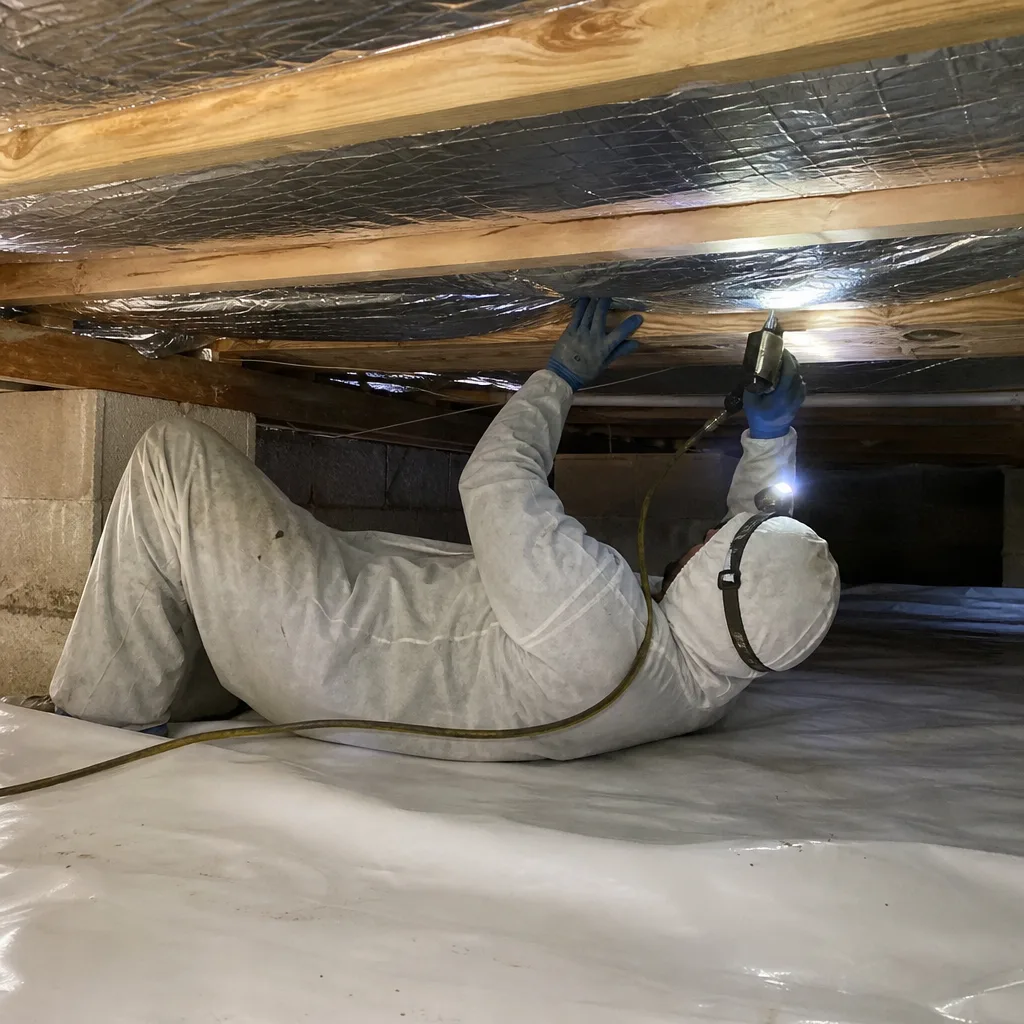
Call a professional when your attic has any of the following: recessed lights, a chimney chase, ductwork, less than 4 inches of existing insulation, visible gaps at top plates or electrical penetrations, any history of moisture or rodent issues, or a need for documented performance (sale, insurance, energy program). Also call when the material is spray foam, when permit compliance is required, or when you cannot verify your work with a blower-door test.
Topside Attic Insulation New Braunfels offers free estimates in New Braunfels - call (830) 243-6352. Every estimate includes a written price before any work starts, a documented scope, and on applicable jobs, a blower-door baseline. We also provide a Free Second Opinion on any written estimate from another contractor. Bring us their scope; we’ll read it with you and tell you what’s included, what’s omitted, and what the numbers mean.
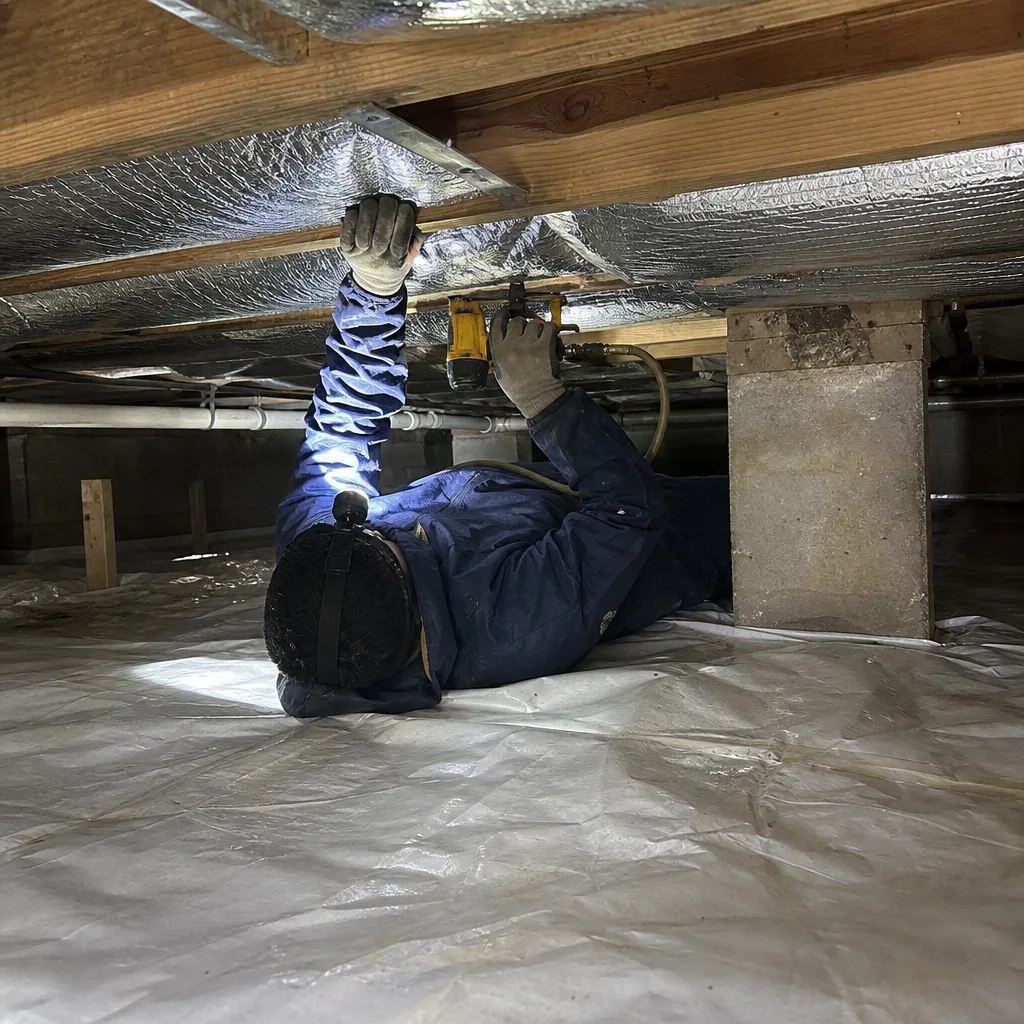
For crawl space encapsulation and vapor barrier in New Braunfels, the same documentation standards apply. The Haven Standard doesn’t vary by service type.
Frequently Asked Questions
Most attic insulation jobs in a 1,500-2,500 square foot home run between $2,400 and $4,200 when air sealing, permit compliance, and blower-door verification are included. Spray foam applications range from $4,500 to $7,200 for open-cell roof deck work. Call (830) 243-6352 for a written price before any work starts - estimates are free.
Yes, but only if your attic floor is already professionally air-sealed with documented results, you have at least 4 inches of existing insulation, and your attic has no recessed lights, chimney chases, or ductwork. Otherwise, you’re adding depth over leaks that will continue to waste energy and risk moisture damage. The rental blower is a tool for the right job, not a shortcut around envelope sealing.
No. Consumer spray foam kits lack temperature control, pressure monitoring, and ratio verification. Off-ratio foam cures with 30-50% lower R-value, poor adhesion, and no warranty. Professional application with certified technicians is the only path to code-compliant, warrantied spray foam in New Braunfels.
A blower-door test is a pressurization reading that shows, in one number (CFM50), how much air your building envelope is losing. We run this test before and after air sealing so you can verify the actual performance change. A typical unsealed New Braunfels home tests at 3,500-5,000 CFM50. After our sealing work, we regularly document 1,800-2,500 CFM50. That reduction is your energy savings, in a single figure.
Typically not in New Braunfels homes built before 2015. Our mixed-humid climate and common construction practices created attics with significant bypasses. Insulation slows heat transfer but does not stop air movement. Unsealed top plates, can lights, and chase gaps allow conditioned air to escape continuously. We’ve tested homes with R-60 attic insulation and utility bills unchanged from pre-insulation levels because the envelope leaked.
Yes, if the work involves spray foam, air sealing of structural penetrations, or modification around combustion appliances. The New Braunfels Development Services Department enforces IECC 2021 standards for air sealing and insulation. Permitted work requires inspection and documentation, which DIY projects typically cannot produce. Unpermitted work may complicate insurance claims or home sale disclosure.
Documented air sealing with fire-rated materials, blower-door verification, permit compliance, an insulation certificate, a photo record of conditions, and a written warranty. Under the Haven Standard, you also get a written price before any work starts and a 365-Day Done Right Promise. These documents protect your investment and increase your home’s value. DIY cannot replicate them.
The Bottom Line
The DIY vs. professional insulation question in New Braunfels resolves to a single technical issue: can you seal the envelope before you insulate it? For more guides & resources on attic performance, air sealing, and when to call a pro, visit our blog. If yes, and your situation matches the narrow conditions where DIY is appropriate, the rental blower is a reasonable tool. If no - and for most homes with typical attic complexity, the answer is no - professional scope is not an upsell. It’s the minimum viable path to performance that you can verify, document, and warrant.
We’ve sealed and insulated over 9,000 homes since 2016. Every one began with a written price and ended with a documented record. The ones that performed best were the ones where sealing preceded insulation, and where the homeowner could read the blower-door number that proved it.
Call (830) 243-6352 for a free estimate. We’ll assess your attic, name your price in writing, and show you what documentation looks like before anyone starts.
Written by Wes Okafor, Owner at Topside Attic Insulation New Braunfels, serving New Braunfels since 2016.