
Last updated September 24, 2026
Attic Insulation Maintenance Checklist for New Braunfels Homeowners
Blown fiberglass loses roughly 1 inch of effective depth for every five years of normal settling. A 13-inch install that met R-38 at the time of construction may be performing closer to R-30 a decade later, with no visible sign from the living space below. In New Braunfels, where summer attic temperatures routinely exceed 140°F and winter cold snaps can drop below freezing, that silent degradation translates directly into higher electric bills, longer HVAC run times, and uneven room temperatures that homeowners often blame on their air conditioner rather than the envelope above it. This checklist turns those invisible failure modes into observable, measurable conditions you can assess with basic tools and a methodical walkthrough.
Quick Answer
Attic insulation maintenance in New Braunfels means checking insulation depth against your original install spec, inspecting for pest channeling and compressed areas around HVAC equipment, sealing visible air leaks at top plates and penetrations, and monitoring your electric bill trend year-over-year. Most homeowners should perform this inspection annually, ideally in late March before cooling season begins. A 10-minute attic check with a ruler and flashlight catches problems that otherwise go unnoticed for years.
Table of Contents
- How to Measure Current Insulation Depth Against Your Original Spec
- Identifying Pest Channeling, Tunneling, and Frass in Blown Insulation
- HVAC Chase and Boot Inspection: Where Ductwork Breaks the Insulation Plane
- Spotting Air Leaks at Top Plates, Can Lights, and Penetrations
- Reading Your Electric Bill Trend as a Proxy Metric
- What to Monitor Yourself Versus When to Schedule a Blower-Door Retest
- A Seasonal Maintenance Schedule for New Braunfels Homes
- Common Mistakes to Avoid
- When to Call a Professional
- Frequently Asked Questions
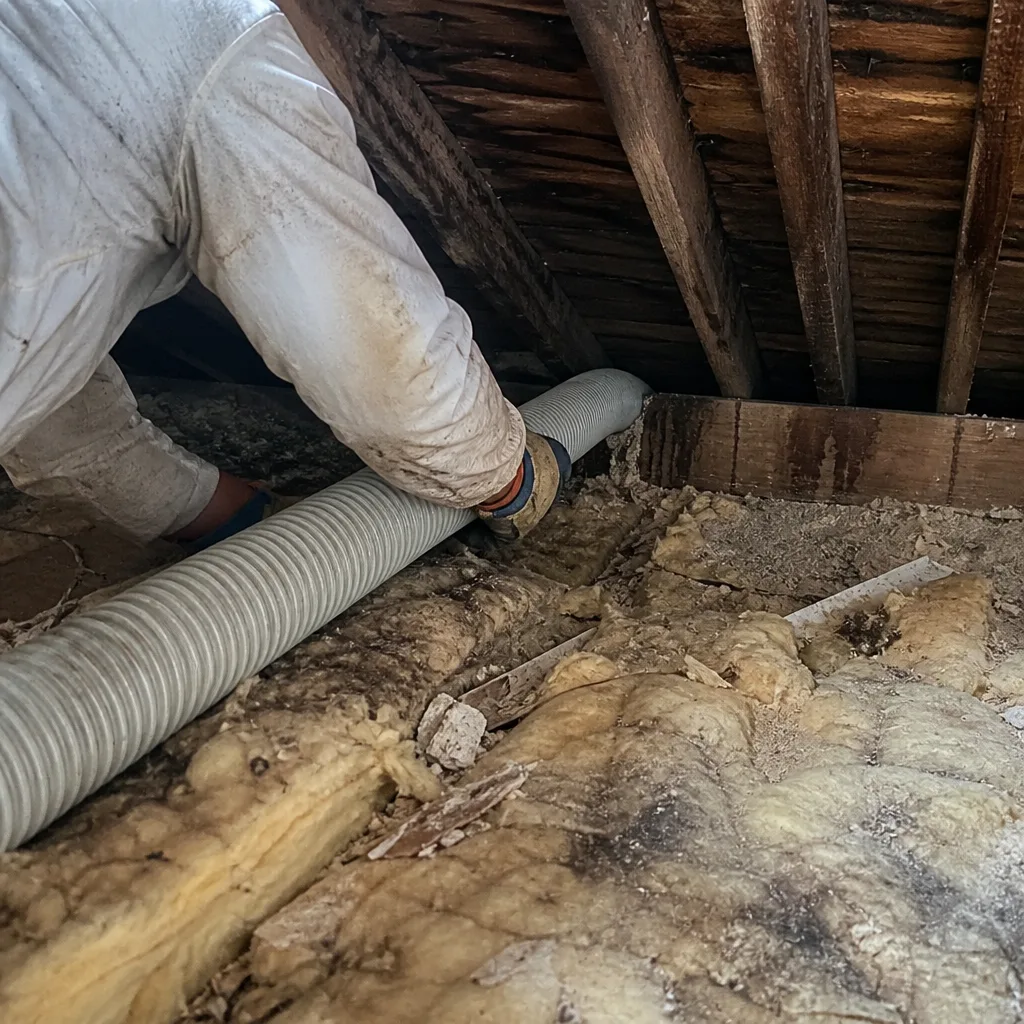 Before
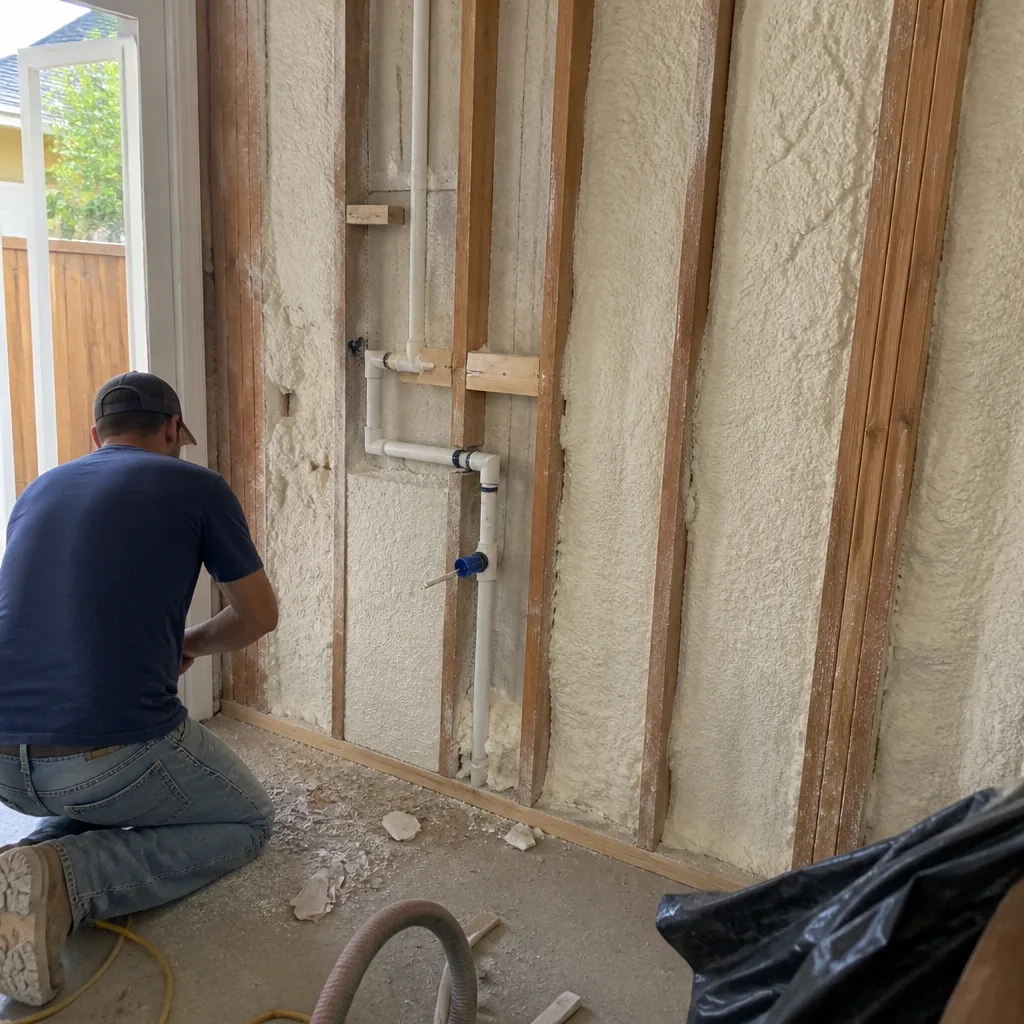 After
AfterHow to Measure Current Insulation Depth Against Your Original Spec
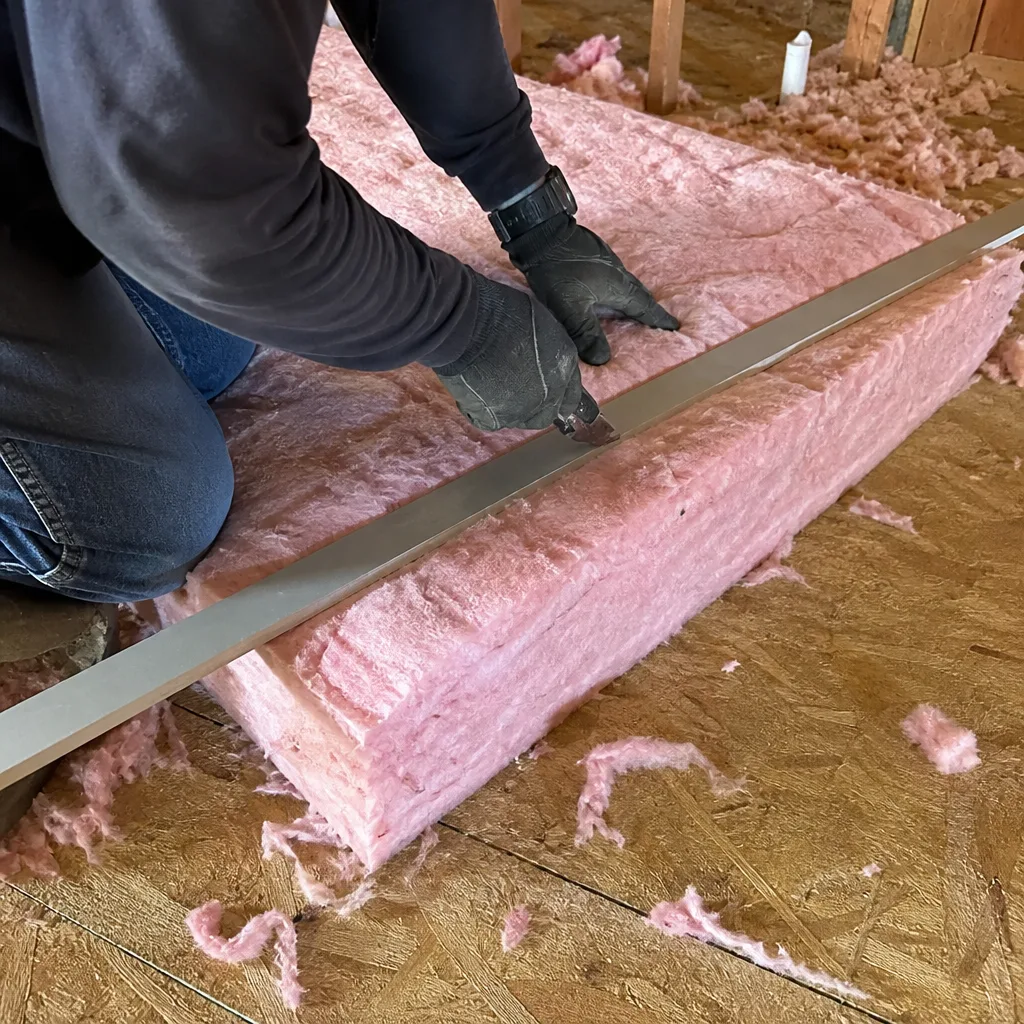
The single most useful number in attic maintenance is also the easiest to obtain: current insulation depth measured with a ruler. Every attic in New Braunfels should have documentation from the original install, either on the building permit, the insulation certificate posted near the attic access, or in the homeowner disclosure packet from your purchase.
Finding Your Original Spec
New Braunfels falls in IECC Climate Zone 2, which for attics typically requires R-30 to R-38 depending on the code cycle in force when your home was built. The insulation certificate, often stapled to a rafter near the access hatch, lists the installed R-value, the material type, and the depth required to achieve that rating. For blown fiberglass, R-38 typically requires 12 to 14 inches; for blown cellulose, 10 to 12 inches; for mineral wool like Rockwool, slightly less due to higher per-inch R-value.
If you cannot locate the certificate, check your Comal County or Guadalupe County building permit records online. The permit application often lists the insulation type and target R-value. Homes in Vintage Oaks, River Chase, or the older neighborhoods near downtown New Braunfels built before 2000 may have R-19 or R-22 originally, which was code-compliant at the time but well below current standards.
Taking the Measurement
- Wait for a cool morning. Attic temperatures in New Braunfels exceed 120°F by 10 a.m. from May through September.
- Bring a tape measure or yardstick, a flashlight, and a camera.
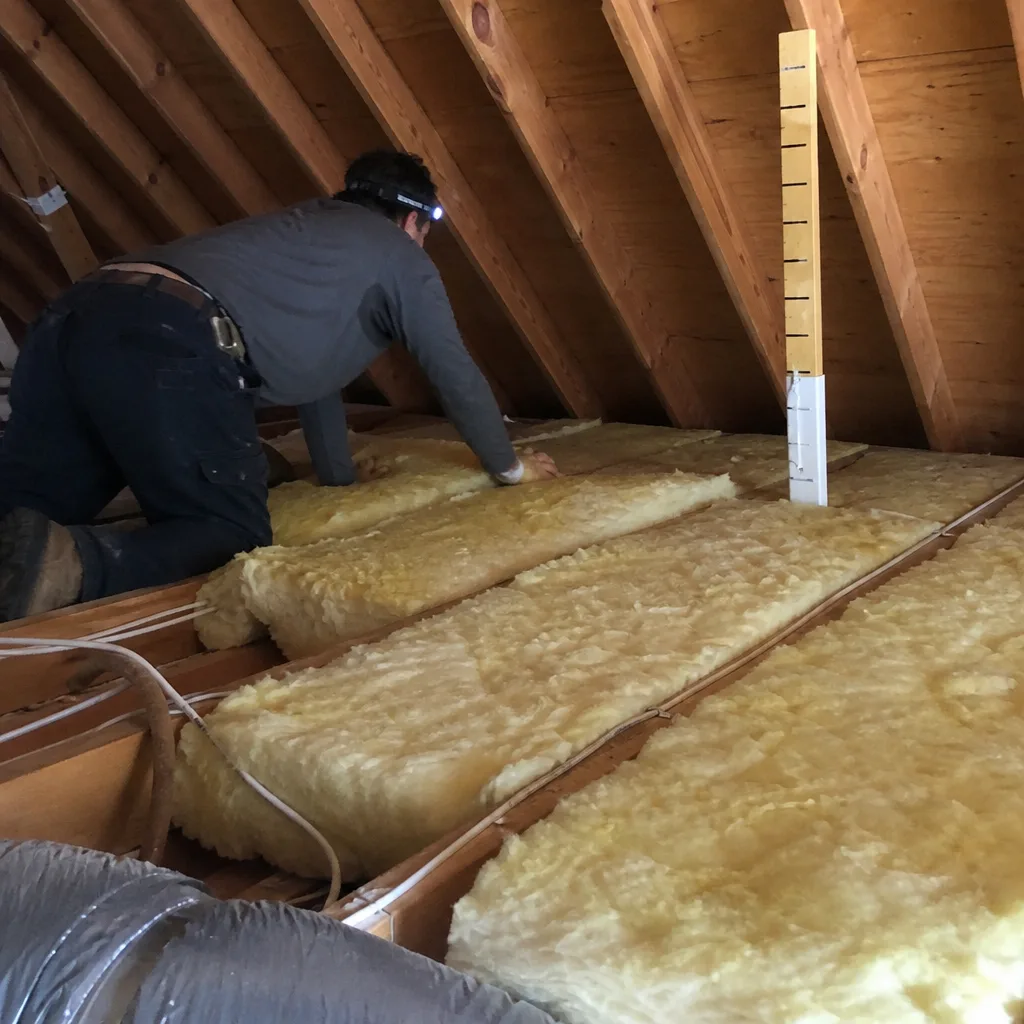
- Measure at five locations: center of attic, near each eave, and near any HVAC equipment. Push the ruler gently through the insulation until you feel the drywall ceiling below.
- Photograph each measurement location with the ruler visible.
- Average your five readings. Compare against the original spec depth listed on your certificate.
Settling is normal and expected. Blown fiberglass settles 10-15% in the first year, then roughly 2% annually thereafter. Cellulose settles more initially, then stabilizes. What you’re looking for is deviation beyond normal settling, localized compression, or uneven distribution that creates thin spots.
In our experience across New Braunfels, homes with original blown fiberglass from the 2005-2015 construction boom average 2.5 to 4 inches below spec depth. That gap represents roughly 30% performance loss, which a homeowner typically experiences as the upstairs bedroom running 4-6°F warmer than the thermostat setting in July.
Identifying Pest Channeling, Tunneling, and Frass in Blown Insulation
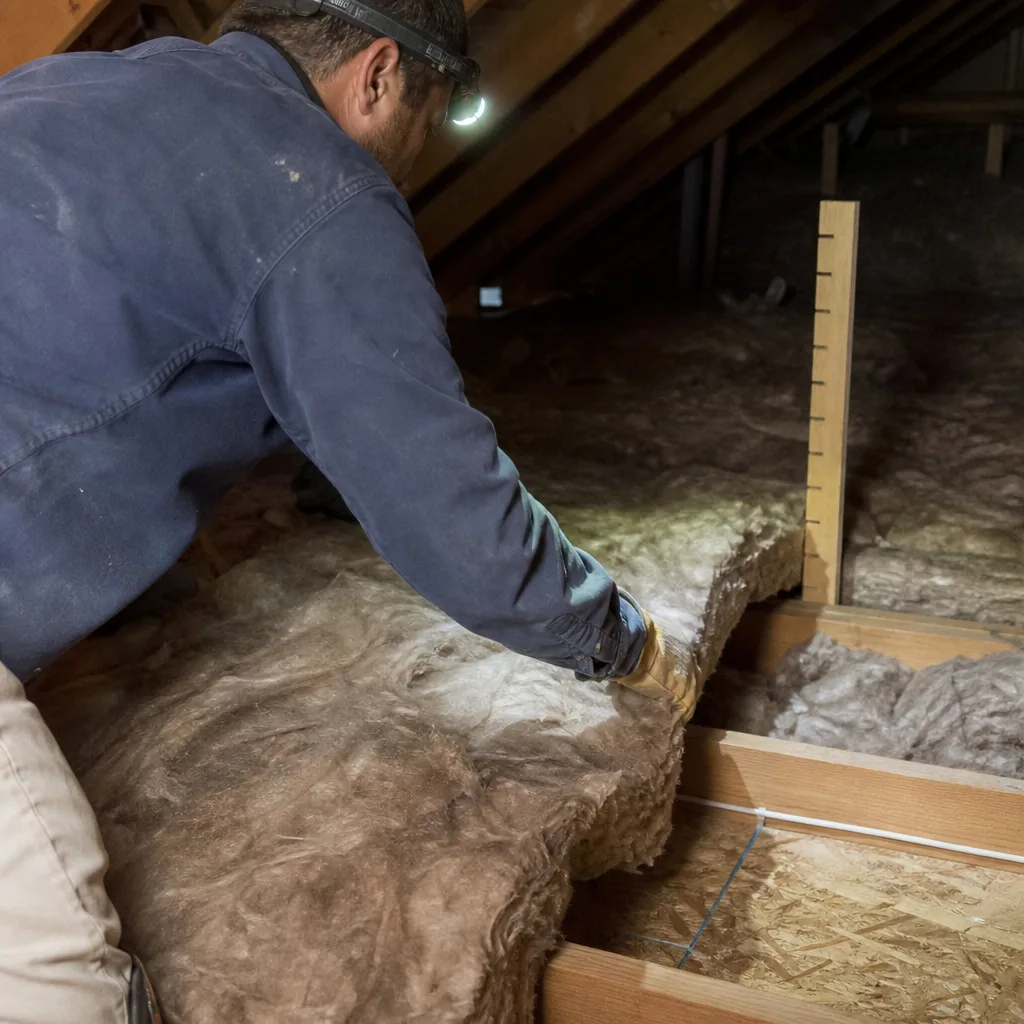
Pest activity in attics is common in New Braunfels, where mild winters, abundant oak and pecan canopy, and proximity to the Guadalupe and Comal rivers create favorable conditions for rodents, raccoons, and insects. The damage they leave is distinct from normal settling once you know what to look for.
Normal Settling Versus Pest Disturbance
Normal settling creates a uniform, slightly undulating surface that follows the ceiling plane below. The insulation appears flatter than original but evenly distributed. Pest channeling, by contrast, creates discrete paths, piles, and voids that break that uniformity.
Five Signs of Active or Recent Pest Activity
- Tunnel patterns: Narrow, winding troughs 2-4 inches wide where insulation has been pushed aside, often following joist bays or electrical runs. These are rodent travel paths.
- Compressed trails: Repeated foot-traffic-like compression in specific routes, distinct from the generalized flattening of settling. Raccoons and squirrels leave these.
- Frass accumulation: Small, uniform pellets of insect excrement, often concentrated near soffit vents or ridge gaps. In New Braunfels, we see this most from roof rats and, less commonly, from carpenter ants in homes near the river corridor.
- Nesting material: Gathered insulation pulled into discrete piles, often mixed with shredded paper, leaf litter, or fabric scraps.
- Insulation displacement at entry points: Gaps or depressions near roof penetrations, vent screens, or fascia gaps where animals have pushed through.
Roof rats are the most common attic pest in New Braunfels neighborhoods with mature tree canopy, including the areas around Landa Park and along the Guadalupe River. They’re excellent climbers and can squeeze through gaps smaller than a quarter. Their channeling patterns typically run along the warm side of the attic, near the ridge, and they often follow the same paths repeatedly, creating visible trails within weeks of entry.
If you find active pest signs, address the infestation before restoring insulation. Blowing new material over contaminated insulation traps odors, pathogens, and pheromones that attract subsequent pests. Topside Attic Insulation New Braunfels home services include insulation removal and replacement with a documented photo record of the full remediation.
HVAC Chase and Boot Inspection: Where Ductwork Breaks the Insulation Plane
The most common location of attic insulation failure in New Braunfels homes built before 2010 is not at the eaves or the ridge. It’s where flexible ductwork, metal boots, or PVC condensate lines penetrate the insulation plane, creating gaps that are invisible from below but thermally significant.
Why Pre-2010 Homes Are Especially Vulnerable
Homes built during the 1990s and 2000s construction waves in New Braunfels, including large sections of Copper Ridge, Oak Run, and the original Canyon High School area, typically used flex duct routed through unconditioned attics with minimal sealing at boots and chases. The insulation contractor often blew material around these obstructions without lifting or reseating the ducts, creating voids that widen over time as vibration and thermal cycling shift the ductwork.
We’ve measured blower-door results in these homes showing 15-25% of total envelope leakage concentrated at HVAC penetrations alone. That leakage path is warm, humid attic air entering the duct system in summer, or conditioned air escaping into the attic in winter, depending on pressure dynamics.
What to Look For
- Boot gaps: At each ceiling register location, find the metal or flex boot where it penetrates the drywall. The insulation should form a complete collar around the boot, extending to the ceiling plane. Gaps of even 1-2 inches are significant.
- Duct sag: Flex duct that has sagged below the insulation level creates a thermal bridge. The insulation above the sag may be intact, but the duct itself is exposed to attic temperature along its lower surface.
- Condensate line penetrations: PVC lines running to exterior soffits often pass through the insulation plane with no sealing, creating a direct air path.
- Platform or chase construction: Some homes have framed chases for ductwork that rise above the attic floor. The intersection of these chases with the insulation plane is rarely sealed properly in older construction.
For homeowners comfortable with minor repairs, sealing visible gaps with fire-rated caulk or mastic and repositioning displaced insulation is reasonable maintenance. For extensive chase reconstruction or duct reconfiguration, a professional assessment is warranted. Attic Insulation in New Braunfels includes full HVAC chase evaluation as part of every inspection.
Spotting Air Leaks at Top Plates, Can Lights, and Penetrations
Air sealing and insulation are sequential operations, not alternatives. In New Braunfels, where cooling dominates the energy budget, attic air leaks are particularly costly because they allow 140°F attic air to be drawn into conditioned space whenever the HVAC system creates negative pressure.
The Top Plate Gap
The top plate is the horizontal framing member where interior and exterior walls meet the ceiling drywall. In platform-framed construction, this creates a linear gap at every wall intersection. In homes with vaulted ceilings or complex rooflines common in newer New Braunfels subdivisions like Veramendi and Morningside, the linear footage of top plate exposure can be substantial.
To inspect: look along wall-ceiling intersections from the attic side. You may see gaps where drywall does not fully meet the top plate, or where electrical wiring has been pulled through without sealing. These gaps are often 1/8 to 1/4 inch wide but run for many feet. Accumulated, they represent a significant leakage path.
Can Lights and Electrical Penetrations
Recessed can lights installed before 2012 are rarely airtight. Even IC-rated (insulation contact) fixtures have visible gaps at the housing edge. In New Braunfels, where attic temperatures stress all components, the thermal expansion and contraction of can light housings widens these gaps over time.
Electrical boxes for ceiling fans, smoke detectors, and junction boxes also penetrate the air barrier. Look for gaps around box edges and where cables enter. Plumbing vent stacks, while required to remain open, should have insulation packed tightly around them where they pass through the ceiling plane.
What Homeowners Can Seal
- Gaps around electrical boxes with fire-rated caulk or foam
- Top plate gaps accessible from the attic with caulk or gasket material
- Non-IC can lights with airtight retrofit covers, then insulation over the cover
- Plumbing penetrations with expanding foam, keeping the vent itself open
What requires professional equipment: comprehensive air sealing with blower-door guidance to measure progress, and sealing of any combustion appliance venting where improper work creates safety hazards. We never recommend homeowner work near gas water heater vents or furnace flues.
Reading Your Electric Bill Trend as a Proxy Metric
Not every homeowner can or should enter their attic annually. Physical access may be limited by steep stairs, health conditions, or safety concerns. Your electric bill trend, tracked methodically, serves as a reasonable proxy for insulation performance degradation.
How to Normalize Your Data
Texas utilities bill by kilowatt-hours used, but raw usage is affected by thermostat setting, occupancy patterns, and weather. To isolate envelope performance:
- Collect 24 months of bills. Most New Braunfels homeowners receive electric service from CPS Energy or New Braunfels Utilities.
- Note the billing period dates and total kWh.
- Find the degree days for each billing period. The National Weather Service station at New Braunfels Regional Airport publishes this data, or use an online calculator with your ZIP code.
- Calculate kWh per cooling degree day (for summer months) and kWh per heating degree day (for winter).
A rising trend in kWh per degree day, with thermostat settings held constant, indicates degrading envelope performance. In New Braunfels, where cooling dominates, focus on May through September data. A 15-20% increase over three years, with no equipment change, strongly suggests attic insulation or air sealing degradation.
What the Trend Cannot Tell You
Electric bill trends cannot distinguish between insulation degradation, duct leakage, HVAC efficiency loss, or increased internal heat gain. They flag a problem worth investigating, not the specific cause. For homeowners in Garden Ridge or along the I-35 corridor where utility rates have shifted, also verify that rate structure changes aren’t driving the cost increase.
When the trend rises and attic access is difficult, a professional assessment with blower-door testing provides definitive diagnosis. The Spray Foam Insulation in New Braunfels page describes how closed-cell foam can eliminate many of these degradation paths in homes with chronic issues.
What to Monitor Yourself Versus When to Schedule a Blower-Door Retest
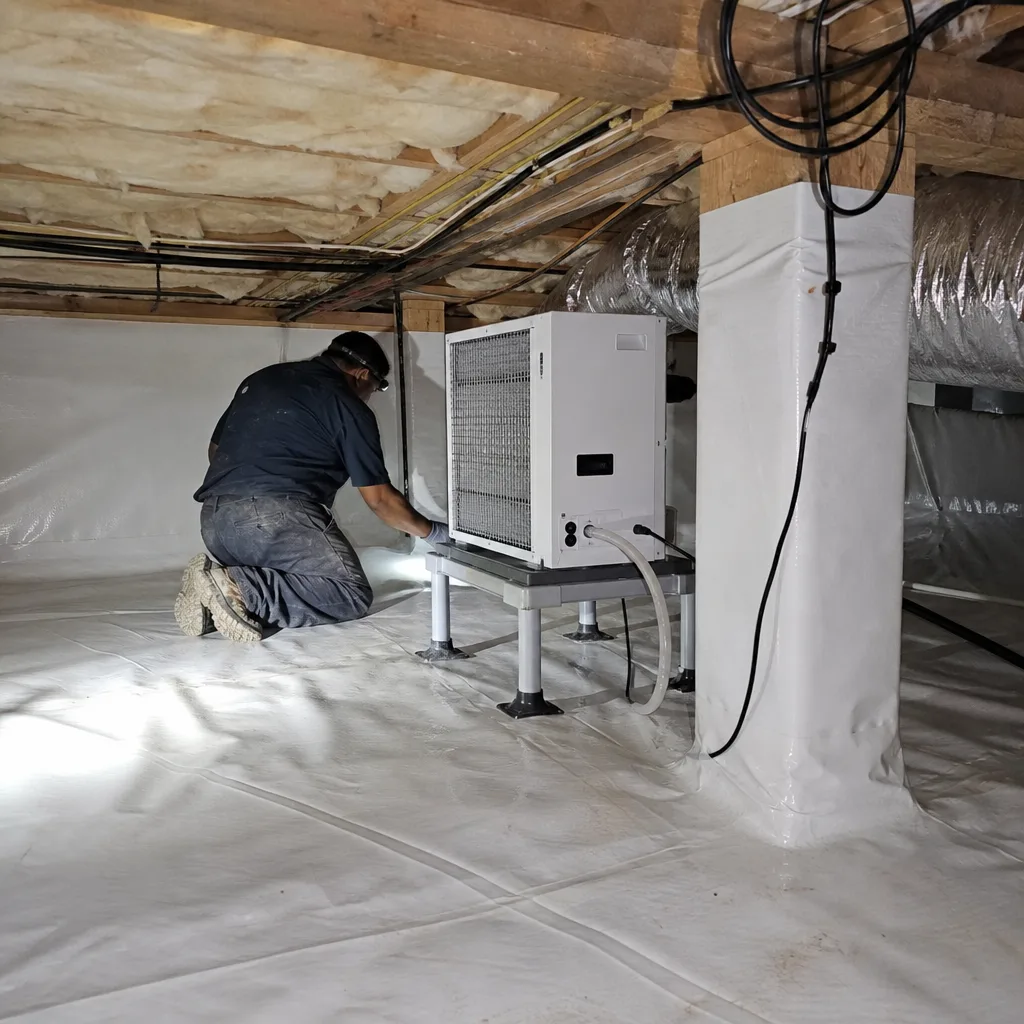
Annual homeowner monitoring catches visible, accessible problems. Professional blower-door testing measures what you cannot see: the cumulative effect of many small leaks, the performance of your air barrier as a system, and the quantitative improvement after any remediation.
Homeowner Monitoring Checklist (Annual, Late March)
- Measure and photograph insulation depth at five locations; compare to spec
- Inspect for pest channeling, frass, or nesting material
- Check HVAC boots and chases for gaps or displacement
- Seal accessible air leaks at electrical and plumbing penetrations
- Review electric bill trend for unexplained increase
- Walk the house with HVAC running; note rooms that fail to reach setpoint
Conditions That Trigger Professional Blower-Door Testing
| Condition | Recommended Action |
|---|---|
| Insulation depth 3+ inches below spec in multiple locations | Schedule assessment for add-on insulation or full replacement |
| Active pest contamination or moisture staining | Professional remediation with documented photo record |
| Electric bill trend up 20%+ over 3 years with no equipment change | Blower-door test to quantify envelope leakage and locate hidden paths |
| Post-renovation or post-addition | Blower-door test to verify continuity of air barrier at new-old intersections |
| Home purchase within 2 years, no prior blower-door data | Baseline test for future comparison; most New Braunfels homes have never been tested |
A blower-door test - a pressurization reading that shows, in one number, how much air your building envelope is losing - typically takes 90 minutes and provides immediate, actionable data. In our work across New Braunfels, we’ve found that homeowners who have never seen their home’s leakage number are often surprised by how high it is, and equally surprised by how much improvement proper air sealing achieves. We publish before-and-after blower-door numbers on every applicable job so the performance change is documented, not assumed.
A Seasonal Maintenance Schedule for New Braunfels Homes
New Braunfels climate patterns create distinct seasonal priorities for attic maintenance. The following schedule aligns inspection timing with local weather and energy demand patterns.
March: Pre-Cooling Season Inspection
The critical window. Attic temperatures are still manageable, and any remediation completed in March-April pays back through the entire cooling season. Perform full depth measurement, pest inspection, and air leak survey. Schedule professional work by mid-April to beat the rush.
May: First Bill Review
Establish your baseline kWh per cooling degree day after any winter rate changes. Compare to prior year. Flag unexplained increases for investigation.
July: Mid-Season Spot Check
Quick attic entry early morning only. Check for any new pest activity that may have begun in spring, and verify that no insulation has been displaced by HVAC vibration or wind during spring storms common to the I-35 corridor.
October: Post-Cooling Assessment
Review full summer bill trend. If cooling costs were higher than expected despite normal thermostat settings, schedule fall professional assessment before heating season begins. Fall scheduling in New Braunfels is typically more flexible than spring.
December: Heating Season Baseline
New Braunfels heating demand is modest but not negligible. Verify that rooms with north-facing exposures or over unconditioned garages maintain temperature. Persistent cold spots often trace to attic insulation gaps above.
Common Mistakes to Avoid
- Blowing new insulation over old without inspecting what’s beneath. In New Braunfels, we’ve removed insulation layers that concealed active roof leaks, pest contamination, and degraded vapor barriers. The new insulation performs poorly and may trap moisture.
- Compressing insulation around HVAC equipment. Pushing batts or blown material tightly against flex duct crimps airflow and can cause condensation. Insulation should surround, not constrict.
- Ignoring soffit vent blockage. Adding insulation without maintaining clear soffit-to-ridge airflow path is common in DIY projects. Blocked soffits create moisture problems that manifest as ceiling stains in winter.
- Sealing can lights with the wrong materials. Non-fire-rated materials against hot fixtures create ignition hazards. Only use rated airtight covers designed for the specific fixture type.
- Measuring depth only at the attic center. Eaves and corners often thin first due to wind washing and installer access difficulty. These are also the locations where heat loss matters most.
- Assuming original spec equals current need. Code has changed. A 1995 New Braunfels home with R-19 attic insulation was compliant then but performs poorly against current standards. Depth measurement against original spec tells you if it’s degraded; it doesn’t tell you if it’s adequate.
When to Call a Professional
Call when your annual inspection reveals conditions beyond homeowner remediation scope: insulation depth more than 3 inches below spec across multiple locations, active pest contamination, moisture staining or mold, significant air leaks at HVAC chases requiring duct modification, or any condition near combustion venting. Browse our more guides & resources for additional homeowner maintenance help. Also call when your electric bill trend rises without explanation and you want quantitative diagnosis through blower-door testing.
Topside Attic Insulation New Braunfels offers free estimates in New Braunfels. Every assessment includes a written price before any work starts, a documented photo record of conditions found, and on applicable jobs, before-and-after blower-door numbers so you can verify the result. Call (830) 243-6352 to schedule. A live person answers 24/7.
Frequently Asked Questions
Professional attic inspection and assessment typically runs $150-$250, though many contractors including Topside Attic Insulation New Braunfels apply this to subsequent work if hired. Add-on blown fiberglass to restore degraded depth in a typical 2,000 square foot attic runs $1.80-$2.40 per square foot. Full removal and replacement with new material, including air sealing, ranges from $3.50-$5.50 per square foot depending on access difficulty and material selected. Call (830) 243-6352 for a written price specific to your home - estimates are free.
Perform a full inspection annually, ideally in late March before cooling season. New Braunfels climate stress - extreme attic heat, occasional freeze-thaw cycles, and active pest pressure - accelerates degradation compared to milder climates. Homes with mature tree canopy or near the Guadalupe River corridor may need more frequent pest monitoring.
Adding insulation over existing material is cheaper upfront but often more expensive over the life of the home if the existing layer is contaminated, compressed, or installed over an unsealed attic floor. See our DIY vs Professional Insulation: The New Braunfels Homeowner’s Decision Guide for help deciding which path fits your situation. In our experience, roughly 40% of New Braunfels homes built 1990-2010 benefit from removal and fresh install because the original work omitted air sealing or has pest damage. A professional assessment with photo documentation lets you compare both paths with real numbers.
Homeowners can safely perform depth measurement, visual pest inspection, and sealing of accessible electrical and plumbing penetrations with fire-rated caulk. Work near gas lines, combustion appliance venting, or in attics with limited structural flooring should be left to professionals. We do not recommend DIY blown insulation installation; even distribution and proper depth are difficult to achieve without experience, and soffit vent blockage is a common error.
Blown fiberglass remains the most common choice for cost-effective add-on applications. Cellulose performs well in our climate and offers slightly better air resistance. CertainTeed and Rockwool mineral wool products provide fire resistance and don’t support mold growth, which matters in humid attics. Icynene open-cell and closed-cell spray foam eliminate many degradation paths by creating both insulation and air barrier in one application, at higher initial cost. Material selection depends on attic conditions, budget, and whether air sealing is performed first. We source from multiple manufacturers with no proprietary lock-in, so recommendations are based on your specific home.
Proper attic ventilation in New Braunfels requires balanced intake at soffits and exhaust at ridge or gable vents, typically 1 square foot of net free vent area per 150 square feet of attic floor for unconditioned attics. Signs of inadequate ventilation include shingle curling or premature degradation, visible moisture on roof decking in morning hours, and insulation that appears darkened or stained from condensation. During your annual inspection, verify that soffit vents remain unobstructed by insulation and that ridge vents show no blockage from debris or pest nesting.
The Bottom Line
Attic insulation in New Braunfels degrades silently through settling, pest activity, and displacement around HVAC equipment. For a deeper dive, read The Complete Guide to Insulation in New Braunfels. A methodical annual inspection - depth measurement against your original spec, pest channeling check, HVAC boot inspection, and electric bill trend review - catches problems before they compound into comfort complaints and high utility bills. Most maintenance is observational and requires no special equipment. When conditions exceed homeowner scope, professional assessment with blower-door testing provides quantitative diagnosis and documented results. The homes that perform best over decades are those where someone looks regularly.
Written by Wes Okafor, Owner at Topside Attic Insulation New Braunfels, serving New Braunfels since 2016.