
Last updated September 24, 2026
Insulation Permits, Codes & Inspections in TX: What You Need to Know
Here’s the counterintuitive part: Texas has no statewide building code. The Legislature adopts the International Residential Code (IRC) and International Energy Conservation Code (IECC) by reference, but enforcement is entirely local. In New Braunfels, that means a home permitted in 2014 follows different insulation rules than one permitted in 2016, even on the same street in the Gruene Historic District. This guide maps the actual enforcement landscape for Comal County homeowners, shows you how to look up which code version governs your property, and explains when insulation work triggers a permit, what inspections are required, and how to read the documentation that proves the job was done legally. For Insulation Warning Signs: A New Braunfels Homeowner’s Reference Guide, see our companion post.
Quick Answer
Insulation permits in Texas are required when you’re adding or replacing insulation in a way that changes the thermal envelope or involves structural modifications. Most Texas jurisdictions, including New Braunfels, enforce the IRC and IECC versions adopted at the time of original construction for existing homes, while new construction follows current standards. Inspections typically cover insulation type and placement, R-value verification, and - for new builds - mandatory blower-door testing; retrofits rarely trigger the same inspection rigor unless the work is part of a larger permitted renovation.
Table of Contents
- Which Code Version Actually Applies to Your Home
- When Insulation Work Triggers a Permit in Texas
- Prescriptive vs. Performance Compliance: Which Path Saves You Money
- The Texas Blower-Door Requirement: New Construction vs. Retrofits
- How to Read a Certificate of Insulation (and What If You Never Got One)
- What Inspectors Actually Check: The Inspection Process Step by Step
- New Braunfels and Comal County: Local Amendments That Affect Your Project
- Common Mistakes to Avoid
- When to Call a Professional
- Frequently Asked Questions
- The Bottom Line
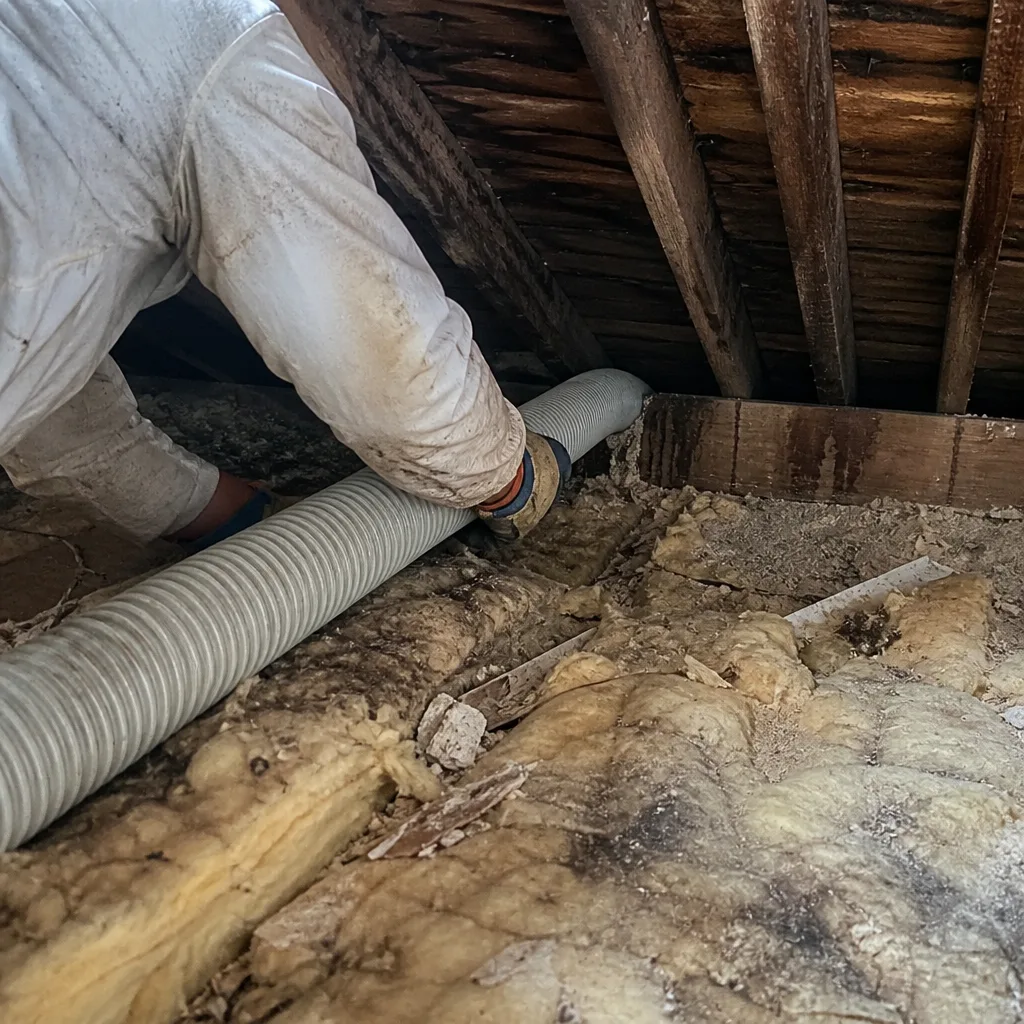 Before
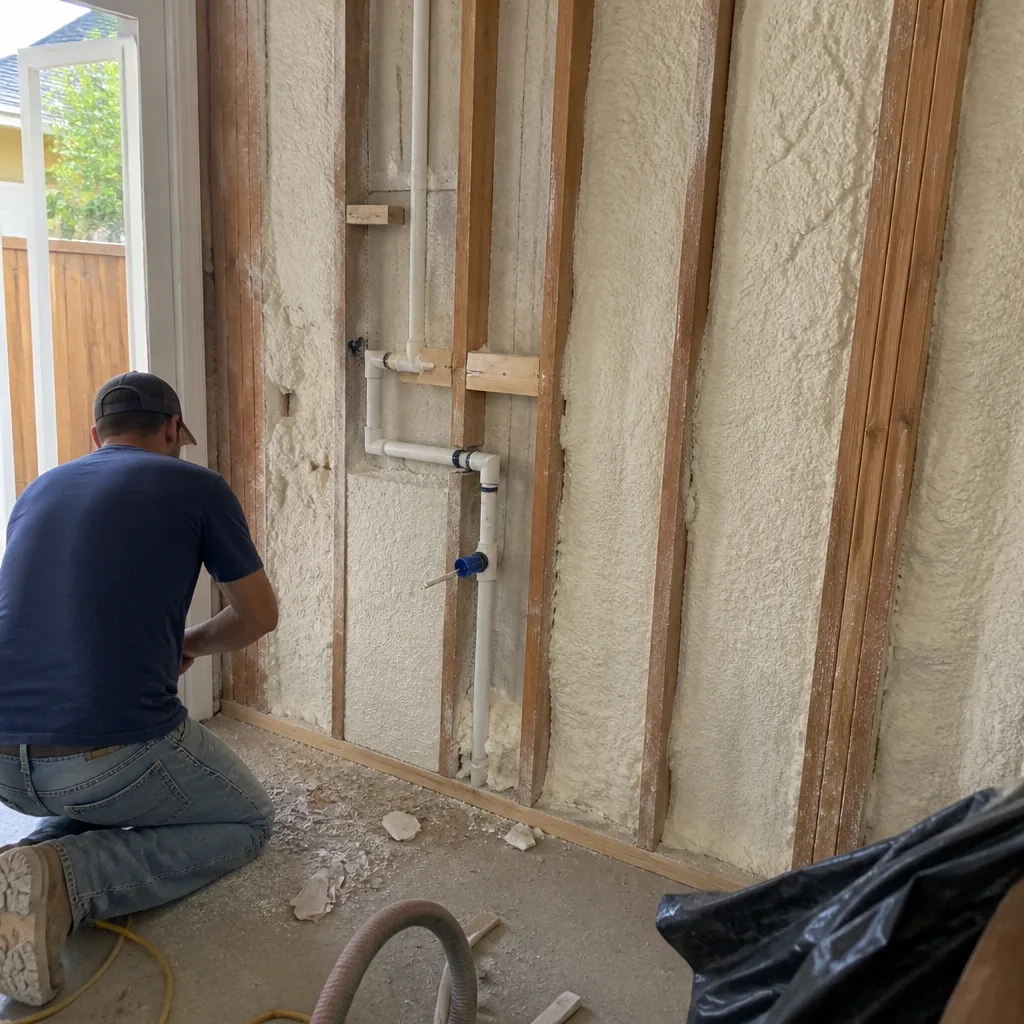 After
AfterWhich Code Version Actually Applies to Your Home
Texas operates under a “frozen code” principle for existing structures. The version of the IRC and IECC that governs your home is the one in effect when your original building permit was issued, not the version on the books today. This matters enormously in fast-growing markets like New Braunfels, where construction spans multiple code cycles.
New Braunfels adopted the 2015 IECC for residential construction, but that adoption occurred after years of building under the 2009 and 2012 versions. Homes in neighborhoods like River Chase, Copper Ridge, or the older sections of Landa Park Estates may each fall under different energy code requirements. A 2013 build in Veramendi follows the 2009 IECC; a 2017 build follows the 2015 version. The contractor’s obligation is to meet the standard in force at original permitting, not to upgrade the home to current code during a retrofit.
To find your governing code:
- Locate your original building permit. In New Braunfels, search the city permit portal using your address or permit number if you have it.
- Check the permit issue date. This date, not the construction completion date, locks the applicable code version.
- Contact the New Braunfels Building Development Services department at City Hall on Seguin Avenue to confirm which IECC and IRC versions were in effect that year.
- For unincorporated Comal County, call the County Engineer’s office - county adoption timelines often lag city adoptions by 12 to 24 months.
- If no permit exists (common in pre-1980s construction), the home is technically “non-conforming” and most retrofit work is governed by current code only when triggered by specific permit types.
We’ve encountered this gap repeatedly in New Braunfels homes built during the 2012 to 2015 transition period. A homeowner in the Oak Run area assumed their 2014 home met 2015 IECC standards for attic insulation, only to discover the original permit was pulled under 2009 requirements - meaning the builder was only required to achieve R-30 in the attic, not the R-38 or R-49 that current code demands. This doesn’t force an upgrade, but it explains why performance varies street by street.
When Insulation Work Triggers a Permit in Texas
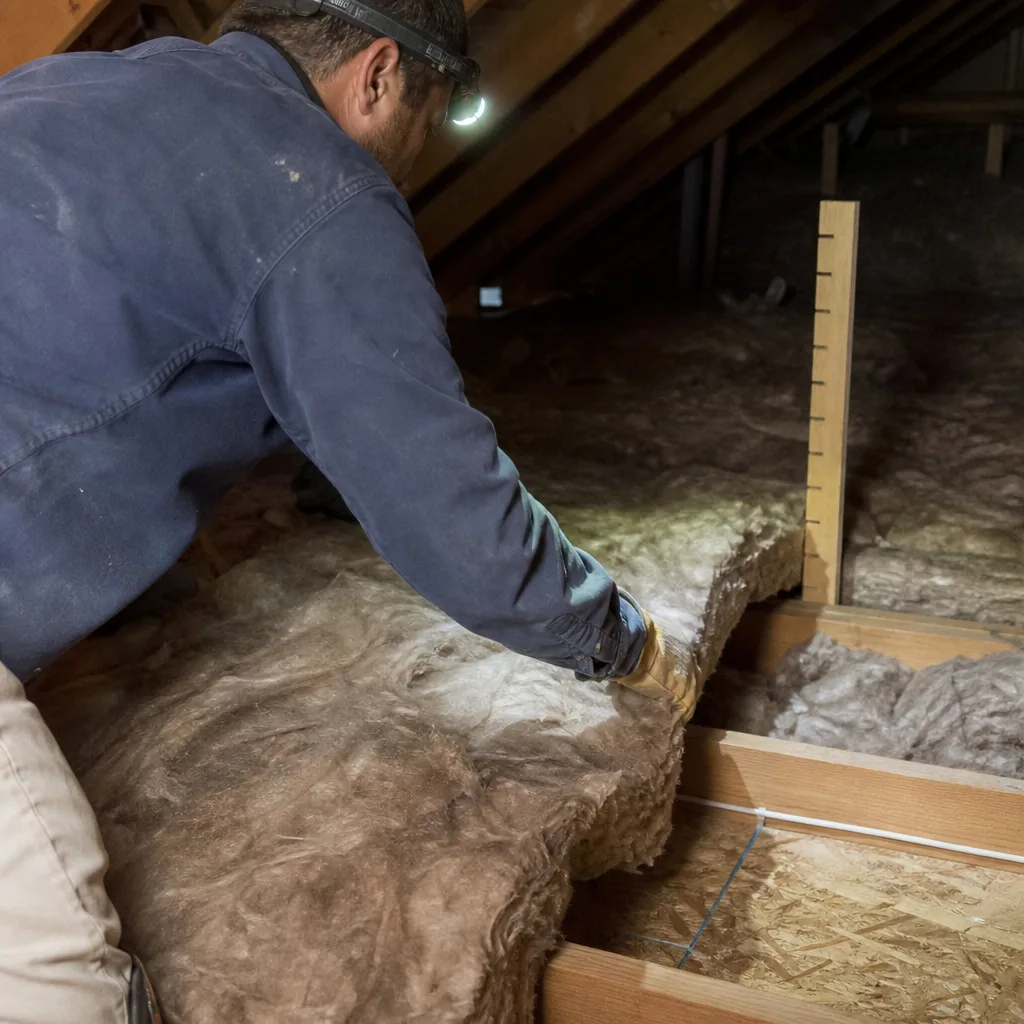
Not all insulation work requires a permit. Texas follows the IRC’s threshold approach: replacement of existing insulation in kind (same type, same R-value, no structural changes) typically does not trigger permitting. But the exceptions are broad enough that most significant insulation projects cross into permitted territory.
Permit-required work in New Braunfels and Comal County includes:
- Adding insulation where none existed previously (converting an uninsulated attic, finishing a garage, insulating a crawl space for the first time)
- Changing insulation type (switching from fiberglass batts to spray foam, for example, which alters vapor permeability and may require ignition barrier review)
- Insulation work that requires structural modification (sistering joists to support dense-pack cellulose, building out knee walls, modifying soffit venting)
- Work that changes the conditioned envelope boundary (encapsulating a vented crawl space, converting a vented attic to unvented with spray foam)
- Any insulation work performed as part of a larger permitted renovation (room addition, roof replacement with decking modification, HVAC replacement with duct relocation)
The replacement threshold is where homeowners often get surprised. If you’re pulling out degraded fiberglass batts from a 1990s home in New Braunfels and installing new batts at the same R-30 rating, no permit. But if that same home never had attic floor air sealing - and you’re adding it as part of the insulation project - you’ve now altered the thermal envelope’s air barrier continuity, and many jurisdictions require documentation.
Under Haven Standard: Have it in writing, we document whether permitting was required, obtained, and passed before we invoice. Every job begins with a written price that includes permit costs if applicable, so you’re not surprised by a $200 to $400 municipal fee after work starts.
Prescriptive vs. Performance Compliance: Which Path Saves You Money
The IECC offers two compliance paths: prescriptive and performance. Most homeowners and many contractors default to prescriptive because it looks simpler - meet the R-value table, check the box, move on. But in retrofit work, especially in New Braunfels’s mixed housing stock, performance compliance often delivers better results at lower total cost.
Prescriptive compliance means following the code tables exactly: R-49 in ceilings, R-19 in walls, R-13 in floors, with specific material types and installation depths. It’s straightforward but rigid. If your 1970s home in the Historic District has 2×4 walls that physically cannot fit R-13 batts without compressing them (which reduces effective R-value), prescriptive compliance forces expensive solutions: furring out walls, using high-cost rigid foam, or accepting a code variance.
Performance compliance means proving your building envelope meets or exceeds the energy budget of the prescriptive path, typically through a blower-door test or software energy model. You trade R-value checkboxes for measured results.
For retrofits, performance compliance offers three practical advantages we’ve documented across our 9,000+ homes sealed and insulated since 2016. Our Attic Insulation Maintenance Checklist for New Braunfels Homeowners covers ongoing care after the work is complete:
- Air sealing counts. The prescriptive path ignores air leakage entirely; performance compliance lets blower-door results substitute for R-value in some assemblies. A well-sealed attic at R-38 often outperforms a leaky attic at R-49.
- Mixed assemblies are allowed. You can combine materials strategically - spray foam at rim joists for air sealing, batts in open cavities for cost efficiency, radiant barrier in vented attics for solar gain reduction - and prove the assembly works as a system.
- Existing conditions are accommodated. Older homes with non-standard framing, balloon construction, or limited cavity depth can comply without destructive modification.
The catch: performance compliance requires documentation. You need a blower-door test - a pressurization reading that shows, in one number, how much air your building envelope is losing - performed by a certified technician, and you need the results in writing. On applicable jobs, we provide before-and-after blower-door numbers so the homeowner can verify the air-sealing result. A typical New Braunfels home from the 1980s reads 3,500 to 5,500 CFM50 before work and 2,000 to 3,000 after comprehensive air sealing and insulation. Those numbers are your compliance certificate.
For new construction in New Braunfels, performance compliance is rarely worth the consultant fees - the prescriptive path is optimized for clean-slate builds. For retrofits, especially in homes built before 2010, we typically recommend performance compliance when the project includes air sealing, which it always does under our Topside Attic Insulation New Braunfels home approach.
The Texas Blower-Door Requirement: New Construction vs. Retrofits
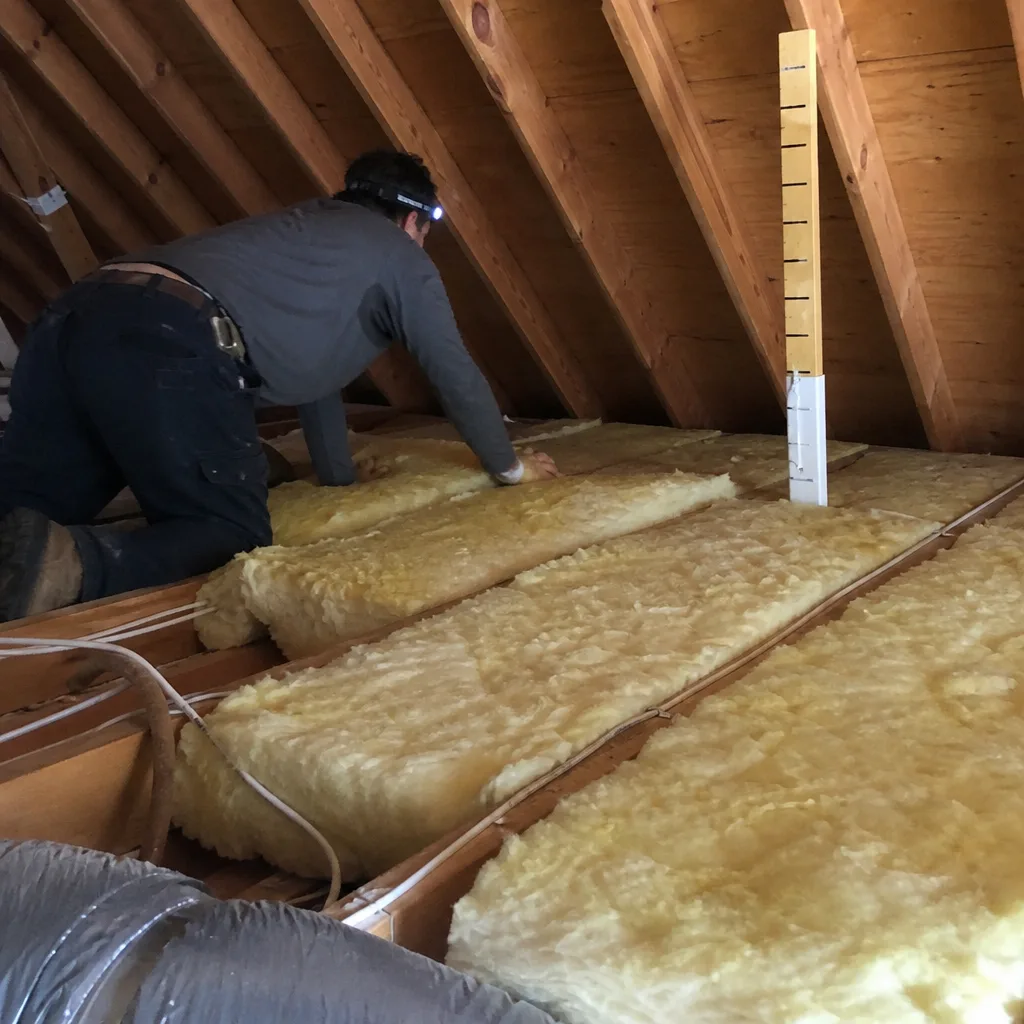
The 2015 IECC, adopted by New Braunfels, introduced a mandatory blower-door testing requirement for new residential construction. Section R402.4.1.2 requires a maximum air leakage rate of 5 air changes per hour at 50 Pascals (5 ACH50) in Climate Zone 2, where New Braunfels sits. The 2021 IECC tightens this to 3 ACH50, but New Braunfels had not adopted the 2021 version as of early 2025.
This requirement applies to new construction permits. It does not apply to retrofit insulation work in existing homes unless that work is part of a whole-house gut renovation with a new certificate of occupancy. This is the single most misunderstood aspect of Texas energy code enforcement we’ve encountered.
Here’s what actually happens:
- New construction: Builder must schedule blower-door test with a certified HERS rater or BPI analyst; inspector verifies test report before final. Failure to achieve 5 ACH50 means re-sealing and retesting at builder expense.
- Retrofit insulation only: No municipal inspector will ask for a blower-door test. The permit, if required, covers insulation type, R-value, and fire safety (ignition barriers for spray foam). Air leakage is not inspected.
- Retrofit with structural permit: If your insulation project is bundled with a room addition, roof-off renovation, or similar, the new construction portion may trigger blower-door requirements for the whole thermal envelope.
This enforcement gap creates a market reality: most retrofit insulation contractors in New Braunfels have never performed a blower-door test, and most homeowners have no documented proof their “energy upgrade” actually reduced air leakage. The R-value on the receipt becomes the only metric, and R-value without air sealing is a partial measure at best.
We publish before-and-after blower-door numbers on every applicable job precisely because the code doesn’t require it. In a market where enforcement stops at the insulation surface, documentation becomes the differentiator. A homeowner in Canyon Lake Estates who receives a blower-door report showing 4,800 CFM50 reduced to 2,400 CFM50 has objective evidence of performance. One who only receives an invoice for “R-38 blown cellulose” has a specification, not a result.
How to Read a Certificate of Insulation (and What If You Never Got One)
IRC Section R401.3 requires a permanent certificate posted on or near the electrical distribution panel that documents insulation levels throughout the building. The certificate must include:
- Insulation type and location (attic floor, attic roofline, walls, floors, foundation)
- Initial installed R-value for each location
- Insulation coverage area as a percentage of total conditioned floor area
- Window U-factor and solar heat gain coefficient (SHGC)
- Duct insulation R-value and leakage test results if applicable
For new construction, this certificate is inspected at final. For retrofits, it’s rarely mentioned - but it should be updated when insulation work significantly changes the thermal envelope.
If you’re reading an existing certificate in a New Braunfels home, check the date and the code version referenced. A certificate citing “2009 IECC” in a 2018 home is a red flag; either the certificate was copied from plans without update, or the home was permitted under older code. Either way, the numbers may not match what’s actually in the walls.
If you never received a certificate - common in homes built before 2000, and surprisingly common in 2000s construction where final inspection was rushed - you have limited recourse. Texas does not require retroactive certificates for existing homes. However, if you’re selling the home, a missing certificate may trigger buyer inspection requests or appraisal questions about energy performance.
We provide a project completion document on every job that functions as a retrofit certificate: insulation type and R-value by location, air sealing work performed, blower-door results if applicable, and photos. It’s not the IRC-mandated form, but it gives the next buyer, appraiser, or inspector documented evidence of what was done and when. Under Haven Standard: Have it in writing, this documentation is included, not available on request. For year-round upkeep, see our Seasonal Insulation Care for New Braunfels: Year-Round Homeowner’s Guide.
What Inspectors Actually Check: The Inspection Process Step by Step
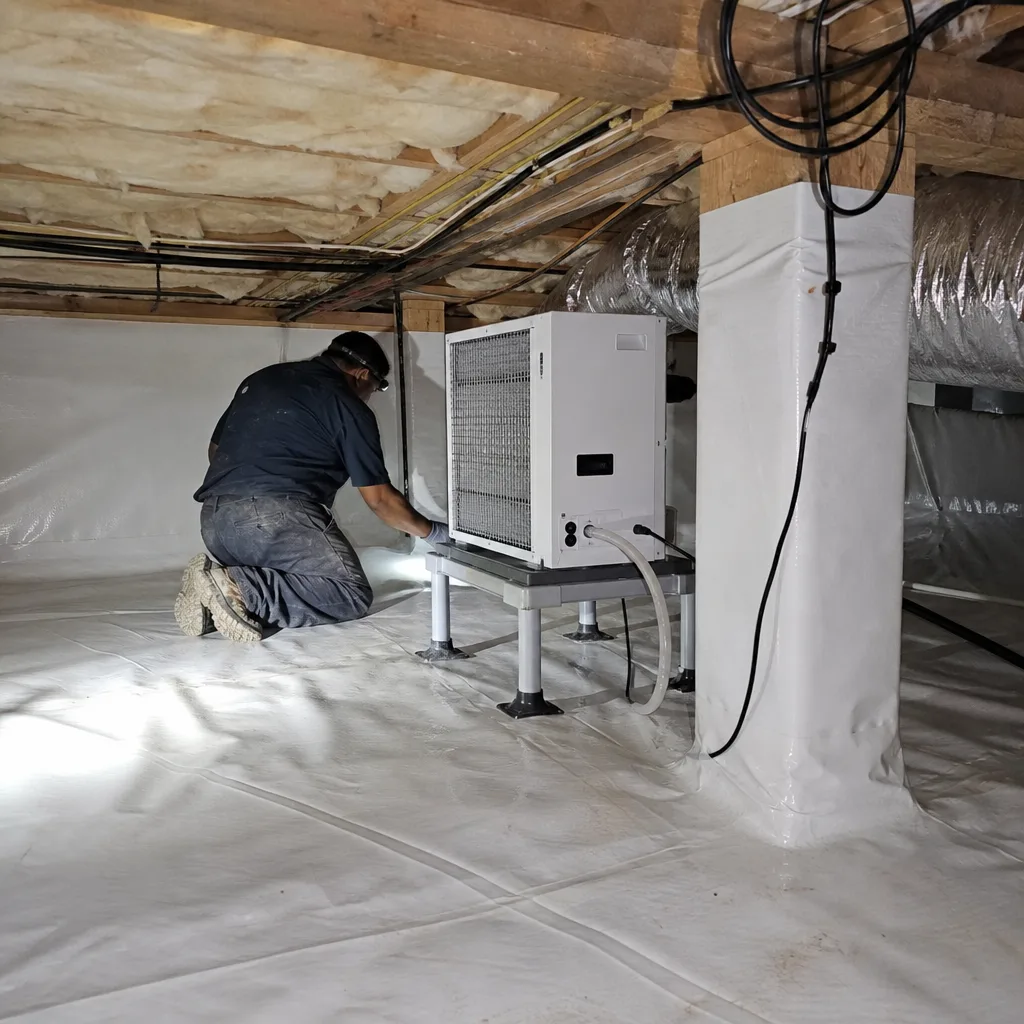
When insulation work triggers a permit, the inspection sequence in New Braunfels follows a predictable pattern. Understanding what inspectors look for helps you prepare and helps you evaluate contractor bids that may skip required steps.
Step 1: Pre-construction meeting (optional but recommended)
For larger projects - full attic conversions, crawl space encapsulations, spray foam jobs - schedule a pre-construction meeting with the building inspector. In New Braunfels, this is handled through Building Development Services. You’ll review the scope, confirm code version, and identify inspection hold points. There’s no fee for this meeting, and it prevents rework.
Step 2: Rough inspection (if required)
Required when insulation will be covered by drywall, decking, or other finishes. The inspector verifies:
- Insulation type matches permit application (fiberglass, cellulose, spray foam, mineral wool)
- R-value markings are visible on batts or documented for blown-in materials
- Vapor retarder placement and permeability rating comply with climate zone requirements
- Attic ventilation is maintained or modified per approved plans (soffit baffles installed, ridge vent clear)
- Recessed light fixtures in contact with insulation are IC-rated (insulation contact) or properly boxed
- Spray foam has required ignition barrier if in habitable space
Step 3: Final inspection
After finishes are complete, the inspector verifies:
- Certificate of Insulation is posted (new construction)
- Access hatches and doors are weatherstripped and insulated to same R-value as surrounding assembly
- Fire blocking is maintained around chimneys, flues, and penetrations
- No compression of insulation around wiring, plumbing, or framing that would reduce effective R-value
Step 4: Specialized inspections (spray foam only)
Spray foam insulation in Texas requires additional scrutiny. The Texas Department of Insurance and most jurisdictions, including New Braunfels, require:
- Installer certification documentation (SPFA or manufacturer-specific)
- Thickness verification by core sample or thermal imaging
- Ignition barrier inspection for open-cell foam in attic floors and crawl spaces
- Off-gassing period documentation - occupants must vacate during and 24 hours after installation
We’ve seen inspectors in Comal County reject spray foam jobs where the installer couldn’t produce certification, even when the foam itself appeared properly applied. This is why we source materials from certified applicators using products like Icynene and Demilec spray foam insulation in New Braunfels, with documentation included in every project file.
New Braunfels and Comal County: Local Amendments That Affect Your Project
Texas jurisdictions can amend the adopted codes, and New Braunfels has exercised this authority in ways that matter for insulation work. The most significant local variation involves floodplain construction requirements.
New Braunfels sits at the confluence of the Comal and Guadalupe Rivers, and FEMA flood zones cover substantial portions of the city. Homes in the 100-year floodplain - including areas near Landa Park, along Common Street, and in portions of the River Chase neighborhood - face additional requirements:
- Flood-resistant materials below the Base Flood Elevation (BFE). Cellulose and fiberglass are not flood-resistant; closed-cell spray foam and rigid extruded polystyrene are. If your crawl space or lower floor is below BFE, prescriptive insulation choices may be prohibited.
- Venting requirements for enclosed areas below BFE. Flood vents must allow automatic entry and exit of floodwater, which conflicts with standard crawl space encapsulation. A vapor barrier and sealed crawl space in a floodplain home requires engineered flood vent integration.
- Elevation documentation. Any work that modifies the foundation or enclosed area below BFE requires elevation certificate review by the city floodplain administrator.
Comal County’s unincorporated areas follow county amendments that differ from New Braunfels city code. The county has historically lagged the city on IECC adoption by one to two cycles, meaning a home in Garden Ridge or Bulverde may follow 2009 or 2012 standards while a New Braunfels home of the same vintage follows 2015.
Wind-borne debris zones also affect insulation-adjacent work. New Braunfels is inland enough that standard IRC provisions apply, but homes in the Hill Country fringe of Comal County may fall under higher wind speed requirements that impact window replacement - and window replacement often triggers insulation inspection hold points because the wall cavity is opened.
For crawl space encapsulation and vapor barrier work in New Braunfels, we verify floodplain status before specifying materials. A sealed crawl space with GreenFiber cellulose on the floor above works well in most of the city. In the floodplain, we specify closed-cell spray foam at the rim joist and foundation walls, with engineered flood vents maintaining code compliance.
Common Mistakes to Avoid
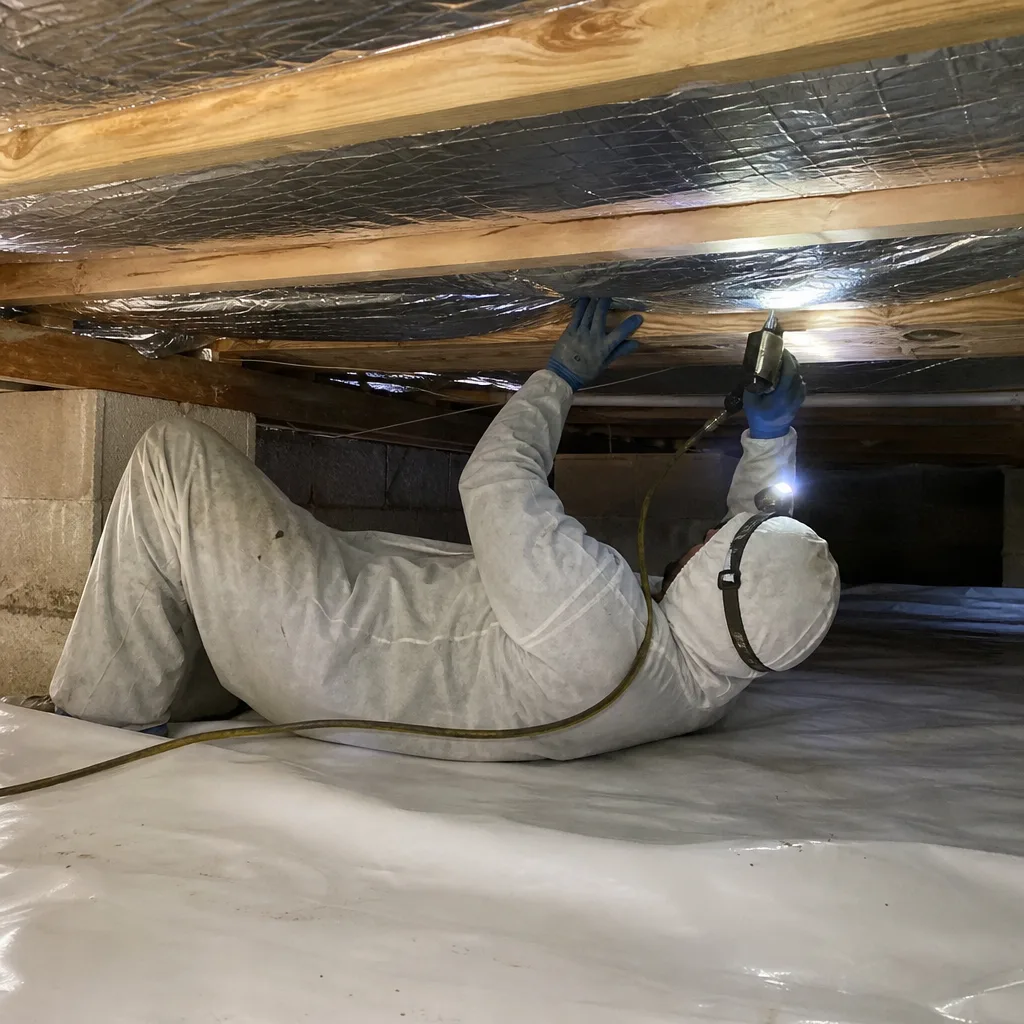
- Assuming your contractor handles permits. Many insulation contractors in the New Braunfels market operate unlicensed or under a general contractor’s umbrella. Verify who pulls the permit and whose name appears on the inspection record. If it’s not your contractor, you have no direct recourse if work fails.
- Installing insulation over unsealed air leaks. This is the most common error we correct in New Braunfels homes, especially in 1990s and 2000s construction in neighborhoods like Copper Ridge and Veramendi. Blown fiberglass over a leaky attic floor moves with air currents, creating uneven coverage and allowing conditioned air to escape through top plates and can light penetrations.
- Ignoring the ignition barrier for spray foam. Open-cell spray foam in an attic or crawl space requires a thermal or ignition barrier if the space is accessed for storage or contains equipment. We’ve found unprotected foam in at least a dozen local homes where the original installer never returned for barrier installation.
- Compressing insulation to fit. A batt rated R-19 compressed into a 2×4 cavity performs at approximately R-13. The label R-value is meaningless if the installed thickness is wrong. Inspectors check this; homeowners should too.
- Neglecting to update the Certificate of Insulation after major retrofit work. While not legally required for retrofits, an updated certificate helps at resale and provides documentation for energy-efficiency tax credits or utility rebates. CPS Energy and Guadalupe Valley Electric Cooperative both offer rebate programs that require proof of installed R-value.
- Failing to verify which code version applies before planning. We’ve had homeowners in New Braunfels budget for R-49 attic insulation based on current code, only to learn their 2012-permitted home only required R-38 at original construction. The difference in material cost is substantial, and performance compliance may make R-38 with air sealing superior to R-49 without.
When to Call a Professional
Call a professional when your project involves spray foam (certification and barrier requirements are unforgiving), when you’re in a FEMA floodplain and material selection is restricted, when you need performance compliance documentation for rebates or resale, or when you simply cannot determine which code version governs your home. The New Braunfels permit portal is not always intuitive, and Building Development Services staff are helpful but busy.
Topside Attic Insulation New Braunfels offers free estimates in New Braunfels - call (830) 243-6352. Every estimate includes a code version lookup, a written price before any work starts, and a clear statement of whether permitting is required. If you have a competing quote, bring it; we provide a Free Second Opinion on any written estimate and will read it with you line by line. Browse our more guides & resources for additional homeowner help.
Frequently Asked Questions
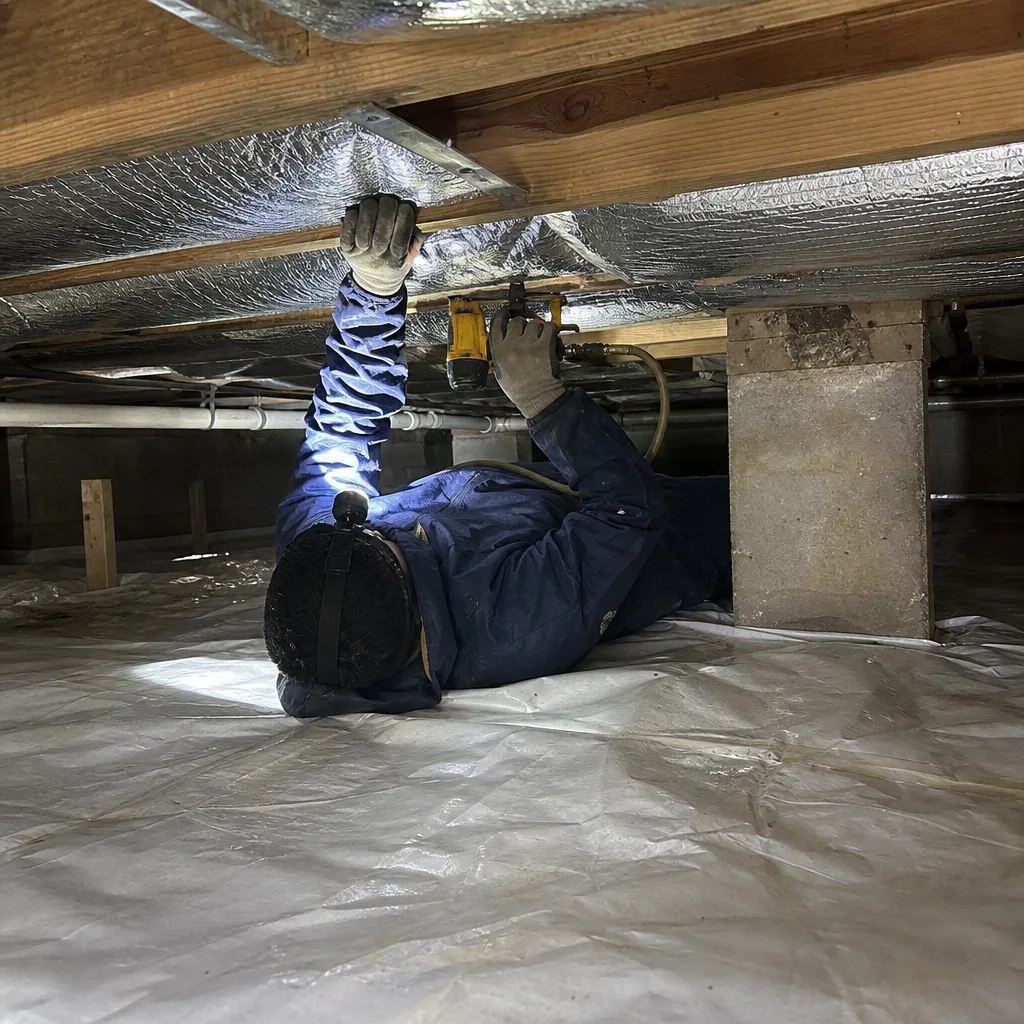
Not if you’re replacing existing insulation in kind with the same type and R-value. You do need a permit if you’re adding insulation where none existed, changing insulation type (especially to spray foam), or modifying the structure to accommodate the work. Call New Braunfels Building Development Services with your address and scope if you’re uncertain - or call us at (830) 243-6352 and we’ll verify it during your free estimate.
Permit fees vary by jurisdiction. New Braunfels charges approximately $150 to $400 for residential insulation permits depending on project value and inspection complexity. Comal County fees are typically lower for unincorporated areas. The fee is separate from contractor labor and materials. Under Haven Standard: Have it in writing, we include permit costs in every written price when applicable.
For new construction under the 2015 IECC, ceiling insulation in Climate Zone 2 requires R-38 minimum, with R-49 recommended for optimal performance. For existing homes, the requirement is the R-value specified in the code version effective at original permit. Many pre-2016 homes in New Braunfels were only required to achieve R-30. Performance compliance through blower-door testing can substitute for R-value in some retrofit scenarios.
No. The mandatory blower-door requirement applies only to new residential construction under IECC Section R402.4.1.2. Retrofit insulation work is not inspected for air leakage in any Texas jurisdiction we know of, including New Braunfels. This is why we publish before-and-after blower-door numbers on applicable jobs - the code doesn’t require proof, so documentation becomes a quality signal.
No. New Braunfels floodplain amendments require flood-resistant materials below Base Flood Elevation. Standard fiberglass and cellulose are not flood-resistant. Closed-cell spray foam, rigid extruded polystyrene, and certain mineral wool products qualify. If your home is in a FEMA flood zone, material selection is legally restricted regardless of what a standard insulation contractor may recommend.
The inspector issues a correction notice with specific deficiencies and a reinspection timeline. Common failures in New Braunfels include missing soffit baffles (blocking attic ventilation), compressed batts, non-IC-rated recessed lights in contact with insulation, and missing ignition barriers for spray foam. Reinspection fees typically run $50 to $100. We include inspection scheduling and any necessary corrections in our written scope - no additional charges for getting it right.
Check the electrical panel or utility room. The certificate should be posted on or near the panel in a permanent format. If it’s missing and your home was built after 2000, contact New Braunfels Building Development Services - they may have a copy in the permit file. For older homes or if the file is incomplete, we provide a project completion document on every job that serves as retrofit documentation, including insulation type, R-value, location, and blower-door results when applicable.
The Bottom Line
Texas insulation code is local, layered, and often counterintuitive. The code that governs your New Braunfels home depends on when your original permit was pulled, not what’s in the current codebook. Permits are required for envelope changes and spray foam work but not for like-kind replacement. Performance compliance through blower-door testing offers retrofit homeowners a flexible, often superior path - but documentation is your responsibility since inspectors don’t enforce it. Before hiring any contractor, verify they understand your specific code version, will obtain required permits, and will provide written proof of what was installed. Anything less leaves you exposed at resale and may mean you paid for insulation performance you never actually received.
Written by Wes Okafor, Owner at Topside Attic Insulation New Braunfels, serving New Braunfels since 2016.