
Last updated September 24, 2026
Insulation Cost Breakdown: The New Braunfels Homeowner’s Reference for 2026
The cheapest attic insulation quotes in the New Braunfels market typically price blown fiberglass material and labor only. Air sealing, old material removal, and post-install documentation are separate line items that can add $600 to $1,800 to a 1,500-square-foot attic scope. We’ve reviewed competitor quotes from Canyon Lake to Schertz, and the gap between a complete job and a partial one is rarely explained upfront. This guide names the specific cost components that legitimate quotes include and shows what gets cut when the price drops.
Quick Answer
Most complete attic insulation jobs in New Braunfels run $2,200 to $4,800 for a 1,500-square-foot attic, including air sealing, material, and documentation. Spray foam wall or roofline work ranges from $4,500 to $12,000 depending on open-cell versus closed-cell product and accessibility. The key variable isn’t the insulation type, it’s whether the quote includes air sealing as a prerequisite step or treats it as an optional upsell.
Table of Contents
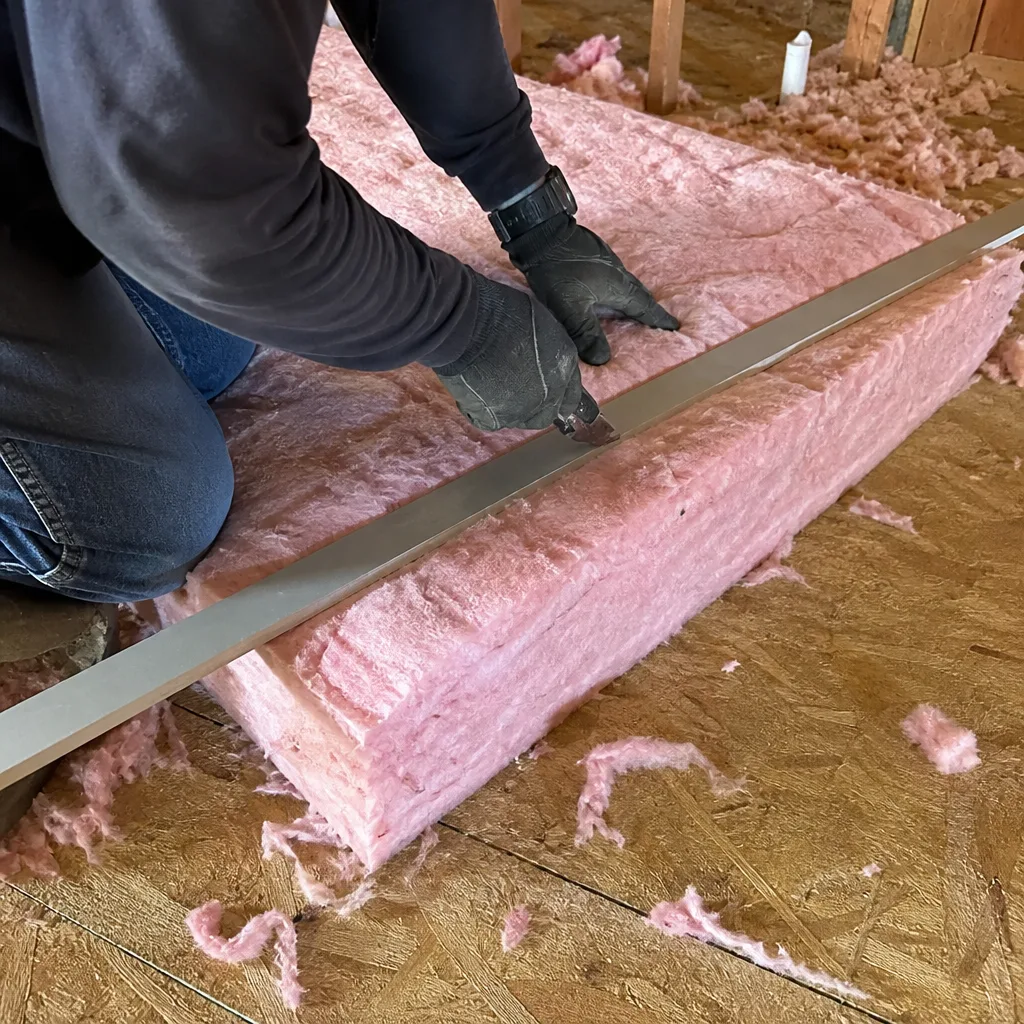
- Material Costs per Installed R-Value in the Comal County Market
- Air-Sealing Labor: The Hidden Cost Center
- Old Material Removal: When It’s Required, Not Optional
- Documentation, Permits, and What Legitimate Contractors Absorb
- Calculating ROI: Simple Payback Using Local Energy Rates
- How to Read Three Quotes That Look Identical
- New Braunfels Neighborhood and Climate Factors
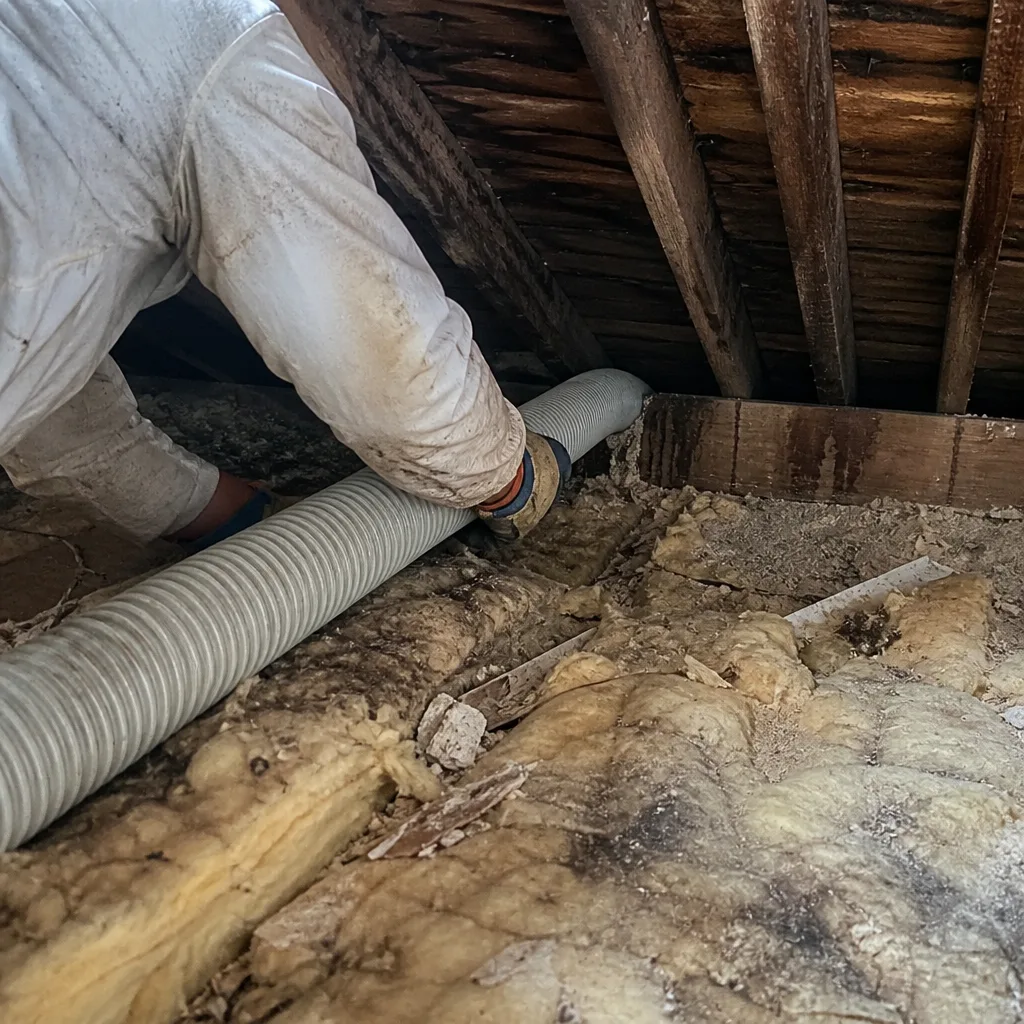 Before
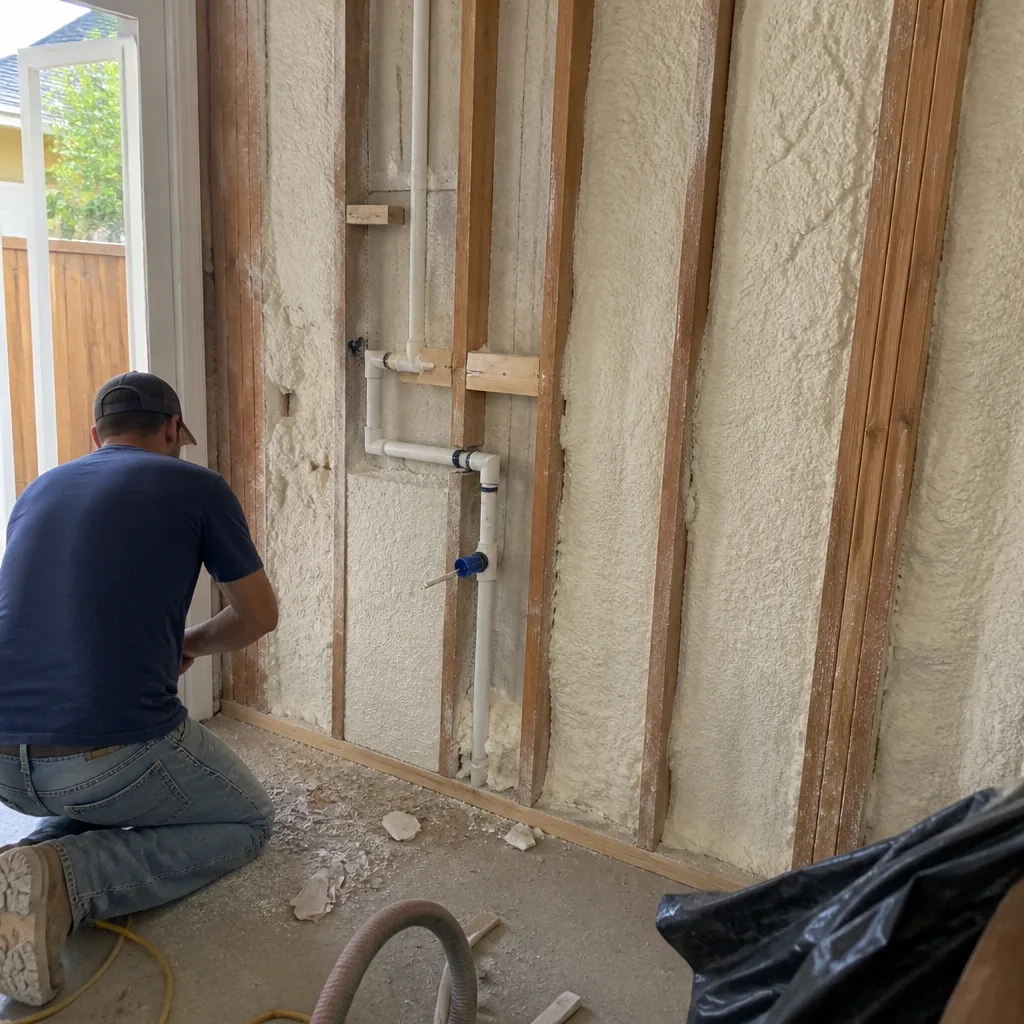 After
AfterMaterial Costs per Installed R-Value in the Comal County Market
Insulation pricing in New Braunfels is sold by the square foot but should be compared by the R-value delivered per dollar. R-value measures thermal resistance; the higher the number, the slower heat moves through the material. In our climate zone, attics need R-38 to R-60, walls R-13 to R-21, and crawl spaces R-19 to R-30.
Here is the installed cost per R-value per square foot we’re seeing in the Comal County market for 2026:
| Material | Installed Cost per R / sq ft | Typical R-Value per Inch | Best Application |
|---|---|---|---|
| Blown fiberglass (Owens Corning, Johns Manville, Knauf) | $0.04 - $0.06 | R-2.2 to R-2.7 | Open attics, top-ups over existing |
| Blown cellulose (GreenFiber) | $0.03 - $0.05 | R-3.2 to R-3.8 | Attics, dense-pack walls |
| Open-cell spray foam (Icynene, Demilec) | $0.18 - $0.22 | R-3.5 to R-3.7 | Rooflines, walls, sound control |
| Closed-cell spray foam | $0.40 - $0.55 | R-6.0 to R-7.0 | Crawl spaces, rim joists, moisture barriers |
| Rockwool batts | $0.08 - $0.12 | R-3.0 to R-4.0 | Walls, fire blocking, sound |
| Radiant barrier (foil, deck-mounted) | $0.50 - $0.85 / sq ft flat | Reflects radiant heat; R-value N/A | Attic roof decking in sun-exposed homes |
These figures include material, basic labor, and equipment but do not include air sealing, removal, or testing. A quote that comes in at $0.03 per R / sq ft for blown fiberglass is almost certainly material-only pricing.
In New Braunfels specifically, we see higher cellulose uptake in older homes near downtown and in the Gruene Historic District, where balloon framing and knob-and-tube wiring make dense-packing the only viable wall option. Spray foam dominates in newer builds from 2010 onward in Vintage Oaks and Copper Ridge, where open attics and complex rooflines favor two-part foam. The Hill Country exposure west of I-35 also drives more radiant barrier requests, since afternoon roof temperatures on west-facing pitches can exceed 160°F in July.
Material sourcing matters for warranty transferability. We specify Owens Corning, Johns Manville, Knauf, Rockwool, CertainTeed, Icynene, Demilec, and GreenFiber depending on the application. No proprietary lock-in means if a manufacturer discontinues a product, we can match the spec with an equivalent from another line.
Air-Sealing Labor: The Hidden Cost Center
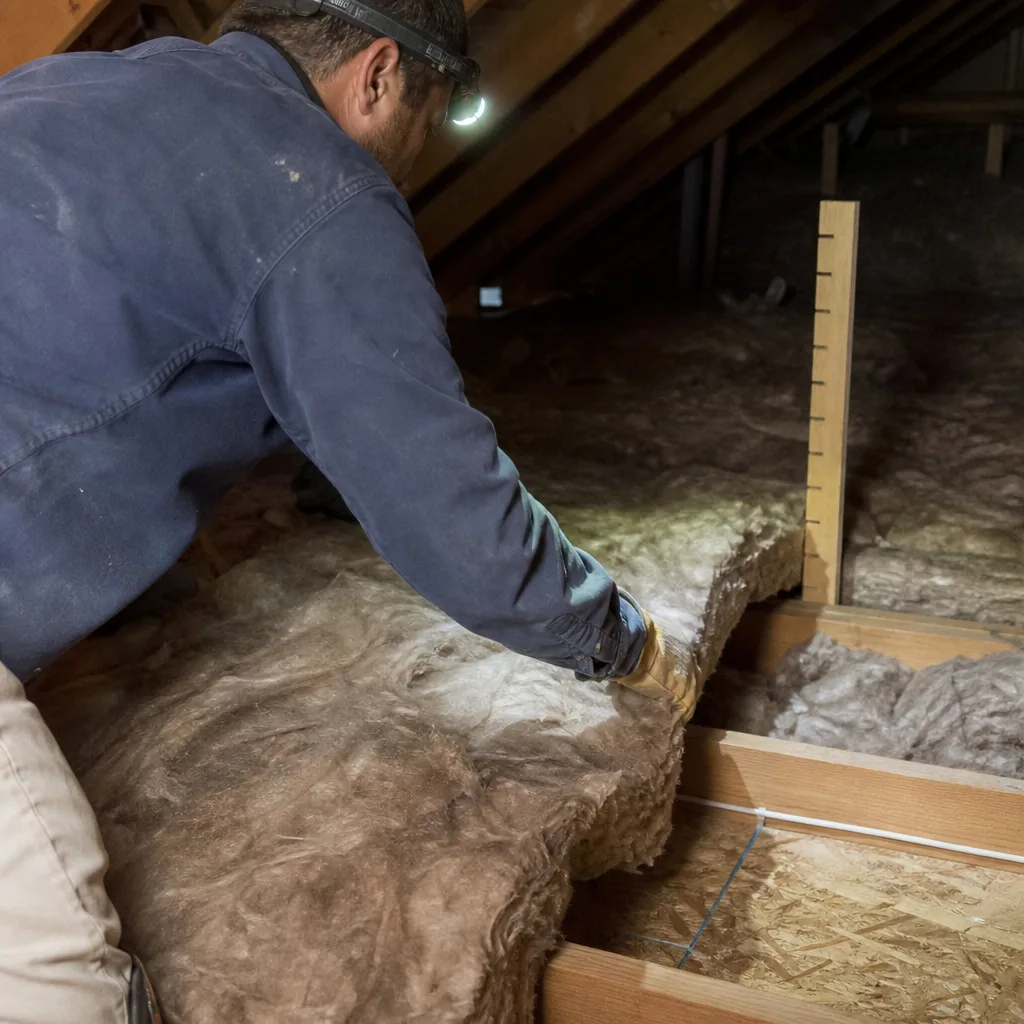
Air sealing is the pressurization work that happens before insulation goes in. We seal top plates, electrical penetrations, can light housings, attic hatches, chase walls, and duct boots. In our protocol, this is never an upsell. It’s the first phase of every job.
Here’s what legitimate air sealing covers in a typical New Braunfels attic:
- Top plate seams - the horizontal framing member where interior walls meet the ceiling deck. These gaps are often 1/4 to 1/2 inch wide and run the full perimeter of every partition wall.
- Electical and plumbing penetrations - holes drilled through top plates for Romex, PEX, and vent stacks. We foam or caulk each one.
- Recessed can lights - IC-rated housings get sealed to the drywall; non-IC fixtures get boxed or replaced.
- Attic hatches and pull-down stairs - weatherstripped and insulated to match the surrounding R-value.
- Chase walls - vertical channels for fireplaces, flues, and plumbing stacks that connect conditioned space to attic air.
- Duct boots and plenum seams - where flex duct or hard pipe penetrates the ceiling, sealed with mastic or foil tape.
This work takes 2 to 4 hours in a 1,500-square-foot attic with normal access. In older homes near Comal Avenue or in the original 1845 plat, we’ve seen attics with 80 to 120 individual penetrations, pushing sealing time to 6 hours.
The performance return is measured in ACH50, or air changes per hour at 50 pascals of pressure. A typical unsealed New Braunfels home from the 1980s or 1990s tests at 8 to 15 ACH50. After sealing and before insulation, we commonly see 4 to 7 ACH50. The insulation then has a stable air barrier to perform against. Without sealing, blown fiberglass acts as a filter, not a barrier, and conditioned air continues to escape through the gaps below.
Air-sealing labor in our market runs $45 to $75 per hour for trained technicians. A complete attic seal on a 1,500-square-foot home typically adds $350 to $900 to the job. Quotes that omit this line item are pricing insulation that will underperform by 30 to 50 percent.
Old Material Removal: When It’s Required, Not Optional
Existing insulation below 2 inches, contaminated with rodent waste, or water-stained must come out before new material goes in. This is not a preference. Dense-pack cellulose and spray foam both require a clean substrate for proper adhesion and to avoid trapping moisture or biological material against the structure.
We see three removal scenarios regularly in New Braunfels:
- Pre-1990 vermiculite or rock wool - common in homes near Landa Park and the original German settlement. Vermiculite may contain asbestos and requires abatement-certified removal at $8 to $15 per square foot.
- Fiberglass batts compressed below R-10 - typical in 1990s tract homes in Oak Run and River Chase. Removal and disposal runs $1.50 to $2.50 per square foot.
- Rodent-contaminated blown material - frequent in homes with unsealed eaves near the Guadalupe River corridor. Removal, sanitization, and proofing adds $2.00 to $4.00 per square foot.
Some contractors price removal as “optional” to keep the base quote competitive. We’ve inspected attics where new blown fiberglass was installed directly over compacted, urine-saturated old batts. The homeowner saved $400 on the front end and paid $2,200 six months later for full removal, sanitization, and reinstallation after the smell penetrated the ceiling.
Our protocol: inspect, photograph, document. If removal is required, it’s in the written scope before any work starts. The Topside Attic Insulation New Braunfels home page shows examples of pre-job documentation.
Documentation, Permits, and What Legitimate Contractors Absorb
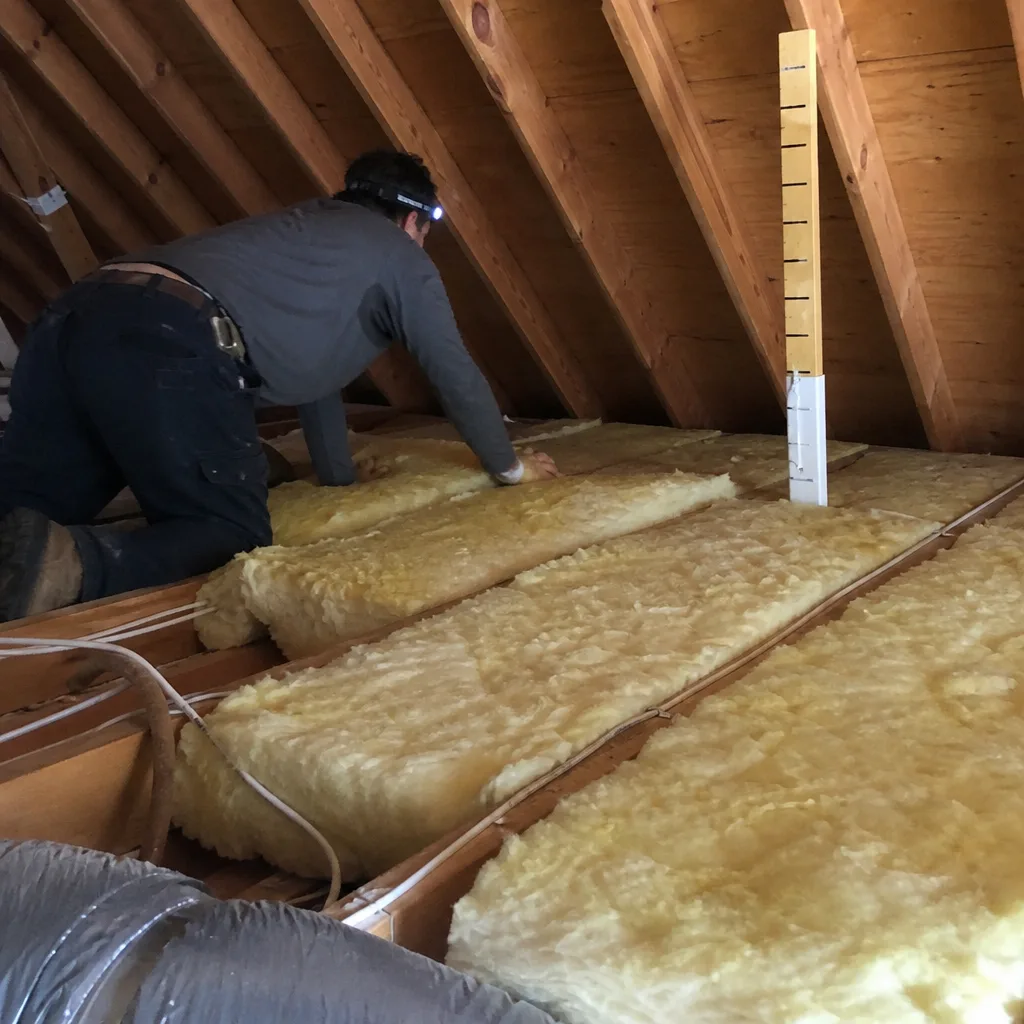
A complete job ends with paperwork. Not marketing materials, performance documentation. Here’s what that costs and why some contractors skip it:
| Documentation Item | What It Is | Typical Cost to Contractor | What Homeowner Receives |
|---|---|---|---|
| Blower-door test (before and after) | Pressurization reading showing air leakage in CFM50 | $150 - $300 per test; equipment calibration $400/year | Printed report with before/after numbers |
| Infrared thermal imaging | Surface temperature scan showing insulation gaps and air leaks | $75 - $150 per scan | Digital images with annotation |
| Permit and inspection | City of New Braunfels or Comal County building permit for insulation work | $100 - $250; inspector callback time | Approved permit card and final inspection sign-off |
| Documented Photo Record | Time-stamped photos of access, conditions, work in progress, and completion | Technician time + cloud storage | Link to private gallery or printed packet |
The City of New Braunfels requires permits for spray foam installations and any insulation work involving structural modification or removal of more than 32 square feet of material. Comal County unincorporated areas enforce the 2021 IECC with local amendments, which mandates air sealing and insulation verification for alterations. A contractor who skips permitting avoids $100 to $250 in fees and 2 to 4 hours of inspector coordination. The homeowner assumes the liability if the work is questioned during a future sale or insurance claim.
We publish before-and-after blower-door numbers on every applicable job. Not because it’s required, because it’s the only way to prove the air-sealing result the homeowner paid for. A blower-door reading of 4,200 CFM50 before work and 2,100 CFM50 after is a concrete fact. “Your home is more efficient now” is not.
Calculating ROI: Simple Payback Using Local Energy Rates
Sticker price comparison misses the time value of energy savings. Here’s how to calculate simple payback for insulation upgrades in New Braunfels using actual utility rates.
Current local rates (2026):
- CPS Energy residential electric: $0.12 - $0.14/kWh depending on tier and season
- Oncor delivery charges (for areas served by retail providers): $0.04 - $0.05/kWh additional
- Average New Braunfels home cooling load: 60 to 75 percent of annual electricity use
Simple payback formula:
(Total Job Cost) ÷ (Annual Energy Savings) = Years to Breakeven
Example: 1,500 sq ft attic, blown fiberglass to R-38 with complete air sealing
- Job cost: $3,200 (including air sealing, material, documentation)
- Estimated cooling load reduction: 18 to 25 percent
- Annual electricity use: 14,000 kWh
- Cooling portion: 8,400 kWh (60 percent)
- Savings at 20 percent reduction: 1,680 kWh × $0.13 = $218/year
- Simple payback: $3,200 ÷ $218 = 14.7 years
Same home with spray foam roofline (open-cell, R-20 effective with air barrier):
- Job cost: $7,800
- Estimated cooling load reduction: 30 to 40 percent (ductwork now in conditioned space)
- Savings at 35 percent reduction: 2,940 kWh × $0.13 = $382/year
- Simple payback: $7,800 ÷ $382 = 20.4 years
The spray foam payback is longer on energy savings alone. But in homes with ducts in the attic, which describes most New Braunfels construction from 1985 to 2010, the duct leakage reduction and thermal protection often prevent equipment upsizing or extend HVAC lifespan by 3 to 5 years. Those avoided costs aren’t in the simple payback but matter to the total cost of ownership.
We also see faster effective payback in homes west of FM 306 with full western exposure, where roof temperatures drive peak cooling loads 20 to 30 percent above shaded or eastern-facing homes. The Attic Insulation in New Braunfels page has case-specific examples.
How to Read Three Quotes That Look Identical
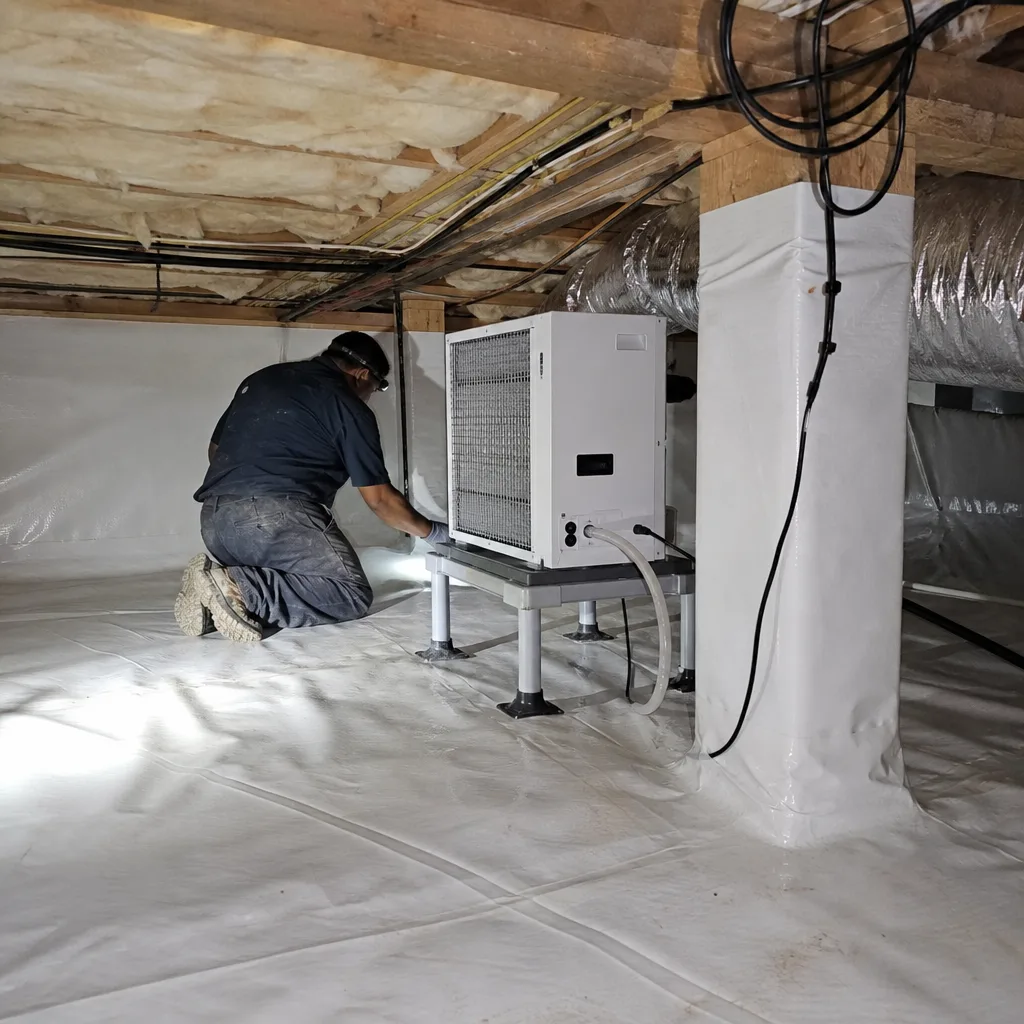
Three quotes for “attic insulation, R-38, 1,500 sq ft” can vary by $1,400 or more. Here’s how to find what’s actually different.
- Check the R-value method. Settled R-value or installed R-value? Blown fiberglass settles 1 to 2 inches over the first year. A quote for “R-38 installed” should specify 14 to 15 inches of loose-fill to settle to 12 inches at R-38. “R-38 bag count” without depth specification is ambiguous.
- Look for air sealing as a separate line item. If it’s absent, the contractor isn’t doing it, or they’re burying it in overhead. Ask directly: “What is your air-sealing scope, and what ACH50 target do you guarantee?”
- Verify material brand and product line. “Owens Corning” covers dozens of products. AttiCat PINK Loose Fill Insulation is different from PROPINK High-R. The specific product name should appear in the written scope.
- Ask about removal and disposal. Is existing material inspection included? Is removal priced per square foot or as a flat fee? Flat fees often assume minimal material; actual conditions may trigger change orders.
- Request the documentation deliverables. Will you receive a blower-door report, thermal images, permit approval, and photo record? Or just an invoice?
- Confirm warranty terms in writing. The 365-Day Done Right Promise we offer is backed by a written scope and written warranty delivered before work starts. Verbal warranties are not enforceable.
We’ve provided free second opinions on competitor quotes in New Braunfels since 2016. Bring us a written estimate and we’ll read it with you, line by line, no obligation.
New Braunfels Neighborhood and Climate Factors
Local conditions affect both material selection and installed cost. Here’s what we account for in specific New Braunfels areas:
Hill Country west of I-35 (Vintage Oaks, Copper Ridge, Morningside): Higher elevation, more wind exposure, and limestone substrate. Crawl spaces are often vented and require Crawl Space Encapsulation & Vapor Barrier in New Braunfels rather than simple floor insulation. Rim joist spray foam is standard here, adding $800 to $1,500 to typical jobs.
River corridors and flood-adjacent areas (Guadalupe River, Comal River, Lake McQueeney): Elevated humidity and flood history. We see more moisture-compromised existing insulation and higher rates of rodent intrusion from riparian habitat. Vapor barrier and dehumidification planning are essential. Spray Foam Insulation in New Braunfels is often specified for its moisture-barrier properties in these zones.
Historic core and pre-1950 construction (Gruene, original plat, Comal Avenue corridor): Balloon framing, no top plates, minimal original insulation. Dense-pack cellulose in walls is the only non-invasive option. Attic access is often through small scuttle holes in closets, increasing labor time. Permitting through the New Braunfels Historic Landmark Commission adds 2 to 3 weeks for exterior-visible work.
1990s to 2005 subdivisions (Oak Run, River Chase, Prestonwood): Standard truss attics with blown fiberglass, often below current code. These are the most straightforward retrofits but also where we find the most “top-off” quotes that ignore air sealing. Ductwork in vented attics is common; sealing and insulating the roofline often outperforms adding more floor insulation.
Climate specifics: New Braunfels sits in IECC Climate Zone 2, hot-humid. Cooling degree days dominate energy use. Summer design temperature is 97°F, but attic peak temperatures reach 140 to 160°F in uninsulated or under-insulated spaces, which is why seasonal insulation care for New Braunfels matters year-round. This drives the case for radiant barriers on west-facing pitches and for moving ductwork into conditioned space where possible.
Common Mistakes to Avoid
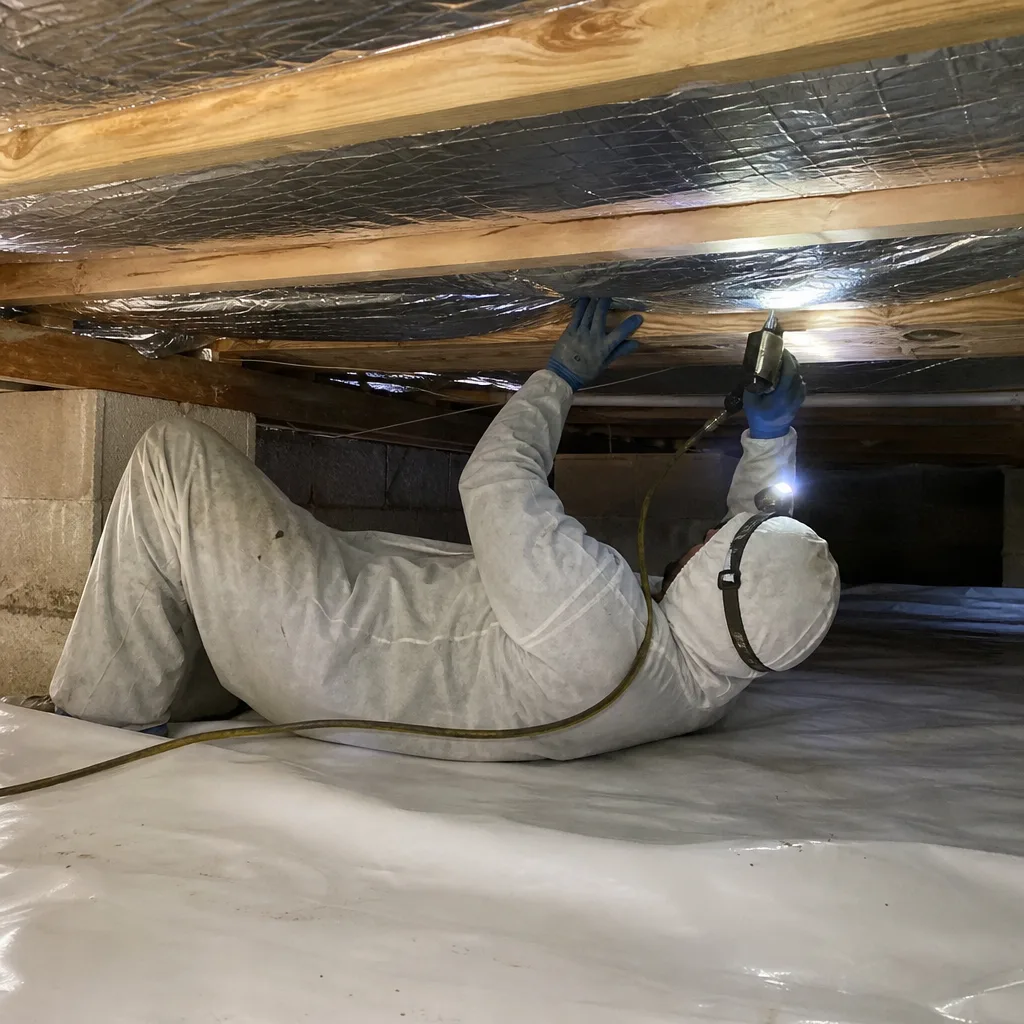
- Comparing material-only quotes to complete job quotes. A $1,800 blown fiberglass quote and a $3,400 complete-system quote are not comparable services. Normalize by line item before comparing totals.
- Ignoring air sealing in humid climates. New Braunfels humidity averages 65 to 75 percent in summer. Air leaks bring moist outside air into the envelope, where it condenses on cool surfaces. Insulation without sealing traps this moisture.
- Installing new material over contaminated old material. We’ve removed attics where three layers of fiberglass were stacked over rodent waste, each layer trapping more odor and biological material. The eventual remediation cost exceeds doing it correctly the first time.
- Specifying closed-cell spray foam in rooflines without moisture management. Closed-cell is a vapor barrier. In an unvented roof assembly, it must be thick enough to prevent condensation on the sheeting, or paired with exterior insulation. Thin applications (below 2 inches) in rooflines have caused sheeting rot in local homes.
- Accepting verbal scope descriptions. Under Haven Standard Clause 1, every job begins with a written price, written scope, and written warranty. If a contractor won’t put it in writing, the price is not real.
- Neglecting to verify permit status. Unpermitted spray foam can void homeowner’s insurance and complicate resale. The City of New Braunfels building division can confirm whether a permit was pulled with a quick phone call.
When to Call a Professional
Call for an assessment if your attic insulation is below the ceiling joists, if you’ve had rodent activity, if rooms have temperature differences greater than 3°F from the thermostat reading, or if your summer electric bills exceed $0.14 per conditioned square foot-these are common insulation warning signs New Braunfels homeowners should watch for. These are symptoms of envelope failure, not just insulation deficiency.
Topside Attic Insulation New Braunfels offers free estimates in New Braunfels and surrounding Comal County areas. Every estimate includes a written scope, itemized pricing, and documentation of what we found. Call (830) 243-6352 to schedule. A live person answers 24/7.
Frequently Asked Questions
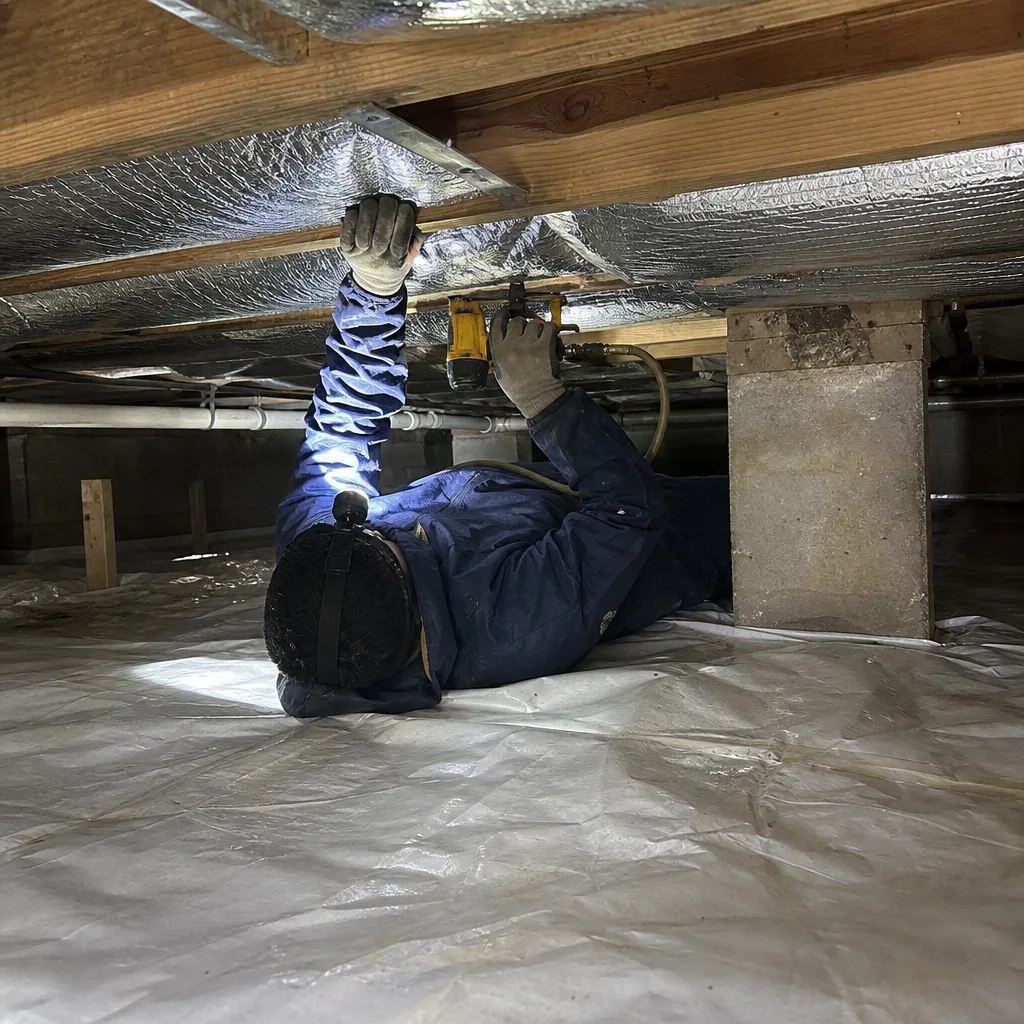
Most complete attic insulation jobs for a 1,500-square-foot home in New Braunfels run $2,200 to $4,800 including air sealing, material, and documentation. Blown fiberglass to R-38 is at the lower end; spray foam roofline work is at the higher end. Call (830) 243-6352 for a written estimate on your specific home.
Top-off pricing is lower upfront but rarely the better value. Adding new material over compressed, contaminated, or inadequate existing insulation traps problems and reduces the effective R-value of the new layer. If existing insulation is below 2 inches, wet, or rodent-damaged, removal and replacement is the only legitimate option.
Same-day completion is possible for straightforward attic top-offs in homes with clear access and no removal required. Jobs involving air sealing, removal, or spray foam typically schedule 1 to 3 days depending on scope and permit status. We provide a written timeline with every estimate.
Look for a separate line item describing top plate sealing, penetration foaming, and hatch weatherstripping. If the quote lists only “insulation” and “labor,” air sealing is not included. Ask for the contractor’s ACH50 target and whether blower-door verification is part of the job.
Comal County pricing runs 5 to 10 percent below San Antonio metro averages due to lower labor costs and shorter travel distances for material suppliers. However, Hill Country access challenges in western New Braunfels neighborhoods can offset this savings for homes with steep drives or limited equipment access.
You should receive a written invoice matching the pre-approved scope, a permit approval or inspection sign-off if applicable, and a photo record of conditions and completion. On jobs where blower-door testing is performed, you should receive a printed report with before-and-after CFM50 readings. We deliver all of these on every job, no request needed.
The Bottom Line
Insulation quotes in New Braunfels vary because they describe different scopes of work, not because the market is inefficient. The legitimate cost components are material per R-value, air-sealing labor, removal when required, and documentation that proves the result. A lower quote typically omits one or more of these. Calculate payback in years, not just dollars, and demand written scope, written price, and written warranty before any work starts. For more guides & resources on evaluating insulation quotes, see our blog. That’s Haven Standard. We’ve applied it to 9,000 homes since 2016.
Ready for a written estimate? Call (830) 243-6352. A live person answers, 24/7.
Written by Wes Okafor, Owner at Topside Attic Insulation New Braunfels, serving New Braunfels since 2016.