

How Much Does Spray Foam Insulation Cost in New Braunfels?
Our Spray Foam Insulation services in New Braunfels, TX typically run between $1.50 and $3.50 per board foot installed, depending on foam type, application area, and the condition of the building envelope before work begins. A full attic application on a 1,800-square-foot New Braunfels home generally lands between $2,800 and $6,400, while a crawl space or rim joist project tends to fall in the $900 to $2,200 range. Most jobs in this market are quoted flat-rate with a written scope before any crew shows up – that’s how we operate under The Haven Standard at Envelope Insulation Co.
Spray Foam Insulation Cost Breakdown (2026)
Spray foam pricing in New Braunfels breaks into two distinct product types: open-cell and closed-cell. They behave differently, cost differently, and solve different problems. Knowing which one your home actually needs – before you get a quote – will save you from paying for the wrong product.
Open-cell foam (roughly 0.5 lb/ft³ density) is the softer, more vapor-permeable material. It’s commonly used on attic roof decks in New Braunfels to create a conditioned attic space, which keeps HVAC equipment and ductwork out of the brutal Texas summer heat. Closed-cell foam (roughly 2 lb/ft³) is denser, water-resistant, and carries a higher R-value per inch – around R-6 to R-7 per inch versus open-cell’s R-3.5 to R-4. It’s the right choice for crawl spaces, exterior walls, and areas where moisture management is a hard requirement.
| Application Area | Foam Type | Typical Cost Range (Installed) | Notes |
|---|---|---|---|
| Attic roof deck (conditioned attic) | Open-cell | $2,800 – $5,200 | 1,800 sq ft home; includes air sealing at penetrations |
| Attic roof deck (conditioned attic) | Closed-cell | $4,500 – $7,800 | Higher R-value per inch; less volume needed |
| Crawl space walls and rim joists | Closed-cell | $900 – $2,200 | Moisture barrier critical in New Braunfels clay soils |
| Garage ceiling/walls | Open-cell or closed-cell | $700 – $1,800 | Depends on access and surface condition |
| Exterior wall cavities (retrofit) | Closed-cell (injection or open-face) | $1.50 – $3.50/board ft | Access method drives cost significantly |
| New construction – full envelope | Open-cell or closed-cell | $4,200 – $9,500+ | Varies by plan size and spec |
| Rim joists only (basement/pier homes) | Closed-cell | $400 – $900 | Quick win for air sealing in older New Braunfels homes |
What drives these numbers up: closed-cell product costs roughly twice the material cost of open-cell; hard-to-access attic spaces with steep pitches (common in newer Gruene and Vintage Oaks builds) add crew time; and any existing insulation that needs removal before foam can be applied will add $400 to $1,200 to a typical job. In New Braunfels, we also factor in ambient temperature and humidity conditions – foam applied during a humid July afternoon in the Hill Country behaves differently during the cure window than foam applied on a dry December morning, and a crew that doesn’t account for that will give you poor cell structure and reduced R-value. We schedule foam applications during conditions that produce the yield the spec calls for, not just the yield that fills the truck.
What drives the price down: open-cell foam on an accessible, clean attic deck in a home built after 2010 is the most straightforward job in this market. Combine that with a home that doesn’t need extensive air sealing prep work, and a 1,800-square-foot job can come in at the lower end of those ranges above.
What Affects Spray Foam Insulation Pricing in New Braunfels
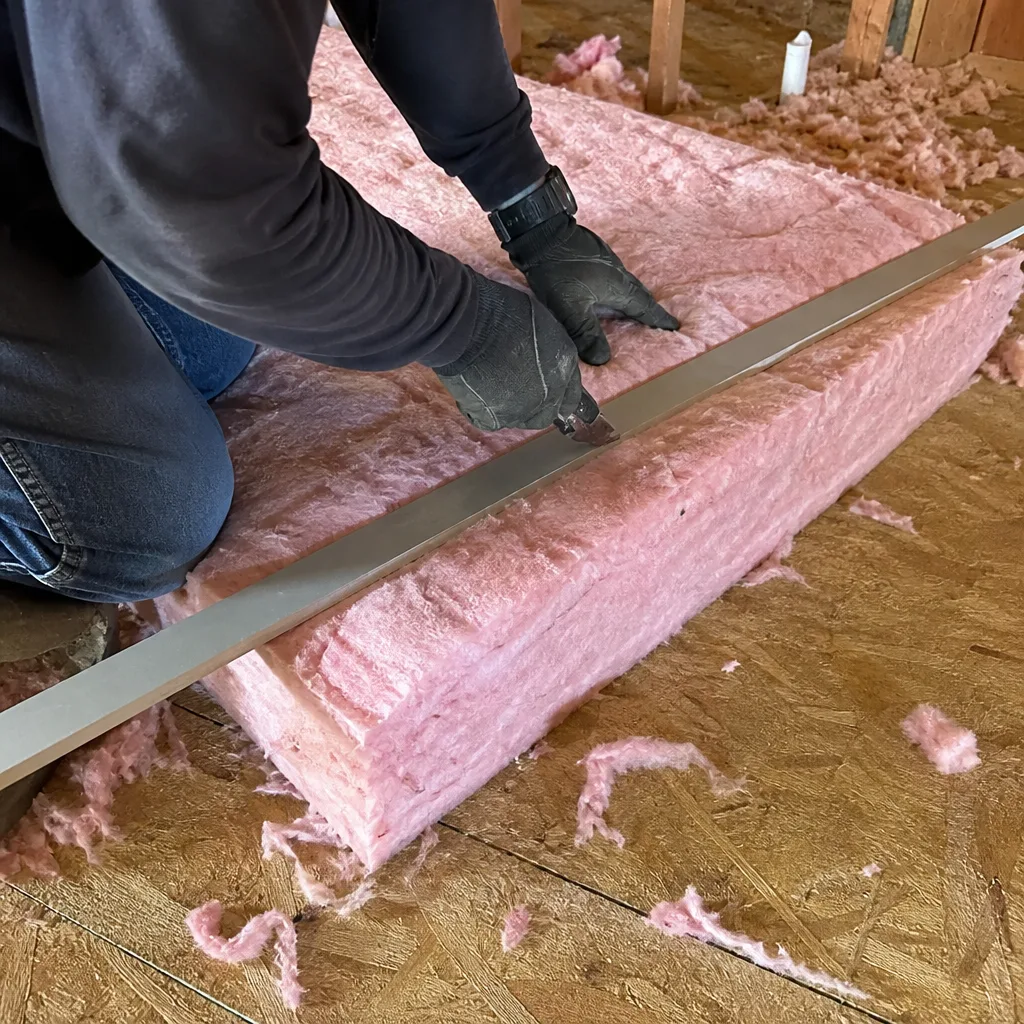
Six variables account for most of the spread between a $2,800 quote and a $6,500 quote on what looks like the same job on paper.
- Foam type (open-cell vs. closed-cell): Closed-cell foam costs roughly 50 to 80 percent more per board foot than open-cell. For a New Braunfels attic roof deck where the primary goal is heat management and HVAC protection, open-cell at R-20 to R-30 is usually the spec. For a crawl space or anywhere ground moisture is a factor – common in the Landa Park and Canyon Lake corridor area – closed-cell is the right call and priced accordingly.
- Thickness (R-value target): Texas energy code requires R-38 in attic assemblies for most New Braunfels homes built under current permits. That’s roughly 11 inches of open-cell or 6 inches of closed-cell at the roof deck. Homes in older neighborhoods like Walnut Springs or downtown New Braunfels that predate modern code often need additional thickness to hit current targets, which adds material and labor cost.
- Existing insulation removal: Spray foam cannot be applied effectively over old blown fiberglass or deteriorating batts. If the attic floor has 20-year-old insulation that’s compressed, rodent-damaged, or contaminated, it needs to come out first. Removal in a 1,800-square-foot attic typically runs $400 to $1,200 depending on depth and access conditions in New Braunfels homes.
- Air sealing prerequisites: At Envelope Insulation Co., air sealing of top plates, can lights, and penetrations is completed before any foam goes in – not as an upsell, but as a hard prerequisite. That sequence matters because foam applied over unsealed gaps doesn’t correct the underlying air leakage; it insulates over a problem. The air sealing component can add $300 to $800 to a project, but the blower-door reading after the job reflects the actual performance gain. We publish those before-and-after numbers on every applicable job so you can see what you paid for.
- Attic access and geometry: The steep-pitch rooflines in newer Vintage Oaks and Rockwall Ranch developments, and the low-clearance knee walls in some of the 1960s-era homes near downtown New Braunfels, add setup and crew time. A crew spending 90 minutes crawling through a 22-inch clearance attic is a crew not covering linear footage – and that shows in the quote.
- Local climate and application conditions: New Braunfels sits in a hot-humid climate zone (IECC Climate Zone 2), which means vapor management isn’t optional. The Comal River corridor adds ground moisture that works its way up through slab foundations and crawl spaces year-round. Material selection and application spec have to account for that – a foam contractor who quotes the same product for a Canyon Lake Road crawl space and a dry Schertz-area garage isn’t reading the conditions carefully enough.
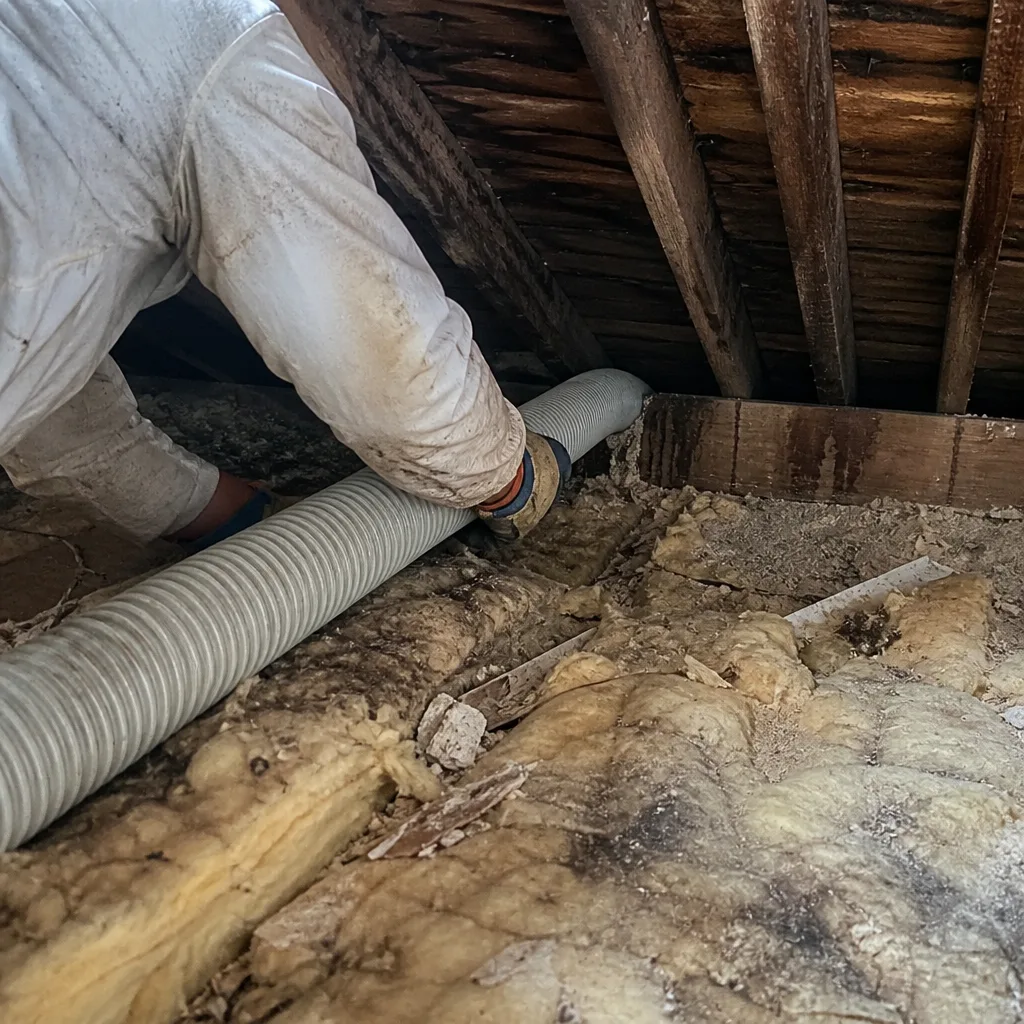 Before
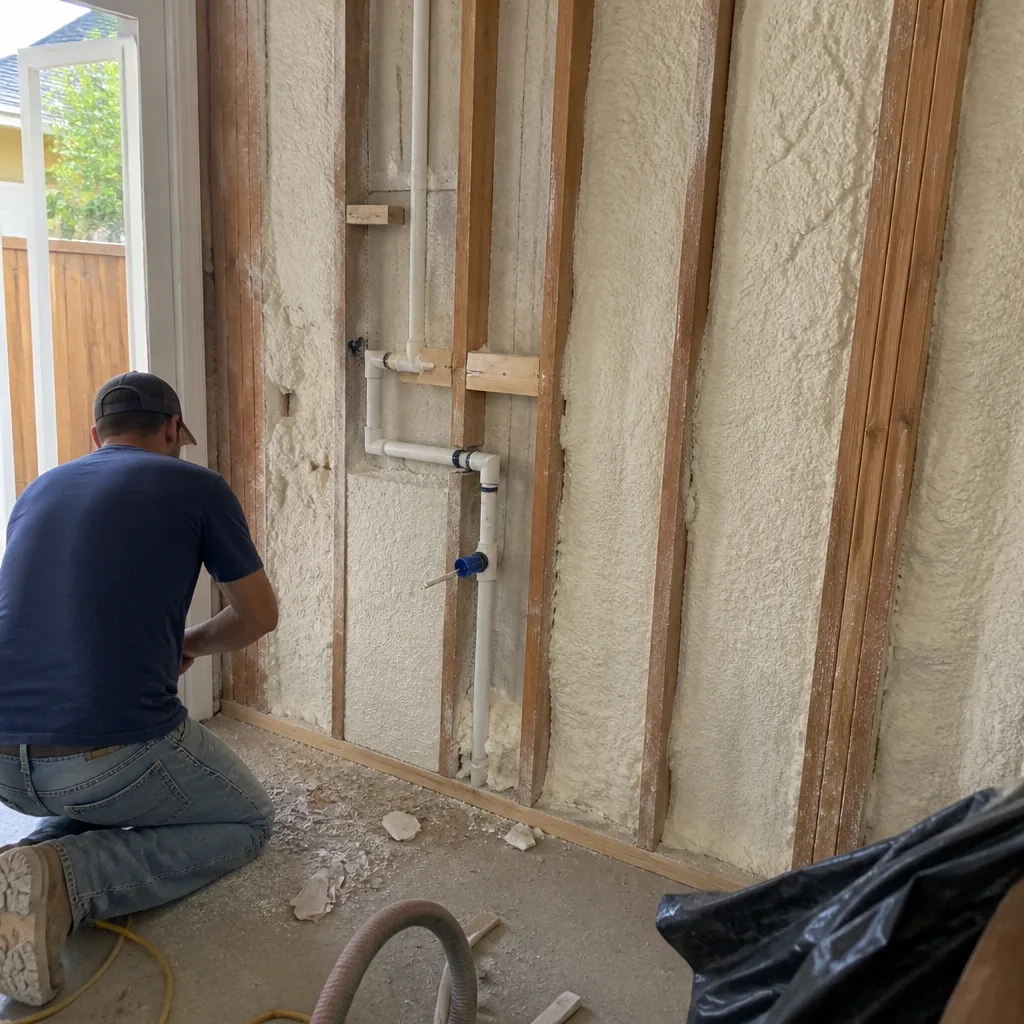 After
AfterOpen-Cell vs. Closed-Cell Foam in the New Braunfels Climate
This comparison matters more in New Braunfels than in most Texas markets because the city sits at the edge of the Edwards Plateau, where Hill Country drainage and Comal County clay soils create localized moisture behavior that a generic product recommendation doesn’t address well.
Open-cell foam is vapor-permeable. In a conditioned attic application – where the roof deck is sprayed and the attic space becomes part of the conditioned envelope – open-cell works well because the HVAC system manages moisture in that space. HVAC equipment and ductwork running through a conditioned attic instead of an unconditioned 140-degree attic can reduce cooling loads noticeably in a New Braunfels summer. We’ve measured attic temperatures dropping from the 135-145°F range to within 5-10°F of indoor temp after a proper open-cell conditioned attic conversion.
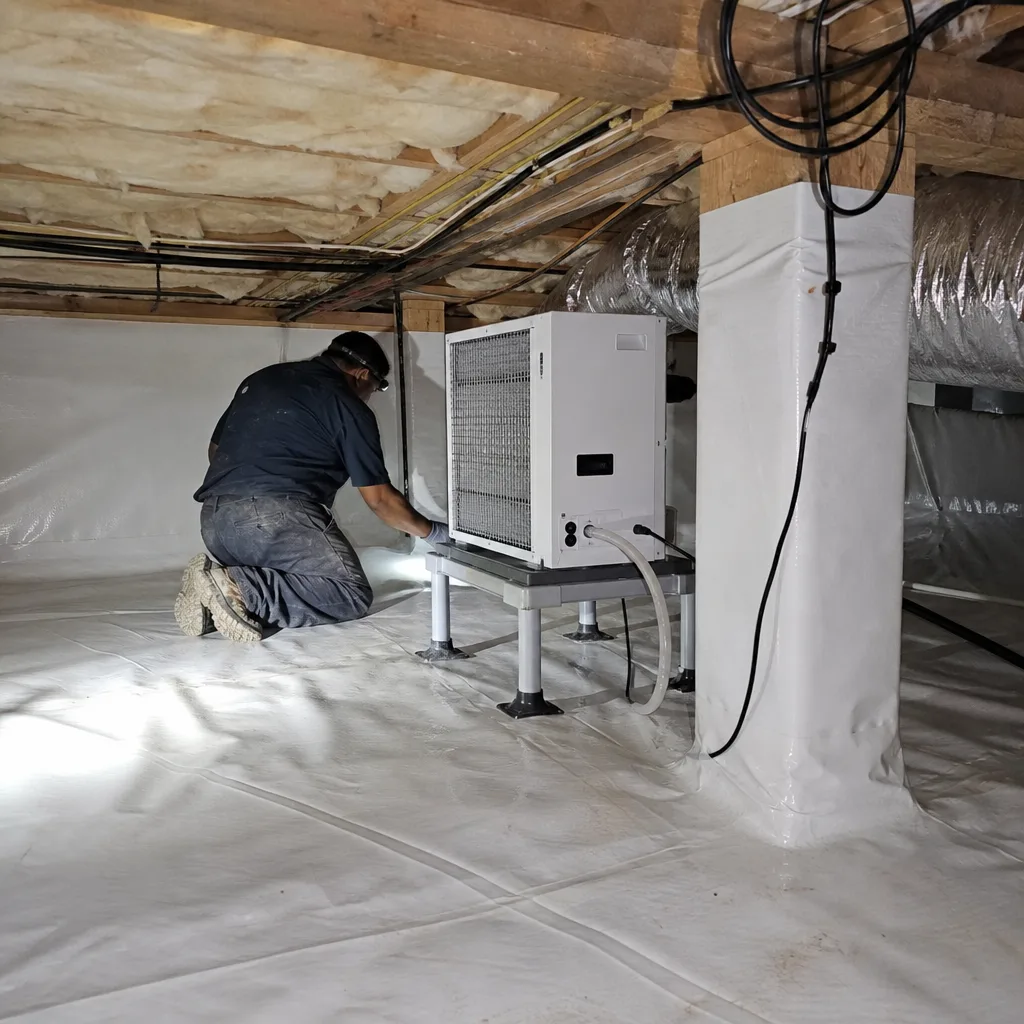
Closed-cell foam is the correct call in any application where the foam is the primary vapor retarder: crawl spaces, below-grade walls, exterior-facing surfaces, and rim joists. Its closed-cell structure (hence the name) resists water vapor migration and adds structural rigidity to the assembly. In the older pier-and-beam homes near the Comal River and Landa Park, where ground moisture has decades of history working up through the floor system, closed-cell at 2 inches on crawl space walls and rim joists is the spec that actually stops the problem.
A contractor who recommends open-cell in a damp New Braunfels crawl space is either cutting cost or hasn’t looked at the conditions. Ask for the reasoning in writing – under Haven Standard Clause 1, a written scope before work starts is non-negotiable.
How to Save on Spray Foam Insulation in New Braunfels
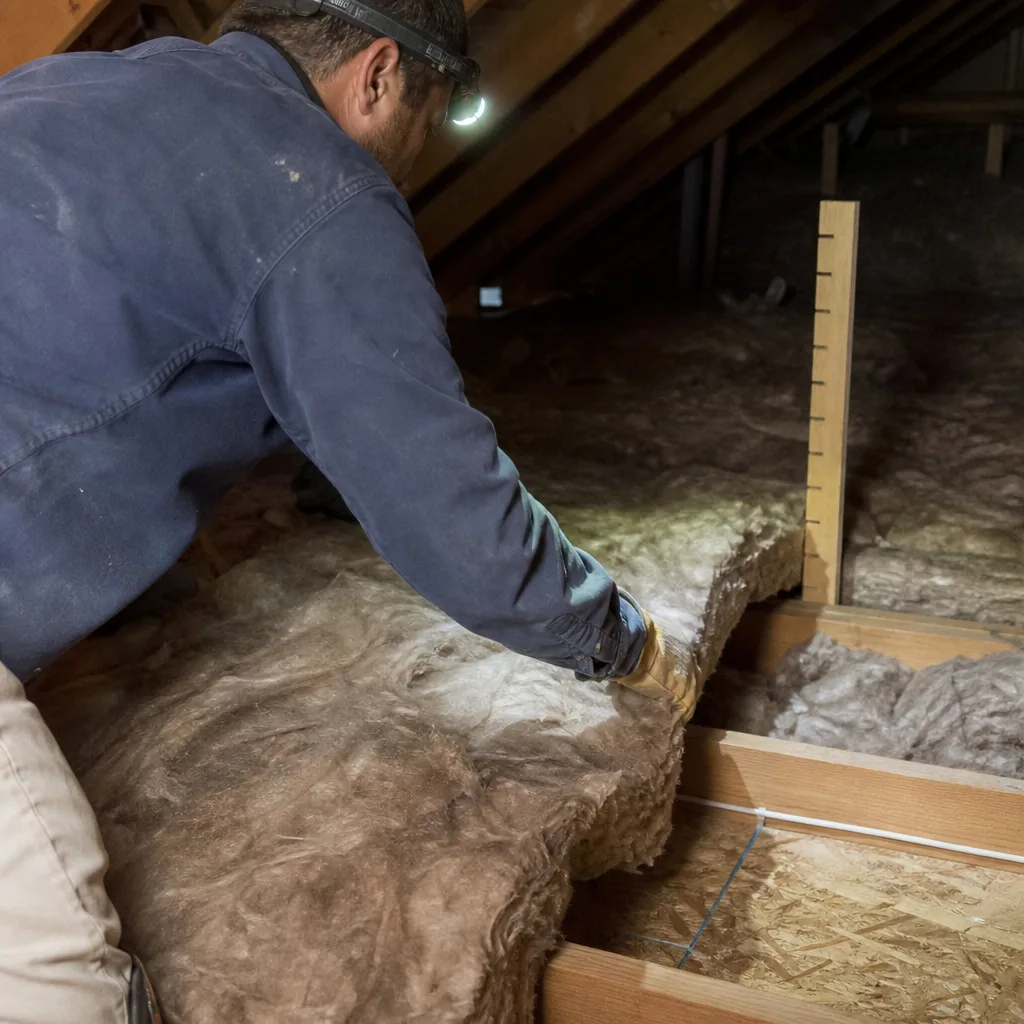
There are real ways to reduce the cost of a spray foam project without compromising the outcome. There are also ways that look like savings and create problems within 18 months. Here’s the difference.
- Get a second opinion on any written estimate. Envelope Insulation Co. offers a free second opinion on any written estimate. Bring us a competing quote and we’ll read it with you – line by line, spec by spec. In New Braunfels, we’ve reviewed quotes that specified open-cell foam in crawl spaces, under-specified thickness for Texas energy code, and excluded air sealing from the scope entirely. Any of those would have produced a job the homeowner would have needed to redo. A second set of eyes on a written quote costs nothing and can save thousands.
- Bundle with attic air sealing. Air sealing and spray foam installation in the same mobilization is more cost-efficient than scheduling them separately. The crew is already in the attic with equipment on-site. If air sealing gets skipped or scheduled as a future project, you’re paying a second mobilization fee later – and you’re living in an insufficiently sealed envelope in the meantime.
- Address access issues before the crew arrives. In New Braunfels attics, the access hatch is often the bottleneck. An 18×24-inch hatch that requires equipment to be disassembled and reassembled costs crew time that shows up in labor. If your access is undersized, widening it before the project date is a practical way to reduce the labor component of the quote.
- Check for utility rebates. CPS Energy and some Comal County-adjacent utility providers have historically offered rebates on qualifying insulation and air sealing improvements. These programs change frequently – verify current availability directly with your provider before counting on a rebate in your budget. We don’t quote jobs with rebates already factored in, because that creates a problem if a rebate program changes between quote and job date.
- Time the project for moderate weather. Spring (March-May) and fall (September-November) in New Braunfels generally produce better application conditions than mid-July at 98°F. Scheduling flexibility can occasionally translate to better crew availability and a more controlled application environment. We won’t tell you foam applied in summer is always substandard – it isn’t, when conditions are managed correctly – but if your schedule is flexible, shoulder-season timing has advantages.
- Don’t over-spec thickness. More foam is not always better foam. Texas energy code targets are real numbers – for most New Braunfels homes in Climate Zone 2, R-38 in the attic meets or exceeds the code requirement and the point of diminishing returns. A quote spec’d to R-60 in an attic where R-38 meets code is adding cost without proportional performance gain. Ask what R-value the spec targets and why.
For a written estimate with the full scope, foam type, thickness, and price in one document before anyone touches your home, call Wes Okafor and the Envelope Insulation Co. team at (830) 243-6352. Estimates are free, and the quote you receive will have a flat number on it – not a range, not an “it depends.”
Spray Foam vs. Other Insulation Types: Is It Worth the Cost in New Braunfels?
Spray foam costs more upfront than blown fiberglass or cellulose. In a New Braunfels attic, blown fiberglass to R-38 might run $1,000 to $1,800 installed. Spray foam open-cell to R-30 at the roof deck for a conditioned attic conversion runs $2,800 to $5,200. That’s a real difference. Here’s what the number doesn’t show.
Blown insulation on an attic floor doesn’t seal air leaks. It insulates. If the top plates, can lights, and penetrations in the attic floor are open – and in most New Braunfels homes built before 2015, they are – blown fiberglass sits on top of gaps that are moving conditioned air into the attic continuously. A blower-door test on a typical 1,990s New Braunfels home before air sealing often reads between 3,800 and 5,500 CFM50 (cubic feet per minute at 50 pascals of pressure – a standardized measurement of how much air the building envelope is losing). After air sealing and insulation, we’ve documented readings dropping to 1,200 to 2,100 CFM50 on the same homes. That’s the difference between an envelope that’s leaking conditioned air all day and one that holds it.
Spray foam at the roof deck in a conditioned attic conversion does both: it seals the assembly and insulates it. The HVAC equipment now lives in a space that’s 75°F instead of 140°F, which means the equipment runs shorter cycles and lasts longer. That performance is documented – not estimated – with the before-and-after blower-door readings we publish on every applicable job.
If your goal is the lowest possible upfront cost and your attic floor has already been air-sealed properly, blown insulation is a reasonable product. If you’re starting from an unsealed attic or converting to a conditioned attic to protect HVAC equipment in a New Braunfels summer, spray foam is the product that solves the problem blown insulation can’t.
For a full comparison of options for your specific home, our Spray Foam Insulation in New Braunfels service page covers the application scenarios in more detail.
What the Job Looks Like From Quote to Finish
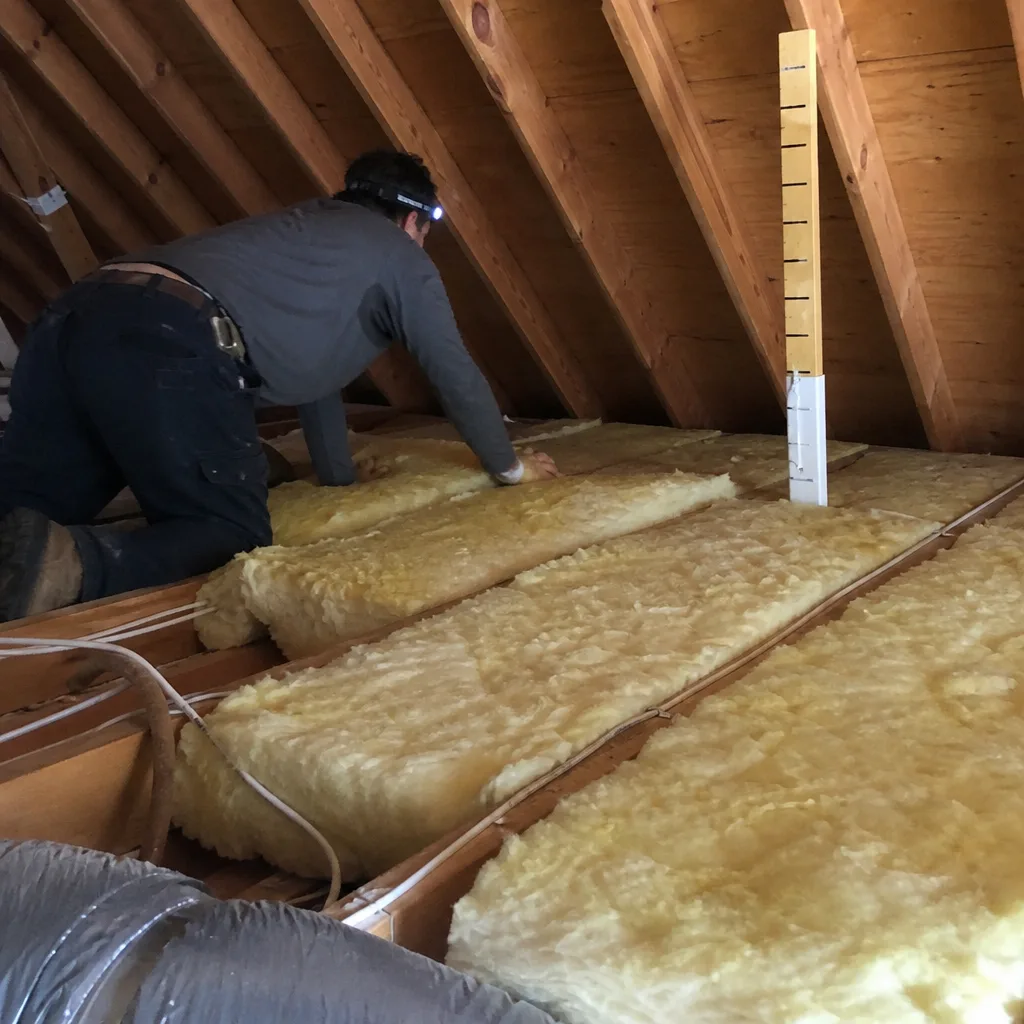
Wes Okafor has led Envelope Insulation Co. since 2016, and the job sequence has been consistent: written price before any work starts, air sealing completed before foam is applied, and a documented photo record plus blower-door readings delivered when the crew leaves. Here’s what that actually looks like on a New Braunfels spray foam project.
- Site assessment: A technician inspects the application area, documents existing conditions with photos, and measures the space. For attic work, this includes checking attic access, existing insulation condition, the number and type of penetrations that need air sealing, and HVAC equipment placement. The assessment is the basis for the written quote – not a starting point for negotiation.
- Written scope and price: You receive a flat price, written scope, and written warranty before any crew schedules. Haven Standard Clause 1: no work starts without it. The scope specifies foam type, target R-value or thickness, which areas get air sealed, and what the crew will not do (as important as what they will).
- Air sealing: Top plates, can lights, attic access hatches, plumbing penetrations, and electrical chases are sealed before foam is applied. We don’t spray foam over unsealed penetrations. This is the step most contractors skip or upcharge. We don’t.
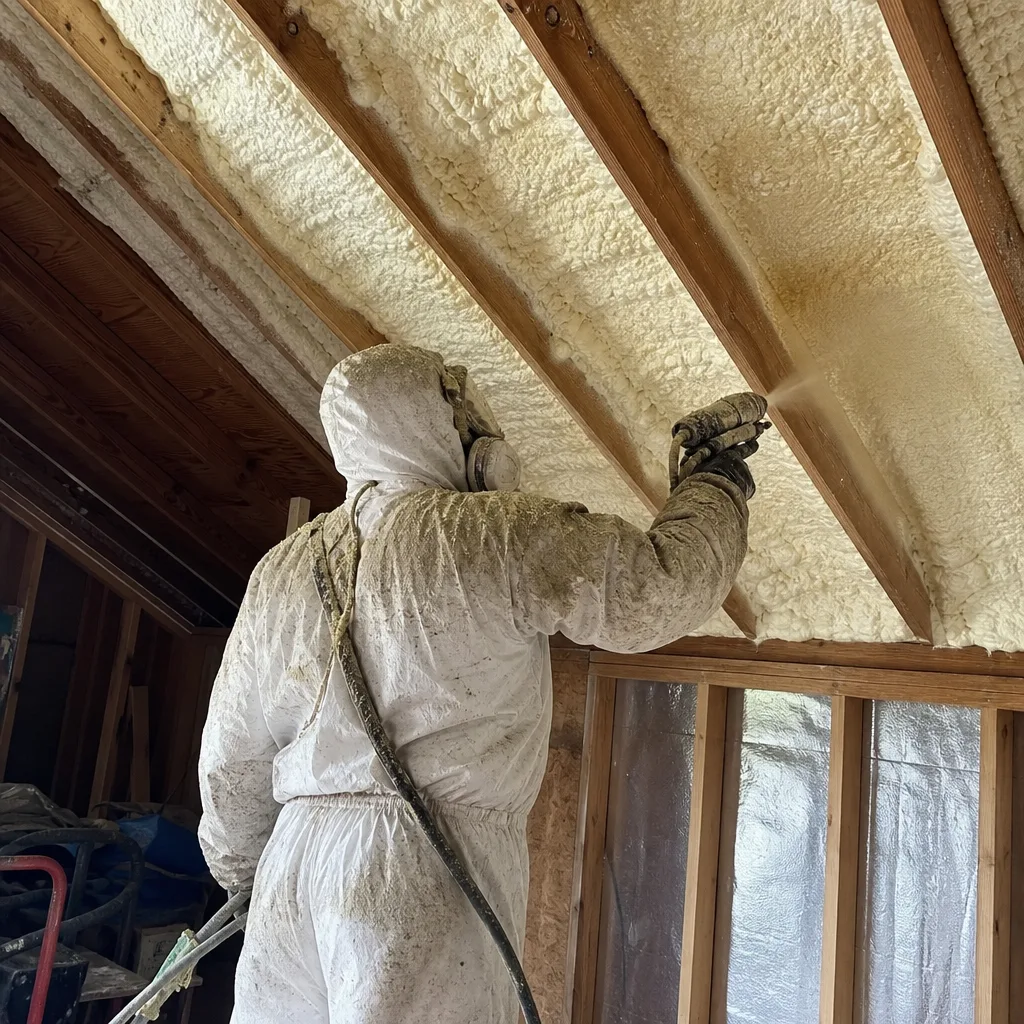
- Foam application: The foam is mixed and applied by trained technicians using manufacturer-specified ratios. For Icynene and Demilec products, those ratios are tight – off-ratio foam has compromised cell structure and reduced R-value. Application thickness is verified before the crew leaves the attic.
- Blower-door test and documentation: On applicable jobs, a blower-door test is run before and after. The before reading and after reading are documented and provided to you with the job record. You see the performance change in a single number – not a claim, a measurement.
- Photo record: Every visit generates a documented photo record. You know what your attic looked like before, what was sealed, and what the finished foam installation looks like. That record is yours.
Permit and Code Considerations for Spray Foam in New Braunfels
New Braunfels falls under Comal County jurisdiction for most residential permits, with the City of New Braunfels Development Services managing permits within city limits. Spray foam insulation applied at the roof deck as a conditioned attic conversion typically requires a building permit in New Braunfels, because it changes the thermal boundary of the home and affects the HVAC load calculation.
Texas follows the International Energy Conservation Code (IECC), and New Braunfels enforces Climate Zone 2 requirements. For new construction, the code specifies R-38 minimum for attics (or R-30 if the full cavity is filled) and specific vapor retarder requirements in moisture-sensitive assemblies. For retrofit work, permit requirements vary by scope – a simple rim joist application rarely requires a permit, while a full conditioned attic conversion usually does.
Permit fees in Comal County typically run $75 to $250 for residential insulation work, depending on project value. The permit process and inspection timeline in New Braunfels have historically been 3 to 7 business days for residential work, though that can vary during peak construction periods. Our quotes specify whether a permit is included in the scope and who pulls it – that information belongs in writing before work starts, not as a surprise on the job date.
FAQs – Spray Foam Insulation Cost in New Braunfels
How much does spray foam insulation cost per square foot in New Braunfels?
Open-cell spray foam runs approximately $0.50 to $1.00 per square foot per inch of thickness installed in the New Braunfels market. Closed-cell runs $1.00 to $2.00 per square foot per inch. For a practical reference: open-cell foam at 5.5 inches (roughly R-20) on an attic roof deck costs $2.75 to $5.50 per square foot of ceiling area. Most New Braunfels homeowners find it easier to think in total project cost rather than per-square-foot, because attic geometry (slopes, dormers, obstructions) affects the actual foam area significantly. Call (830) 243-6352 for a flat written quote on your specific space.
Is spray foam worth the extra cost compared to blown-in insulation in New Braunfels?
For a conditioned attic conversion or any application where air sealing and insulation need to happen in the same assembly, spray foam typically produces better measurable results than blown insulation plus separate air sealing – and in many cases the long-term operating cost difference offsets a significant portion of the upfront premium. In New Braunfels summers, HVAC equipment running in a 140°F unconditioned attic versus a 75-80°F conditioned attic has a direct impact on equipment lifespan and energy bills. For attic floor applications where the space is already air-sealed and the goal is simply adding R-value, blown cellulose or fiberglass can be the more cost-effective choice. The right answer depends on what the attic actually looks like – which is why we assess before we quote.
How long does spray foam insulation last in New Braunfels, TX?
Properly installed spray foam – both open-cell and closed-cell – is rated for the life of the structure when installed at manufacturer-specified thickness and ratio. In New Braunfels’s climate, the primary degradation risk is UV exposure (foam left exposed without a protective coating or cover board will degrade in sunlight) and physical disturbance during HVAC service or roof work. Foam in a sealed attic application, away from UV exposure, doesn’t have a practical service life ceiling under normal conditions. The 365-Day Done Right Promise at Envelope Insulation Co. covers the installation itself – if it’s not done right, we make it right, in writing.
Can I get spray foam insulation installed in one day in New Braunfels?
Most residential spray foam projects in New Braunfels are completed in one day. A standard attic roof deck application on a 1,800 to 2,200 square foot home typically runs 4 to 7 hours of crew time, including air sealing, application, and cure verification. Larger homes, homes with complex attic geometry (common in Vintage Oaks and some of the newer Gruene-area developments), or jobs that require significant existing insulation removal before foam can be applied may run into a second day. The written scope you receive before work starts will specify the expected crew time and schedule.
Does Envelope Insulation Co. offer financing or payment options for spray foam in New Braunfels?
Payment terms are outlined in the written scope provided before work begins. The flat price in that document is the number – no surprises at job completion. For questions about payment structure on a specific project, call (830) 243-6352 and ask Wes Okafor’s team directly. The answer will be in writing before you commit to anything.
What’s the difference between spray foam and injection foam for walls in New Braunfels?
Spray foam and injection foam are different products applied differently. Spray foam is applied to open cavities – an exposed attic roof deck, an open crawl space wall, or framing during new construction before drywall goes up. Injection foam (sometimes called slow-rise or injected foam) is pumped into an enclosed cavity through small-diameter holes drilled in the exterior or interior wall surface, then patched afterward. For retrofit wall insulation in existing New Braunfels homes – particularly in the older wood-frame homes near downtown or in Gruene – injection foam is often the correct call because it avoids opening the wall. Closed-cell spray foam is generally used in exposed applications where moisture resistance is the priority. The quote for a specific wall application will specify which product and why.
Key Takeaways
- Spray foam insulation in New Braunfels runs $1.50 to $3.50 per board foot installed, with full attic projects typically landing between $2,800 and $7,800 depending on foam type and scope.
- Open-cell foam is generally the right call for conditioned attic conversions; closed-cell is the correct spec for crawl spaces, rim joists, and moisture-exposed assemblies in New Braunfels’s climate.
- Air sealing before foam application isn’t optional – it’s what produces the measurable blower-door improvement. At Envelope Insulation Co., it’s a hard prerequisite, not an upsell.
- A written price, written scope, and written warranty are delivered before any work starts – that’s Haven Standard Clause 1, and it applies to every job.
- Before-and-after blower-door readings are documented on every applicable job so you can verify what you paid for.
- Wes Okafor and the Envelope Insulation Co. team have been operating under The Haven Standard since 2016 – covering New Braunfels and surrounding Comal County communities with a 365-Day Done Right Promise on completed work.
For more on what Envelope Insulation Co. does in this market and how we sequence the work, our home page covers the full building-envelope service line.
Get a Written Estimate for Your New Braunfels Home
If you want a flat price – not a range, not a callback with “we’d have to come look” – call Wes Okafor’s team at (830) 243-6352. We’ll schedule a site assessment, document what we find, and give you a written quote with the foam type, R-value target, air sealing scope, and total price on one page before anyone picks up a spray gun. No work starts without it. That’s the standard we’ve operated under since 2016, and it’s the standard that applies to your job.
Written by Wes Okafor, Owner at Envelope Insulation Co. (Topside Attic Insulation New Braunfels), serving New Braunfels, TX since 2016.
Pricing reflects the New Braunfels market as of 2026. Topside Attic Insulation New Braunfels offers free estimates – call (830) 243-6352.
What Our Customers Say
"Two other companies quoted to blow more insulation on top of what was there. These were the only ones who said the existing material had to come out first, and explained why."
- Clifford E."Crawl space encapsulation done properly. Photographs of the vapour barrier at every seam, and the damp smell in the hallway is gone."
- Ainsley P."They air-sealed the attic floor before insulating and showed me the blower-door number before and after. The upstairs is finally the same temperature as downstairs."
- Marisol D.