

Insulation in Live Oak, TX
Crawl space encapsulation and vapor barrier installation in Live Oak typically runs $3,200-$6,800 for a full encapsulation, with vapor barrier-only jobs starting around $1,400-$2,600. Most Live Oak homes we work on were built during the JBSA-Randolph expansion era with vented crawl spaces that pull Gulf moisture directly under the floor, making this one of the highest-ROI envelope upgrades in the city. Call (830) 243-6352 for a written price before any work starts.
Envelope Insulation Co. treats air sealing as a hard prerequisite, not an upsell. In Live Oak’s 1970s-1990s housing stock, that means we seal the crawl space perimeter, rim joists, and subfloor penetrations before adding any insulation material. Every applicable job gets before-and-after blower-door numbers so you can see the performance change you paid for.
Why Live Oak Homes Are Different
Live Oak’s residential core is overwhelmingly 1970s-1990s tract housing built to house civilian and military families tied to JBSA-Randolph. These homes were constructed with vented unconditioned attics, minimal wall cavity insulation, and HVAC ductwork routed through attic spaces that regularly hit 140°F in July and August. Decades of service calls and amateur attic storage have compressed or displaced original fiberglass batts, dropping already-low R-values even further.
The February 2021 Winter Storm Uri exposed another layer of deficiency: homeowners watched pipes freeze inside supposedly heated spaces because conditioned air was leaking into attics and walls through unsealed top plates, can lights, and duct boots. That event generated a sustained wave of insulation and air-sealing calls we still see today.
Homes near the JBSA-Randolph flight line carry an additional signature: expedited construction permits during base-expansion booms meant minimal oversight. We regularly find attic hatches with zero insulation, ductwork with separated joints blowing conditioned air directly into superheated attics, and soffit vents blocked by decades of blown-in debris. The combination can add $80-$120 per month to summer electric bills, and it’s correctable in a single day with proper sequencing: seal first, then insulate.
Our Main Live Oak Services
Live Oak homeowners call us most often for attic upgrades and spray foam applications. These three services have dedicated Live Oak pages with deeper detail:
Attic Insulation in Live Oak
Most Live Oak attics hold compressed fiberglass batts at R-11 to R-19, far below Bexar County’s current R-38 minimum. We remove or overlay existing material after air sealing, using blown-in fiberglass or cellulose from Owens Corning, Johns Manville, or GreenFiber. Every attic job includes a Documented Photo Record and, when applicable, before-and-after blower-door readings. Attic Insulation in Live Oak covers full pricing and process detail.
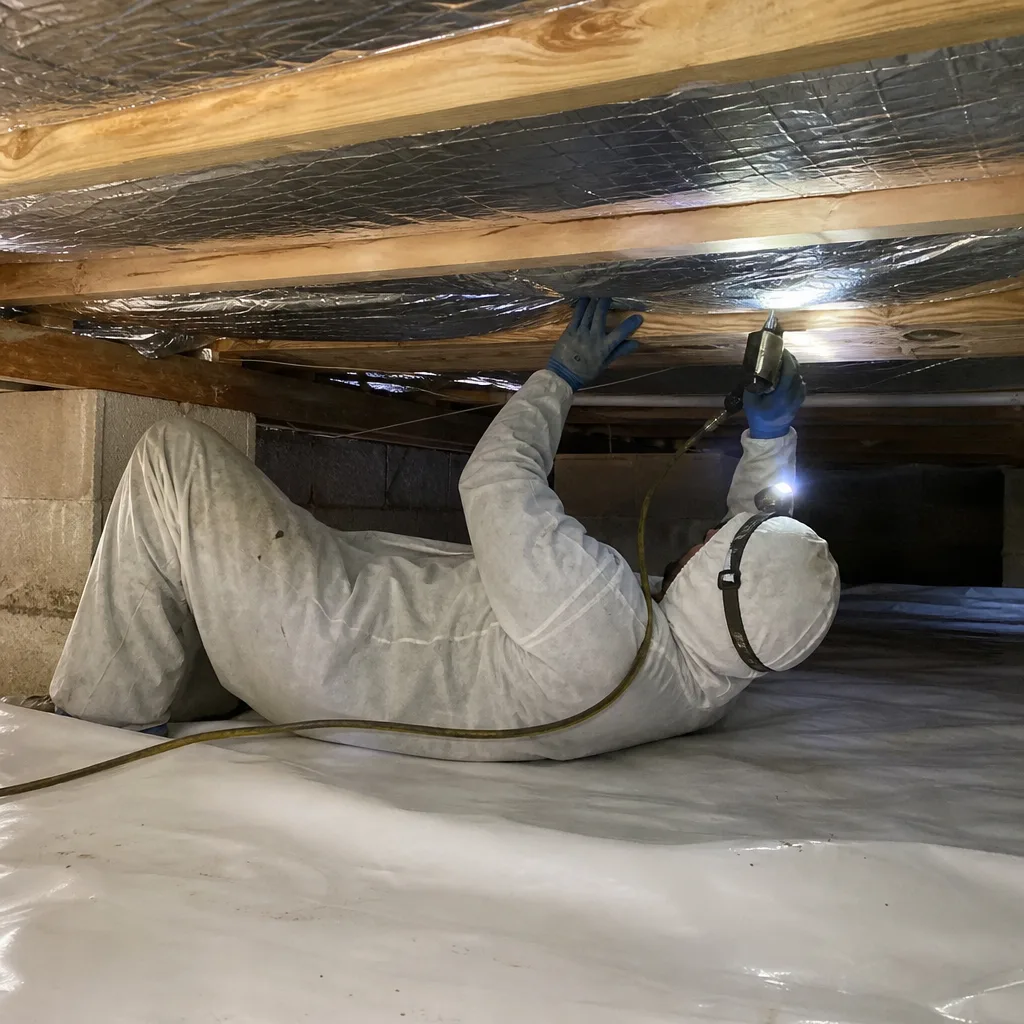
Spray Foam Insulation in Live Oak
Open-cell and closed-cell spray foam from Icynene and Demilec solve the ductwork-in-attic problem common in Live Oak ranch homes by creating a conditioned attic space. This is especially effective for homes with frequent HVAC repairs or rooms that never reach set temperature. We publish blower-door results on every foam job so you can verify the envelope improvement. Spray Foam Insulation in Live Oak has complete specs.
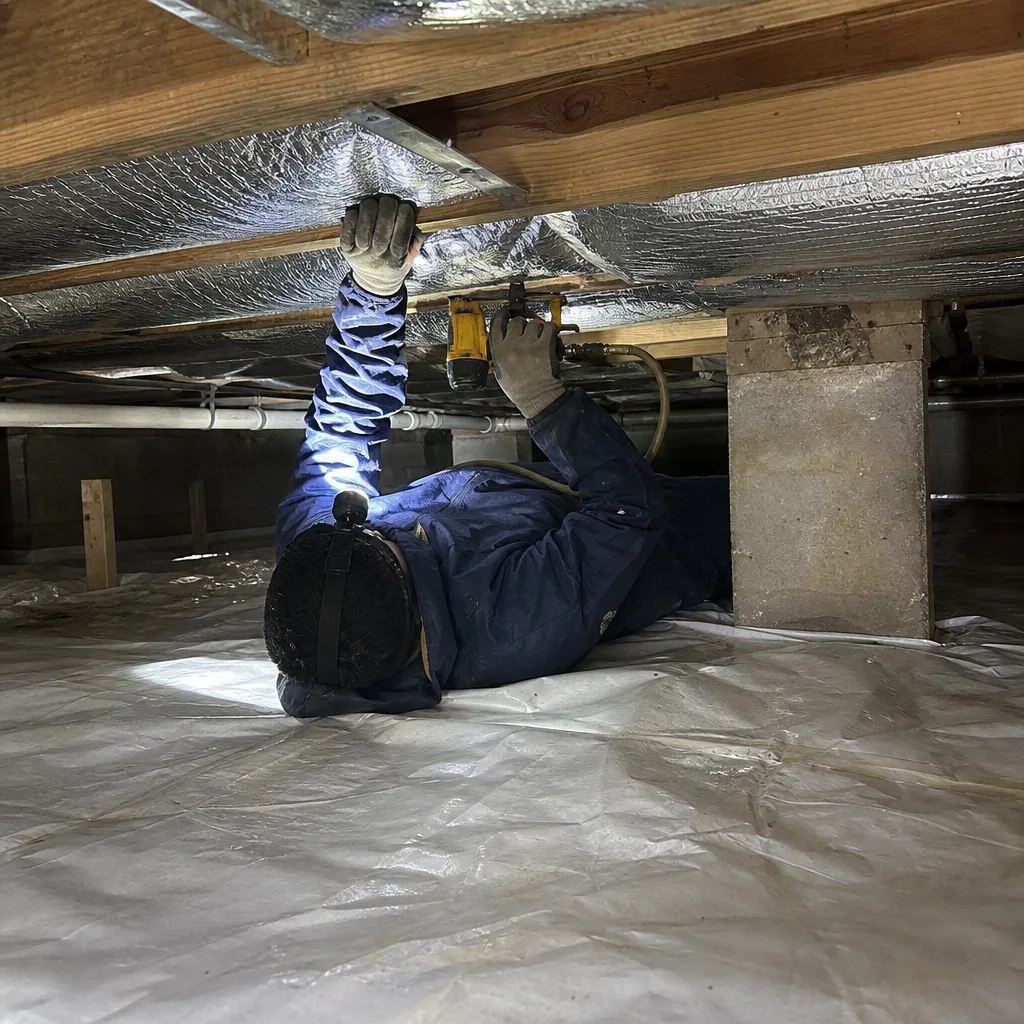
Blown-In Insulation in Live Oak
Blown-in fiberglass or cellulose is the most cost-effective upgrade for Live Oak’s dense concentration of under-insulated tract homes. We dense-pack over air-sealed attic floors, filling joist cavities to full R-38 depth without the thermal bridging of batts. Material selection depends on your roof deck condition and budget. Blown-In Insulation in Live Oak breaks down options and pricing.
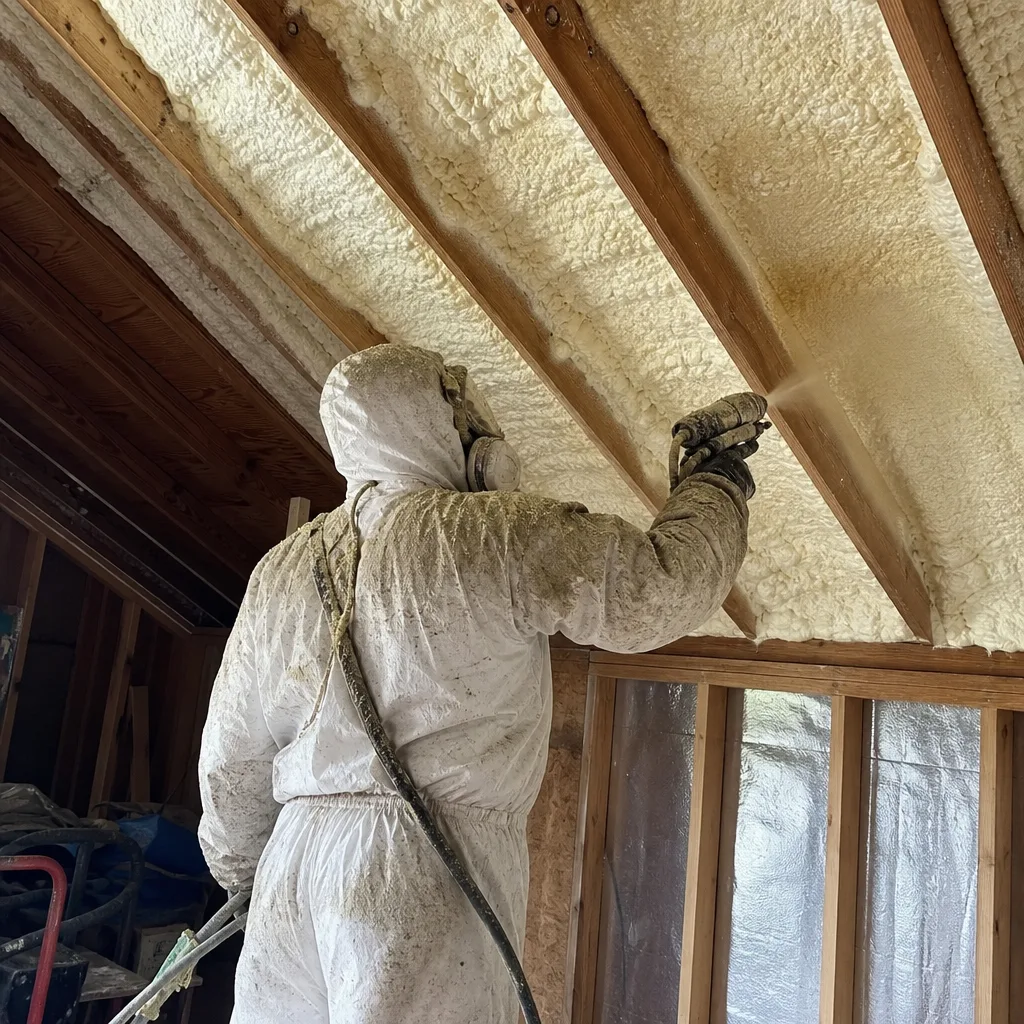
What happens when you call
- 1
A real person answersNo phone trees - you reach a local pro.
- 2
You get an upfront price rangeHonest numbers before anyone is dispatched.
- 3
A background-checked tech heads outLicensed & insured, dispatched right away.
- 4
You approve before work beginsNothing starts until you say go.
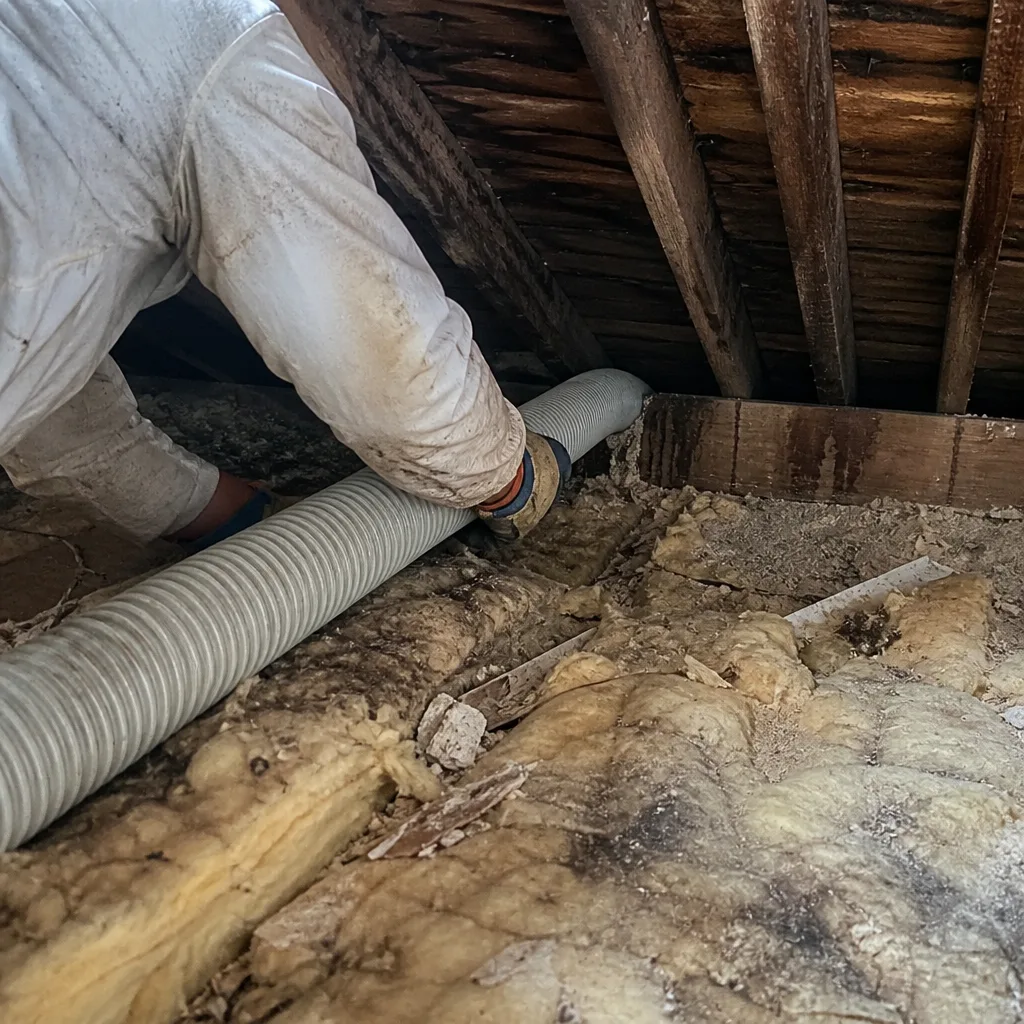 Before
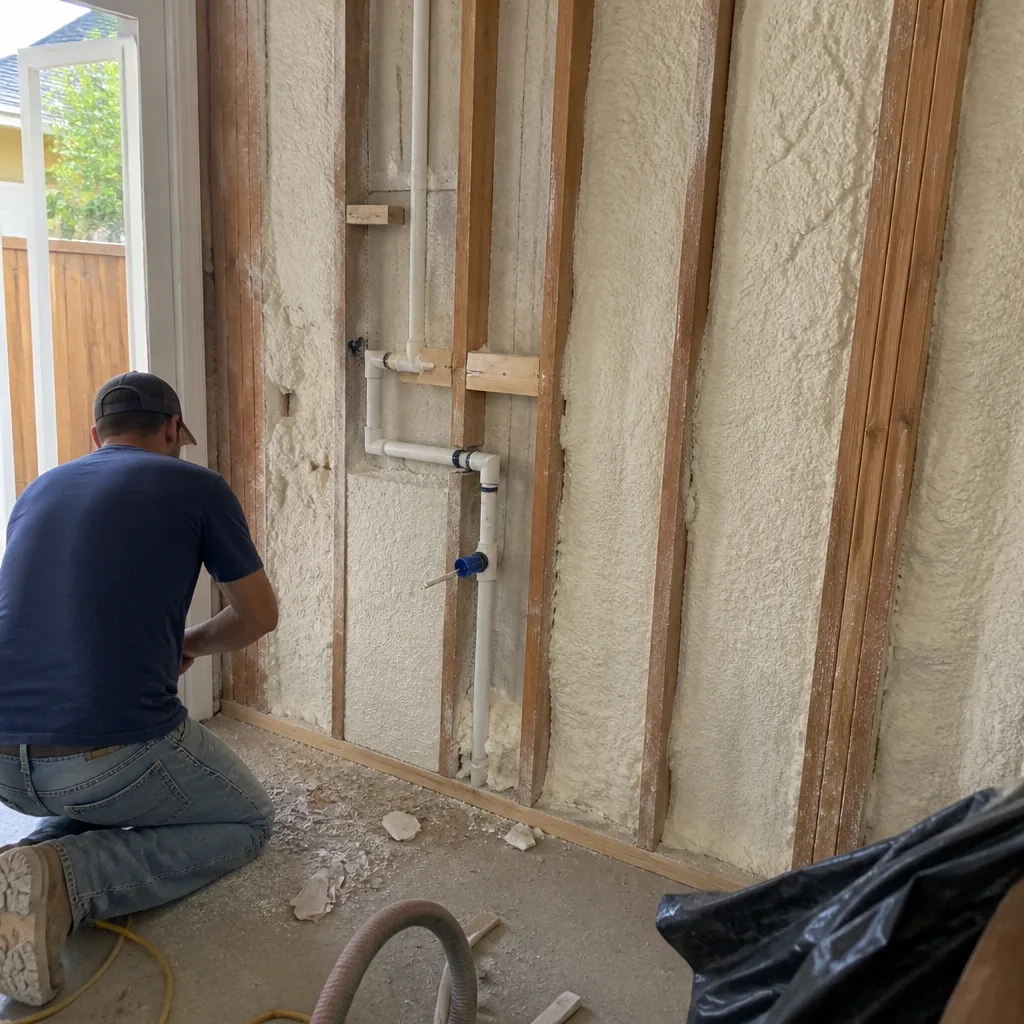 After
AfterCrawl Space Encapsulation & Vapor Barrier in Live Oak
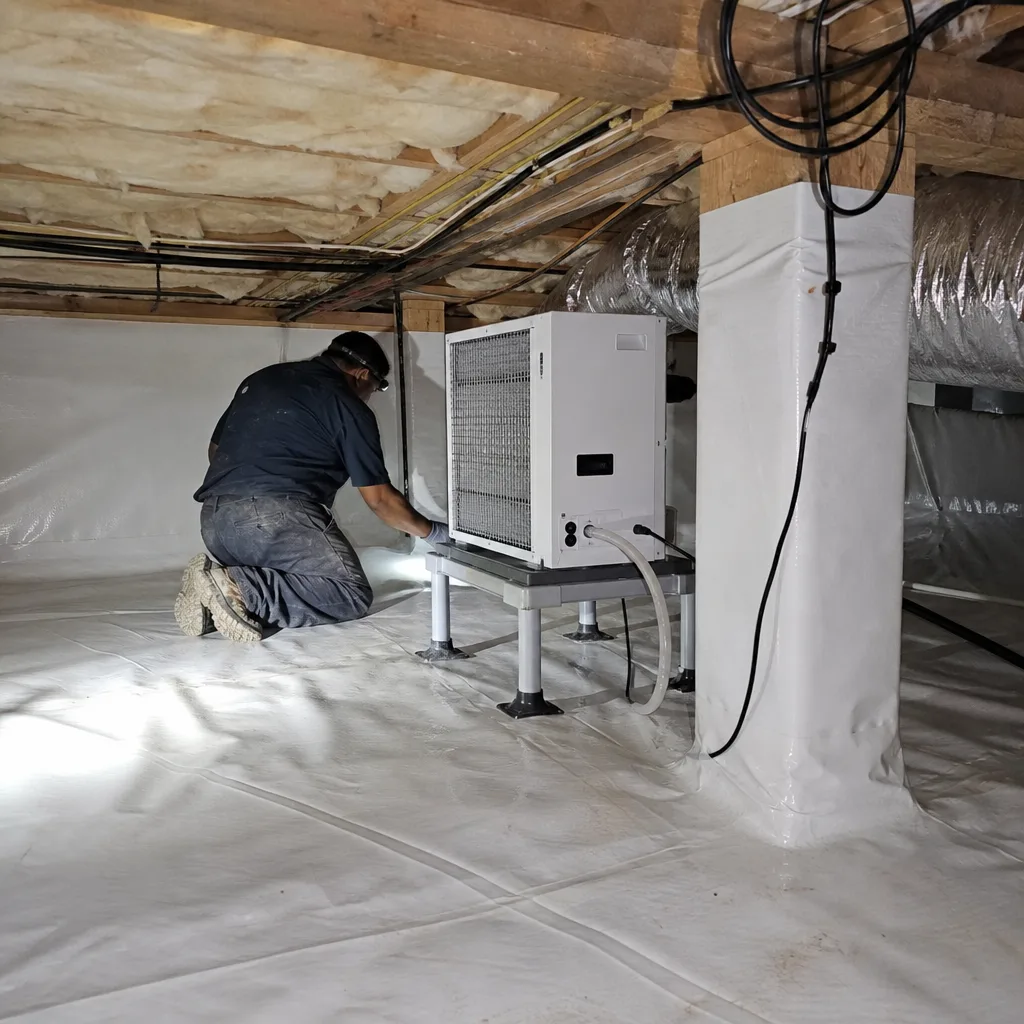
Live Oak’s vented crawl spaces were built to code in the 1980s but function as moisture collectors in San Antonio’s northeastern suburban zone, where Gulf humidity pushes dew points high enough for condensation on ductwork and floor joists year-round. We encapsulate or install vapor barriers only after sealing all rim joists, penetrations, and the perimeter sill plate - the same sequence we follow on every Crawl Space Encapsulation & Vapor Barrier job. The result is a dry, conditioned crawl space that stops mold growth and reduces floor-level humidity inside the home.
Crawl Space Encapsulation
Signs you need it
Your crawl space has standing water after rain, mold on floor joists, or indoor humidity that your HVAC cannot control.
What it costs in Live Oak
Full encapsulation with closed-cell foam on walls, sealed vents, and dehumidifier typically runs $3,200-$6,800 for a 1,200-2,000 square foot Live Oak home.
How we do it
We remove debris, seal all penetrations and rim joists with closed-cell foam, install a reinforced polyethylene liner on walls and floor, seal vents, and add a condensate-pumped dehumidifier sized to the space.
Crawl Space Vapor Barrier
Signs you need it
Your crawl space has damp soil but no standing water, and you want to stop ground moisture without full encapsulation.
What it costs in Live Oak
A 6-mil to 20-mil reinforced vapor barrier installed over sealed ground typically runs $1,400-$2,600 for a standard Live Oak crawl space.
How we do it
We level the ground, seal seams and piers with tape and mechanical fasteners, and extend the barrier 6-12 inches up foundation walls for complete ground isolation.
What Crawl Space Encapsulation & Vapor Barrier Costs in Live Oak
| Item | Typical range in Live Oak |
|---|---|
| Crawl space vapor barrier (6-20 mil) | $1,400 - $2,600 |
| Full crawl space encapsulation | $3,200 - $6,800 |
| Encapsulation with dehumidifier | $4,500 - $8,200 |
How long does crawl space encapsulation take in Live Oak?
Most full encapsulations finish in 1-2 days; vapor barrier-only jobs typically complete in a single day. We deliver a written scope and written price before anyone starts, and you get a Documented Photo Record when the crew leaves.
Will encapsulation lower my electric bill?
Yes, by reducing the load on your HVAC system - less humidity enters the home, and ductwork in the crawl space operates in stable conditions instead of damp, variable air. Call (830) 243-6352 for a free estimate with exact numbers for your home.
Radiant Barrier Installation in Live Oak
Live Oak’s vented attics regularly reach 140°F in summer, and radiant heat transfer through the roof deck is the primary driver. Radiant barrier installation reflects that infrared energy back toward the roof deck before it can radiate into insulation and ductwork below. In homes with dark shingles and minimal existing attic ventilation - common in the 1980s builds near Woodlake Parkway - this can reduce attic temperatures by 20-30°F and cut cooling load measurably.
Attic Radiant Barrier
Signs you need it
Your upstairs rooms run 8-12°F warmer than downstairs, or your AC runs continuously after 2 p.m. on sunny days.
What it costs in Live Oak
Attic radiant barrier installation typically runs $1,200-$2,400 for a 1,500-2,500 square foot Live Oak home.
How we do it
We staple perforated aluminum foil or spray low-emissivity coating to the underside of roof decking, maintaining ventilation paths and avoiding contact with electrical components.
Radiant Barrier & Ventilation
Signs you need it
Your attic has blocked soffit vents, no ridge vent, or exhaust fans that vent into the attic instead of outside.
What it costs in Live Oak
Radiant barrier paired with ventilation correction typically runs $1,800-$3,400 for a standard Live Oak ranch home.
How we do it
We clear soffit vents, install baffles to maintain airflow over insulation, add ridge or static vents as needed, then apply radiant barrier material for combined heat rejection and passive cooling.
What Radiant Barrier Installation Costs in Live Oak
| Item | Typical range in Live Oak |
|---|---|
| Attic radiant barrier (foil or spray) | $1,200 - $2,400 |
| Radiant barrier with ventilation upgrade | $1,800 - $3,400 |
| Radiant barrier roof deck (new construction or re-roof) | $2,000 - $4,200 |
Does radiant barrier work with blown-in insulation?
Yes, and the combination performs better than either alone - radiant barrier blocks roof-deck heat, while blown-in insulation slows conductive heat through the attic floor. We install both in sequence, sealing first.
How long does radiant barrier last?
Properly installed perforated foil lasts 20+ years; spray-applied low-e coatings last 10-15 years before reapplication. We document installation date and material in your job record.
Insulation Removal & Replacement in Live Oak
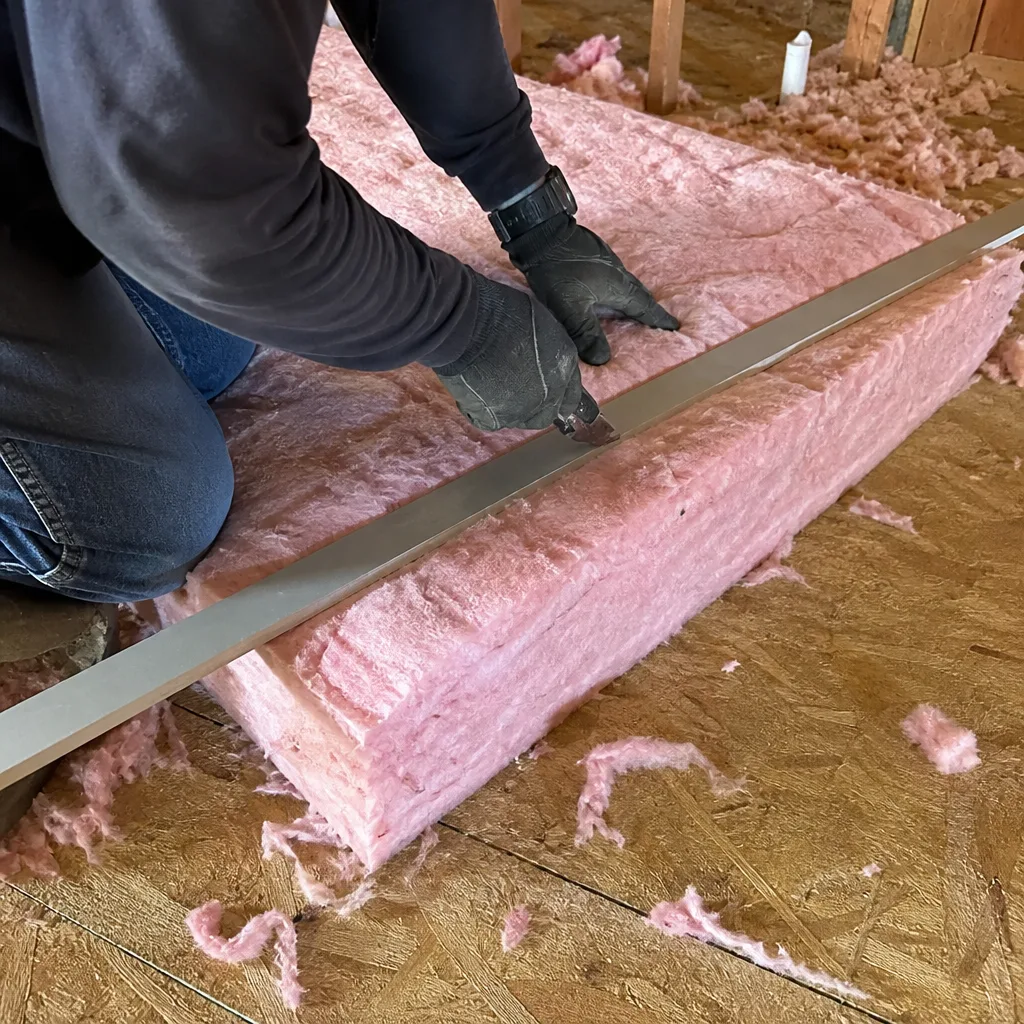
Live Oak’s original fiberglass batts, now 30-50 years old, are often compressed, water-stained, or contaminated by rodent activity. Removal and replacement is not optional when insulation has been compromised - new material installed over damaged old material traps moisture and odor. We see this most often in homes near JBSA-Randolph where attic access hatches were never sealed, allowing squirrels and roof rats to nest in the thermal layer.
Contaminated Insulation Removal
Signs you need it
Your attic insulation has droppings, urine staining, mold, or a persistent odor that enters the home through ceiling penetrations.
What it costs in Live Oak
Contaminated insulation removal with HEPA containment and disposal typically runs $1,600-$3,200 for a standard Live Oak attic.
How we do it
We establish negative air pressure with HEPA filtration, remove bagged material through contained chutes, apply antimicrobial treatment to exposed surfaces, and provide documentation for insurance if needed.
Insulation Replacement
Signs you need it
Your attic has bare spots, compressed batts below joist height, or R-values that no longer meet Bexar County minimums after removal.
What it costs in Live Oak
Insulation replacement with new blown-in fiberglass or cellulose typically runs $2,400-$4,800 for a 1,500-2,500 square foot Live Oak home.
How we do it
We air seal the attic floor completely, then install blown-in material to R-38 depth using Owens Corning or Johns Manville products, with depth markers and a final density check.
What Insulation Removal & Replacement Costs in Live Oak
| Item | Typical range in Live Oak |
|---|---|
| Contaminated insulation removal | $1,600 - $3,200 |
| Standard insulation removal (non-contaminated) | $800 - $1,600 |
| Insulation replacement (blown-in to R-38) | $2,400 - $4,800 |
Can I add new insulation on top of old?
Only if the old material is dry, uncompressed, and uncontaminated - conditions we verify with moisture meters and visual inspection. In most Live Oak homes of this age, removal first is the correct approach.
Is removal covered by homeowners insurance?
Some policies cover contamination from sudden water damage or vermin entry; we document condition with photos and provide written reports to support your claim. Call (830) 243-6352 and we’ll review your situation.
Attic Air Sealing in Live Oak
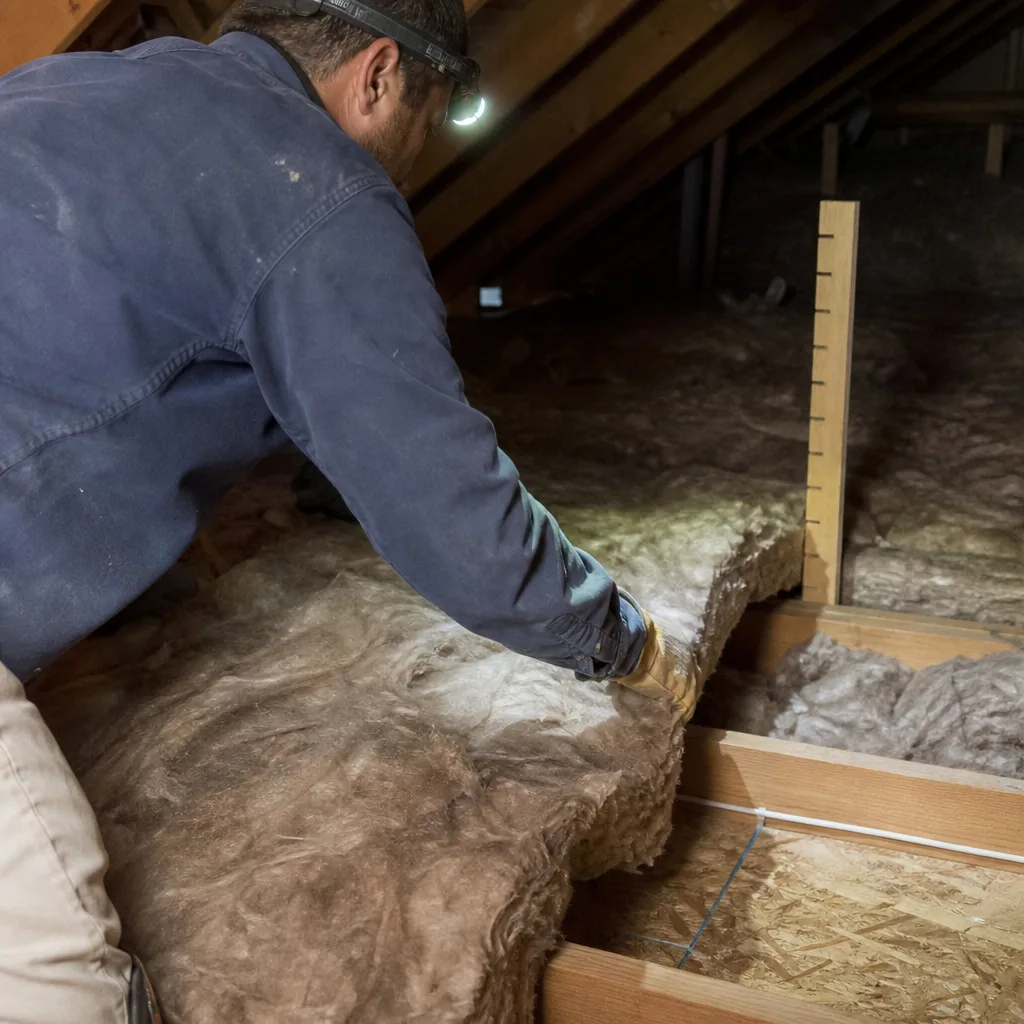
Attic air sealing is the single most cost-effective envelope upgrade for Live Oak’s 1970s-1990s housing stock, and we complete it before adding any insulation material. The original construction had no top plate sealing, unsealed can light housings, and attic hatches with gaps large enough to pass a pencil. A blower-door test - a pressurization reading that shows, in one number, how much air your building envelope is losing - typically reads 3,500-5,000 CFM50 in these homes before sealing and 1,800-2,800 after.
Top Plate & Penetration Sealing
Signs you need it
Your home has dust trails around ceiling fixtures, rooms that are hard to keep warm in winter, or icicles on the roof after freeze events.
What it costs in Live Oak
Top plate and penetration sealing typically runs $1,400-$2,800 for a standard Live Oak single-story home.
How we do it
We seal all top plate joints with acoustical sealant and rigid foam, foam-seal wire and plumbing penetrations, and install fire-rated covers over non-IC can lights.
Can Light & Duct Boot Sealing
Signs you need it
Your can lights flicker in wind, your ducts blow less air at the register than at the plenum, or your attic is noticeably cooler than outside in winter.
What it costs in Live Oak
Can light and duct boot sealing typically runs $800-$1,800 for a home with 8-16 fixtures and standard duct routing.
How we do it
We install pre-formed fire-rated enclosures over can lights, seal duct boots with mastic and mesh, and pressure-test the duct system to verify no remaining leaks.
What Attic Air Sealing Costs in Live Oak
| Item | Typical range in Live Oak |
|---|---|
| Top plate and penetration sealing | $1,400 - $2,800 |
| Can light and duct boot sealing | $800 - $1,800 |
| Full attic air sealing (comprehensive) | $2,200 - $4,200 |
Will air sealing alone lower my bills?
Yes, typically 10-20% on heating and cooling - but the full benefit requires proper insulation depth after sealing. We never recommend sealing without addressing insulation, and we price both together so you see the complete picture.
How do I know if my attic is leaky?
We offer a blower-door test that quantifies leakage in CFM50 - a single figure that tells you exactly how much conditioned air you’re losing. Every air-sealing job includes before-and-after numbers in your written record.
Wall Insulation in Live Oak
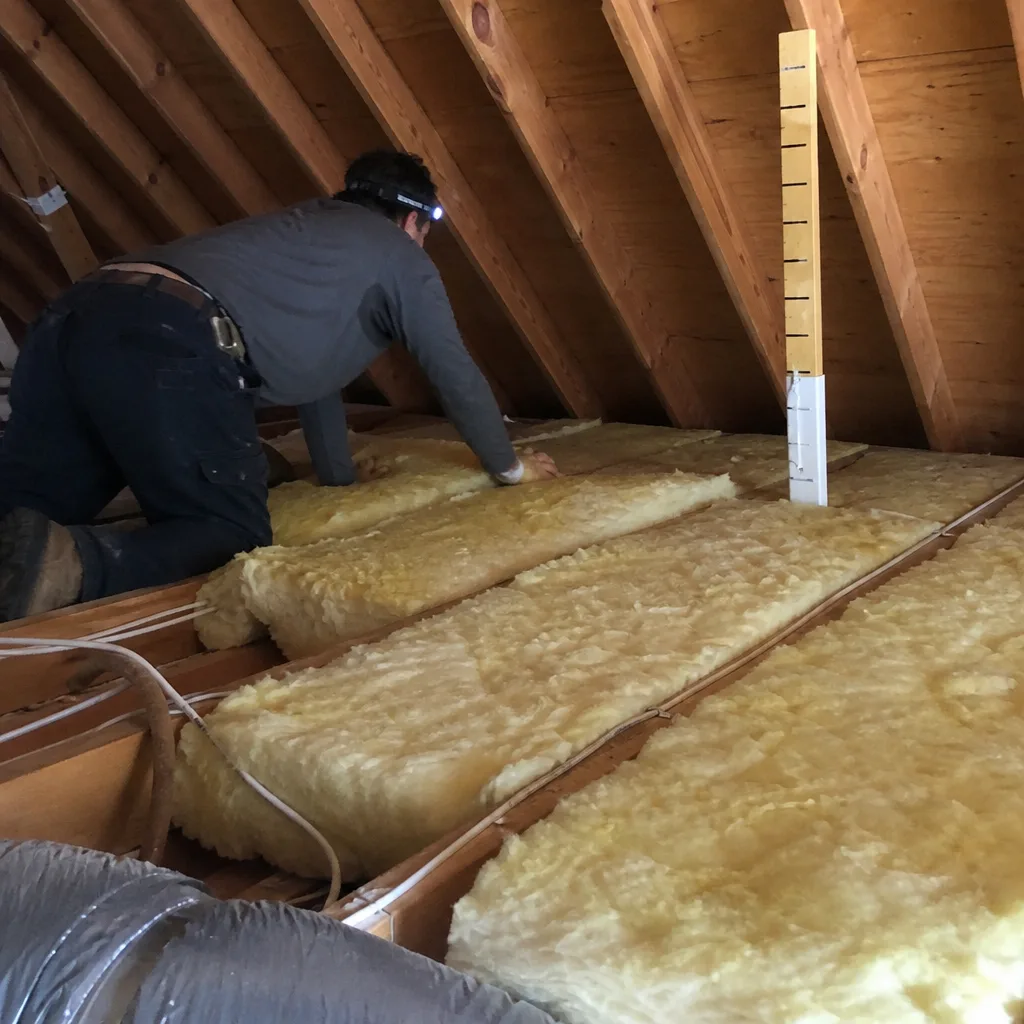
Live Oak’s 1970s-1990s tract homes were built with 2×4 exterior walls and minimal cavity insulation - often compressed batts with gaps at electrical boxes and plumbing stacks. Wall insulation retrofits are more invasive than attic work but essential for rooms with exterior walls that never reach set temperature, especially north-facing bedrooms in winter. We use injection foam or dense-pack cellulose that fills voids without removing drywall.
Injection Foam Wall Insulation
Signs you need it
Your exterior walls feel cold to the touch in winter, or you have rooms with two outside walls that are 5-10°F cooler than interior rooms.
What it costs in Live Oak
Injection foam wall insulation typically runs $3,200-$5,800 for a 1,500-2,500 square foot Live Oak home with accessible stud cavities.
How we do it
We drill 5/8-inch holes through exterior siding or interior drywall at stud spacing, inject slow-rise foam that fills cavities without bowing studs, then patch and match finish.
Drill & Fill Wall Insulation
Signs you need it
Your walls have no insulation or fallen batts visible through outlet openings, and you want a lower-cost alternative to full foam injection.
What it costs in Live Oak
Drill and fill with dense-pack cellulose typically runs $2,400-$4,200 for a standard Live Oak ranch home with 2×4 walls.
How we do it
We drill access holes at top and bottom of each stud bay, blow cellulose to 3.5 pounds per cubic foot density for no-settle performance, then seal holes with matching plugs.
What Wall Insulation Costs in Live Oak
| Item | Typical range in Live Oak |
|---|---|
| Drill and fill (dense-pack cellulose) | $2,400 - $4,200 |
| Injection foam (slow-rise, full fill) | $3,200 - $5,800 |
| Exterior wall insulation with siding removal | $4,800 - $8,400 |
Does wall insulation require removing drywall?
Not with injection foam or drill-and-fill methods - we access cavities through small holes that we patch and finish. Drywall removal is only needed for gut renovations or severe moisture damage.
Can you insulate walls from outside?
Yes, by removing a course of siding, drilling through sheathing, and reinstalling siding - a common approach for brick-veneer Live Oak homes where interior access is impractical. We match siding color and style on completion.
Attic Cleaning & Rodent Proofing in Live Oak
Live Oak’s mature tree canopy and proximity to greenbelts create sustained rodent pressure, and unsealed attic hatches in 1980s construction provide easy entry. We clean and sanitize attics after removal of contaminated material, then seal all entry points with rodent-proof materials - not spray foam, which rats chew through. Every job ends with a Documented Photo Record showing before condition, sealed entry points, and finished state.
Attic Sanitizing & Decontamination
Signs you need it
Your attic has visible droppings, urine staining on insulation or joists, or a musty odor that enters living spaces through recessed lights.
What it costs in Live Oak
Attic sanitizing and decontamination with HEPA vacuuming and antimicrobial treatment typically runs $1,200-$2,400 for a standard Live Oak attic.
How we do it
We remove contaminated material, HEPA-vacuum all surfaces, apply botanical or synthetic antimicrobial as appropriate, and run air scrubbers until particle counts drop below ambient.
Rodent Proofing & Exclusion
Signs you need it
You hear scratching at night, find droppings in the attic, or see gnaw marks on fascia boards or vent screens.
What it costs in Live Oak
Rodent proofing and exclusion typically runs $800-$1,800 for a single-story Live Oak home with standard roofline complexity.
How we do it
We install 1/4-inch hardware cloth over vents, seal all gaps larger than 1/4 inch with steel wool and cementitious sealant, and replace deteriorated fascia or soffit materials that allow entry.
What Attic Cleaning & Rodent Proofing Costs in Live Oak
| Item | Typical range in Live Oak |
|---|---|
| Attic sanitizing and decontamination | $1,200 - $2,400 |
| Rodent proofing and exclusion | $800 - $1,800 |
| Full attic restoration (cleaning + proofing + re-insulation) | $3,600 - $7,200 |
How do I know if rodents are in my attic?
Listen for scratching at dawn and dusk, check for droppings near attic hatches, and look for gnawed wiring or compressed insulation trails. We inspect and document entry points during every estimate.
Will rodents come back after proofing?
Not through sealed entry points - we use materials rats cannot chew and guarantee our exclusion work for one year. Recurring issues are almost always new entry points from rotted fascia or storm damage.
Home Energy Audit in Live Oak
A home energy audit in Live Oak identifies the specific envelope failures driving high electric bills and uncomfortable rooms. Our audit combines blower-door testing, thermal imaging, and duct leakage measurement to prioritize repairs by cost-effectiveness. In a typical 1985 Live Oak ranch, we find 35-50% of cooling load attributable to attic air leaks and inadequate insulation - problems that are fixable with documented results.
Blower Door Test
Signs you need it
Your home has drafts you cannot locate, rooms with inconsistent temperatures, or electric bills that spike without usage changes.
What it costs in Live Oak
A standalone blower-door test typically runs $350-$550; when bundled with a full audit, it’s included in the comprehensive price.
How we do it
We install a calibrated fan in an exterior door, depressurize the home to 50 Pascals, and measure airflow in CFM50 while tracing leaks with smoke pencils and thermal imaging.
Thermal Imaging Inspection
Signs you need it
You suspect missing insulation in walls or ceilings, or you want visual proof of air leaks before committing to repairs.
What it costs in Live Oak
Thermal imaging as part of a full audit typically runs $450-$750; standalone imaging starts at $300 for a single-story home.
How we do it
We scan all exterior surfaces with a FLIR camera during blower-door depressurization to reveal temperature differentials that indicate missing insulation or active air leaks.
What Home Energy Audit Costs in Live Oak
| Item | Typical range in Live Oak |
|---|---|
| Blower-door test (standalone) | $350 - $550 |
| Full home energy audit with thermal imaging | $450 - $750 |
| Audit with duct leakage testing included | $650 - $950 |
What does a home energy audit include?
A written report with blower-door CFM50, thermal images with temperature readings, prioritized repair list with estimated savings, and a written price for any work we recommend. No obligation to hire us.
How long does an audit take?
2-3 hours for a typical Live Oak single-story home; 3-4 hours for two-story or complex layouts. You receive the written report within 48 hours, and we review it with you line by line.
Brands We Service in Live Oak
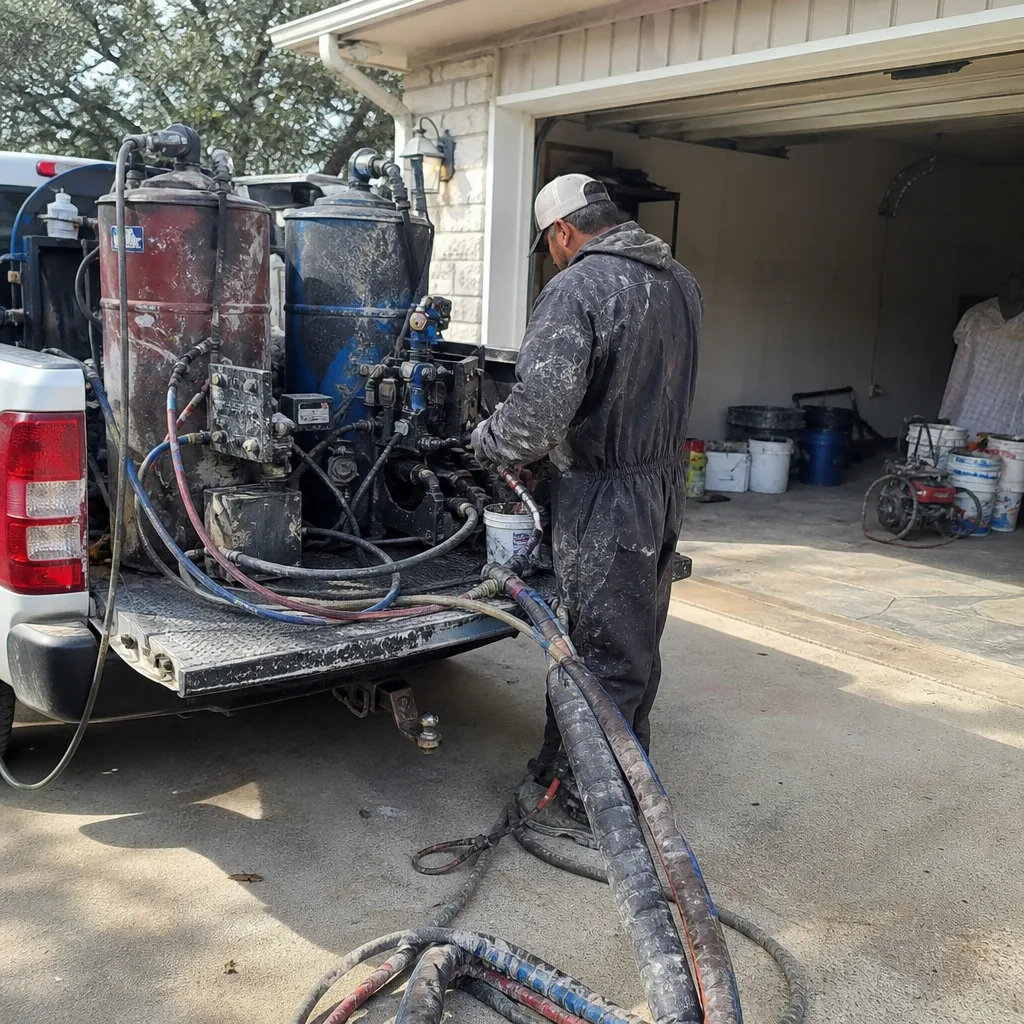
We install and service materials from Owens Corning, Johns Manville, Knauf, Rockwool, CertainTeed, Icynene, Demilec, and GreenFiber - no proprietary lock-in means we specify what’s right for your home, not our inventory. Most common products are stocked locally for next-day starts on approved jobs. See our brands for full specifications.
Pricing for Insulation in Live Oak, TX
| Service | Typical range in Live Oak |
|---|---|
| Crawl space vapor barrier | $1,400 - $2,600 |
| Full crawl space encapsulation | $3,200 - $6,800 |
| Attic radiant barrier | $1,200 - $2,400 |
| Radiant barrier with ventilation | $1,800 - $3,400 |
| Contaminated insulation removal | $1,600 - $3,200 |
| Insulation replacement (blown-in R-38) | $2,400 - $4,800 |
| Attic air sealing (comprehensive) | $2,200 - $4,200 |
| Wall injection foam | $3,200 - $5,800 |
| Attic sanitizing and decontamination | $1,200 - $2,400 |
| Full home energy audit | $450 - $750 |
Prices in Live Oak run higher when we encounter buried ductwork, active rodent infestations requiring multiple visits, or structural repairs needed before insulation can be installed. Every job still begins with a written price - no work starts without it - and our Free Second Opinion applies to any competing written estimate you bring us.
Neighborhoods We Serve in Live Oak
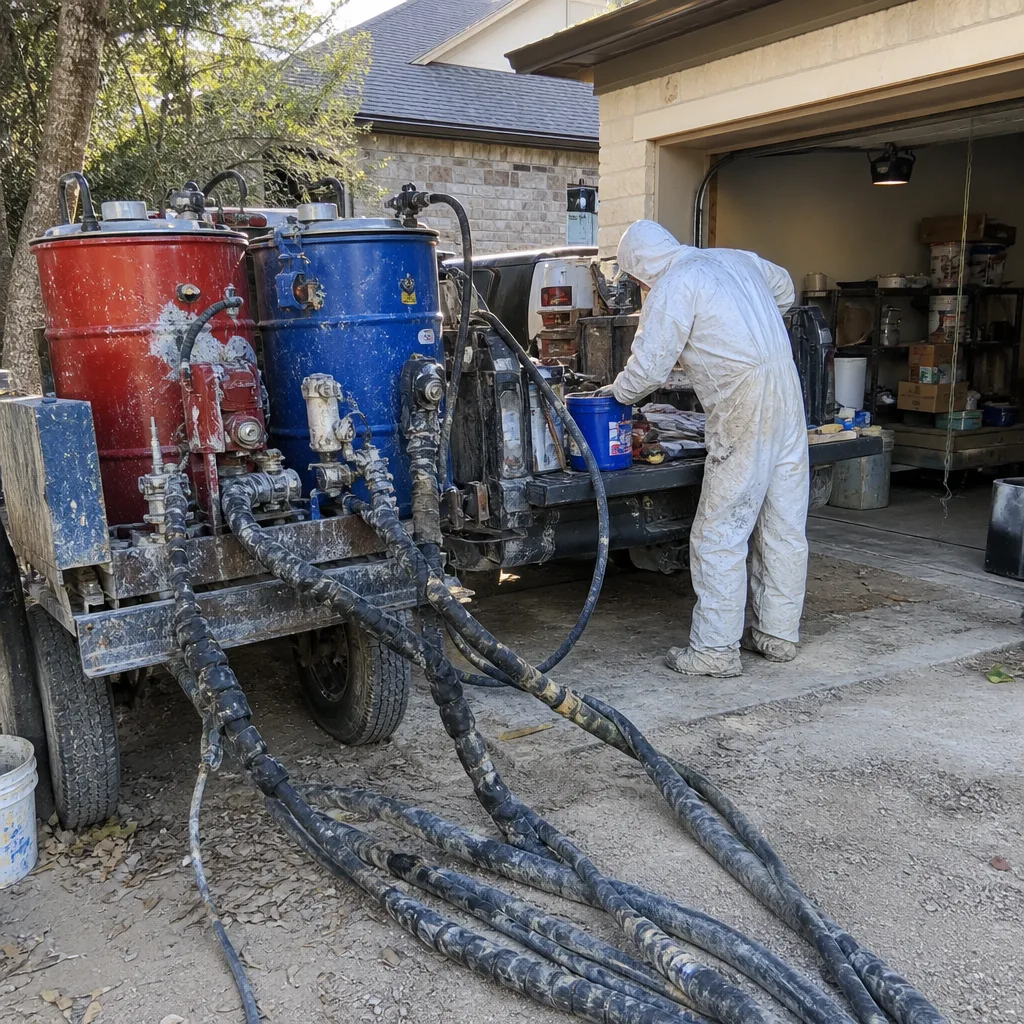
We work across Live Oak’s full residential core, from the original 1970s subdivisions to newer infill near Loop 1604. Most Live Oak addresses are within 25 minutes of our San Antonio dispatch office, with same-day or next-day scheduling for urgent situations.
- Woodlake
- Live Oak Estates
- Willow Springs
- Autumn Woods
- The Trails at Longhorn Quarry
Service Area - Cities Near Live Oak
Envelope Insulation Co. serves the full northeastern San Antonio metro from our San Antonio dispatch office, with local crews covering New Braunfels, TX, Cibolo, TX, Seguin, TX, and Schertz, TX in addition to Live Oak. Scheduling is coordinated centrally; crews arrive with materials, documentation equipment, and a written scope for every job.
Serving Live Oak, TX - Our Local Coverage Area
We’re based in the Live Oak area and know this community well. Use the map below to see our service coverage - if you’re nearby, we can almost certainly help.
FAQs About Insulation in Live Oak
Live Oak falls under Bexar County and San Antonio metro permitting; most attic insulation and air sealing does not require a permit, but crawl space encapsulation and spray foam may trigger inspection requirements. We handle permit research and submission as part of our written scope when needed.
We typically schedule estimates within 24-48 hours for Live Oak addresses, with emergency calls answered by a live person 24/7. Most standard jobs start within 3-5 business days of written price approval.
Insulation alone does not control humidity - air sealing and vapor barriers do. In Live Oak’s Gulf-influenced climate, we address moisture first, then insulation, which is why every job begins with a blower-door test and moisture assessment before material selection.
Call (830) 243-6352 for a free estimate. A live person will answer, gather your details, and schedule a technician who arrives with a written scope, a written price, and the documentation you’ll receive when the job is done. Under Haven Standard: Have it in writing.
What happens when you call
- 1A real person answersNo phone trees - talk to a local insulation pro.
- 2You get an upfront price rangeHonest numbers before anyone is dispatched. No surprises.
- 3A background-checked tech heads outLicensed & insured, typically same-day.
- 4You approve before work beginsNothing starts until you say go.
What Live Oak Customers Say
"They photographed rodent damage in the old insulation that we had no idea about, and priced the exclusion work separately so we could decide."
- Harriet N."The winter gas bill dropped by about a third. They had estimated a quarter, so they under-promised."
- Genevieve R."Two other companies quoted to blow more insulation on top of what was there. These were the only ones who said the existing material had to come out first, and explained why."
- Clifford E.