

How Much Does a Home Energy Audit Cost in New Braunfels?
A home energy audit in New Braunfels, TX typically runs between $250 and $650 for a standard single-family home, with most homeowners paying around $350-$450 for a full blower-door assessment paired with a written findings report. Larger homes above 3,000 square feet, or older builds in areas like Gruene or the historic downtown corridor where air-sealing deficiencies tend to stack up, can push that number closer to $600-$800 when the scope includes duct leakage testing and infrared thermal imaging.
The short version: budget $300-$500 for most New Braunfels homes built between 1990 and 2015, and know that the audit cost is almost always recovered in the first year through lower CPS/GVEC bills once the identified problems are fixed.
Home Energy Audit Cost Breakdown (2026)
The price you pay covers specific diagnostic procedures, not a general walk-through. Here is what each component typically costs in the New Braunfels market, priced individually so you know exactly what you are getting.
| Audit Component | Typical Cost Range (New Braunfels, 2026) | What It Tells You |
|---|---|---|
| Basic visual inspection + written report | $150 – $250 | Identifies obvious insulation gaps, attic bypasses, and visible air leaks |
| Blower-door test (whole-house pressurization) | $175 – $300 | Produces a CFM50 reading – one number showing total air loss through the building envelope |
| Duct leakage test (duct blaster) | $100 – $200 | Measures how much conditioned air leaks out of ducts before it reaches a room |
| Infrared thermal imaging | $75 – $175 | Shows exactly where heat moves through walls, ceilings, and floors – useful in New Braunfels’s mixed-climate zone |
| Full comprehensive audit (all above combined) | $350 – $650 | Complete picture of where energy is leaving the home and a prioritized fix list |
| Large home / older stock surcharge (3,000+ sq ft or pre-1985) | $100 – $200 added to base | Extra time for more penetrations, older duct configurations, and complex attic layouts |
| Follow-up verification audit (post-work) | $150 – $250 | Second blower-door reading taken after air sealing to confirm the CFM50 dropped |
What Pushes the Price Up or Down
The single biggest cost driver is home size. A 1,800-square-foot slab-on-grade ranch in the Vintage Oaks area will audit faster than a two-story, 3,400-square-foot home in Havenwood with a vaulted ceiling, a bonus room over the garage, and a partially unconditioned attic knee wall. Each additional zone adds instrument setup time.
Age of construction matters a lot in New Braunfels specifically. The city has grown fast – entire neighborhoods like Vintage Oaks, Copper Ridge, and Creekside went up between 2005 and 2018, and many of those homes were built to the minimum code insulation values of that era, not to current performance standards. Those homes often audit quickly because the problem list is predictable. Older homes near downtown or along the Guadalupe corridor, built in the 1950s through 1970s before Energy Code existed in Texas, take longer because the auditor has to trace duct runs, check for vermiculite or deteriorated fiberglass batts, and document multiple entry points for conditioned-air loss.
Audits that include infrared thermal imaging cost more because the camera work is most useful either early morning or after sunset, when the temperature differential between inside and outside is large enough to produce a readable image. In July and August in New Braunfels, that means the audit runs longer into the evening – time that is reflected in the price.
Finally, the written deliverable affects cost. A verbal summary and a one-page checklist is cheaper than a 12-page PDF with annotated photos, CFM50 before/after values, a prioritized repair list with estimated savings per line item, and a documented photo record – which is what a proper audit should produce and what you should ask for before agreeing to any price.
What Affects Home Energy Audit Pricing in New Braunfels
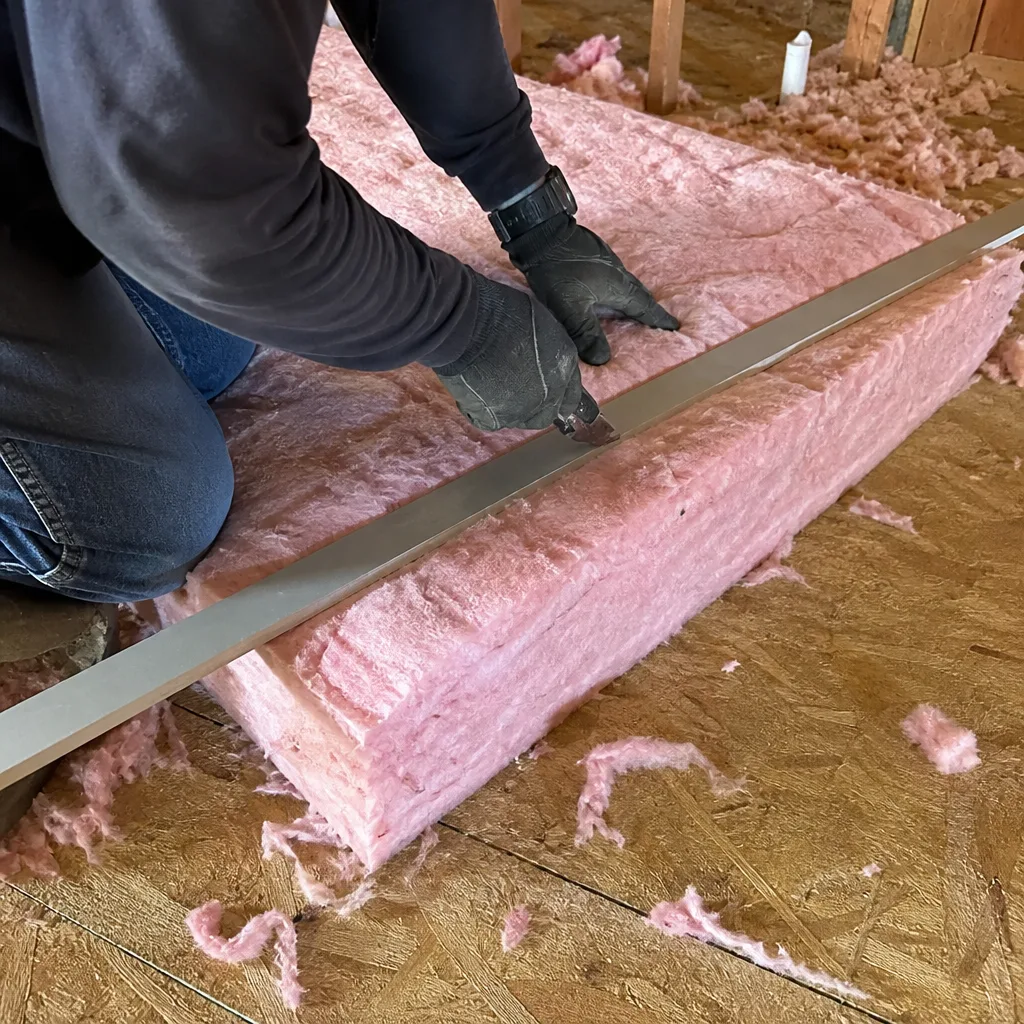
- Home square footage and story count: Auditors price by time on-site. A single-story 1,600-square-foot home might take 90 minutes; a two-story 3,200-square-foot home with a detached garage and a conditioned crawl space can take three hours or more. Most New Braunfels auditors price in brackets – under 2,000 sq ft, 2,000-3,000 sq ft, 3,000+ sq ft.
- Construction era and building complexity: New Braunfels grew in three distinct waves – pre-1980 stock near the river and downtown, 1990s-2000s growth along I-35 between here and San Marcos, and the post-2010 master-planned communities to the north and west. Each era has a different envelope profile. Homes built before 1980 frequently need more instrument time because original duct layouts were not designed for modern HVAC equipment.
- Climate zone and testing conditions: New Braunfels sits in IECC Climate Zone 2B – a hot-dry/mixed climate that runs brutal cooling loads from May through October. Thermal imaging is most diagnostic when the indoor-outdoor temperature difference exceeds 15°F. In summer, that requires evening appointments; in winter, early-morning testing is more practical. Either way, scheduling around New Braunfels’s climate adds coordination time.
- Duct system location and access: Ducts buried in a tight attic above a two-car garage in Copper Ridge are harder to test and photograph than ducts in a vented crawl space. Difficult access adds time, and time adds cost. If your HVAC system is original equipment from a 1990s build, expect the auditor to spend extra time documenting duct condition before running the leakage numbers.
- Whether a follow-up verification test is included: The most useful audits end with a second blower-door reading after the recommended repairs are done – this is how you confirm the CFM50 actually dropped and that you got what you paid for. Some auditors bundle this into a package price; others charge separately. Either way, ask before you book.
- Report format and documentation depth: A bare-minimum checklist costs less to produce than a documented report with annotated thermal images, before/after readings, and a repair-priority list sorted by payback period. The extra cost of a thorough written report is almost always worth it – especially if you are using the findings to prioritize a larger insulation or air-sealing project.
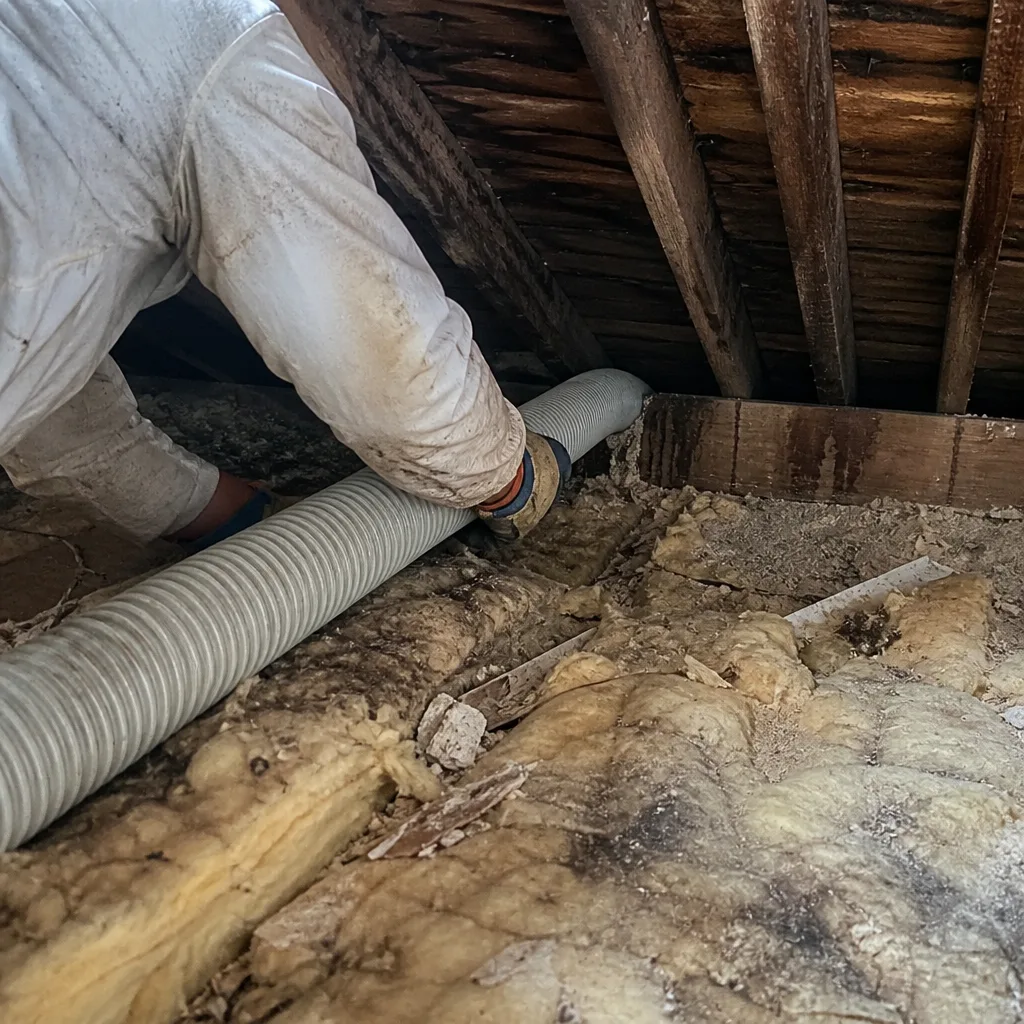 Before
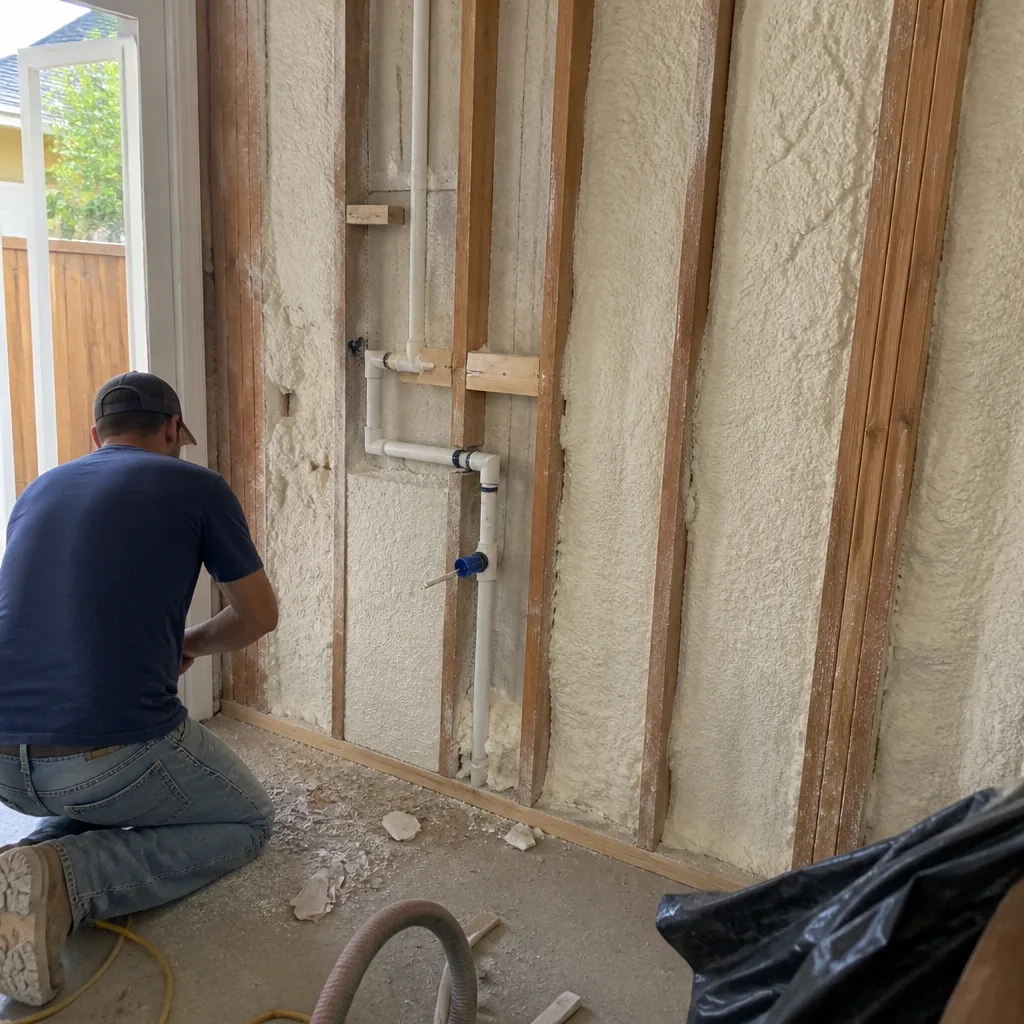 After
AfterWhy the Audit Cost Is Almost Never the Real Question
Most New Braunfels homeowners who ask about audit pricing are really asking: will I get more back than I spend? The honest answer is yes, consistently – but only if the audit produces findings that actually get addressed.
A blower-door test reading of 4,000 CFM50 in a 2,200-square-foot home in the Creekside neighborhood is the kind of number that tells a clear story. That is roughly equivalent to leaving a 14-inch-square hole open in your exterior wall every hour the air handler runs. An auditor who hands you that number alongside a photo-documented list of the top five leak points – attic hatch, top plates behind the HVAC air handler, recessed can lights, the knee wall behind the bonus room, and the plumbing chase – gives you everything you need to prioritize the repair work that will move that number.
After those five areas are addressed and insulation is added in the correct sequence (air sealing first, then insulation – never the other way around), a follow-up blower-door reading commonly drops to 2,000-2,400 CFM50. At current GVEC and CPS residential rates in the New Braunfels area, that kind of reduction in envelope leakage translates to a measurable drop in monthly cooling costs during the months that matter most here: June, July, August, and September.
The $350-$500 audit cost pays for itself in clarity. Without the numbers, a homeowner guessing at where to spend their insulation budget is as likely to insulate over existing air leaks as to fix the actual problem – which accomplishes little and can trap moisture in the wrong places.
At Envelope Insulation Co., led by Wes Okafor, we treat the audit findings as the mandatory first step. We will not blow insulation over an unsealed attic floor. Air sealing of top plates, can lights, and penetrations gets completed before any insulation is added – because that is the order that produces a documented performance change, not just a thicker layer of material sitting on top of an unresolved problem. You can read more about how that process works on our Home Energy Audit in New Braunfels page.
New Braunfels-Specific Findings: What Auditors Typically Find Here
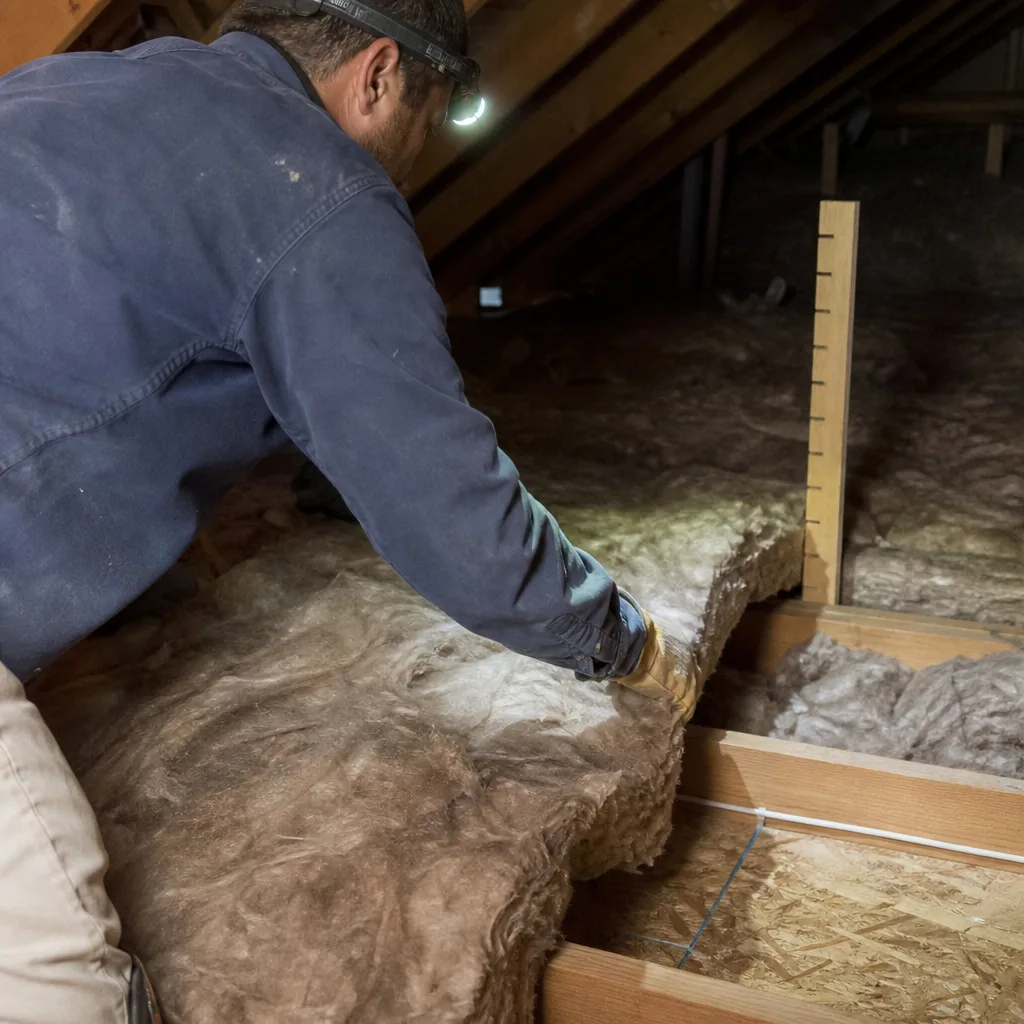
After auditing and sealing homes across New Braunfels since 2016, the same deficiencies appear in predictable patterns by neighborhood and construction era. This is not a generic list – these are the specific findings that show up repeatedly on blower-door reports in this market.
Gruene and Downtown Historic Stock (Pre-1980)
Attic bypasses at partition walls are almost universal in this era. The original insulation – often 3.5 inches of blown fiberglass that has settled to 2 inches over 40 years – sits on top of a floor that has never been air-sealed. Top plates at interior wall headers are open. Pull-down attic stairs have zero insulation value and leak conditioned air at a rate that shows up immediately on a CFM50 reading. Duct systems in these homes were designed for evaporative cooling or early central air units and are frequently undersized for current HVAC equipment.
I-35 Corridor Builds (1990-2005)
This era’s homes were built to T-24 or early IECC standards that permitted insulation values that look low by 2026 benchmarks. Recessed can lights penetrating the attic floor are the most common single leak point – each unprotected can is essentially a hole the size of a coffee can punched through the ceiling air barrier. A home with 20 original recessed fixtures and no airtight housings can be losing 400-600 CFM50 through the lighting alone before any other deficiency is counted. New Braunfels homes in the Fischer Road, Westwood, and Blieders Creek-area subdivisions from this period audit consistently in the 3,500-5,500 CFM50 range before sealing work.
Post-2010 Master-Planned Communities (Vintage Oaks, Copper Ridge, Havenwood)
These homes were built to a higher initial standard, but “code minimum” still leaves significant performance on the table. The most common findings here: radiant heat gain through the roof deck (the attic hits 145-150°F on a July afternoon and the insulation, however thick, is working against a furnace), knee walls in bonus rooms that are insulated on the wrong side, and HVAC equipment installed in unconditioned attic space that loses 10-15% of its output before the conditioned air reaches the living areas. Blower-door readings in this stock typically run 1,800-3,000 CFM50 – tighter than older homes, but still well above the threshold where envelope improvements produce a measurable bill reduction.
How to Save on a Home Energy Audit in New Braunfels
A few practical ways to get more value out of the audit budget – or reduce what you spend without cutting out the diagnostics that actually matter.
- Check GVEC and CPS rebate programs first. Both utilities serving the New Braunfels area have run rebate programs that offset a portion of audit costs for residential customers. Program terms change annually, so call your utility directly before scheduling – a $75-$150 rebate on a $400 audit is worth five minutes on the phone.
- Get a written price before anything starts. This sounds obvious, but auditors who quote verbally can add scope – and cost – after they are already in your attic. Under Haven Standard Clause 1, Envelope Insulation Co. provides a flat written price and written scope before anyone starts. Ask any auditor for the same.
- Bundle the audit with a planned insulation project. If you already know your attic needs attention, scheduling the audit and the air-sealing/insulation work together – rather than separately – often reduces the combined cost because the auditor and the installation crew share a single site visit and setup. Ask whether the contractor prices them as a package.
- Schedule for off-peak months. In New Braunfels, demand for insulation and energy-efficiency work peaks from late February through June as homeowners prepare for summer cooling season. Scheduling an audit in November, December, or January often means faster scheduling and, occasionally, reduced pricing – plus winter temperature differentials make thermal imaging more effective, so you get better data at a better price.
- Ask for a free second opinion on any written estimate. If you have already received a written audit or insulation proposal from another contractor, Envelope Insulation Co. will review it with you at no charge. Wes Okafor’s team reads competing quotes line by line – not to undercut them, but to make sure you understand what you are actually buying before you sign.
- Do not skip the follow-up verification test. This sounds counter-intuitive in a section about saving money, but skipping the post-work blower-door reading means you have no confirmation that the air-sealing work produced a measurable result. If you spend $1,800 on attic air sealing and never run a second CFM50 measurement, you cannot verify the improvement. The follow-up test costs $150-$250 and is the only way to confirm the investment performed as claimed.
For a written price on a home energy audit in New Braunfels with no obligation to book further work, call (830) 243-6352. The estimate is free, the price will be in writing before anything is scheduled, and there is no upsell pressure toward a repair scope until the findings are in front of you.
What You Should Receive When the Audit Is Done
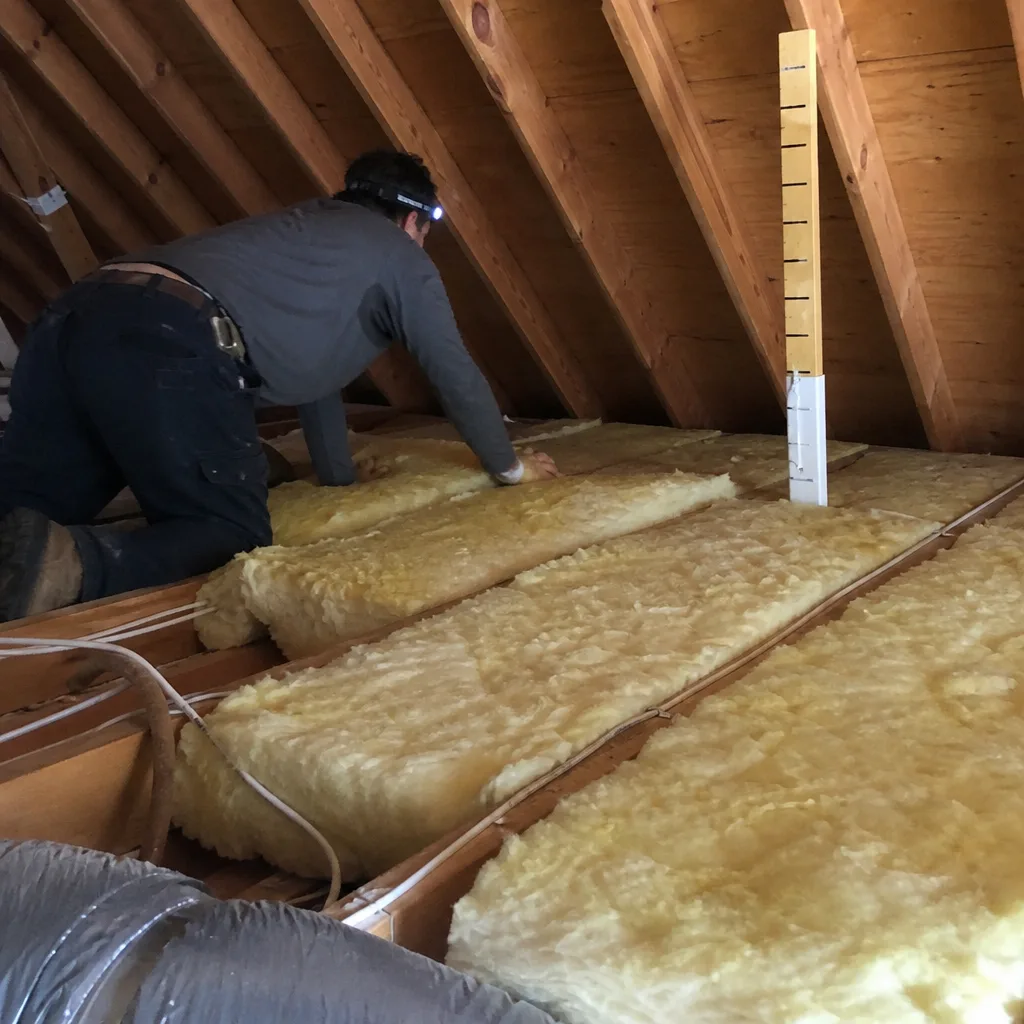
This is the section most homeowners do not think to ask about until after the fact. A home energy audit should produce a specific set of documents – not a handshake and a verbal summary. Before booking any auditor in New Braunfels, confirm you will receive all of the following.
- A written blower-door result – the CFM50 number before any repairs, with a notation of the equivalent leakage area in square inches so the number has context
- A documented list of identified air-leak locations with photographs – not a generic checklist, but photos from your specific home showing the actual penetrations, gaps, and bypasses the auditor found
- A duct leakage reading if duct testing was included, expressed in CFM25 – the standard measure of duct air loss in this climate zone
- Annotated thermal images if infrared was part of the scope, with a note on the indoor-outdoor temperature differential at the time of testing (this affects how meaningful the images are)
- A prioritized repair list – not a blanket “add more insulation” recommendation, but a line-item breakdown of findings sorted by estimated impact, with rough cost ranges for each fix
- A second blower-door reading if the audit included post-repair verification, showing the CFM50 after sealing work was completed
At Envelope Insulation Co., a Documented Photo Record is included on every visit – not available on request, included by default. When blower-door testing is performed, the before and after numbers are published on the job record so the homeowner has a permanent reference. That is the Haven Standard, and it applies to audit work the same way it applies to every insulation job.
You can see how that documentation process fits into a full home energy improvement project on our main site, where the service line and the written-price guarantee are described in full.
Repair Costs After the Audit: What to Budget
The audit is the diagnostic step. The repair costs that follow depend entirely on what the audit finds – but New Braunfels homeowners ask about the downstream numbers often enough that it is worth giving real ranges here.
- Attic air sealing (top plates, can lights, penetrations, attic hatch): $400-$1,200 for most homes under 2,500 sq ft, depending on the number of penetrations and the attic access conditions
- Blown-in insulation added after sealing (attic floor to R-38 or R-49): $800-$2,400 depending on existing insulation depth and square footage
- Radiant barrier installation (reflective barrier on rafters): $900-$2,200 for a typical New Braunfels home – particularly cost-effective in Climate Zone 2 where the attic routinely exceeds 140°F in summer
- Duct sealing and insulation upgrade: $600-$2,000 depending on duct system age and configuration
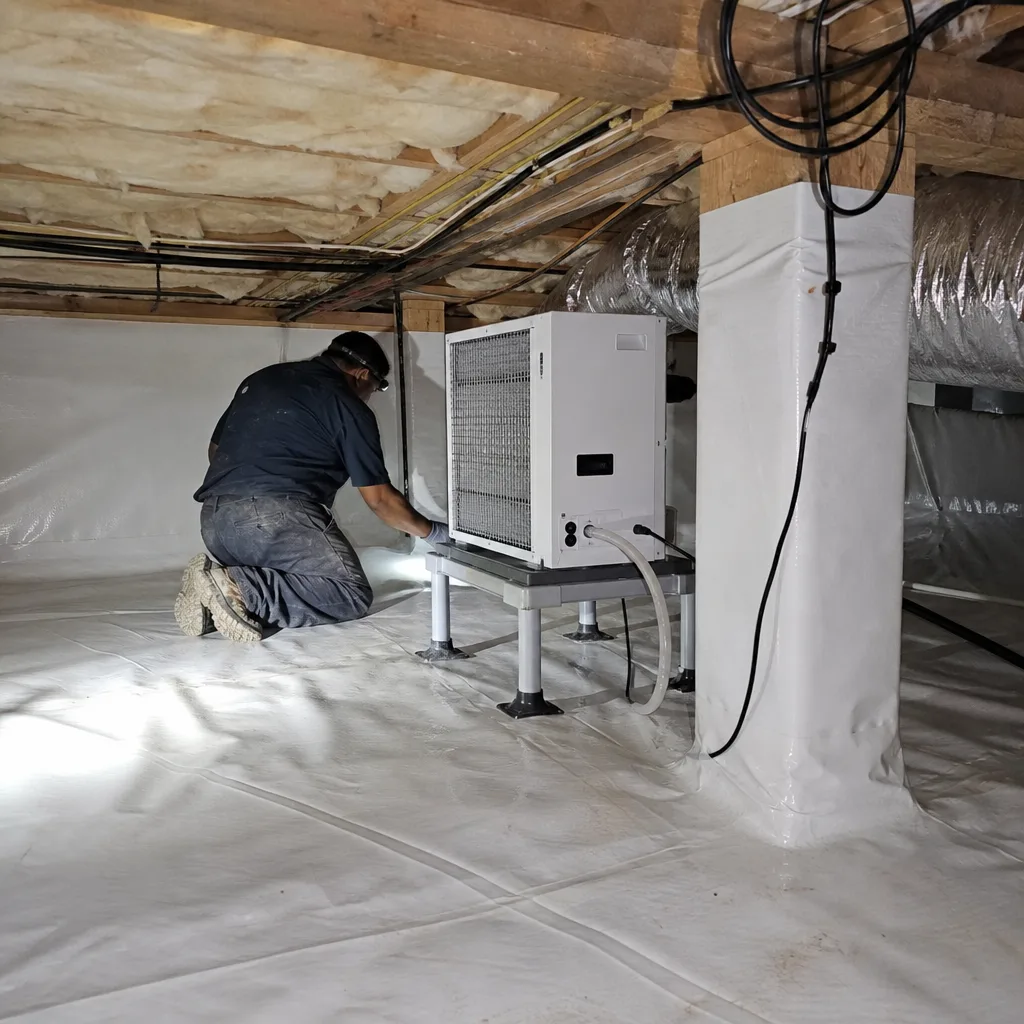
- Crawl space vapor barrier / encapsulation (where applicable): $1,200-$3,500 for homes with unconditioned crawl spaces – less common in New Braunfels’s predominantly slab-on-grade construction, but present in some of the older Gruene-area and river-adjacent properties
A full attic air-sealing and insulation project – audit through final blower-door verification – runs $1,500-$4,500 for most New Braunfels homes in the 1,800-3,000 sq ft range. Homes with more complex attic geometry, older duct systems, or significant pre-existing moisture issues will be at the higher end of that range or beyond it. A written price before any work starts is the only way to know exactly where your project lands.
FAQs: Home Energy Audit Cost in New Braunfels
How much does a home energy audit cost in New Braunfels, TX?
Most home energy audits in New Braunfels run between $250 and $650, with the typical single-family home falling in the $350-$450 range when the audit includes a blower-door test, duct leakage measurement, and a written findings report. Homes above 3,000 sq ft or with complex attic configurations can reach $600-$800. Call (830) 243-6352 for a written price specific to your home’s square footage and construction year – the estimate is free.
Is a home energy audit worth the cost in New Braunfels?
Yes, consistently – provided the audit produces documented findings that get addressed. New Braunfels sits in one of Texas’s most demanding cooling climates, and homes with blower-door readings above 3,000 CFM50 are typically losing enough conditioned air to add $80-$150 per month to summer GVEC or CPS bills. At $350-$500 for the audit and $1,500-$3,000 for targeted air sealing and insulation, most homeowners recover the combined investment in two to four cooling seasons. Without the audit, repair money often goes to the wrong places.
What does a home energy audit include in New Braunfels?
A complete home energy audit includes a whole-house blower-door pressurization test (which produces a CFM50 reading showing total envelope air loss), a duct blaster test for duct leakage, infrared thermal imaging to locate specific heat-transfer points, a visual inspection of the attic, wall assemblies, and crawl space (where present), and a written report with photographs and a prioritized repair list. Some auditors charge separately for thermal imaging and duct testing; others bundle everything. Ask for the full component list and a written price before booking.
Can I get a free home energy audit in New Braunfels?
Free audits are sometimes available through GVEC or CPS residential efficiency programs – both utilities serving the New Braunfels area have offered subsidized or no-cost audits for qualifying customers in past program years. Check directly with your utility for current availability; these programs open and close based on funding cycles. Contractor-provided “free energy assessments” are typically visual walk-throughs without blower-door equipment – useful for identifying obvious problems, but not a substitute for measured diagnostics. Call (830) 243-6352 to ask what is currently available and what a full diagnostic audit would cost for your specific home.
How long does a home energy audit take in New Braunfels?
Plan on 90 minutes to three hours for a complete audit of a typical New Braunfels single-family home. A 1,600-square-foot slab-on-grade home with a straightforward attic runs closer to 90 minutes. A 3,000-square-foot two-story with a complex roofline, older duct system, and multiple HVAC zones will run two and a half to three hours. The blower-door setup and testing alone takes 20-30 minutes; thermal imaging after dark (required for summer accuracy in New Braunfels’s climate) can add 30-45 minutes to the visit. The auditor should tell you expected time on-site when they provide the written price.
What is a good blower-door test result for a New Braunfels home?
IECC 2021 – the current Texas energy code – targets 3 ACH50 or lower for new construction. For a typical 2,200-square-foot New Braunfels home, that translates to roughly 1,600-1,800 CFM50. Existing homes in New Braunfels audit across a wide range: post-2010 master-planned-community builds commonly test at 2,000-3,500 CFM50; 1990s-2000s builds run 3,500-5,500; pre-1980 homes near Gruene or downtown can exceed 6,000 CFM50. Any reading above 4,000 CFM50 in a home under 2,500 sq ft represents a meaningful air-sealing opportunity with a measurable payback in reduced cooling costs.
Schedule a Written-Price Audit for Your New Braunfels Home
Envelope Insulation Co., independently owned and operated under The Haven Standard since 2016, has audited and sealed homes across New Braunfels – from older Gruene-area builds with decades of accumulated air-sealing deficiencies to newer Vintage Oaks construction where radiant heat gain and duct placement are the primary performance drag. Wes Okafor and the team have documented before-and-after blower-door numbers on applicable jobs since the company’s first year – not because it is a marketing point, but because it is the only way to confirm the work performed as claimed.
Every audit starts with a written price. The scope is in writing before anyone arrives. The findings come back to you as a documented photo record with your CFM50 reading, a list of identified leak locations with photographs, and a prioritized repair list you can act on immediately or sit with for a month – no pressure, no urgency theatre, no follow-up calls until you ask for one. The 365-Day Done Right Promise applies: if it is not right, we make it right.
To book a home energy audit in New Braunfels or to get a free second opinion on a written estimate you have already received, call (830) 243-6352. A live person answers – no voicemail loop, no callback window measured in business days.
Written by Wes Okafor, Owner at Envelope Insulation Co. / Topside Attic Insulation New Braunfels, serving New Braunfels, TX since 2016. Pricing reflects the New Braunfels market as of 2026. For a free written estimate, call (830) 243-6352.
What Our Customers Say
"Crawl space encapsulation done properly. Photographs of the vapour barrier at every seam, and the damp smell in the hallway is gone."
- Ainsley P."They air-sealed the attic floor before insulating and showed me the blower-door number before and after. The upstairs is finally the same temperature as downstairs."
- Marisol D."They photographed rodent damage in the old insulation that we had no idea about, and priced the exclusion work separately so we could decide."
- Harriet N.