
Crawl Space Vapor Barrier in New Braunfels, TX
A crawl space vapor barrier is a polyethylene or reinforced foil membrane installed across the ground and up the foundation walls of your crawl space to block soil moisture before it migrates into your home’s structural framing, insulation, and living area. In New Braunfels, where the Guadalupe River corridor and the clay-heavy soils around FM 306 and Gruene Road keep ground moisture elevated for much of the year, an unprotected crawl space floor is one of the most reliable sources of mold, rot, and elevated indoor humidity we see. Most barrier installations in this market run between $1,200 and $3,800, depending on square footage and access conditions – and in most cases we complete the work in a single day.
At Topside Attic Insulation New Braunfels, we don’t hand you a quote and start cutting plastic. Under Haven Standard Clause 1, you receive a written price and a written scope before anyone enters your crawl space. When the crew leaves, you get a documented photo record of what was installed, where seams were lapped, and how the barrier was secured to footings. Wes Okafor built this process because a vapor barrier you can’t verify is a vapor barrier you can’t trust. If you’d like to talk through what your crawl space actually needs, call (830) 243-6352 – a live person picks up, any time of day.
This page covers the vapor barrier installation specifically. If you’re also considering full Crawl Space Encapsulation & Vapor Barrier in New Braunfels – which adds conditioned air supply, a dehumidifier, and complete sealing of vents and rim joists – that parent service page explains how the two scopes relate and when full encapsulation makes more sense than barrier-only work.
When You Need a Crawl Space Vapor Barrier
Not every crawl space needs the same intervention, but in New Braunfels the combination of reactive clay soils, seasonal flooding in low-lying areas near the Comal River, and the humidity spikes that hit between March and October pushes a lot of homes past the threshold where a bare dirt floor is acceptable. Here are the situations where a vapor barrier installation is typically the right first move.
- You notice a musty smell in the first floor of your home, especially after rain. That odor is usually microbial – mold spores and mildew growing on framing or subfloor sheathing that stays damp from soil evaporation. In the Creekside Estates and Vintage Oaks areas, we regularly find first-floor odors that trace directly to an uncovered crawl space floor, not a plumbing leak.
- Your hardwood or laminate floors are buckling or showing edge-gapping. Lumber absorbs moisture vapor that rises from bare soil. When the subfloor and joists fluctuate in moisture content season to season, finished flooring above them moves with it. A properly lapped barrier – sealed to the footings with a mechanical fastener or adhesive – significantly reduces that cycle.
- A home inspector flagged moisture staining or light mold on your crawl space joists. This is common in homes built before 2005 in the older sections of New Braunfels near downtown and along San Antonio Street, where crawl space construction was standard and vapor barriers were rarely specified. Staining on wood within 18 inches of a bare soil floor almost always means the soil moisture is winning.
- Your HVAC system is running longer cycles than it used to, or your utility bills have crept up. Moisture in the crawl space air raises the latent load – the portion of your air conditioner’s work that goes toward dehumidification rather than temperature drop. A barrier reduces that latent load, and we can document the change if you have pre-installation utility data to compare against.
- You’ve had standing water in the crawl space after a heavy rain. The New Braunfels area sits on the Edwards Plateau transition zone, and drainage can be unpredictable in subdivisions built on cut-and-fill lots. A vapor barrier alone won’t solve an active drainage problem, but after drainage corrections are made, the barrier protects the structure from residual soil moisture that persists for weeks after water recedes.
- Your home has fiberglass batt insulation in the crawl space floor joists and it’s sagging or falling. Batt insulation in a vented crawl space absorbs moisture and loses both its shape and its R-value. Before we re-insulate anything in that cavity, the soil moisture source needs to be addressed. Sealing first, then insulating – in that order – is how we approach every crawl space job.
Our Crawl Space Vapor Barrier Process
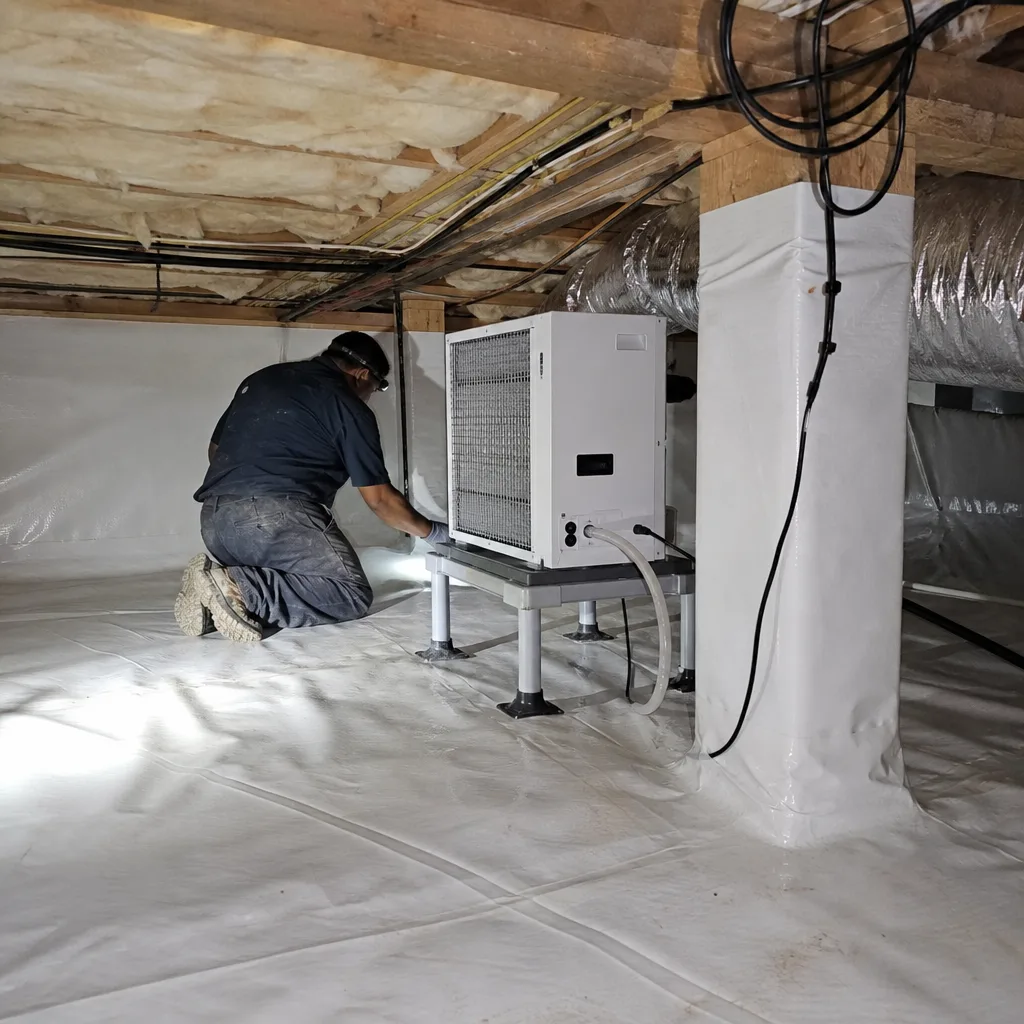
We don’t drop plastic sheeting and call it done. The installation sequence matters as much as the material, and a vapor barrier that isn’t lapped correctly, attached at the walls, or sealed at penetrations will let moisture in through exactly the gaps it was supposed to close. Here’s what the process looks like on a standard New Braunfels installation.
- Pre-installation inspection and documentation. Before any material goes in, we photograph the existing conditions – bare soil, any existing failed barrier, standing water evidence, wood staining, insulation condition, and penetration locations (plumbing, HVAC ducts, support posts). You receive this photo set whether or not you proceed with installation. This is what leaving looks like before we arrive, and it gives you a baseline to compare to the post-installation record.
- Debris removal and ground preparation. Rocks, construction debris, and sharp objects puncture polyethylene barriers within the first year if not cleared. We remove debris from the crawl space floor and, if needed, grade low spots where water can pool beneath the membrane. In New Braunfels homes on older pier-and-beam foundations – particularly in the Landa Park area – we occasionally find legacy fill material that needs to come out before the floor can be properly prepped.
- Barrier installation – field and wall sections. We install a minimum 12-mil reinforced polyethylene membrane across the crawl space floor, with 12-inch overlaps at all seams. Seams are taped with vapor-barrier-specific adhesive tape, not standard construction tape, which fails in the humidity range your crawl space operates in. The membrane runs up the foundation walls and piers to a minimum of 6 inches above grade and is secured mechanically with masonry fasteners or termination bar – never just folded over and left to curl. Owens Corning’s EcoTouch-compatible crawl space systems, where applicable, integrate with this step cleanly.
- Penetration sealing. Every pipe, post, and conduit that passes through the membrane is cut around and sealed with butyl tape or compatible sealant. This is where budget installations fail: the field coverage is fine but the penetrations are left open, and moisture migrates through those gaps at a rate that undermines the whole installation. We treat each penetration as its own detail, photographed individually in the post-installation record.
- Edge and footing termination. The barrier is sealed to the foundation wall or footing using termination bar and masonry adhesive. In pier-and-beam homes, each pier gets its own wrapped detail. A barrier that terminates at the wall but isn’t adhered lifts with air pressure changes and soil movement, creating gaps within 12 to 18 months. Mechanical fastening is the detail that keeps a vapor barrier working past the first few seasons.
- Post-installation documentation and written warranty. When installation is complete, we photograph every section of the finished barrier – wall terminations, seam tape, penetration details, and the full floor coverage. You receive this photo record before we leave the job site. Your written warranty under the 365-Day Done Right Promise is also delivered at this point, not mailed later. If anything isn’t right within 365 days, we make it right – that’s in writing before the work starts.
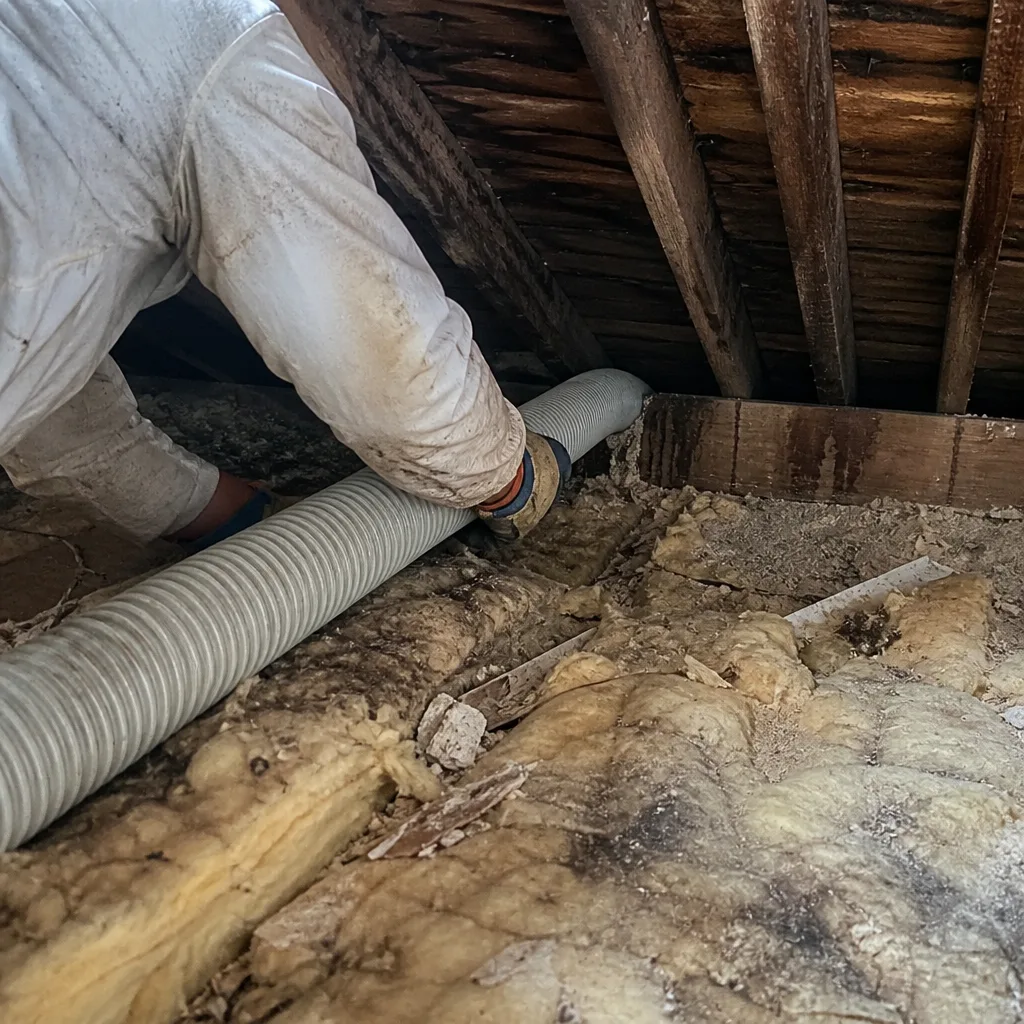 Before
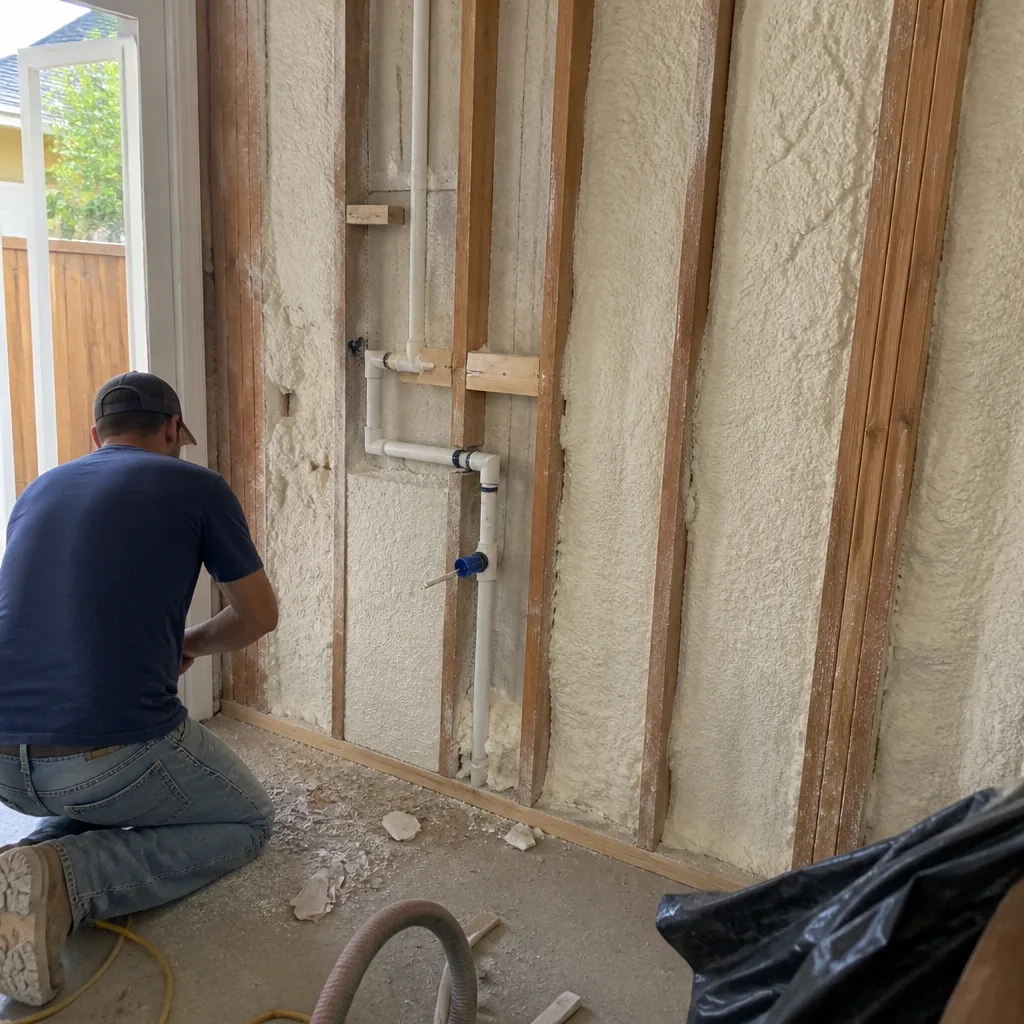 After
AfterCrawl Space Vapor Barrier Pricing in New Braunfels
Crawl space vapor barrier installation in New Braunfels typically runs between $1,200 and $3,800 for residential jobs. The range is wide because the variables that drive cost are structural, not arbitrary. Here’s how those numbers break down.
| Scope | Typical Price Range |
|---|---|
| Small crawl space (under 800 sq ft, good access) | $1,200 – $1,700 |
| Mid-size crawl space (800-1,500 sq ft, standard access) | $1,700 – $2,600 |
| Large crawl space (1,500+ sq ft or restricted access) | $2,600 – $3,800 |
| Debris removal / ground prep (if needed, per hour of labor) | $75 – $125/hr added to base |
| Failed barrier removal before reinstallation | $200 – $600 depending on material and area |
The factors that move your number within that range include the square footage of the crawl space floor, access height (a crawl space under 24 inches takes significantly longer to work in), the number of piers and penetrations that need individual detailing, whether existing material needs to come out first, and whether debris removal or drainage corrections are required before the membrane goes down.
We don’t adjust the price after we’ve started. Under Haven Standard Clause 1, the written price you receive before work begins is the price you pay – no materials-cost adjustments, no “we found something” adders after the crew is already in. If we find a condition during inspection that changes the scope, we write a revised price and you approve it before anything proceeds. That’s how we’ve operated since 2016 and it’s what we mean when we say a written price before any work starts is the foundation, not a marketing line.
If you have a written estimate from another contractor, bring it. We offer a free second opinion on any written estimate – we’ll read it with you, line by line, and tell you what the scope covers and what it doesn’t. Call (830) 243-6352 to schedule a crawl space inspection and get your written price. There’s no charge for the estimate.
Key Takeaways
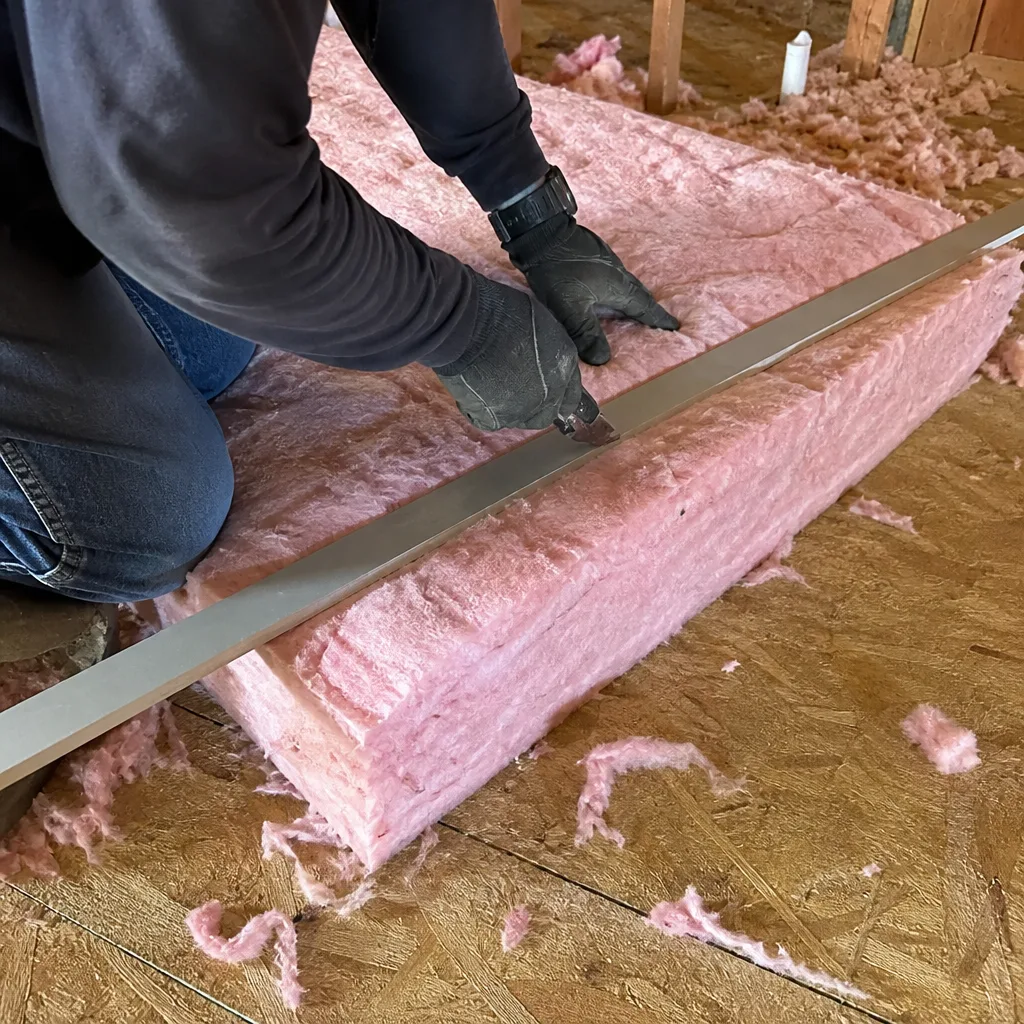
- Vapor barrier installation in New Braunfels typically costs $1,200 to $3,800, depending on square footage and access conditions.
- Clay soils and seasonal flooding near the Guadalupe and Comal River corridors make crawl space moisture protection more urgent here than in drier markets.
- A 12-mil reinforced membrane with properly taped seams, mechanically fastened wall terminations, and sealed penetrations performs significantly longer than thin single-ply sheeting with stapled edges.
- You receive a written price before any work starts and a documented photo record when the crew leaves – both are standard, not available on request.
- The 365-Day Done Right Promise backs every completed installation in writing.
- Wes Okafor leads every project under the Haven Standard framework that Topside Attic Insulation New Braunfels has operated under since 2016.
FAQs – Crawl Space Vapor Barrier
How thick should a crawl space vapor barrier be in New Braunfels?
A minimum of 12 mil is the right spec for crawl spaces in New Braunfels. Thinner products – 6 mil is common at big-box stores – puncture during installation and degrade faster under foot traffic from future HVAC or plumbing service calls. The soil conditions in areas like Gruene, Solms Ranch, and the older neighborhoods near FM 725 are abrasive enough that we consistently recommend 12 mil reinforced poly as the baseline. Some conditions, particularly active moisture seepage or high-traffic crawl spaces, warrant 20-mil products. Your written scope will specify the exact mil rating of the material going into your home. Call (830) 243-6352 and we’ll walk you through which spec fits your situation.
Will a vapor barrier alone fix the musty smell in my New Braunfels home?
A vapor barrier eliminates the primary moisture source – soil evaporation – but if mold is already growing on your framing or subfloor sheathing, the barrier alone won’t remediate it. In those cases, we document the extent of existing mold growth during the inspection, and if remediation is needed before installation, we’ll say so in writing before the job starts. In homes where the odor is coming from moisture vapor and not active biological growth, most customers in New Braunfels notice a measurable change in crawl space and first-floor air quality within 30 to 60 days of installation. The documented photo record gives you a before-and-after baseline to work from if you want to track the change.
What’s the difference between a vapor barrier and full crawl space encapsulation?
A vapor barrier covers the ground and runs up the foundation walls to block soil moisture from entering the crawl space air. Full encapsulation adds conditioned air supply or a dedicated dehumidifier, seals the foundation vents, and addresses the rim joists and band boards – turning the crawl space from a vented exterior zone into a conditioned interior zone. Barrier-only work is the right starting point when soil moisture is the primary problem and the vented crawl space is otherwise functioning. Encapsulation is a better fit when relative humidity in the crawl space stays above 60 percent even after barrier installation, or when the HVAC ducts running through the crawl space are losing conditioned air. You can read through the full comparison on our Crawl Space Encapsulation & Vapor Barrier in New Braunfels page.
How long does crawl space vapor barrier installation take in a typical New Braunfels home?
Most standard vapor barrier installations in New Braunfels are completed in a single day. A crawl space under 1,200 square feet with reasonable access height – 30 inches or more – typically takes four to six hours from setup to final photo documentation. Restricted-access crawl spaces, pier-and-beam foundations with many individual piers to detail, or jobs requiring debris removal first may run into a second day. The written scope you receive before work starts will include a timeline estimate so you know what to expect. Call (830) 243-6352 to schedule an inspection and get a written price – estimates are free.
Why New Braunfels Homeowners Work with Topside Attic Insulation
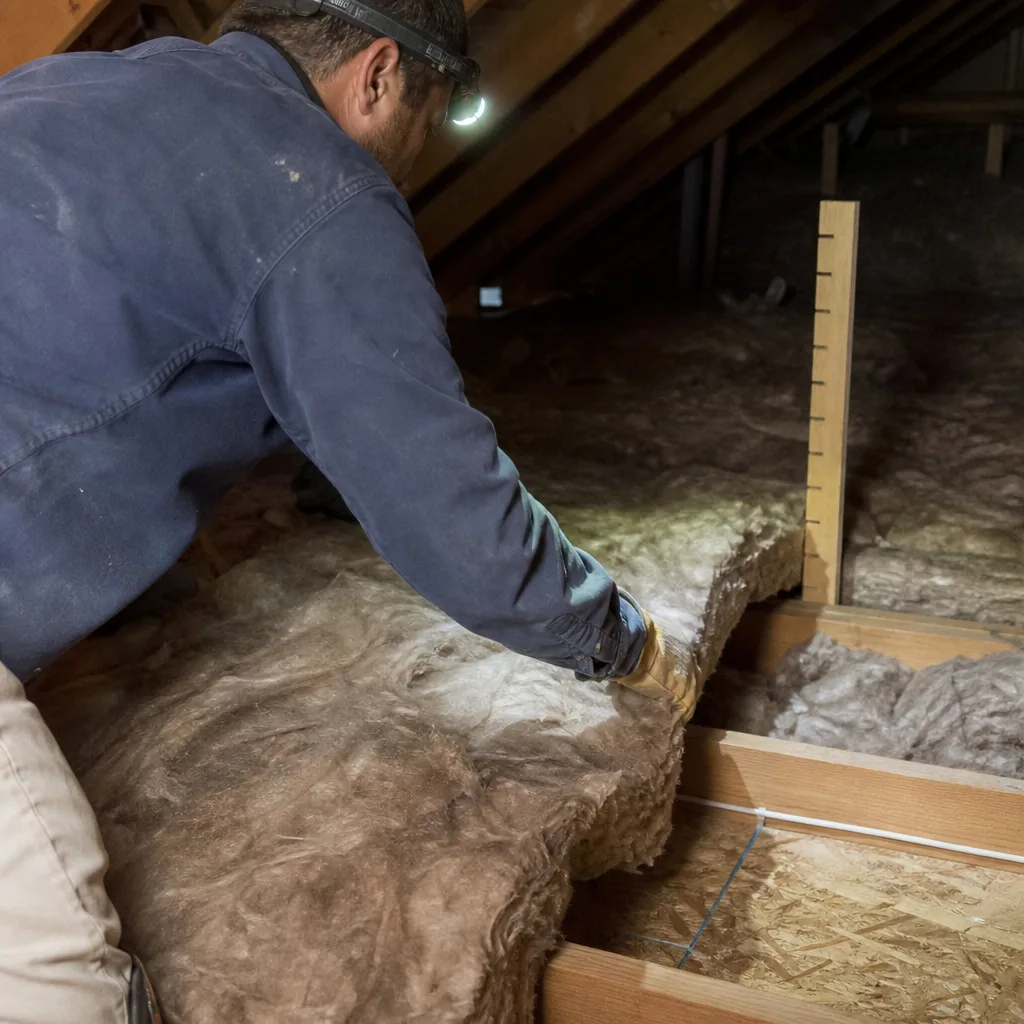
Since 2016, Topside Attic Insulation New Braunfels has completed work in more than 9,000 homes across the region, every one of them under a written price agreed to before the crew arrived. That number matters in this context because crawl space moisture problems are one of the conditions that tends to get more expensive the longer they’re left alone – framing rot, failed insulation, and mold remediation all cost more than a properly installed vapor barrier.
Wes Okafor designed the Haven Standard process because he wanted homeowners to have a record of exactly what was done and exactly what was promised – not a verbal assurance that everything looks good. The documented photo record you receive at the end of every visit is part of that. So is the 365-Day Done Right Promise: if something about the installation isn’t right within the first year, we return and correct it at no additional cost. That commitment is in writing before we start, not offered after you call to complain.
We source materials from proven manufacturers including Johns Manville and Owens Corning – not proprietary product lines that lock you into a single vendor for future service. What goes into your crawl space is specified in your written scope, by name and mil rating, before installation begins.
New Braunfels is a city where the ground doesn’t dry out the way inland Texas markets do. The limestone and clay mix that sits under much of Comal County holds water after rain events longer than sandy soils, and homes in lower-lying subdivisions near the Guadalupe River can have elevated crawl space humidity even in dry months. A vapor barrier that’s installed correctly the first time, sometimes with crawl space insulation added, is significantly cheaper than one that has to be replaced because the seams weren’t taped or the wall terminations weren’t fastened. That’s not a pitch – it’s what we consistently find when we’re called to correct installations done by others.
To schedule a free crawl space inspection and receive a written price for your New Braunfels home, call (830) 243-6352. A live person will answer and can usually schedule an inspection within the week. If you have a competing written estimate, bring it – the second opinion is free and we’ll give you a straight read on what it covers.
You can also learn more about what we do across the full building envelope on our home page, where the complete service line is listed with links to each individual service.
Written by Wes Okafor, Owner at Topside Attic Insulation New Braunfels, serving New Braunfels since 2016.