
Rockwool Attic Insulation: The New Braunfels Owner’s Guide
We stock and install Rockwool Comfortbatt, Comfortbatt Fire Block, and AFB evo attic insulation in New Braunfels homes, with most attic retrofits running between $1.80 and $3.20 per square foot installed depending on thickness and whether the attic floor needs air sealing first. Same-day installation is available on stocked material. Homeowners usually discover their Rockwool insulation is failing when rooms stay hot despite the AC running nonstop, or when they find compressed, moisture-stained batts in the attic after a Hill Country humidity spike.
Which Rockwool Models This Applies To
Rockwool’s residential attic line breaks into three main products you’ll find in New Braunfels homes. Comfortbatt is the pinkish-brown semi-rigid batt, most common in 2×6 and 2×8 joist bays, labeled with R-values from R-15 to R-30. Comfortbatt Fire Block is the denser, gray-faced variant used around penetrations and top plates, rated for one-hour fire blocking per ASTM E136. AFB evo is the softer acoustic/fire batt, sometimes found in conditioned attics or bonus rooms where sound dampening was specified.
To identify what you have, pull back a corner batt and read the inkjet stamp on the foil or paper facing. The model code, density in pounds per cubic foot (Comfortbatt runs 2.5-3.0 pcf, AFB evo closer to 1.7 pcf), and production date should all be visible. If the stamp has faded, measure the batt thickness uncompressed: a true R-23 Comfortbatt is 5.5 inches thick, not the 6.25 inches of competing fiberglass. That half-inch discrepancy matters when you’re calculating whether your existing layer still meets code.
We source Rockwool through standard distribution channels, no proprietary lock-in. For most attic retrofits we install OEM Rockwool; in a few cases where a homeowner is topping existing fiberglass and wants matched compression resistance, we’ll spec Johns Manville or Knauf mineral wool with comparable density. We don’t substitute without writing it into the scope.
Signs Your Rockwool Attic Insulation Is Failing
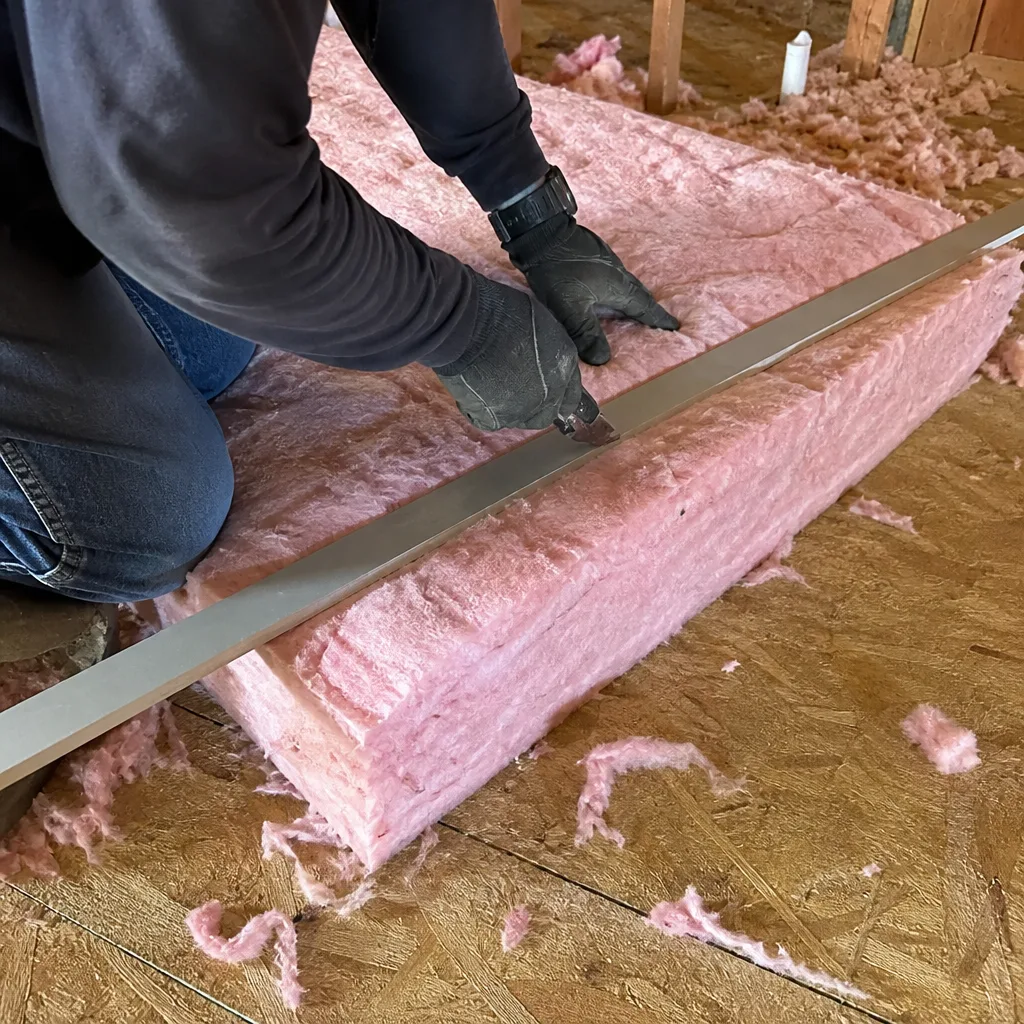
- Uneven room temperatures with the AC running constantly. Rockwool doesn’t settle like blown fiberglass, but it can slide out of sloped ceiling cavities or get kicked aside by service workers. When that happens, you’re looking at bare drywall or top plates with an R-value near zero. We find this most often above second-story bedrooms in Canyon Lake-area homes where roof pitches are steep and batt friction fit wasn’t supplemented with fasteners.
- Black or gray staining on the batt face. This is filtered dust, not mold. Rockwool’s dense fiber matrix traps airborne particles that pass through ceiling cracks, which means air is moving through the insulation, not just around it. The batt is doing its job as a filter, but the house is leaking conditioned air into the attic. The fix isn’t new batts; it’s sealing the bypass first.
- Soggy or crusted batts near the eaves. New Braunfels sees 32-34 inches of annual rainfall, and wind-driven rain can enter soffit vents if the baffles are missing or crushed. Rockwool is water-repellent, not waterproof. Saturated batts lose their thermal resistance and will compress when they dry. We pull these out, repair the vent path, and replace.
- Compressed batts below storage boards. Rockwool recovers better than fiberglass, but walk on a batt enough and the 5.5-inch R-23 becomes a 3-inch R-12. The fibers don’t spring back fully. We see this in attics where HVAC techs have been servicing units; the path from the scuttle to the air handler is a dead zone.
- Visible daylight through gaps at top plates or around flues. Rockwool batts are friction-fit and don’t seal. Code in Comal County requires fire blocking at penetrations, but older homes often have raw gaps where wiring or plumbing drops through. These are thermal bypasses that make the insulation beside them nearly irrelevant.
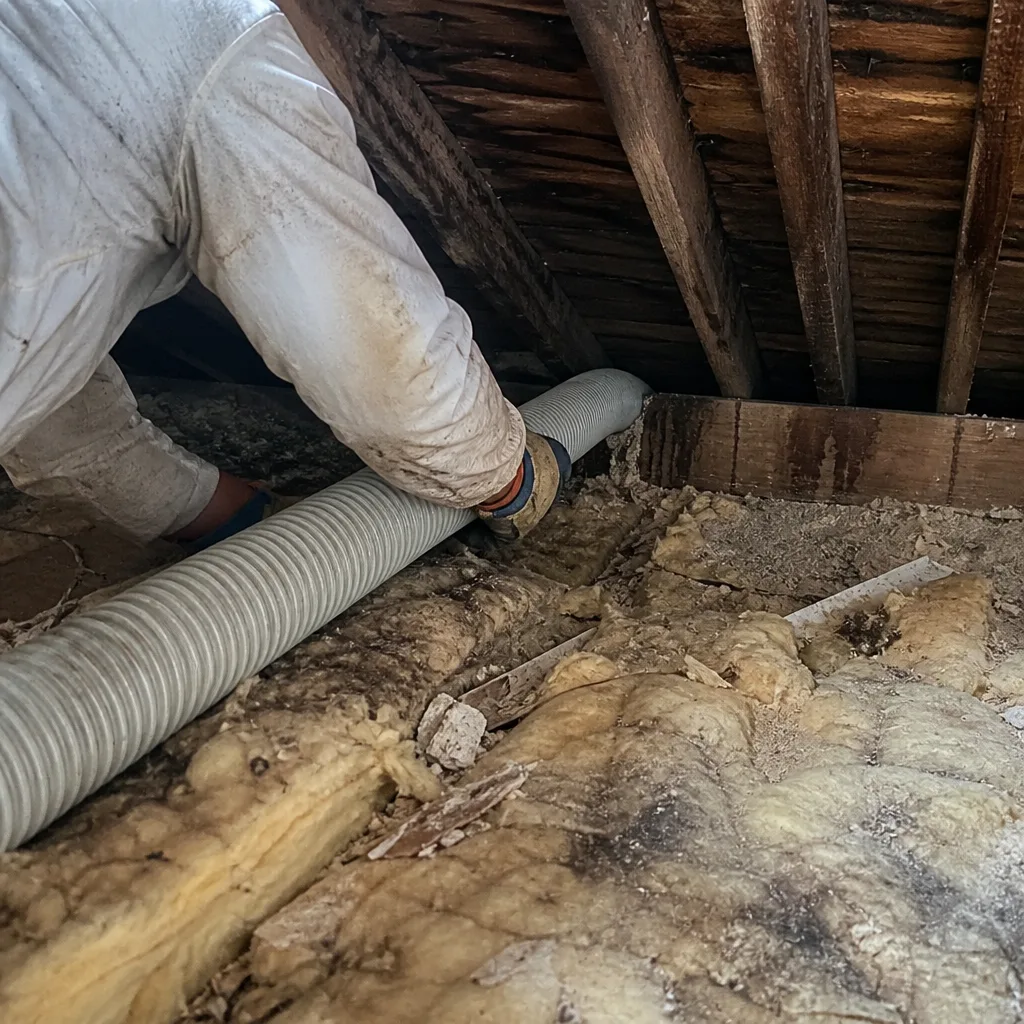 Before
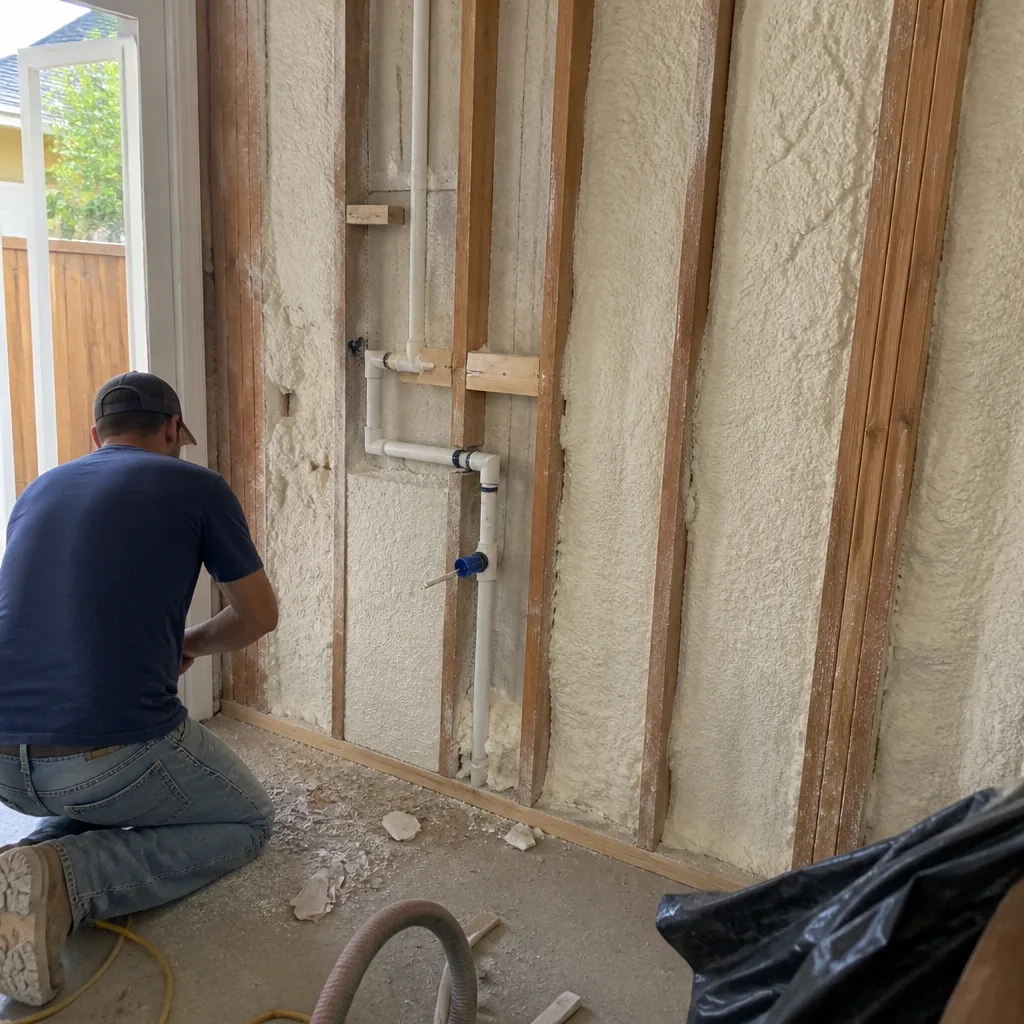 After
AfterReplacement Cost & What’s Included
| Scope | Price Range (New Braunfels) |
|---|---|
| Rockwool Comfortbatt, attic floor only (R-23 to R-30), no air sealing needed | $1.80-$2.40 / sq ft |
| Rockwool Comfortbatt with attic floor air sealing (top plates, can lights, penetrations) | $2.60-$3.20 / sq ft |
| Fire-block replacement at penetrations (Comfortbatt Fire Block, material + labor) | $85-$150 per penetration |
| Partial replacement (water-damaged or compressed sections only) | $450-$900 per zone |
The range depends on three things: attic accessibility (scuttle vs. pull-down stairs vs. no access), whether we need to move stored items, and whether the job includes our standard air-sealing package. We don’t blow insulation over an unsealed attic floor. Under Haven Standard Clause 1, you get a written price before any work starts, flat, with the scope and warranty spelled out. Every job closes with a Documented Photo Record; on air-sealing jobs, we run a blower-door test before and after so you leave with printed CFM50 readings. The 365-Day Done Right Promise applies to all completed work.
DIY or Call Us?
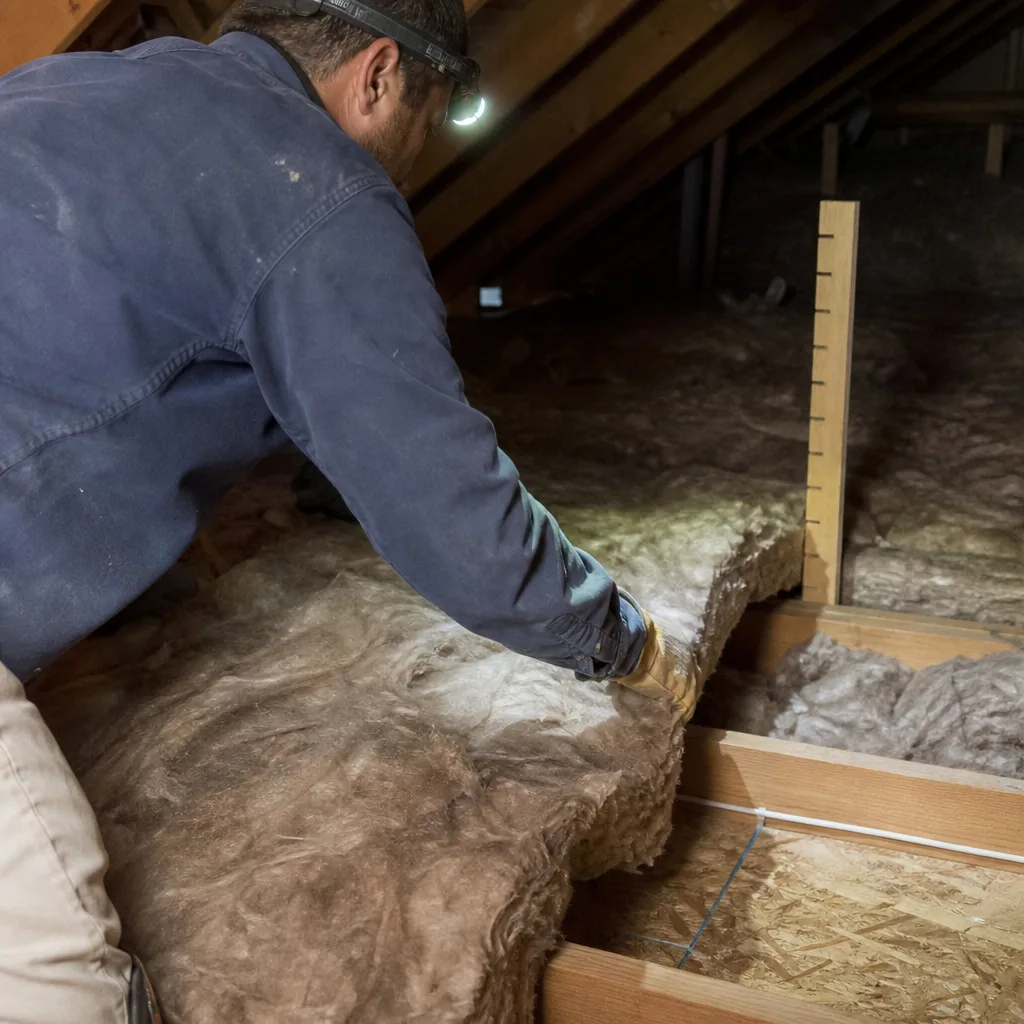
Here’s what you can safely check yourself. Look at the inkjet stamp on your batts to confirm the product line. Measure the thickness of a batt in an undisturbed corner against the labeled thickness; if it’s compressed more than 15 percent, performance has dropped proportionally. Check your soffit baffles for blockage or moisture staining. These are observation tasks, not repairs.
Where DIY goes wrong: Rockwool is heavier than fiberglass, about 1.5 pounds per square foot for R-30, and it doesn’t compress to fit tight spaces well. Cut it short and you’ve created a thermal bypass. Pack it tight against a non-IC-rated can light and you’ve created a fire hazard. Most importantly, you can’t air-seal properly from above without disturbing the insulation you just laid, which is why we seal first, then insulate. If your attic has active knob-and-tube wiring, gas flues without proper clearance, or vermiculite that might contain asbestos, stop and call. We carry combustible gas detectors, non-contact voltage testers, and know the New Braunfels permit requirements for insulation upgrades in homes built before 1980.
Call (830) 243-6352 for a free estimate. We’ll read any written quote you’ve already got, no charge.
FAQs
Rockwool mineral wool is rated for the life of the building when kept dry and undisturbed. In practice, we find batts in New Braunfels attics need partial replacement every 15-25 years due to compression from foot traffic, moisture events, or remodeling disturbance. The fibers themselves don’t degrade, but the installed assembly does. If you’re unsure whether yours has aged out, we include a free condition check with any estimate.
Localized damage from a roof leak or pest intrusion can sometimes be cut out and patched with new batts if the surrounding material is dry, uncompressed, and the facing is intact. We don’t patch over mold, urine-contaminated batts, or sections that have been wet more than once. The labor to patch cleanly often approaches the cost of replacing the whole bay. Call (830) 243-6352 and we’ll tell you which side of that line your attic falls on.
A typical 1,800-square-foot attic with air sealing runs one full day for a two-person crew. Add a half day if we’re removing old insulation first, or if the attic has limited access requiring material to be passed through a scuttle. We stock Comfortbatt R-23 and R-30 on the truck for New Braunfels jobs, so material delay isn’t a factor.
We keep Comfortbatt and Comfortbatt Fire Block in R-23 and R-30 on our New Braunfels truck, with AFB evo available next-day from San Antonio distribution. We’re an independent service provider, not affiliated with Rockwool. If your job requires a specific density or facing type we don’t have in rotation, we’ll source it and give you a written delivery date before you commit. No surprises on timing.
Written by Wes Okafor, Owner, Topside Attic Insulation New Braunfels at Topside Attic Insulation New Braunfels, serving New Braunfels and nearby areas.