
Johns Manville Crawl Space Encapsulation: The New Braunfels Owner’s Guide
We stock and install Johns Manville-compatible crawl space encapsulation systems in New Braunfels, with most full encapsulations running between $3,800 and $7,200 depending on crawl space square footage and whether the foundation needs active dehumidification tied in. Same-day assessments are available, and we carry JM vapor barrier material in 6-mil, 10-mil, and 16-mil rolls on our trucks. Most homeowners realize something’s wrong when they notice musty indoor air that doesn’t clear with the AC running, or when they find fiberglass insulation hanging wet from floor joists after a spring rain.
Which Johns Manville Models This Applies To
Johns Manville doesn’t sell crawl space encapsulation as a branded “system” with a model number the way some manufacturers do. Instead, they produce the component materials that contractors or homeowners assemble: poly vapor barrier sheeting, closed-cell spray foam kits (under the Corbond line), and mineral wool insulation for conditioned crawl walls. What matters for compatibility is matching the mil rating and seam-tape spec to what was originally installed.
If your crawl space was encapsulated between 2015 and 2020, there’s a good chance the original installer used JM 10-mil white reinforced polyethylene with butyl seam tape. The gotcha we see in New Braunfels is that some crews used standard acrylic tape instead of butyl, which fails in our humidity. To identify what you have, check the barrier edge for printed markings - JM material is stamped with the mil rating and ASTM E1745 Class A or C classification. If the stamp’s worn off, measure thickness with a caliper: true 10-mil runs 0.254 mm, and anything under 0.20 mm is likely a 6-mil economy sheet that won’t hold up to foot traffic during plumbing access.
We source OEM-equivalent JM material from our regular supply house, and we also stock Reflectix radiant barrier for hybrid systems where the original design combined vapor barrier with reflective insulation. We’re an independent service provider - not affiliated with Johns Manville - so we match the spec, not the box.
Signs Your Johns Manville Crawl Space Encapsulation Is Failing
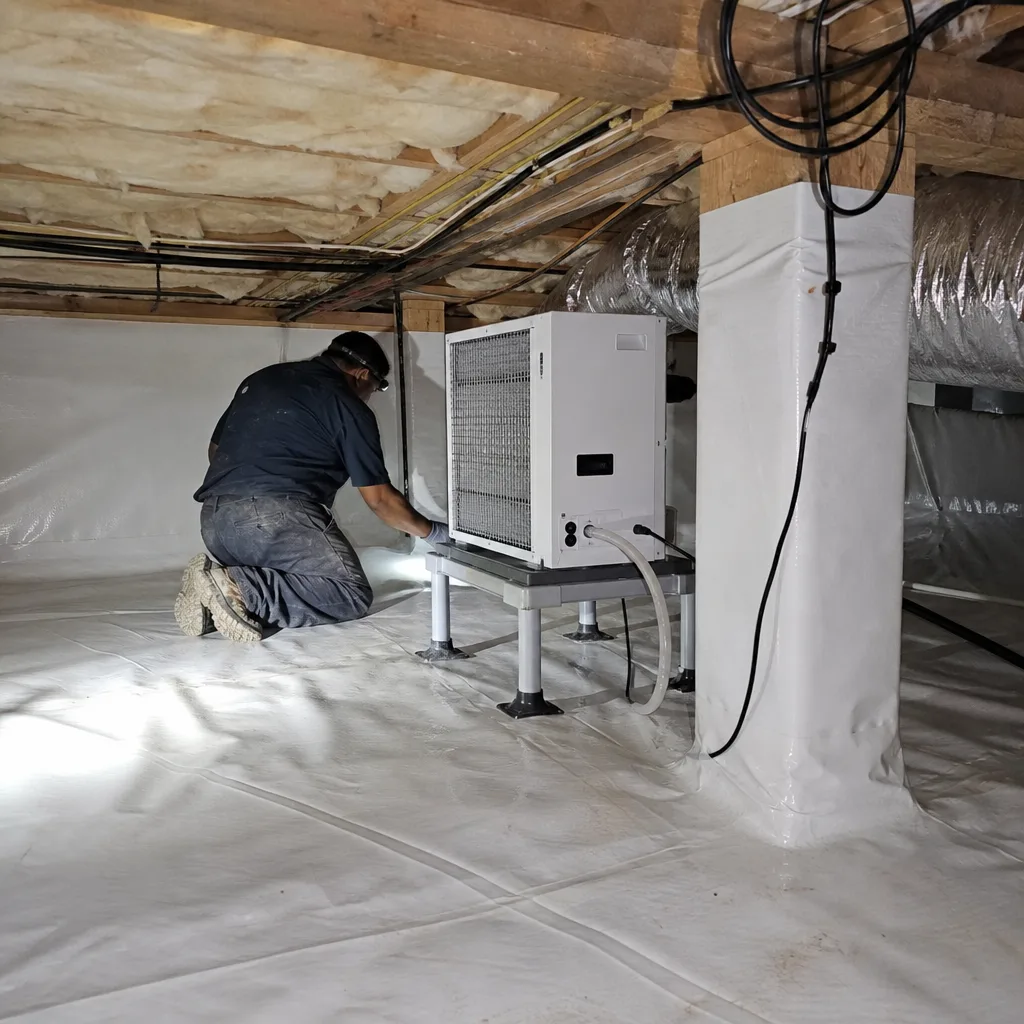
- Wet or sagging insulation between floor joists. When the vapor barrier tears at seams or pulls away from the foundation wall, ground moisture rises and condenses against the cooler subfloor. The fiberglass batts act like a wick, and once they’re saturated, they compress and lose R-value permanently. In New Braunfels, we see this most often in homes built before 1990 with red clay soil that holds water after heavy spring storms.
- Musty smell that intensifies when the HVAC runs. Your ductwork likely runs through the crawl space, and if the encapsulation has failed, the return side pulls that damp air into your living space. The smell isn’t just unpleasant - it’s a sign that mold spores are circulating through your supply plenum.
- White or chalky residue on the vapor barrier surface. This is efflorescence, mineral salts left behind when groundwater evaporates through a barrier that’s no longer fully sealed. It tells us the barrier’s permeability has increased, either through punctures or UV degradation if any portion is exposed to light through foundation vents.
- Increasing humidity readings on your main floor. A properly encapsulated crawl space should hold below 60% relative year-round. When we test homes in the River Road corridor near the Guadalupe, failed encapsulation often correlates with indoor humidity climbing past 65% even with the air conditioner running normally.
- Pest activity or rodent trails on the barrier surface. Rats and mice tear polyethylene to nest underneath it, and their runs leave dark grease marks. Once they’ve compromised the barrier, the entry points become moisture highways. We document this with photos on every inspection - it’s one of the most common failure modes we find in older encapsulations.
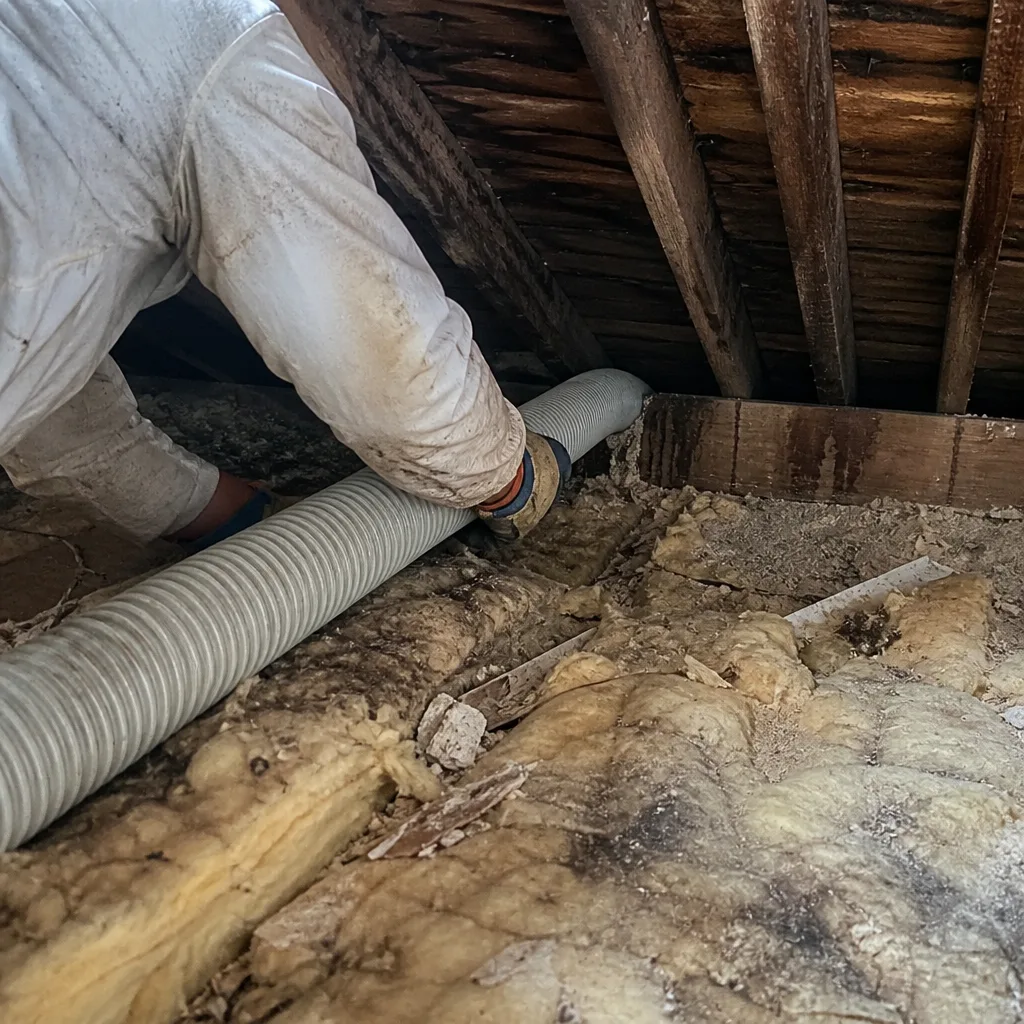 Before
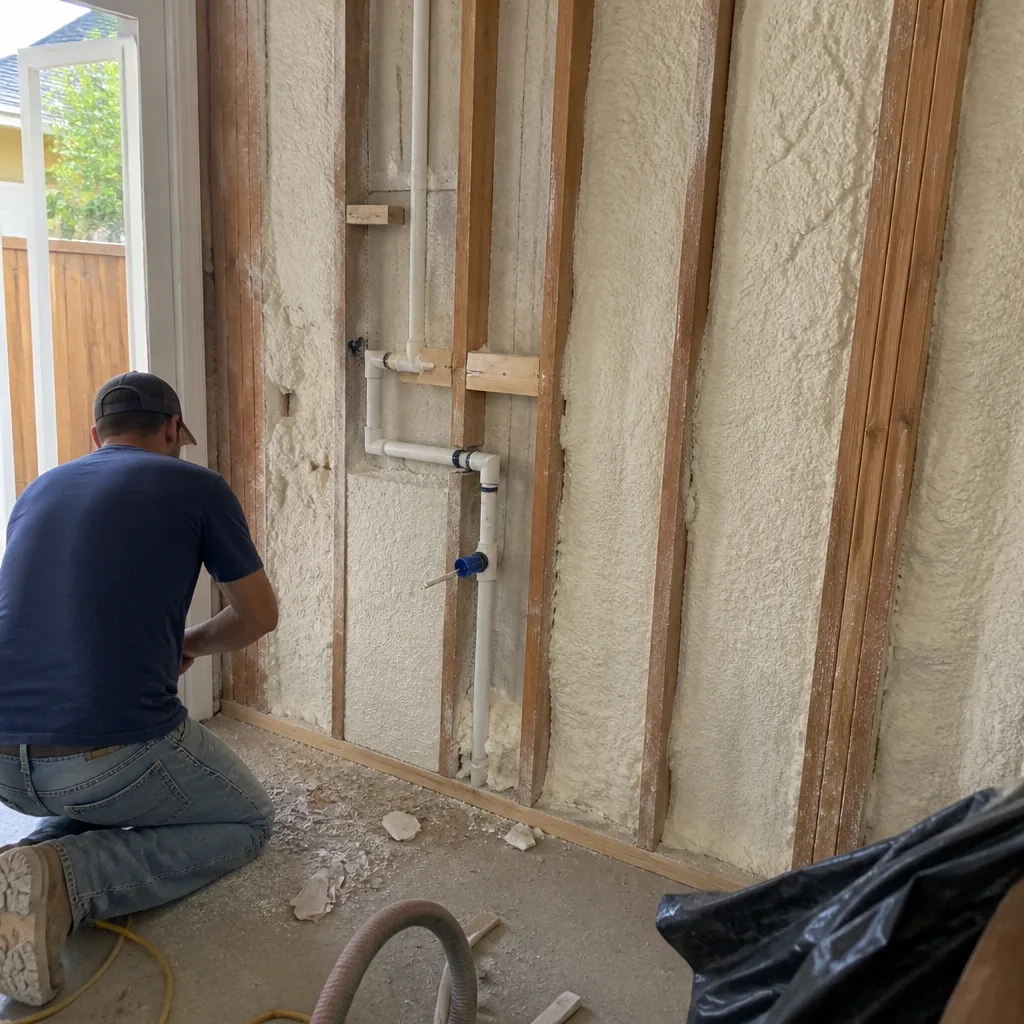 After
AfterReplacement Cost & What’s Included
For a typical New Braunfels crawl space between 1,200 and 2,400 square feet, full encapsulation with Johns Manville-compatible materials runs $3,800 to $7,200 installed. The lower end assumes a straightforward rectangle with good access, 10-mil barrier, and sealed seams with new butyl tape. The upper end covers irregular footprints with multiple piers, 16-mil barrier for storage-use crawl spaces, and integration with a dehumidifier drain line.
Here’s how that breaks down:
- Vapor barrier material: $1.10-$2.40 per square foot depending on mil rating
- Butyl seam tape and foundation adhesive: $280-$450
- Conditioned wall insulation (if needed): $2.80-$4.20 per square foot of wall area
- Dehumidifier installation with dedicated drain: $1,200-$1,800 additional
- Labor and access remediation: $1,400-$2,800
Every job gets a Written Price Before Any Work Starts under Haven Standard Clause 1 - flat price, written scope, written warranty before anyone lifts a tool. We also provide a Free Second Opinion on any written estimate you’ve already received. Our 365-Day Done Right Promise covers all completed work, and you’ll receive a Documented Photo Record plus before-and-after blower-door readings on jobs where we’re sealing the crawl space into the conditioned envelope.
DIY or Call Us?
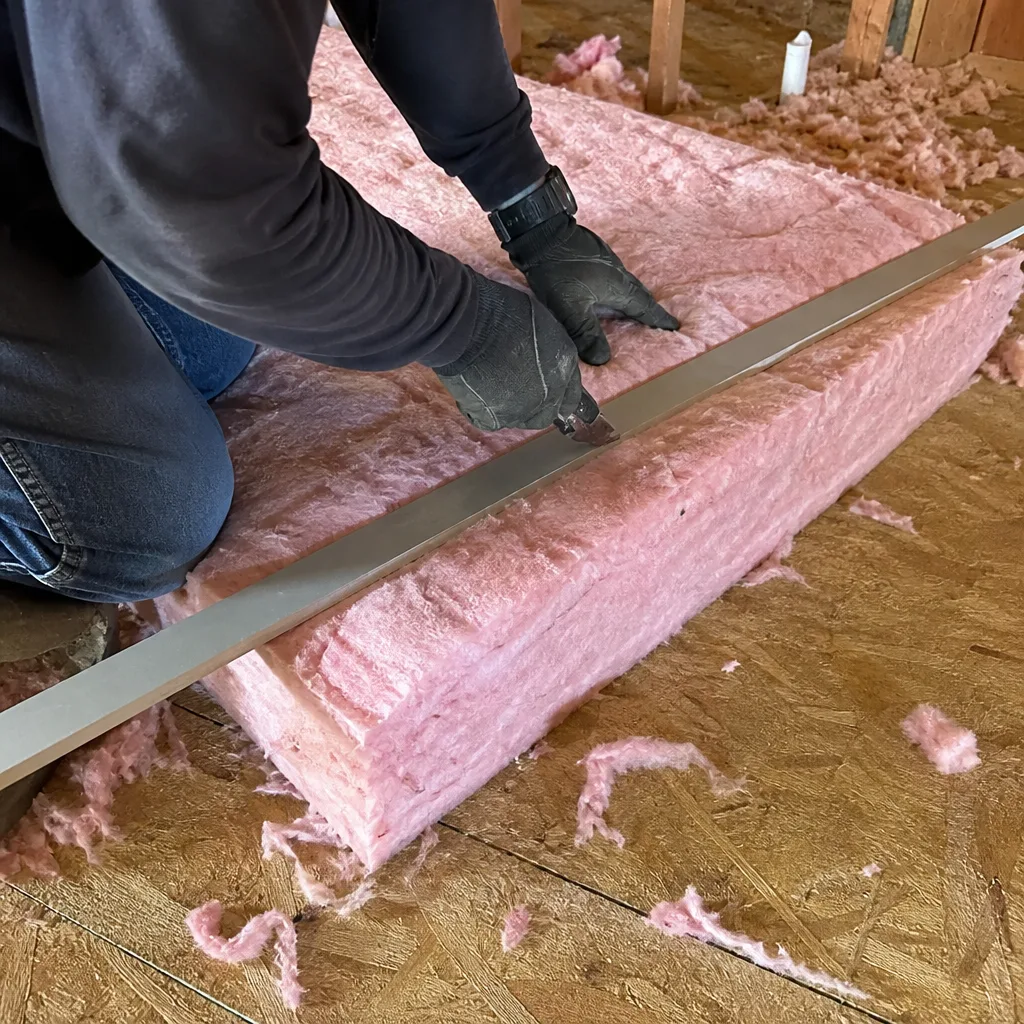
There’s a safe middle ground here, and then there’s where DIY gets expensive. You can check your crawl space humidity with a $15 digital hygrometer and look for the failure signs we listed above. You can also measure your barrier thickness and photograph any stamped markings to confirm what material was originally used.
What we don’t recommend is crawling in to cut and replace barrier yourself. Crawl spaces in New Braunfels often have limited clearance, uneven excavation, and electrical runs at head height. More importantly, proper encapsulation requires sealing to foundation walls with mechanical fasteners and compatible adhesive - if the wall surface is damp concrete or block, the wrong prep work means the new barrier fails in months, not years. We’ve been called in to redo homeowner jobs where the material was fine but the installation skipped the masonry primer.
If you’re unsure what you’re looking at, call us at (830) 243-6352. We’ll read your existing setup with you and give you a written price for whatever’s actually needed.
FAQs
A properly installed 10-mil or 16-mil JM-compatible barrier should last 15 to 20 years in our climate, though we’ve seen butyl-tape seams need attention at year 12 in homes with seasonal groundwater fluctuation. The barrier itself degrades faster if the crawl space has unsealed vents that let UV light hit the polyethylene, or if stored items puncture the surface during access. Call (830) 243-6352 and we’ll inspect seam integrity with a moisture meter - estimates are free.
Small punctures and tears under six inches can be patched with JM-compatible seam tape if the surrounding material is still supple and the subsoil is dry. If the barrier is brittle, extensively taped already, or if the original installation used 6-mil material, replacement is the better value - patches on weak substrate fail repeatedly. We carry patch kits on our trucks for same-day minor repairs, and we’ll tell you honestly which situation you’re in.
Most residential crawl spaces in New Braunfels take one to two days for full removal and replacement, assuming standard access and no active mold remediation needed. Day one is removal, surface prep, and addressing any air sealing at the rim joist; day two is barrier installation, seam sealing, and dehumidifier tie-in if specified. We schedule a single crew to finish what they start - no handoffs between strangers in your crawl space.
Yes - we carry 10-mil and 16-mil reinforced polyethylene in 12-foot widths, plus butyl seam tape and masonry adhesive, on every encapsulation crew’s truck. For jobs requiring Corbond closed-cell spray foam at the rim joist, we stock that as well. If your specification calls for a JM product we don’t have in rotation, we can source it within 48 hours through our regular supply house; we don’t upcharge for special orders, and we don’t substitute without written approval.
Written by Wes Okafor, Owner, Topside Attic Insulation New Braunfels at Topside Attic Insulation New Braunfels, serving New Braunfels and nearby areas.