
GreenFiber Vapor Barrier Installation: The New Braunfels Owner’s Guide
GreenFiber vapor barrier installation in New Braunfels typically runs $1,800-$3,400 for a standard crawl space or attic application, and we stock GreenFiber-compatible 6-mil and 10-mil polyethylene sheeting on every truck for same-day starts. Most homeowners realize theirs has failed when they pull back insulation and find black mold on the subfloor, or when their spring energy bill jumps 20% without explanation. In Comal County’s clay-heavy soil, ground moisture pushes upward year-round, and a compromised vapor barrier lets that moisture meet cool conditioned air exactly where you don’t want it.
Which GreenFiber Models This Applies To
GreenFiber doesn’t sell vapor barrier as a standalone branded SKU like their loose-fill cellulose or stabilized insulation products. What we mean by “GreenFiber vapor barrier installation” is the moisture-control layer installed beneath or adjacent to GreenFiber cellulose insulation in crawl spaces, basements, and conditioned attics. The compatibility question is really about your existing GreenFiber R-value and depth, because a vapor barrier must be spec’d to the assembly, not the insulation brand.
Here’s how to identify what you have: look for a white or silver polyethylene sheet on your crawl space dirt floor, or a kraft-faced or unfaced poly layer between joists. GreenFiber cellulose is typically blown to R-38 to R-60 in New Braunfels attics, and any vapor retarder in that assembly needs to match the permeability rating of the whole system. We install 6-mil cross-laminated polyethylene for crawl space ground covers, 10-mil for high-traffic or rodent-prone areas, and smart vapor retarders like CertainTeed MemBrain for conditioned attic kneewalls where seasonal humidity swings are severe. The OEM-equivalent decision for GreenFiber assemblies usually comes down to this: if your existing barrier is single-sheet 4-mil builder-grade poly, it’s failed already or will within two years in this climate. We don’t stock 4-mil. The upgrade to 6-mil or 10-mil adds roughly $0.40-$0.85 per square foot in material but doubles service life.
Topside Attic Insulation New Braunfels is an independent service provider, not affiliated with GreenFiber. We also stock Reflectix radiant barrier products for hybrid assemblies where both moisture control and radiant heat rejection are needed.
Signs Your GreenFiber Vapor Barrier Installation Is Failing
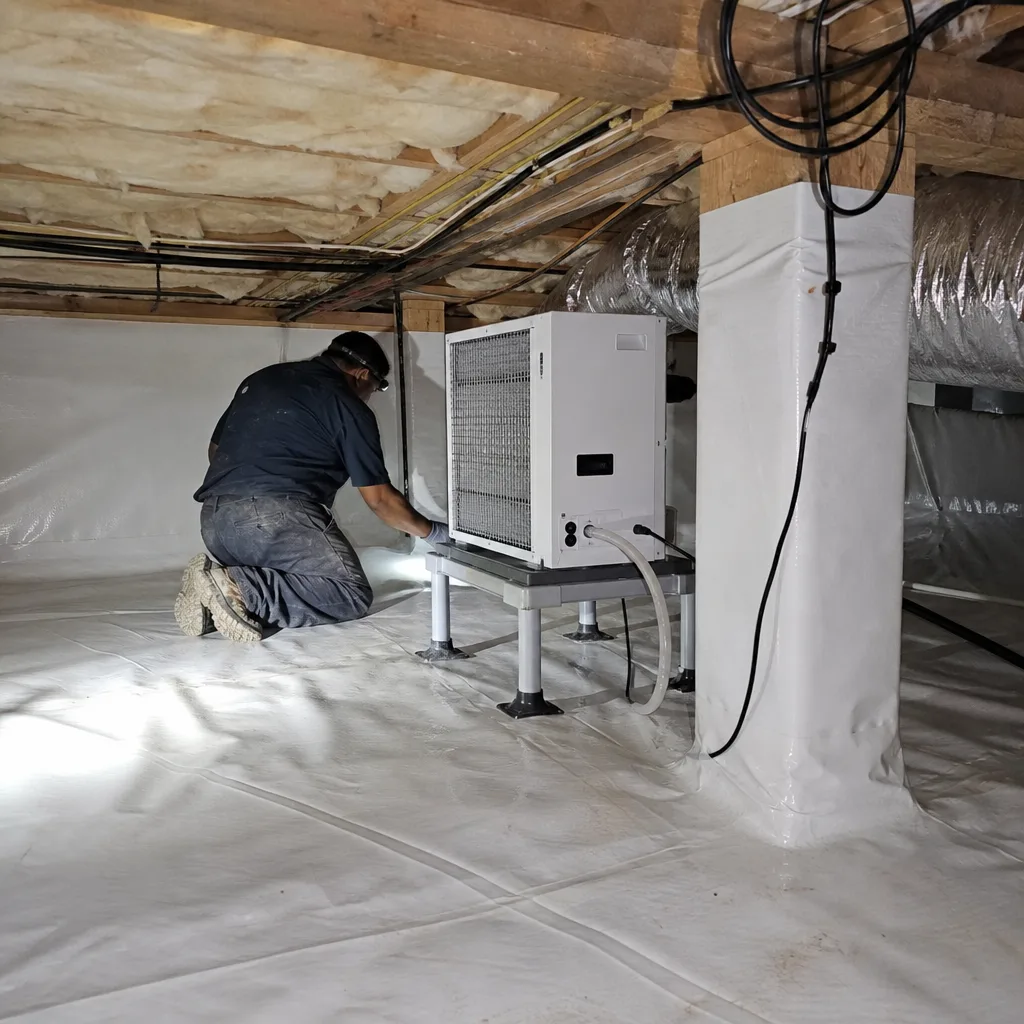
- Musty odor that worsens after rain. The clay soils around New Braunfels hold water for days after a storm. If your crawl space smells like wet cardboard 48 hours after the last rainfall, your ground poly has torn at seams or degraded at perimeter walls. We find this most often in homes built 2005-2015 where builders used 4-mil stapled loosely to sill plates.
- Insulation sagging or dropping from joists. GreenFiber cellulose gains weight when it absorbs moisture, and wet cellulose doesn’t rebound. If you’re seeing batts or blown material hanging below the joist plane, the vapor barrier below or behind it has been passing water vapor for months. The insulation is now a mold substrate, not a thermal barrier.
- Floor condensation in summer. When your vapor barrier fails, the crawl space relative humidity climbs above 70%. That humid air contacts your cooled floor joists and HVAC ducts, and you get actual droplets on the subfloor above. We’ve measured 85% RH in June under homes where the poly looked intact but had pinholes from UV degradation during construction.
- Wood rot at rim joists. The rim joist is where your floor system meets your foundation wall. It’s the coldest surface in the crawl space, so it’s the first place vapor condenses. Soft wood or fungal growth here means your vapor barrier has been ineffective for at least one full season, because rot requires sustained moisture content above 20% in wood.
- Pest activity increase. Termites and carpenter ants prefer damp wood. A failed vapor barrier creates the microclimate they need. If your pest control company is treating the same areas repeatedly, the moisture source is likely your barrier, not your grading.
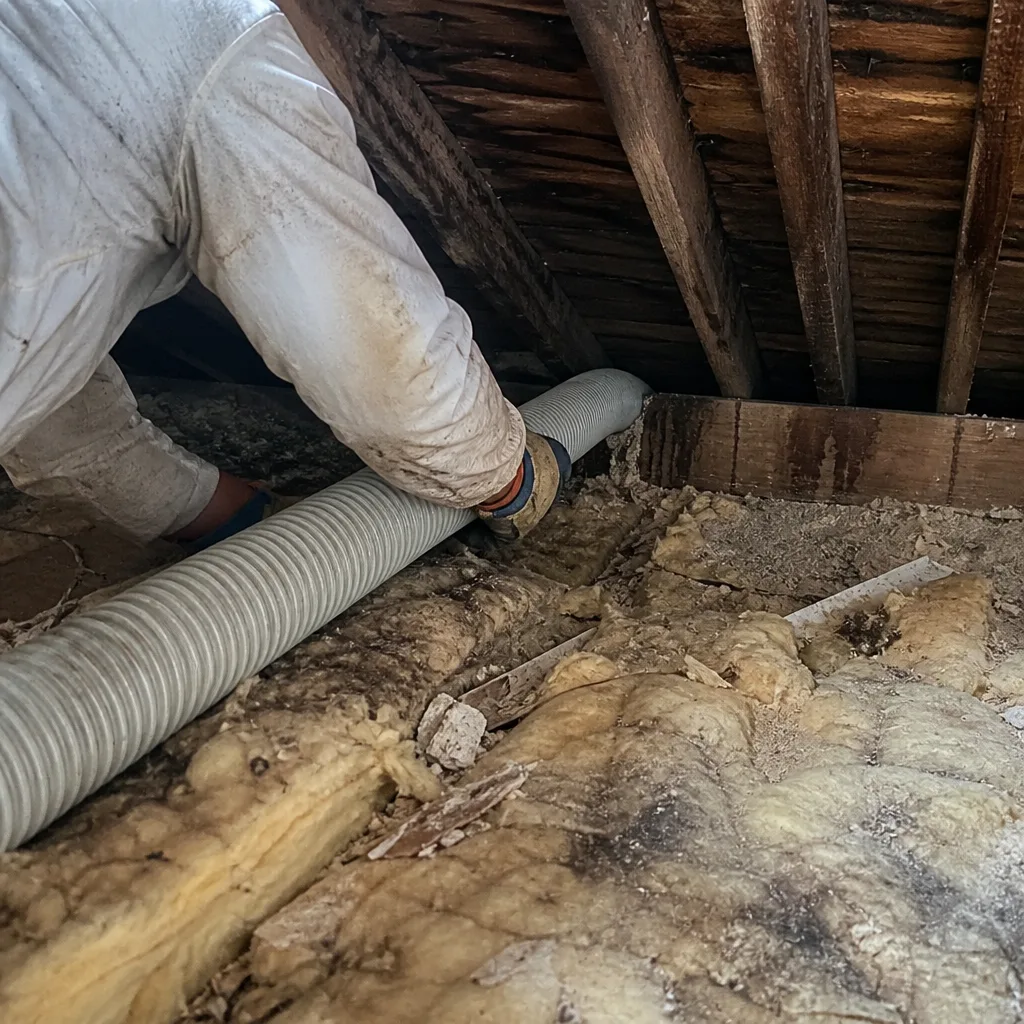 Before
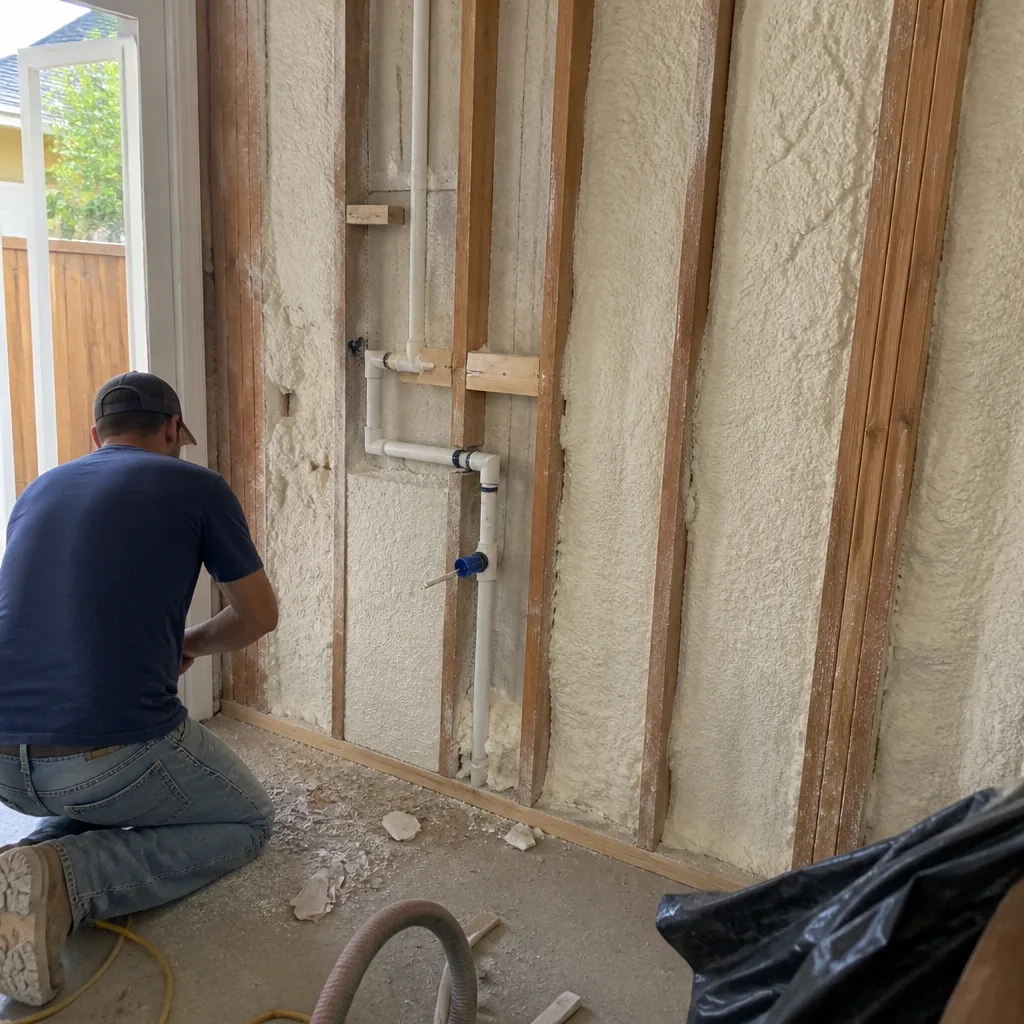 After
AfterReplacement Cost & What’s Included
| Scope | Price Range in New Braunfels | What’s Included |
|---|---|---|
| Standard crawl space, 1,000-1,500 sq ft | $1,800-$2,400 | 6-mil poly ground cover, seam tape, mechanical fastening to walls, perimeter seal |
| Large or irregular crawl space, 1,500-2,500 sq ft | $2,400-$3,000 | 10-mil poly, piers wrapped, full seam welding, dehumidifier pad prep |
| Conditioned attic / kneewall retrofit | $2,800-$3,400 | Smart vapor retarder, air sealing of top plates, blower-door verified |
| GreenFiber insulation removal + replacement | Add $1.20-$1.80/sq ft | Bagged removal, HEPA cleanup, new cellulose to matched R-value |
What drives the range: crawl space height (less than 18 inches requires specialized prep), number of piers and HVAC ducts to work around, existing mold remediation needs, and whether the perimeter walls need sealing with closed-cell foam or just poly extension. Every job gets a Written Price Before Any Work Starts, flat, with line items. No change orders unless you add scope. The 365-Day Done Right Promise covers installation defects, and we leave you with a Documented Photo Record of every seam, every wall transition, and every blower-door reading if air sealing is part of the job.
DIY or Call Us?
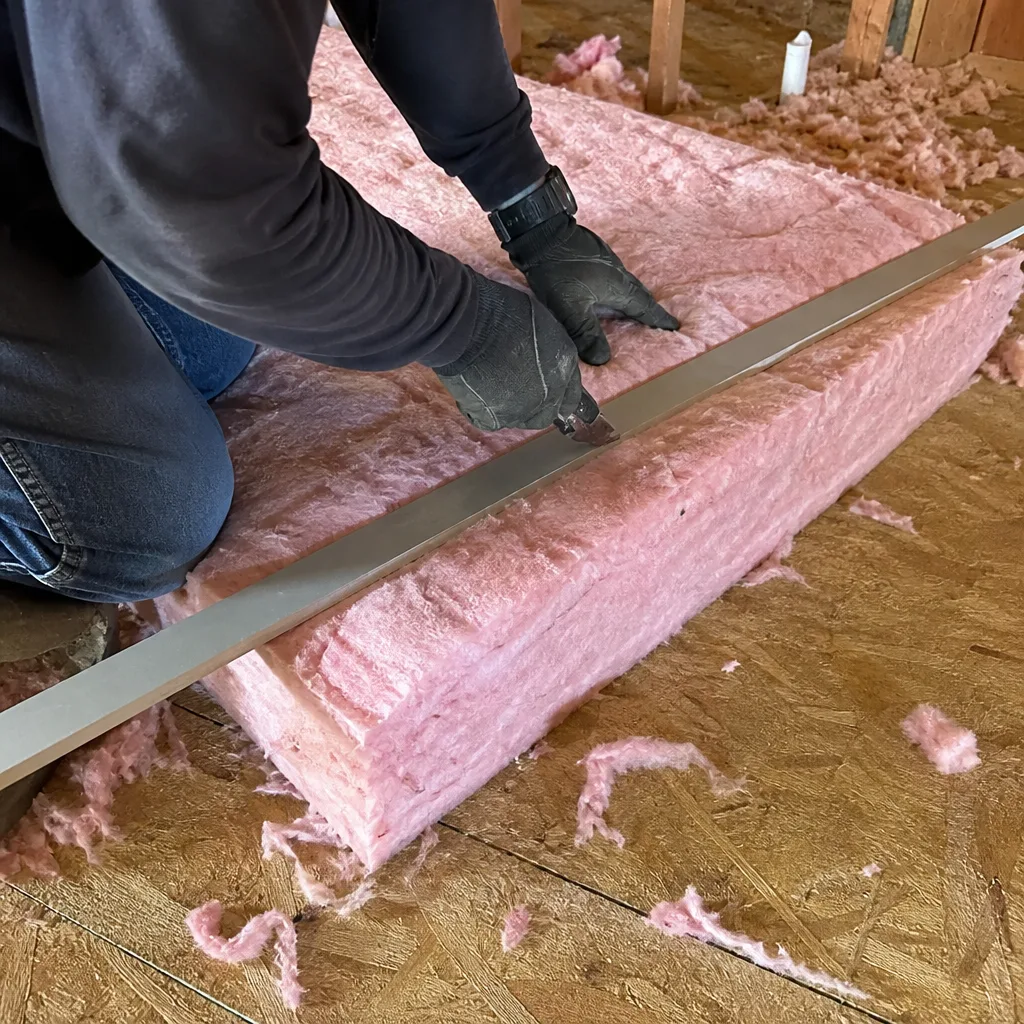
What you can safely check: walk your crawl space with a flashlight and look for tears, pooling water, or poly that’s pulled free from walls. Note any soft spots in the subfloor above. That’s useful information, and you’re not going to hurt anything.
Where DIY goes wrong: vapor barrier installation looks like laying down a tarp, but the failure points are nearly always at seams, wall transitions, and penetrations. GreenFiber assemblies in particular need compatible permeability, or you trap moisture inside the insulation layer. In New Braunfels, we’ve re-done three homeowner installs this year where 6-mil poly was laid loose on the ground with duct tape seams, all three had mold regrowth within 14 months. The tape failed, water pooled at low spots, and the homeowner was back to square one with added remediation cost. Crawl spaces also present real hazards: electrical junctions, gas lines, and in older homes near the Guadalupe, occasional black widow concentrations in undisturbed corners. We carry full insurance and background-checked technicians for a reason.
Call (830) 243-6352 if you want a written price and a crew that knows how GreenFiber assemblies actually behave in Comal County soil conditions.
FAQs
Properly installed 6-mil poly lasts 10-15 years in this climate; 10-mil or reinforced products reach 20 years. The 4-mil builder-grade installed in many local homes 2005-2015 typically fails at 5-8 years due to UV damage during construction and clay soil abrasion. Call (830) 243-6352 and we’ll check yours for free.
Small tears under 6 inches can be patched with compatible seam tape if the surrounding poly is still supple. If the material is brittle, discolored, or pulling at multiple seams, replacement is more cost-effective than chasing individual failures. We assess this on every free estimate and tell you which path actually saves money.
Most standard crawl spaces in New Braunfels are completed in one day. Complex jobs with multiple piers, HVAC rerouting, or insulation removal run into a second day. We give you a written schedule with your written price, and we don’t start until both are signed.
We stock 6-mil and 10-mil polyethylene, seam tape, and mechanical fasteners on every truck. Smart vapor retarders for conditioned attics are ordered to spec but typically arrive within 48 hours. Same-day starts are standard for ground-cover replacement; call (830) 243-6352 to confirm truck availability.
Written by Wes Okafor, Owner, Topside Attic Insulation New Braunfels at Topside Attic Insulation New Braunfels, serving New Braunfels and nearby areas.