
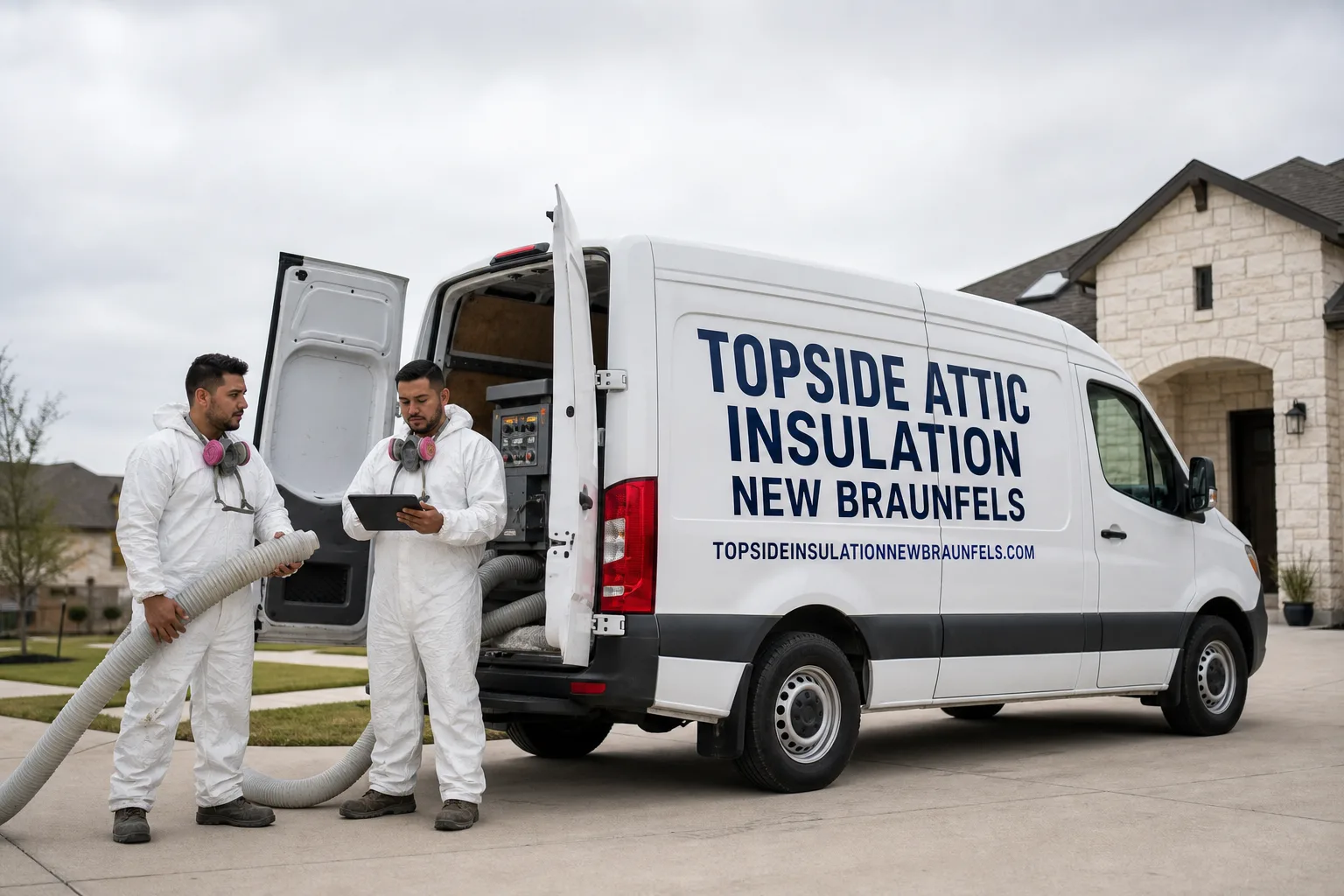
How Much Does Blown-In Insulation Cost in New Braunfels, TX? (2026 Price Guide)
Blown-In Insulation services in New Braunfels typically cost between $1,400 and $3,200 for a standard attic in a 1,500-2,500 sq ft home, with most jobs landing around $1,800-$2,400 when air sealing is included. The exact number depends on current R-value, attic square footage, and how many penetrations need to be sealed before the first bag goes in – and that last part matters more than most contractors will tell you up front.
This guide breaks down what New Braunfels homeowners are actually paying in 2026, what drives those numbers up or down, and what to watch for when comparing quotes. All pricing below reflects the Central Texas market and current material costs from suppliers including Owens Corning, Johns Manville, GreenFiber, and Knauf.
At Envelope Insulation Co. – operating as Topside Attic Insulation New Braunfels and led by Wes Okafor since 2016 – every job starts with a written price before anyone touches a tool. That’s not a sales line; it’s Haven Standard Clause 1, and it applies to every estimate, every time.
Blown-In Insulation Cost Breakdown for New Braunfels (2026)
The table below reflects what homeowners in New Braunfels, Canyon Lake, Seguin, and the surrounding Hill Country corridor are paying for blown-in insulation projects in 2026. These are real ranges based on current labor rates, Central Texas material pricing, and the actual scope of work – not national averages padded with asterisks.
| Project Type | Typical Range | Notes |
|---|---|---|
| Attic top-up only (existing insulation in place, no air sealing) | $800 – $1,400 | Adds R-value; does not address air leakage |
| Attic air seal + blown-in insulation, 1,000-1,500 sq ft attic | $1,400 – $2,100 | Includes top plates, can lights, and penetrations |
| Attic air seal + blown-in insulation, 1,500-2,500 sq ft attic | $1,800 – $3,200 | Most common scope for New Braunfels single-story homes |
| Attic air seal + blown-in insulation, 2,500-3,500 sq ft attic | $2,800 – $4,200 | Two-story or larger footprint; additional access points common |
| Blown-in wall insulation (dense-pack cellulose or fiberglass) | $1.80 – $3.50 per sq ft of wall area | Requires drilling and patching; older New Braunfels construction |
| Existing insulation removal + replacement with blown-in | $2,400 – $5,500+ | Removal, haul-off, air seal, and re-insulate |
| Blower-door test (standalone, before/after documentation) | $250 – $450 | Included on applicable Envelope Insulation jobs at no extra charge |
What Drives the Price Up
A few things reliably push a job toward the top of those ranges in New Braunfels. Homes built between 1985 and 2005 in neighborhoods like Gruene Estates, Oakwood Estates, and older sections of Creekside tend to have heavy can-light penetrations and minimal original air sealing – each can light that opens directly into a conditioned ceiling adds time and materials to the seal-first step. Attics with HVAC equipment staged inside, or with multiple ductwork runs crossing the floor, create real access constraints that slow the work.
Running from R-11 or R-13 up to R-38 (what the 2021 IECC recommends for Climate Zone 2, which covers New Braunfels) adds more blown-in depth and more bags. If you’re comparing quotes, look at the target R-value in writing – a quote that doesn’t name a final R-value isn’t a complete quote.
What Keeps the Price Down
Open, accessible attics with a clear floor, minimal existing debris, and no HVAC equipment in the way are faster to work in. A home that already had air sealing done – say, as part of a previous energy audit – may need only a top-up, which is the lowest-cost scenario on the table above. Combining blown-in insulation in New Braunfels with another envelope service like radiant barrier installation often allows the two scopes to share mobilization costs, which can reduce the total compared to scheduling them separately.
What Affects Blown-In Insulation Pricing in New Braunfels
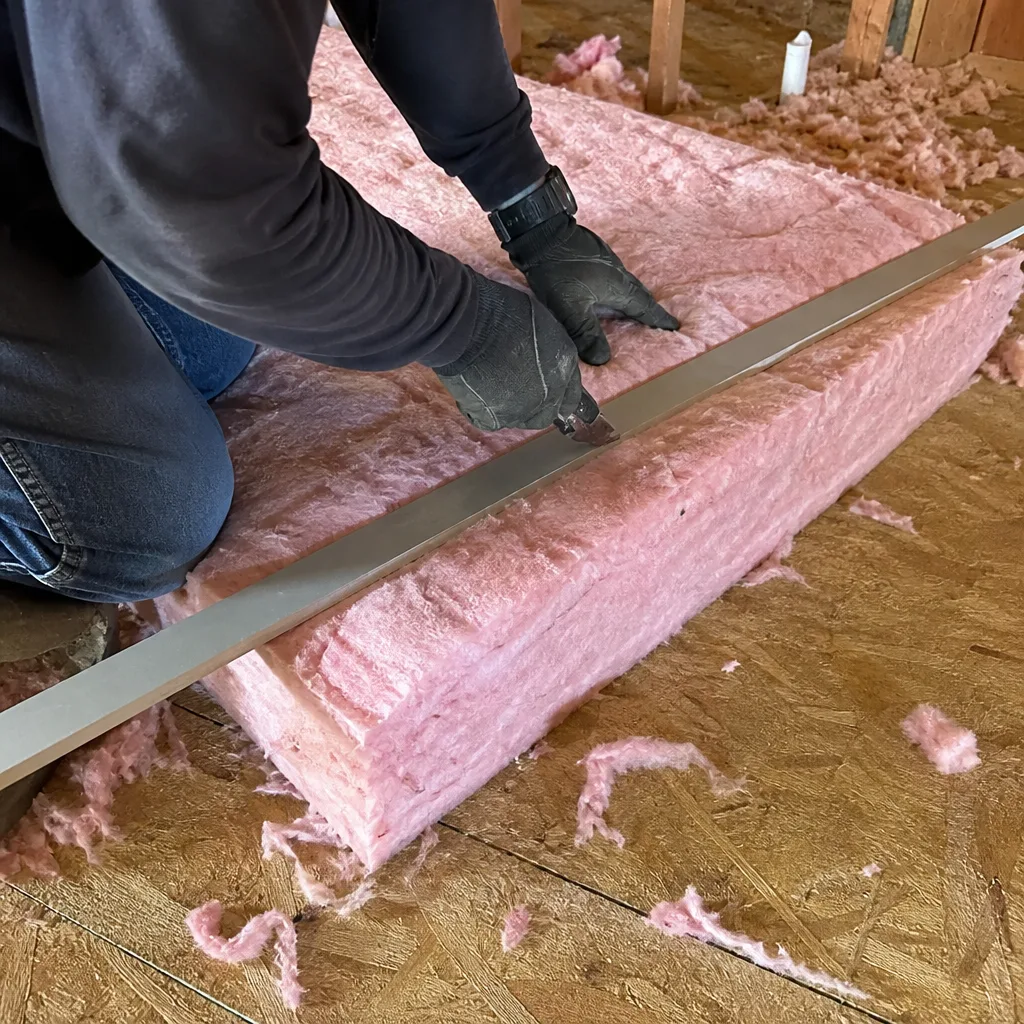
- Current R-value versus target R-value: Most older New Braunfels homes we assess are sitting at R-11 to R-19. Getting to R-38 – the current code floor for Climate Zone 2 – requires enough blown-in depth to add meaningful bag count and labor time. A blower-door test beforehand tells you how much of your energy loss is actually air movement versus missing R-value, so you’re not paying for depth that won’t move the needle.
- Air sealing scope: This is the line item most contractors omit from the initial quote, then add back later – or skip entirely and let the homeowner wonder why their bill didn’t change much. Sealing top plates, recessed lights, plumbing chases, and HVAC penetrations before blowing in insulation is not an upsell at Envelope Insulation Co. – it’s the prerequisite. In New Braunfels attics, we routinely find can lights that are open to the conditioned space with no cap, acting as direct exhaust ports for your cooled air into a 140-degree attic.
- Attic accessibility and layout: A simple gable-roof attic with a single pull-down stair and no obstructions takes less time than a hip-roof attic broken into three separate zones by HVAC equipment and ductwork. Homes in Veramendi and newer master-planned developments tend to have more complex attic geometries than the older ranch-style homes closer to downtown New Braunfels.
- Material choice – fiberglass versus cellulose: Blown-in fiberglass (Owens Corning AttiCat, Knauf Jet Stream) and blown-in cellulose (GreenFiber, GreenFiber PRO) both perform well in the New Braunfels climate, but they’re not identical. Cellulose runs slightly lower per bag in material cost and settles to a denser final depth; fiberglass is lighter and slightly more resistant to moisture uptake – relevant given New Braunfels’ position between dry Hill Country air and the humidity that rolls up the Guadalupe River corridor during spring and early summer. We’ll tell you which material suits your specific attic configuration, in writing, before we quote.
- Existing insulation condition: Old fiberglass batts that have been compressed by HVAC equipment, contaminated by rodents, or soaked by a roof leak are typically removed before new blown-in insulation goes in. Removal and haul-off adds $0.50 to $1.20 per sq ft to the project cost depending on depth and condition. We document the before state with photos – Haven Standard: Documented Photo Record on every visit – so you’re not taking our word for what we found.
- New Braunfels permit requirements: Insulation work in New Braunfels generally does not require a standalone permit for attic top-ups or re-insulation, but any work that involves HVAC modifications, structural penetrations, or new construction is subject to Comal County and City of New Braunfels building code review. We pull permits when the scope requires one – and we tell you which category your job falls into before we start.
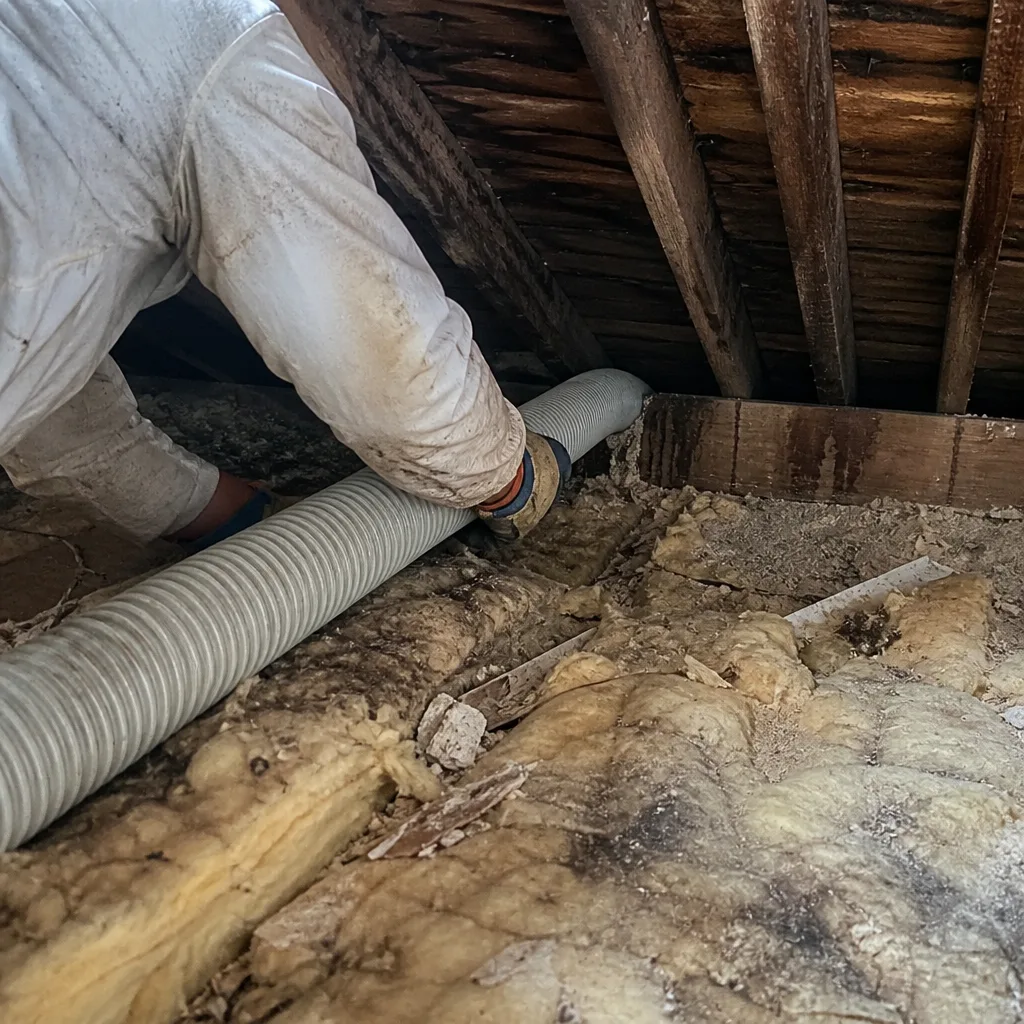 Before
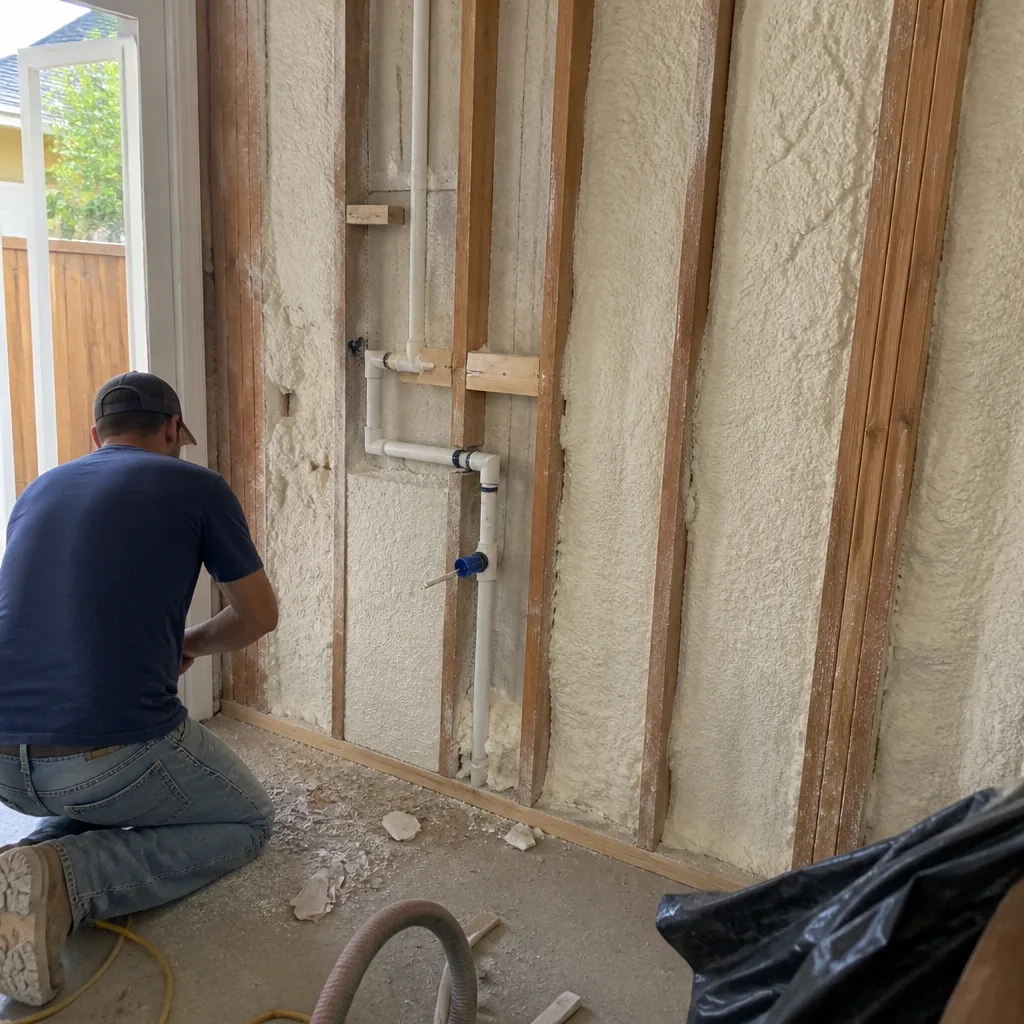 After
AfterThe Air Sealing Step – Why It’s Not Optional
New Braunfels sits at the edge of Climate Zone 2, where summer attic temperatures regularly exceed 135-140 degrees Fahrenheit from June through September. At those temperatures, an attic floor with unsealed penetrations functions as a slow bleed valve: conditioned air at 74 degrees migrates into the 140-degree attic through stack effect, and your HVAC system compensates by running longer. Adding R-value on top of that leak slows the conductive heat transfer through the attic floor but does nothing about the convective loss moving through the gaps.
A blower-door test – a pressurization reading that shows, in a single CFM50 figure, how much air the building envelope is losing – makes this visible before and after the work. Wes Okafor has seen attics in the Creekside neighborhood test at 4,800 CFM50 before sealing and land at 2,300 CFM50 after a proper air-seal job, even before any additional blown-in insulation depth was added. That’s a measurable, documented change – not an estimate of how much better you should feel about your house.
Envelope Insulation Co. publishes before-and-after blower-door numbers on every applicable job. You get the pre-work reading and the post-work reading in writing when the crew leaves. If a contractor can’t show you those numbers, they can’t show you whether the work actually changed anything.
New Braunfels Market Context: What We See in Local Attics
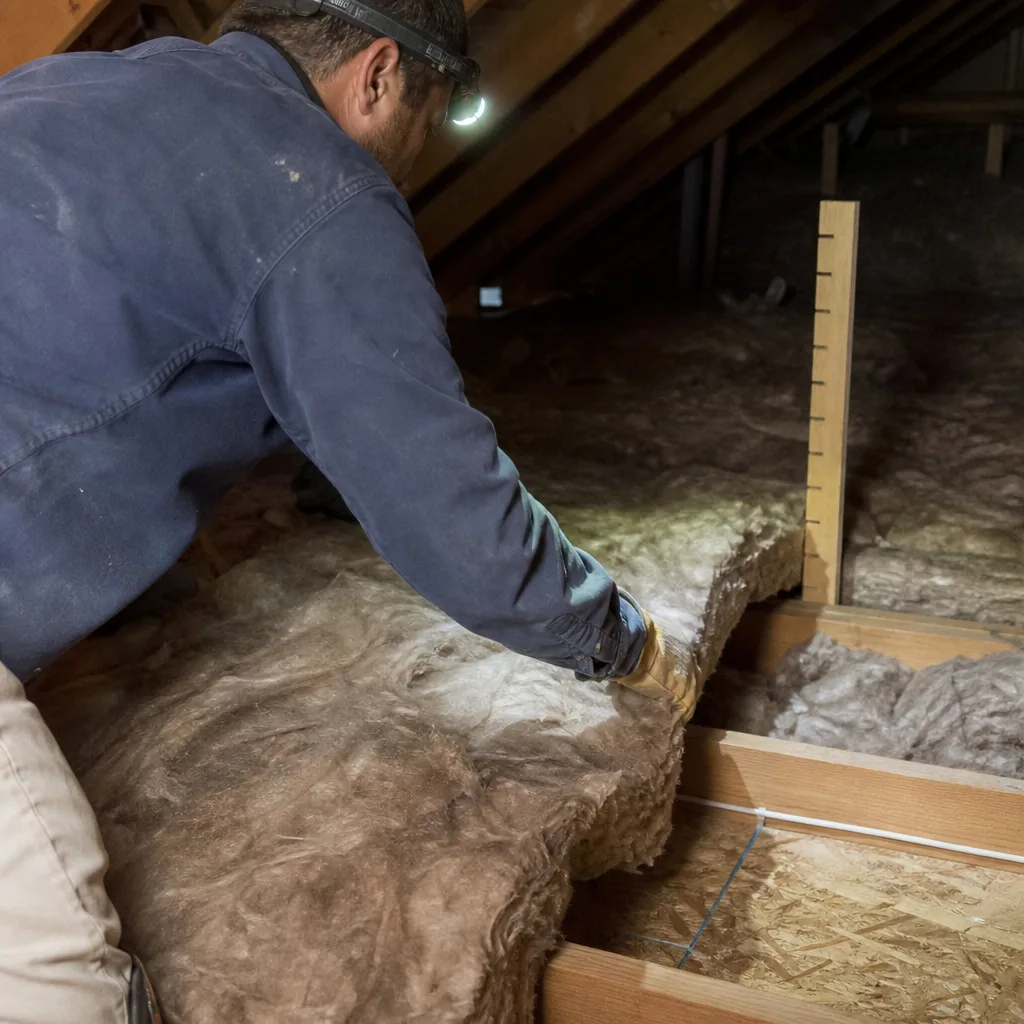
After assessing and insulating homes across New Braunfels, Gruene, Wimberley, San Marcos, and Seguin since 2016, a few patterns come up often enough to be worth naming.
Homes built in the 1990s and early 2000s in areas like Havenwood and River Chase typically have 3.5 to 4 inches of original blown fiberglass – roughly R-11 to R-13 – and very little original air sealing above the drywall plane. The insulation isn’t degraded; it’s just undersized for what IECC 2021 now calls for, and it was never paired with a sealed envelope to begin with. These jobs almost always involve air sealing first, followed by blown-in insulation to R-38, and they’re among the higher-return projects we document – homeowners in that bracket regularly report 18-25% reductions in cooling runtime after the work is done.
Newer construction in Veramendi, River Mill, and Fischer Park often comes with R-30 blown-in already in the attic but with spray foam only partially applied at the top plates – a common builder shortcut when insulation sub-contractors are moving fast. A full audit will find those gaps. They’re small, but at New Braunfels summer temperatures, they add up.
Homes near the Guadalupe River corridor – Think River Road, Hinman Island, and the older neighborhoods between New Braunfels and Gruene – sometimes have moisture-related degradation in the existing insulation from the higher relative humidity in those micro-zones. That’s a removal-first scenario, and the cost table above reflects that range.
How to Save on Blown-In Insulation in New Braunfels
There are real ways to reduce what you pay without compromising the outcome. There are also ways that look like savings and aren’t.
Real Ways to Reduce the Cost
- Start with an energy audit, not a sales call: A home energy audit – including a blower-door test and thermal imaging – costs $250-$450 standalone but tells you exactly where your building envelope is losing energy. You may find that only one section of attic needs attention, or that wall insulation is the higher-priority fix. Spending $400 to learn your attic is actually in decent shape saves you from spending $2,000 on something that won’t change your bill.
- CPS Energy and Comal Electric Coop rebates: New Braunfels sits in a service territory overlap between CPS Energy (city limits and some surrounding areas) and Comal Electric Cooperative (rural and unincorporated Comal County). Both utilities have run rebate programs for attic insulation and air sealing – typically $0.10-$0.15 per square foot for attic insulation upgrades meeting R-38 minimums. Program availability changes, so check with your utility directly, but these rebates can reduce a $2,000 project by $150-$300 in qualifying cases.
- Combine scopes in one visit: If you’re already planning to have blown-in insulation done, adding a radiant barrier or attic air sealing in the same visit shares the mobilization cost. Two separate jobs scheduled months apart cost more in total than the same work done at once.
- Get a second opinion on any existing written estimate: Envelope Insulation Co. offers a free second opinion on any competing written estimate. Wes Okafor will read the scope with you, flag what’s missing, and give you a written comparison. This costs you nothing and takes about 20 minutes.
- Don’t skip air sealing to reduce the initial price: This one looks like a saving and isn’t. A blown-in job without air sealing will reduce conductive heat transfer but leave air leakage paths in place. The R-value you paid for won’t perform at its rated level because the air movement undermines it. You’ll pay for insulation twice – once now and once when you replace or supplement it after it doesn’t move the needle on your utility bills.
For a written estimate on your New Braunfels home, call (830) 243-6352. A live person answers – no voicemail, no callback window measured in business days.
What You Get With Envelope Insulation Co. in New Braunfels
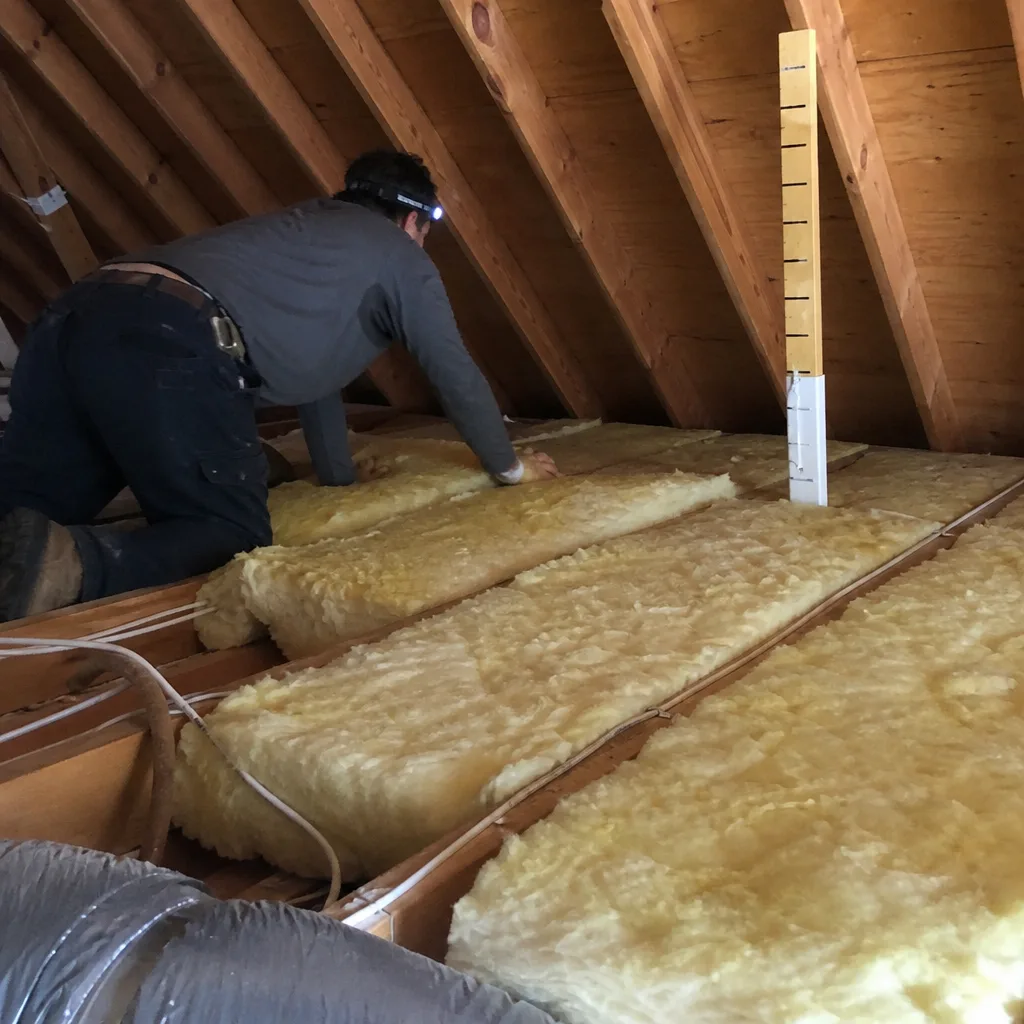
Wes Okafor built Envelope Insulation Co. around one premise: that a homeowner who can read a blower-door report and a written scope before the crew arrives is a homeowner who can hold the contractor accountable to a documented outcome. Since 2016, that’s meant more than 9,000 homes sealed and insulated with a written price before anyone starts and a Documented Photo Record when the crew leaves.
The Haven Standard governs every job:
- Written Price Before Any Work Starts – flat price, written scope, written warranty. Haven Standard Clause 1. No exceptions.
- Air Sealed First, Then Insulated – top plates, can lights, plumbing chases, and HVAC penetrations sealed before a single bag of insulation goes in.
- Before-and-After Blower-Door Numbers Published on Every Applicable Job – you get the CFM50 reading before the work and after it, in writing, when the crew leaves.
- 365-Day Done Right Promise – if it’s not done right, we make it right. Written warranty, not a verbal reassurance.
- Documented Photo Record on Every Visit – included, not available on request.
- Free Second Opinion on Any Written Estimate – bring a competing quote; we’ll read it with you.
- Background-Checked, Uniformed Technicians – you get a named technician and a text when they’re on the way.
- Live Person Answers, 24/7 – no voicemail loops.
Materials come from Owens Corning, Johns Manville, Knauf, GreenFiber, Rockwool, CertainTeed, Icynene, and Demilec – no proprietary product lock-in that limits your options.
Blown-In Insulation vs. Spray Foam in New Braunfels: A Quick Cost Comparison
Homeowners in New Braunfels sometimes ask whether spray foam is worth the price premium over blown-in insulation for attic applications. The short answer: it depends on where in the attic assembly you’re applying it.
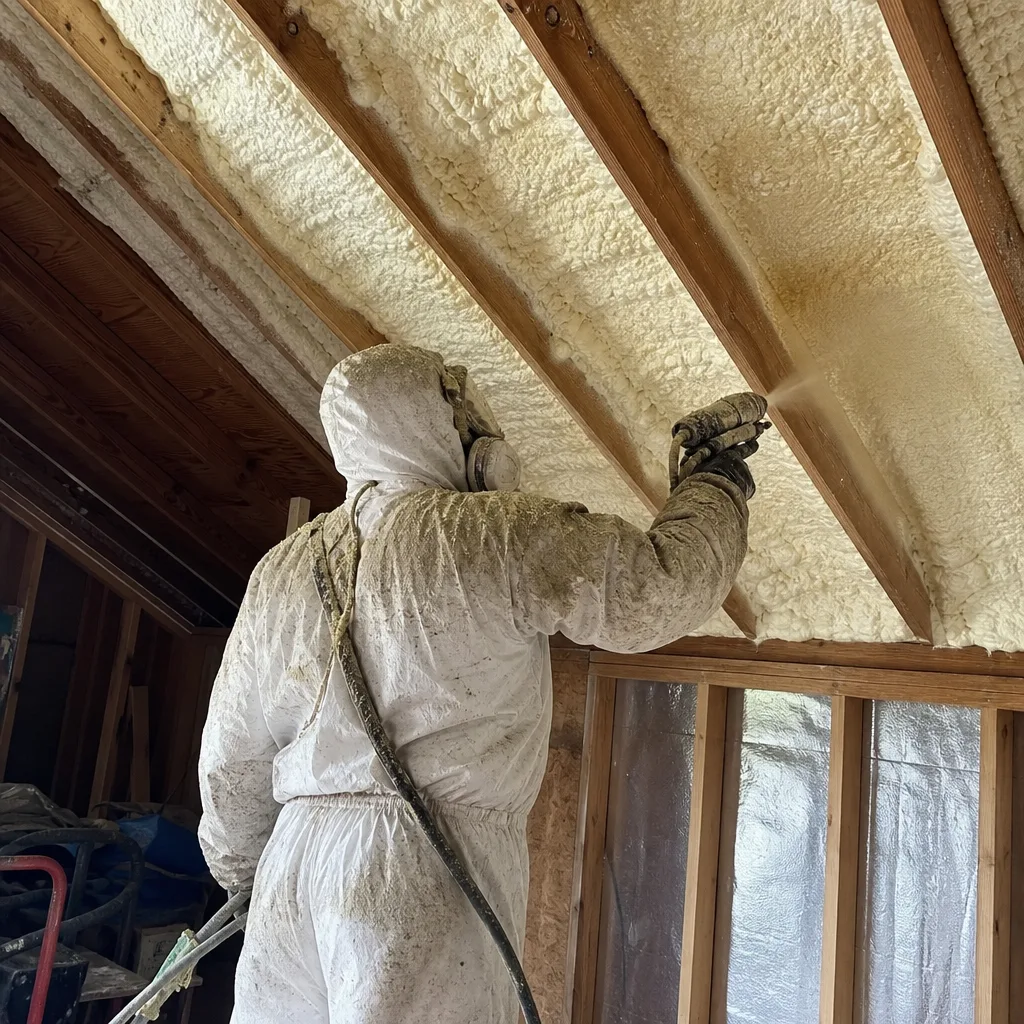
Open-cell spray foam applied to the underside of the roof deck (an unvented attic assembly) runs $1.50-$2.80 per board foot installed – significantly more than blown-in fiberglass or cellulose on the attic floor. For most New Braunfels homes with vented attics and HVAC in conditioned space, blown-in on the attic floor with proper air sealing outperforms spray foam on the deck at a materially lower cost. The case for spray foam on the deck strengthens when HVAC equipment is staged in the attic, because bringing the equipment inside the thermal envelope stops it from working in 140-degree heat.
A good energy audit tells you which configuration applies to your house. Envelope Insulation Co. does both – and Wes Okafor will tell you which approach pencils out for your specific attic geometry before writing a number on anything.
FAQs – Blown-In Insulation Cost in New Braunfels
How much does blown-in insulation cost per square foot in New Braunfels?
Blown-in insulation in New Braunfels runs $0.85 to $2.20 per square foot of attic floor area, depending on starting R-value, target R-value, and whether air sealing is included. A job that starts from near-zero insulation and includes a full air-seal scope sits toward the top of that range; a top-up from R-19 to R-38 with no air sealing work needed runs toward the lower end. Call (830) 243-6352 for a written estimate based on your actual attic measurements – no guessing from square footage alone.
Is it cheaper to do a top-up or full removal and replacement in New Braunfels?
A top-up costs $800-$1,400 for most attics in New Braunfels; full removal and replacement runs $2,400-$5,500+ depending on depth and condition. If the existing insulation is dry, uncontaminated, and structurally intact, a top-up with air sealing is almost always the more cost-effective path. If the insulation has rodent activity, moisture damage, or compaction that reduces its effective R-value significantly, removal is the better long-term decision – and we document the existing condition with photos before we recommend either approach.
Does New Braunfels require a permit for blown-in insulation?
Most attic insulation top-up and re-insulation projects in New Braunfels do not require a standalone permit. Work that involves HVAC modifications, structural penetrations, or is part of a new construction project falls under City of New Braunfels and Comal County building department review. We assess permit requirements as part of the written scope – you’ll know before work starts whether a permit applies to your job, not after.
How long does blown-in insulation last in a New Braunfels attic?
Properly installed blown-in fiberglass or cellulose typically maintains effective R-value for 20-30 years in a New Braunfels attic, assuming no moisture intrusion, pest activity, or physical disturbance. The extreme summer heat in Central Texas – attic temperatures above 130 degrees from June through September – doesn’t degrade blown-in material at a rate that shortens that lifespan meaningfully. What degrades performance faster is rodent activity (which compresses and contaminates the material) and roof leaks that weren’t caught and repaired quickly. Our Documented Photo Record on installation gives you a baseline for future inspections.
What R-value do I need for blown-in insulation in New Braunfels?
New Braunfels falls in IECC Climate Zone 2, which sets R-38 as the minimum for attic insulation under current (2021) energy code. Some energy auditors recommend R-49 for homes where the HVAC system is staged in the attic and works harder due to elevated ambient temperatures – a setup we see frequently in builder-grade homes from the 1990s in Comal County. The target R-value will be stated explicitly in your written scope. Call (830) 243-6352 to schedule an attic assessment and get that number in writing before any estimate is prepared.
Can I get a same-day estimate for blown-in insulation in New Braunfels?
We schedule estimates in New Braunfels, Canyon Lake, Gruene, Seguin, and the surrounding area based on current availability. A live person answers at (830) 243-6352 around the clock – no callback windows, no voicemail. The estimate itself is written, not verbal, and includes a flat price, scope of work, and written warranty before anyone starts.
Key Takeaways
- Most blown-in insulation jobs in New Braunfels run $1,400-$3,200 for a standard single-story home with air sealing included.
- Air sealing before blown-in insulation is not an upsell – it’s what determines whether the R-value you paid for actually performs.
- New Braunfels falls in IECC Climate Zone 2; R-38 is the current minimum for attic insulation.
- Before-and-after blower-door readings (CFM50) are the only objective measurement of whether an air-sealing job changed anything – get them in writing.
- CPS Energy and Comal Electric Coop rebates can reduce qualifying project costs by $150-$300 – confirm current availability with your utility.
- Every Envelope Insulation Co. job starts with a written price and ends with a Documented Photo Record, no exceptions, under The Haven Standard.
- Wes Okafor offers a free second opinion on any written competing estimate.
Get a Written Estimate for Blown-In Insulation in New Braunfels
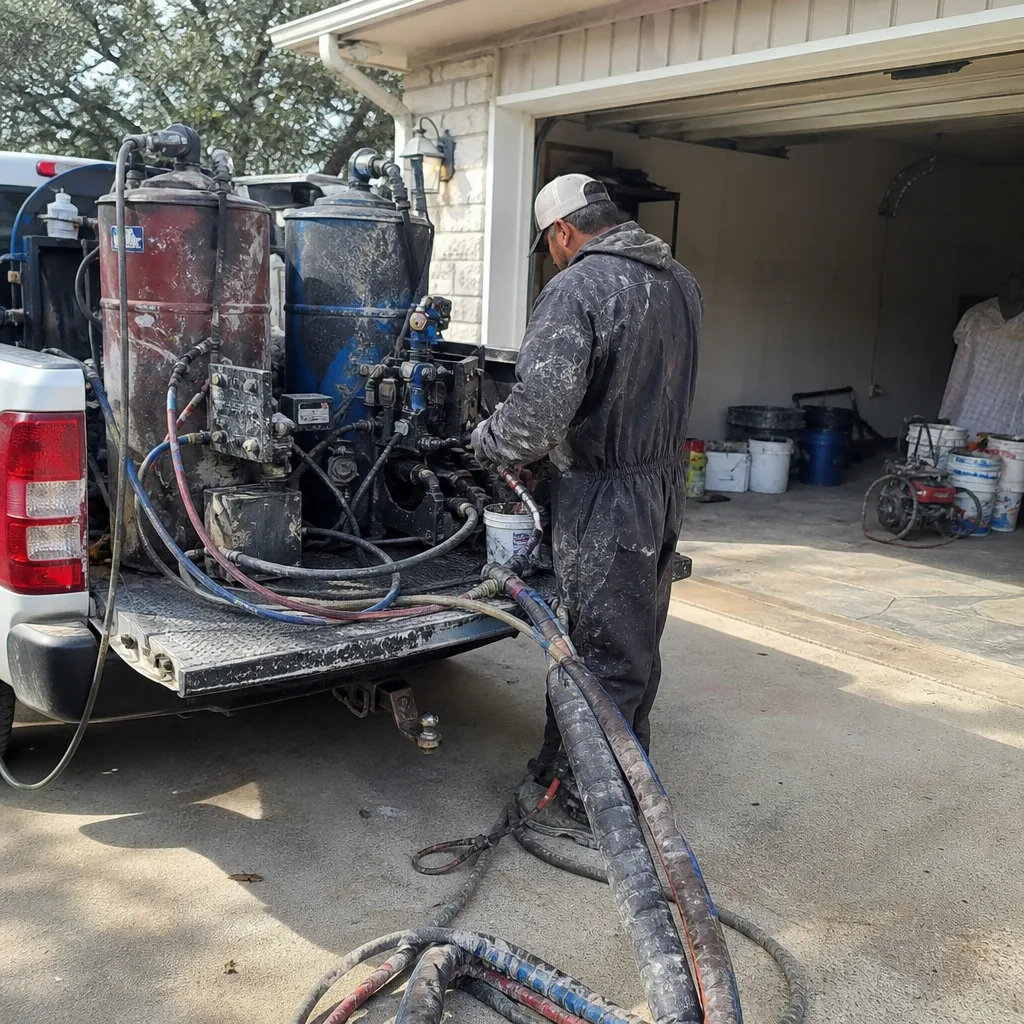
If you’re ready to know what your attic actually costs to fix – in writing, before anyone starts – call (830) 243-6352. A live person answers, we’ll schedule an assessment, and you’ll receive a flat written price with a full scope before we touch anything. No estimate given verbally, no price that changes when the crew shows up.
Wes Okafor leads every assessment with the same starting question: what does the blower-door say before we do anything? That number tells us more about your home’s energy loss than the insulation depth ever will, and it gives you a baseline to measure the work against when we’re done. That’s The Haven Standard – and it’s the same on every job in New Braunfels, from Creekside to Veramendi to the older neighborhoods along the Guadalupe.
Pricing reflects the New Braunfels market as of 2026. Topside Attic Insulation New Braunfels offers free estimates – call (830) 243-6352.
Written by Wes Okafor, Owner at Envelope Insulation Co. (operating as Topside Attic Insulation New Braunfels), serving New Braunfels and Comal County since 2016.
What Our Customers Say
"They photographed rodent damage in the old insulation that we had no idea about, and priced the exclusion work separately so we could decide."
- Harriet N."The winter gas bill dropped by about a third. They had estimated a quarter, so they under-promised."
- Genevieve R."Two other companies quoted to blow more insulation on top of what was there. These were the only ones who said the existing material had to come out first, and explained why."
- Clifford E.