

Fast, Reliable Attic Insulation Across Castle Hills
Most attic insulation jobs in Castle Hills run $1,800-$4,500 depending on whether we’re topping up existing material or stripping and replacing degraded fiberglass in a mid-century ranch. We’re typically on-site within 24-48 hours of your call, and every job starts with a written price before anyone enters your attic. Call (830) 243-6352 for a free estimate with no work required.
Castle Hills is a peculiar market for insulation contractors. It’s a fully built-out, landlocked municipality surrounded on all sides by San Antonio, which means every permit routes through Castle Hills’s own city office, not San Antonio’s. The housing stock is frozen in place: single-story slab-foundation ranches built between the 1950s and 1970s, low-pitched roofs, expansive attic cavities, and original insulation that has now spent fifty years settling and baking. Our crews know these homes block by block. We dispatch from our Dallas-Fort Worth scheduling office, but the technicians who arrive at your Castle Hills door have already pulled permits from that separate city system dozens of times.
Why Topside Attic Insulation New Braunfels Is Castle Hills’s Preferred Attic Insulation Company
We’ve sealed and insulated more than 9,000 homes since 2016, and a significant cluster sits inside Castle Hills’s boundaries. The reviews we receive from Castle Hills homeowners tend to mention the same thing: they finally understand what their attic actually looked like because we handed them a Documented Photo Record showing every penetration, every gap at the top plates, every unsealed can light. Under Haven Standard Clause 1, the written price arrives before work starts, not after.
Response time to Castle Hills averages 24-48 hours for standard scheduling, with same-day availability for urgent cases like post-storm damage or failed insulation removal. Our technicians are background-checked and uniformed; you get a text when they’re en route with a named technician. Live people answer calls 24/7. No voicemail loops.
Local knowledge matters here because Castle Hills presents the same hidden problem repeatedly: 1980s and 1990s garage conversions and rear-room additions where the thermal boundary was never properly connected to the original house. We find it behind well-maintained interiors every month. That’s not a sales pitch. It’s what the blower-door test shows.
Our Attic Insulation Services in Castle Hills
Blown-In Attic Insulation
Blown-in fiberglass or cellulose is the standard retrofit for Castle Hills ranches because it fills irregular cavities around ductwork and wiring that batt insulation leaves exposed. We use Owens Corning and Johns Manville loose-fill products, installed with proper depth markers and baffles at the soffits to maintain ventilation channels. In Castle Hills’s low-pitched roofs, getting the depth uniform matters more than in steep attics; shallow spots become thermal weak points that show up as hot rooms in July. We never blow insulation over an unsealed attic floor. Our Attic Insulation team air-seals top plates, can lights, and penetrations first, then installs to the specified depth.
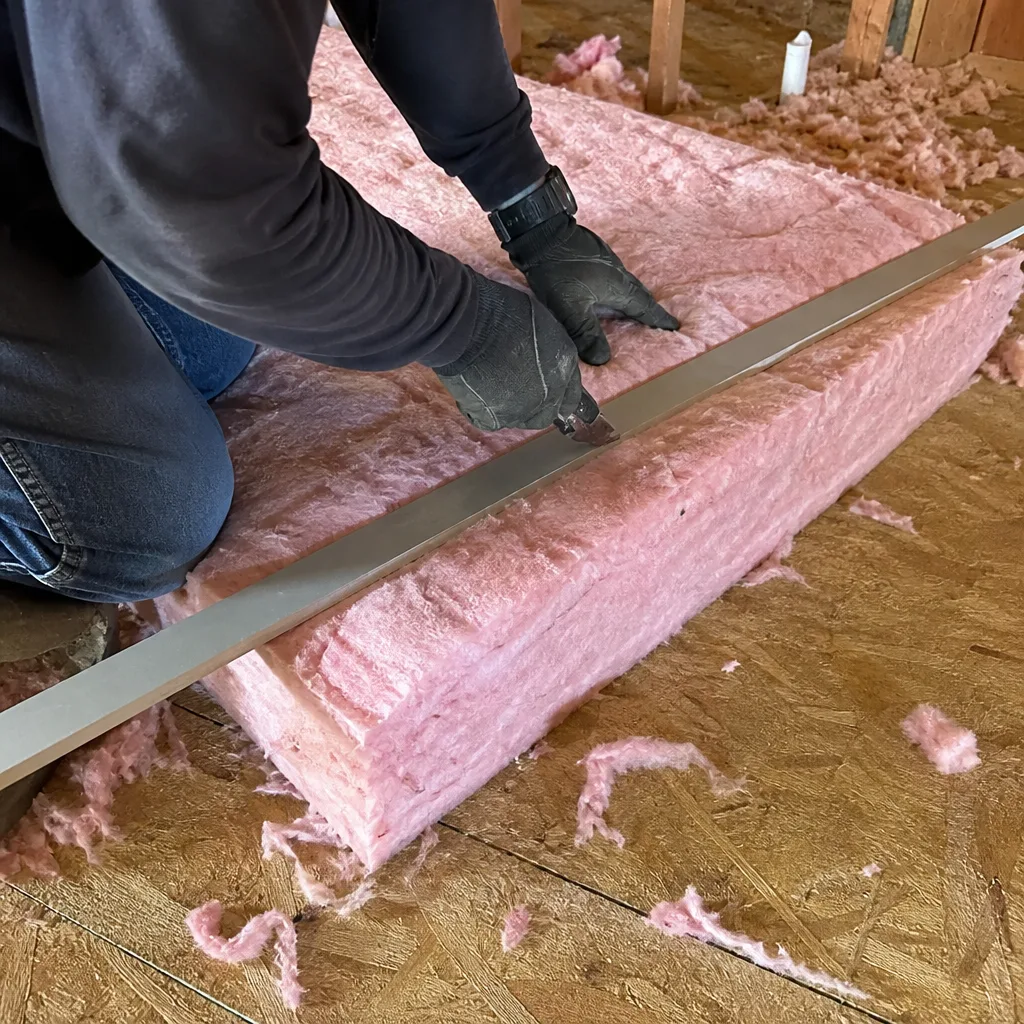
Attic Batt Insulation
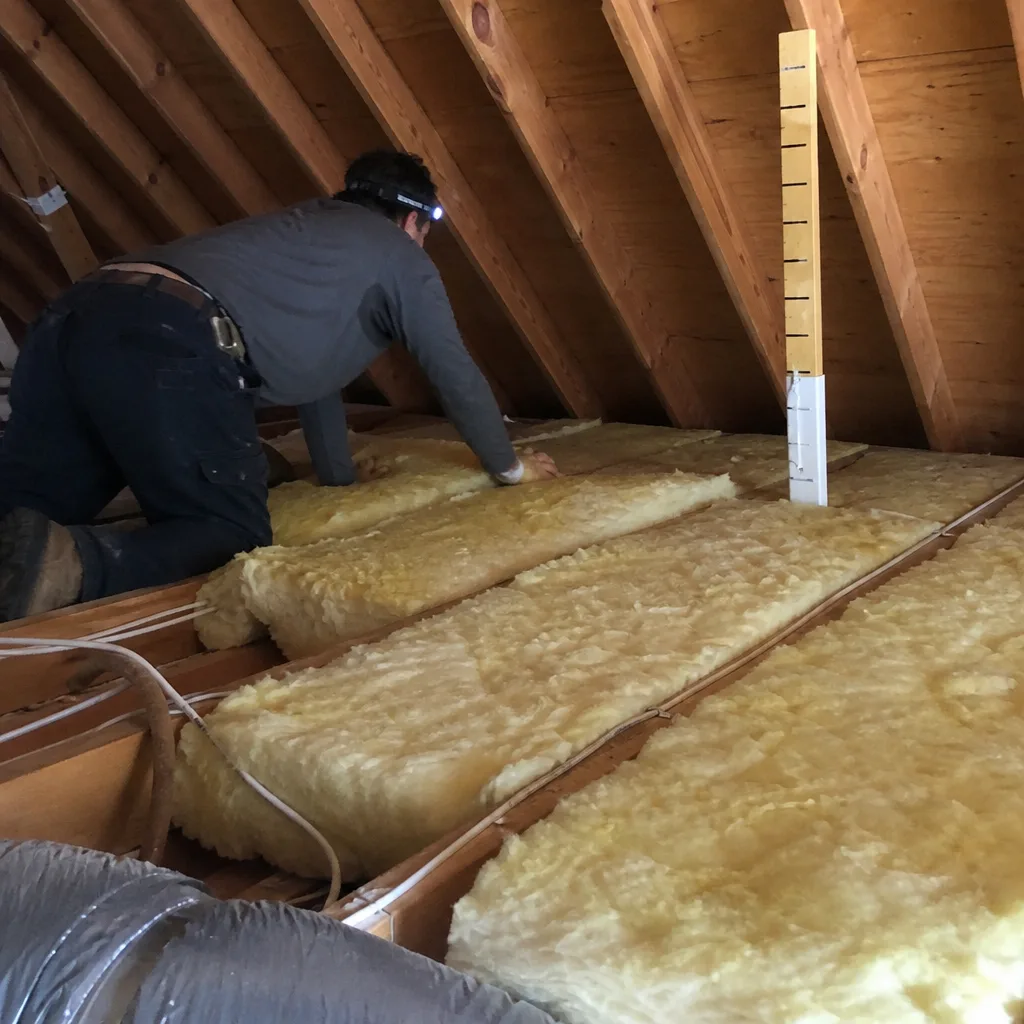
Batt insulation works best in Castle Hills when we’re insulating a defined new space, a kneewall, or a storage platform where blown fill would drift. We stock Knauf and Owens Corning batts in R-30 and R-38 for Climate Zone 2. The key on these older ranches is fitting batts precisely around the truss chords and electrical runs without compression; compressed fiberglass loses R-value fast. We see a lot of homeowner-installed batts in Castle Hills that were wedged in too tight or left gaps at the eaves. Our crews measure, cut, and fit to the cavity.
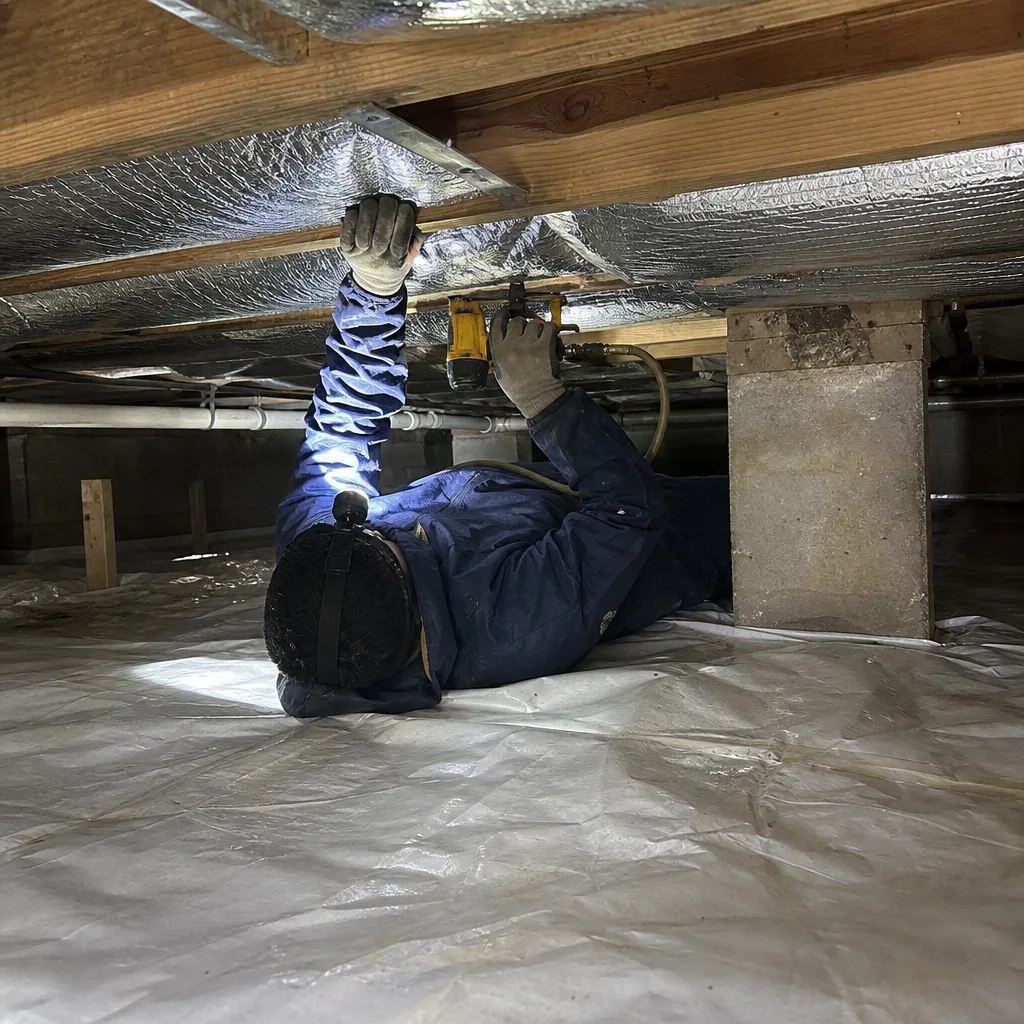
Attic Insulation Top-Up
This is our most common Castle Hills service, and it’s where homeowners get burned most often. A top-up sounds simple: add new insulation over old. But in Castle Hills’s 1950s-1970s ranches, the existing material is often compacted to 2-4 inches, performing at roughly R-8 to R-11, far below the R-38 recommended for this climate zone. Worse, many attics have never been air-sealed, so new insulation gets laid directly over leaks at the top plates and can lights. We top up only after sealing and baffle installation. A typical Castle Hills top-up runs $1,800-$3,200 for a 1,200-1,800 square foot ranch, including air sealing and baffles.
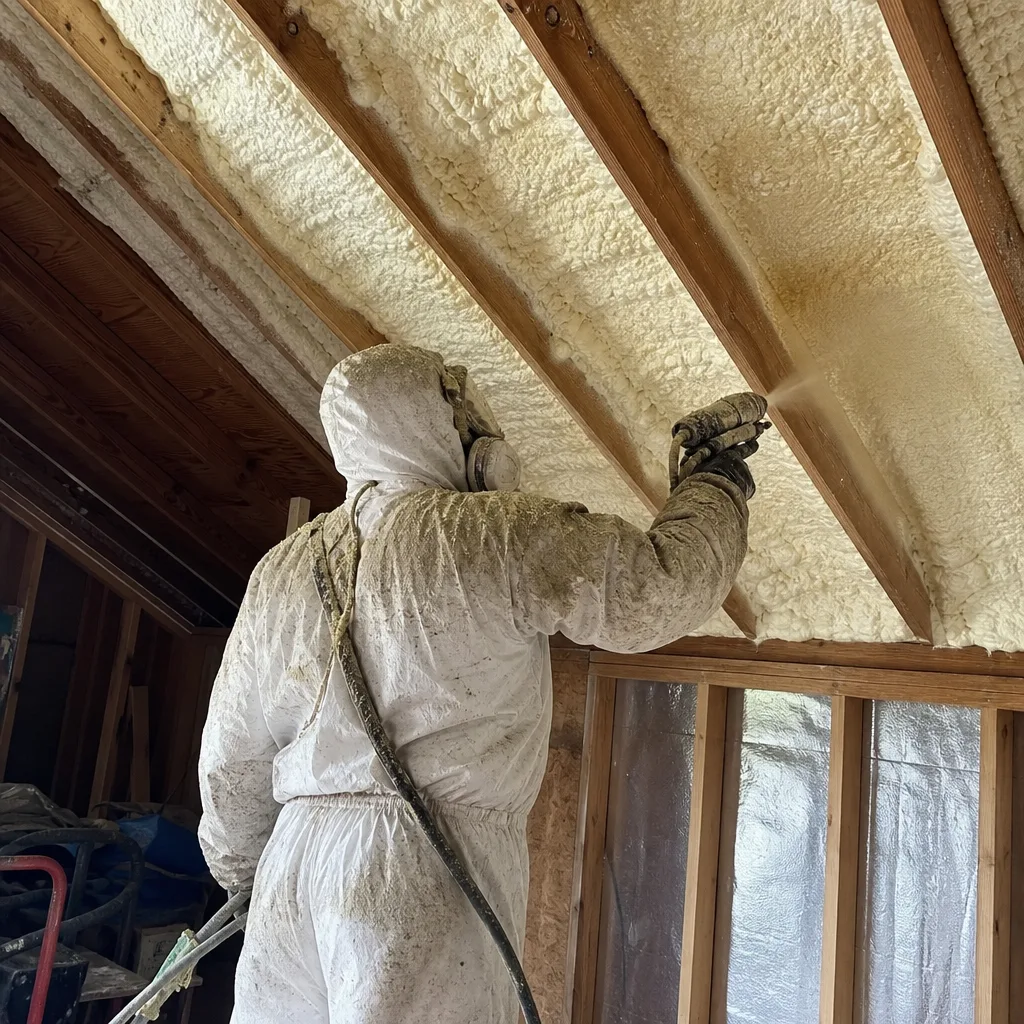
Attic Insulation Replacement
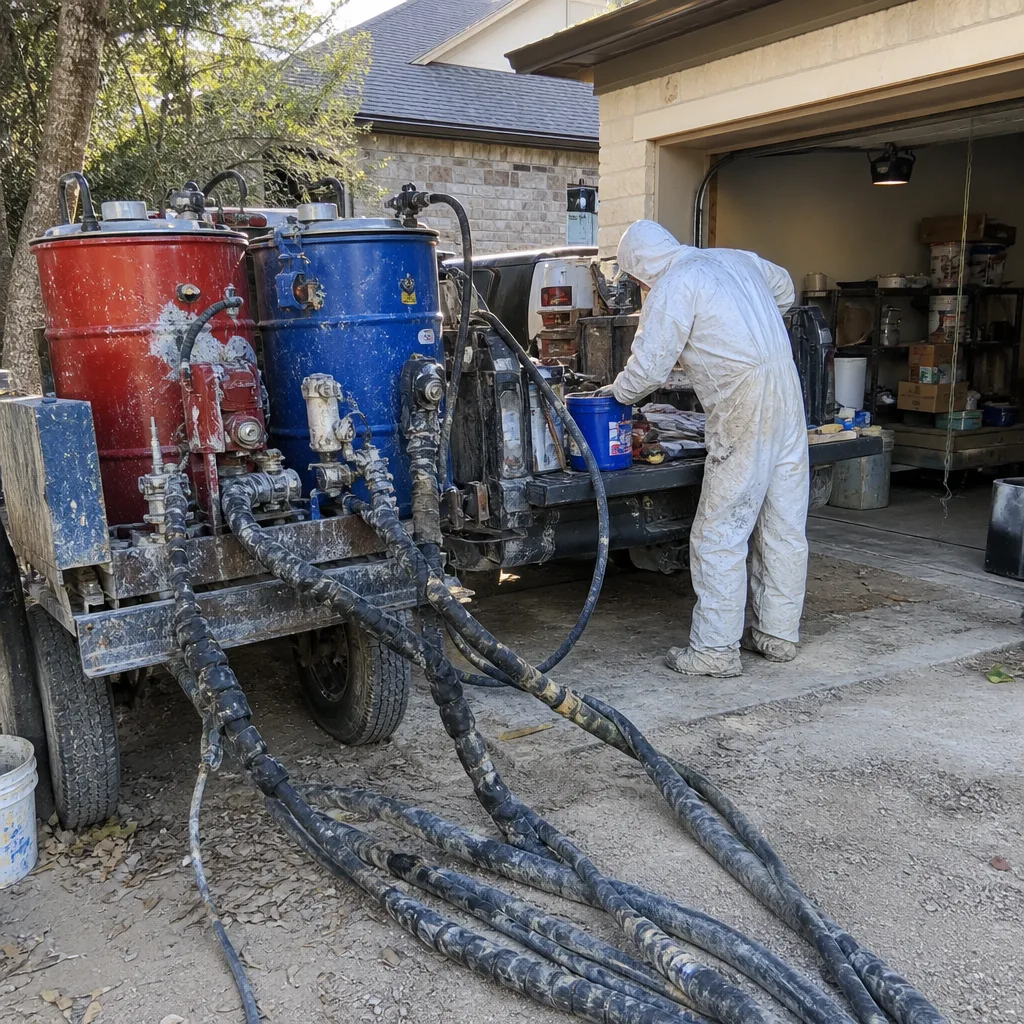
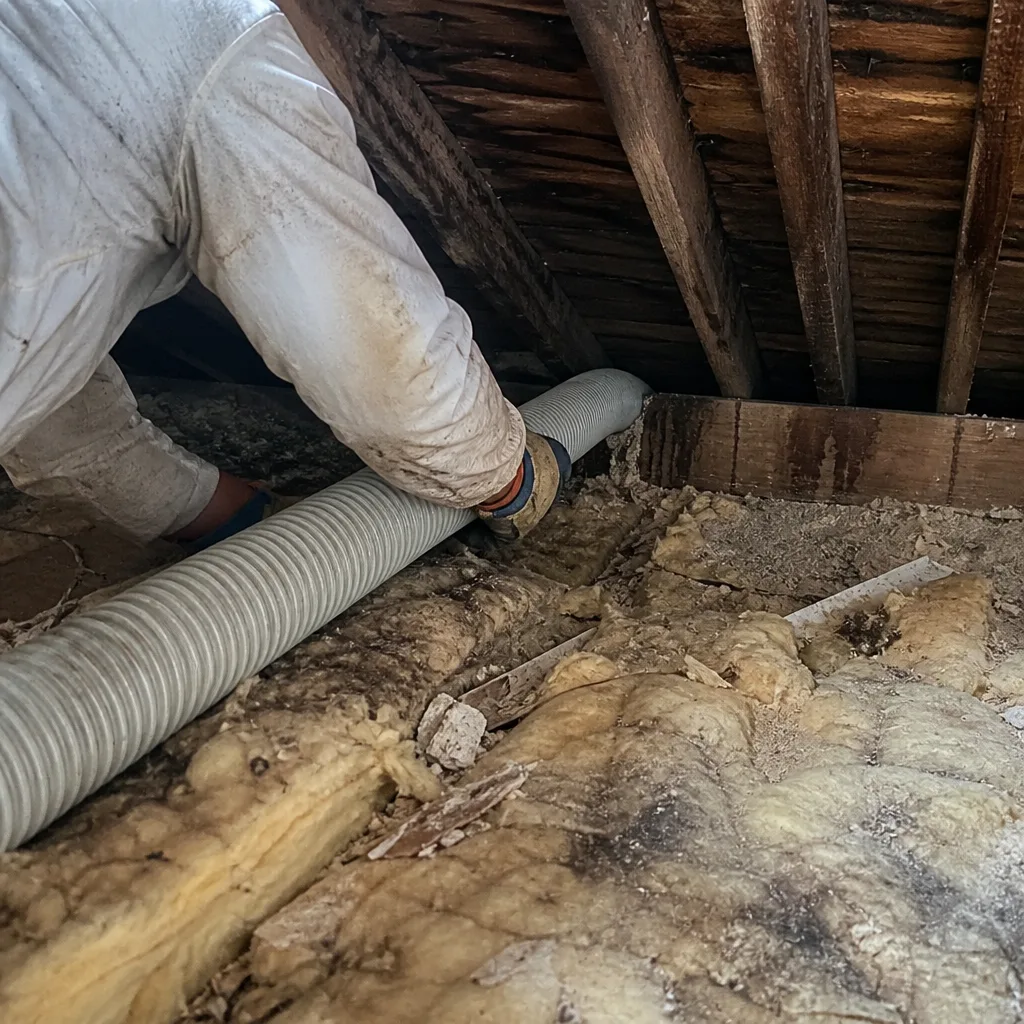
When fiberglass has been degraded by rodent activity, water damage, or fifty years of 150°F summers, we strip it out. Full replacement in Castle Hills runs $3,200-$4,500 for a standard ranch, including removal, disposal, air sealing, baffles, and new blown-in insulation to R-38. We document the before condition with photos, remove the material with contained vacuums, and deliver a complete photo record of the sealed and insulated result. On applicable jobs, we provide before-and-after blower-door numbers so you can verify the air-sealing performance in a single figure.
Attic Baffles & Ventilation Prep
Castle Hills’s low-pitched ranch roofs are especially prone to blocked soffit ventilation. Without baffles, blown insulation drifts into the eaves and chokes airflow, leading to moisture buildup and shingle degradation. We install proper rafter baffles at every soffit intake before adding insulation, maintaining the ventilation path from eave to ridge. This step is non-negotiable on our jobs. We’ve seen too many Castle Hills attics where a previous contractor skipped it.
What happens when you call
- 1
A real person answersNo phone trees - you reach a local pro.
- 2
You get an upfront price rangeHonest numbers before anyone is dispatched.
- 3
A background-checked tech heads outLicensed & insured, dispatched right away.
- 4
You approve before work beginsNothing starts until you say go.
 Before
 After
AfterTrusted Brands We Service in Castle Hills
We source insulation materials from Owens Corning, Johns Manville, Knauf, and Rockwool, among others. No proprietary lock-in. For Castle Hills homeowners, this means we match the product to the application, not the other way around. Owens Corning loose-fill fiberglass for standard blown attics, Rockwool batts for fire-resistant kneewalls or platform storage areas, Johns Manville for specific density requirements. We keep common products stocked for fast turnaround on Castle Hills jobs, and we can source specialty materials within a few days if your project calls for it.
Common Attic Insulation Problems We See in Castle Hills Homes
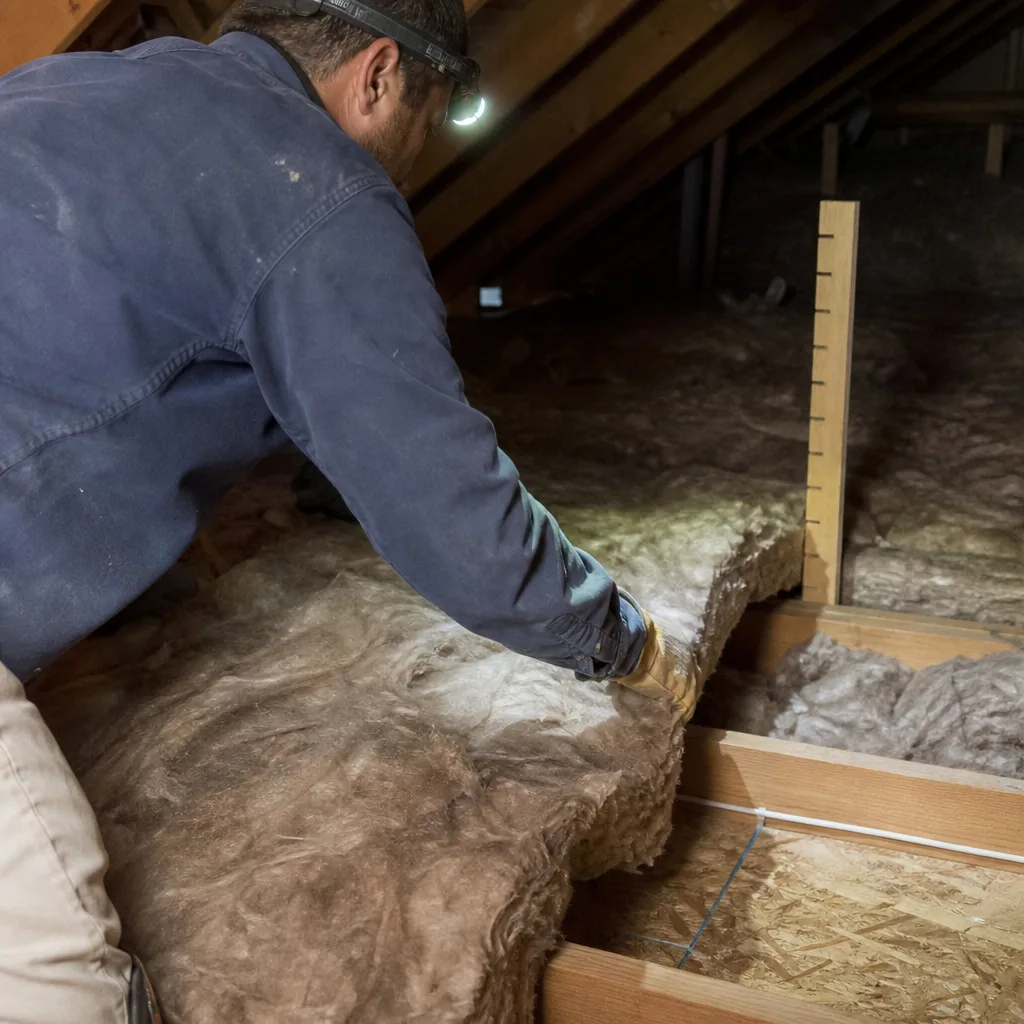
- Settled original fiberglass performing at a fraction of rated R-value. The 2-4 inches of blown or batt fiberglass installed in 1960s and 1970s Castle Hills ranches has compacted over decades. What was once R-19 or R-30 is now effectively R-8 to R-11. The low-pitched roofs bake these attics to 140-155°F in summer, accelerating breakdown.
- Disconnected thermal boundaries at 1980s-1990s additions. On a 1968 single-story ranch off West Avenue in Castle Hills, we found the classic pattern: the main attic had settled 3-inch fiberglass at roughly R-8, but the 1990s rear-room addition had a completely bare attic with no air sealing at the junction - a hidden energy drain behind an otherwise well-kept interior. Our crew air-sealed the top plates and junction, baffled the soffits, and blew in Owens Corning fiberglass to bring the whole envelope to R-38; the homeowner reported the back room finally stopped cooking in the afternoon.
- Top-ups installed without air sealing or baffles. After Winter Storm Uri in February 2021, many Castle Hills homeowners rushed to add insulation. Some contractors obliged by blowing new material directly over leaks and blocked soffits. The result: slightly better R-value on paper, but conditioned air still escaping, and moisture problems developing at the eaves.
- Inadequate thermal envelopes exposed by rare hard freezes. Uri showed how many Castle Hills ranch homes lack the envelope integrity to handle temperatures below 20°F. Cold rooms, high gas bills, and ice damming on low-pitched roofs were common complaints. The fix isn’t more insulation alone; it’s sealing first, then insulating to proper depth.
Pricing for Attic Insulation in Castle Hills, TX
| Service | Typical Range (Castle Hills Ranch, 1,200-1,800 sq ft) |
|---|---|
| Attic air sealing + baffles only | $800-$1,400 |
| Attic Insulation Top-Up (to R-38, with sealing) | $1,800-$3,200 |
| Attic Insulation Replacement (remove, seal, re-insulate) | $3,200-$4,500 |
| Attic Baffles & Ventilation Prep (standalone) | $600-$1,100 |
| Home Energy Audit with blower-door test | $350-$500 |
What moves you within these ranges: attic square footage, current insulation condition, accessibility, whether we need to reroute or protect existing ductwork, and whether the job includes the addition junction repair we so often find in Castle Hills. Every estimate is free, written, and delivered before any work starts. Under Haven Standard: Have it in writing. Bring us a competing quote; we offer a Free Second Opinion on any written estimate.
We Also Serve Cities Near Castle Hills
Our crews work throughout the corridor, including Castle Hills, New Braunfels, Cibolo, Seguin, and Schertz. Same written-price standard, same documented photo record, same 365-Day Done Right Promise. Scheduling is coordinated from our Dallas-Fort Worth office; technicians serve Castle Hills locally.
Serving Castle Hills, TX - Our Local Coverage Area
We’re based in the Castle Hills area and know this community well. Use the map below to see our service coverage - if you’re nearby, we can almost certainly help.
FAQs - Attic Insulation in Castle Hills
You need a permit from Castle Hills’s own permitting office, not San Antonio’s. Castle Hills is an independent municipality with its own building department, and because it’s fully surrounded by San Antonio, this confuses a lot of homeowners and even some contractors who assume San Antonio jurisdiction applies. We pull Castle Hills permits routinely; it’s part of our standard workflow for jobs inside your city limits. Call (830) 243-6352 and we’ll confirm whether your specific scope requires permitting.
Yes, it often means a standard top-up won’t solve the real problem. We regularly find that the addition’s attic is completely bare and unsealed at the junction with the original house, even when the main attic has some existing insulation. Blowing new material over the main attic while leaving the addition disconnected wastes money. We assess the thermal boundary continuity before recommending any scope. Call (830) 243-6352 for a free evaluation.
Current code for Castle Hills, in Climate Zone 2, recommends R-38 for attic insulation. The original 2-4 inches of blown or batt fiberglass in these ranches was typically installed at roughly R-19 to R-30 when new, and has since compacted and degraded to roughly R-8 to R-11. Fifty years of thermal cycling in 150°F attics breaks down the fiber structure. We bring these attics to R-38 with new material after sealing. Call (830) 243-6352 for a written price on your specific attic.
Yes, and on low-pitched Castle Hills roofs, we almost always do both. The shallow pitch reduces natural stack effect ventilation, so maintaining clear soffit-to-ridge airflow is critical. We install baffles at every soffit intake before adding insulation, ensuring the ventilation channel stays open. Without this step, blown insulation drifts into the eaves and traps moisture. Call (830) 243-6352 to schedule an assessment.
Uri exposed how many Castle Hills ranches lacked adequate thermal envelopes for hard freeze conditions, and it created a wave of insulation upgrades. The lasting lesson: insulation alone isn’t enough. Homes that performed best had proper air sealing at the attic floor, not just deep insulation. We’ve seen too many post-Uri top-ups where new material was blown over unsealed leaks, delivering poor results. We seal first, insulate second, and document the blower-door improvement. Call (830) 243-6352 for a free estimate.
Written by Wes Okafor, Owner at Topside Attic Insulation New Braunfels, serving Castle Hills and surrounding communities since 2016.