
Attic Baffles & Ventilation Prep in New Braunfels, TX
Attic baffles – channels installed at each rafter bay along the eaves – keep soffit air moving freely into the attic even after blown-in insulation is added. Without them, insulation plugs the eaves and kills the airflow your roof deck depends on. In New Braunfels, where summer attic temperatures regularly push past 140°F and moisture from Comal County’s spring humidity can linger under a poorly ventilated deck for weeks, blocked soffit vents don’t just reduce energy efficiency – they accelerate sheathing decay and set the stage for mold. Ventilation prep means we verify every intake and exhaust path before a single pound of insulation goes in.
At Topside Attic Insulation New Braunfels, attic baffles and ventilation prep are not an add-on we pitch at the end of a sales call. They’re a prerequisite – part of the same job sequence that governs every attic we work in. If the ventilation path isn’t clear and the air sealing isn’t done, insulation doesn’t go in. That’s the sequence, and we don’t deviate from it. If you want to walk through what your attic actually needs, search for Attic Insulation Near Me in New Braunfels, TX and call us at (830) 243-6352 – we’ll give you a written price before any work starts, which is Haven Standard Clause 1 and not something we negotiate around.
This page lives under our full Attic Insulation in New Braunfels service, where you’ll find detail on R-value targets, material options, and the full project scope. Read that page if you’re deciding between materials or trying to understand the whole job. Read this page if your question is specifically about airflow, baffles, and why ventilation prep has to happen first.
When You Need Attic Baffles & Ventilation Prep
- You’re adding blown-in insulation to an existing attic. Blown-in cellulose or fiberglass – materials like GreenFiber cellulose or Owens Corning ProPink – will pile up against your rafter bays and block soffit vents completely if baffles aren’t in place first. We see this constantly in homes built in the New Braunfels area between 1990 and 2010, where original builders skipped baffles or installed them only partially.
- Your upstairs rooms stay hot even after you’ve added insulation. If insulation is already there but the attic still reads 145°F on a July afternoon, the most common culprit is blocked soffits. Heat isn’t venting; it’s stacking. Homes in the Gruene and Dry Comal Creek neighborhoods see this pattern regularly because of the wide, deep eave overhangs that collapse airflow when insulation pushes against them.
- You’ve found sheathing staining or dark streaking near the ridge. Moisture vapor that can’t exit through the ridge vent condenses on the underside of the decking. In New Braunfels’s climate – humid winters, scorching summers – this cycling creates the exact conditions for wood staining and early sheathing damage. Ventilation prep identifies where the air path is interrupted before more insulation makes the problem worse.
- Your energy bills went up after a past insulation job. This happens when insulation was installed over blocked eaves. The thermal mass of the insulation can actually trap heat that would otherwise vent, running your AC harder. If a previous contractor didn’t install baffles, we can document the current state, install what’s missing, and add the insulation layer in the correct sequence.
- You’re replacing insulation that was damaged by pests or water. Rodent-compromised insulation in attics near the Landa Park area and along the Guadalupe River corridor is something we deal with regularly. When old material comes out, baffles either come out with it or were never there. Ventilation prep is part of every insulation replacement job we do.
- Your attic has a ridge vent but no functional soffit vents. Ridge vents are exhaust only – they require a working intake at the eaves to create the pressure differential that moves air. An attic with a ridge vent but plugged soffits has neither intake nor airflow; it just has a slot at the top that does nothing. We measure net free area at the soffit and ridge to confirm balance before any insulation is placed.
Our Attic Baffles & Ventilation Prep Process
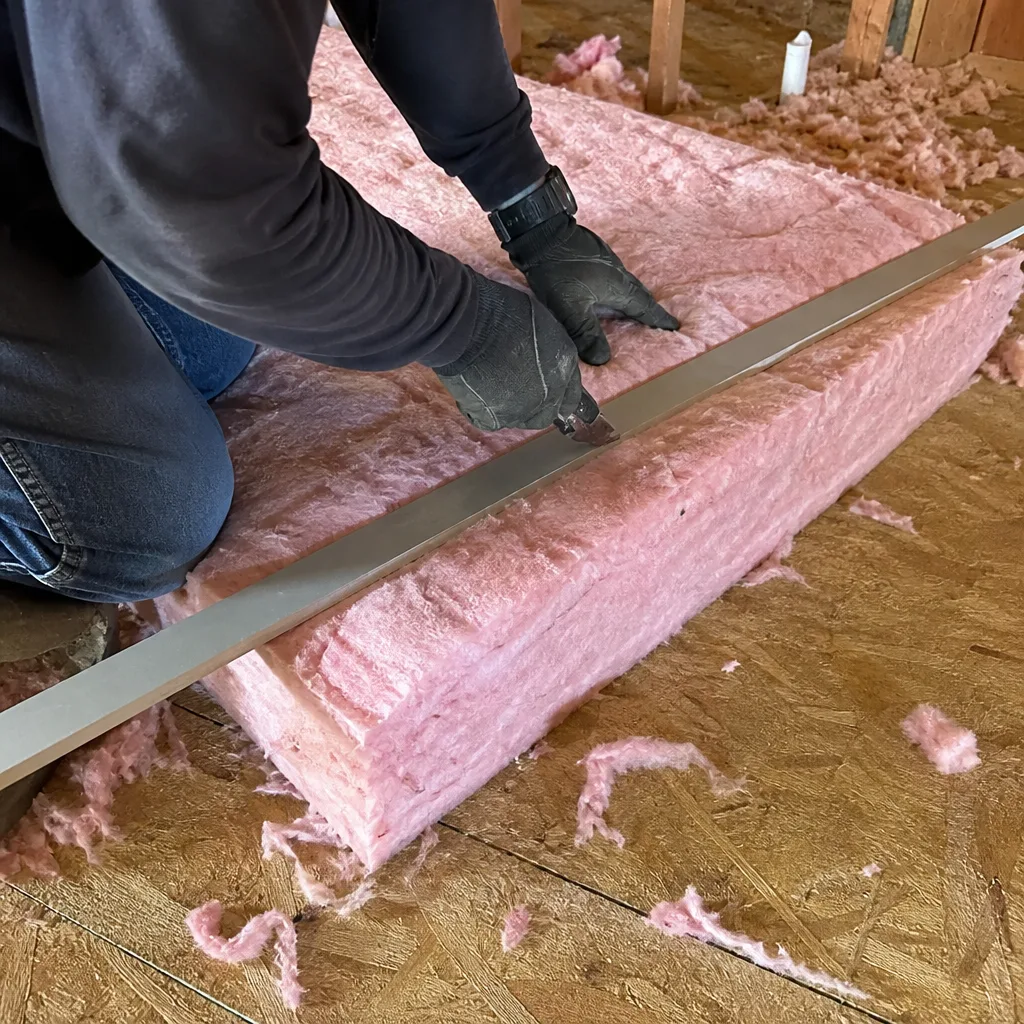
- Written scope and price before anyone enters the attic. Under Haven Standard Clause 1, you receive a flat written price and a documented scope of work before a technician touches anything. This includes the baffle type specified (typically foam or cardboard chute baffles in standard rafter bays; rigid foam in problem areas), the linear footage to be installed, and any ventilation deficiencies identified in the preliminary visual. No surprises on invoice day.
- Full attic inspection with photo documentation. A background-checked, uniformed technician walks the entire attic, photographs every rafter bay at the eave line, and records the condition of existing baffles, the net free area of soffit vents, ridge vent continuity, and any visible sheathing staining. You receive a Documented Photo Record of the pre-work condition – this is included on every visit, not available on request. In many New Braunfels homes built in the 1990s, we find that fewer than half the rafter bays have any baffle installed at all.
- Air sealing of top plates, can lights, and penetrations. Baffles manage airflow above the insulation plane; air sealing manages the conditioned air below it. Both have to happen before insulation goes in. We seal top-plate gaps, recessed light fixtures, plumbing and electrical penetrations, and any HVAC boot connections using appropriate sealants rated for the application. On applicable jobs, we run a blower-door test – a pressurization reading that shows, in one number, how much air the building envelope is losing – before and after sealing so you can see the actual result in CFM50, not just take our word for it.
- Baffle installation at every open rafter bay. We install baffles from the exterior wall top plate to a point above the insulation depth target, creating a clear channel from soffit to attic air space. In standard 2×6 rafter bays common in New Braunfels homes built after 1995, we maintain a minimum 1-inch clear channel; in older 2×4 construction, we often use thinner profile baffles and document the net clearance. Every bay gets a baffle – not just the obvious ones or the ones near the hatch.
- Ventilation balance check. We calculate net free area (NFA) for both intake (soffit) and exhaust (ridge or gable) and confirm the ratio meets the 1:150 rule under IECC or 1:300 when a vapor retarder is in use – whichever applies to the assembly. If the soffit screen is clogged, partially painted over, or undersized for the attic square footage, we document it and either correct it as part of scope or flag it clearly in writing for the homeowner to address. We don’t move forward with insulation if ventilation balance is materially off.
- Insulation installation and final photo record. Only after baffles are confirmed and air sealing is complete does insulation go in. The final Documented Photo Record shows every rafter bay with a baffle visible, the insulation depth at multiple measurement points (we use depth rulers photographed in place), and the finished surface. The 365-Day Done Right Promise applies from this point forward – if something isn’t right, we make it right; that’s in writing before we leave.
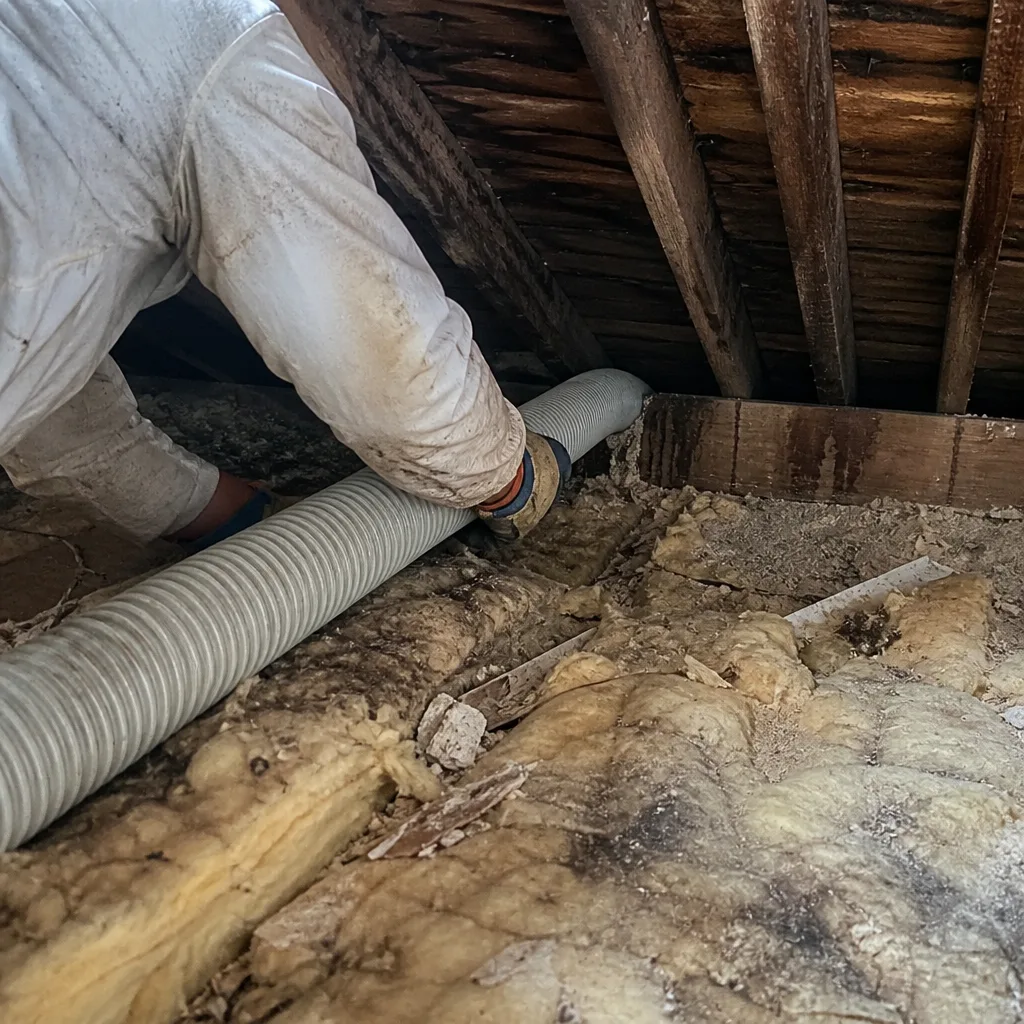 Before
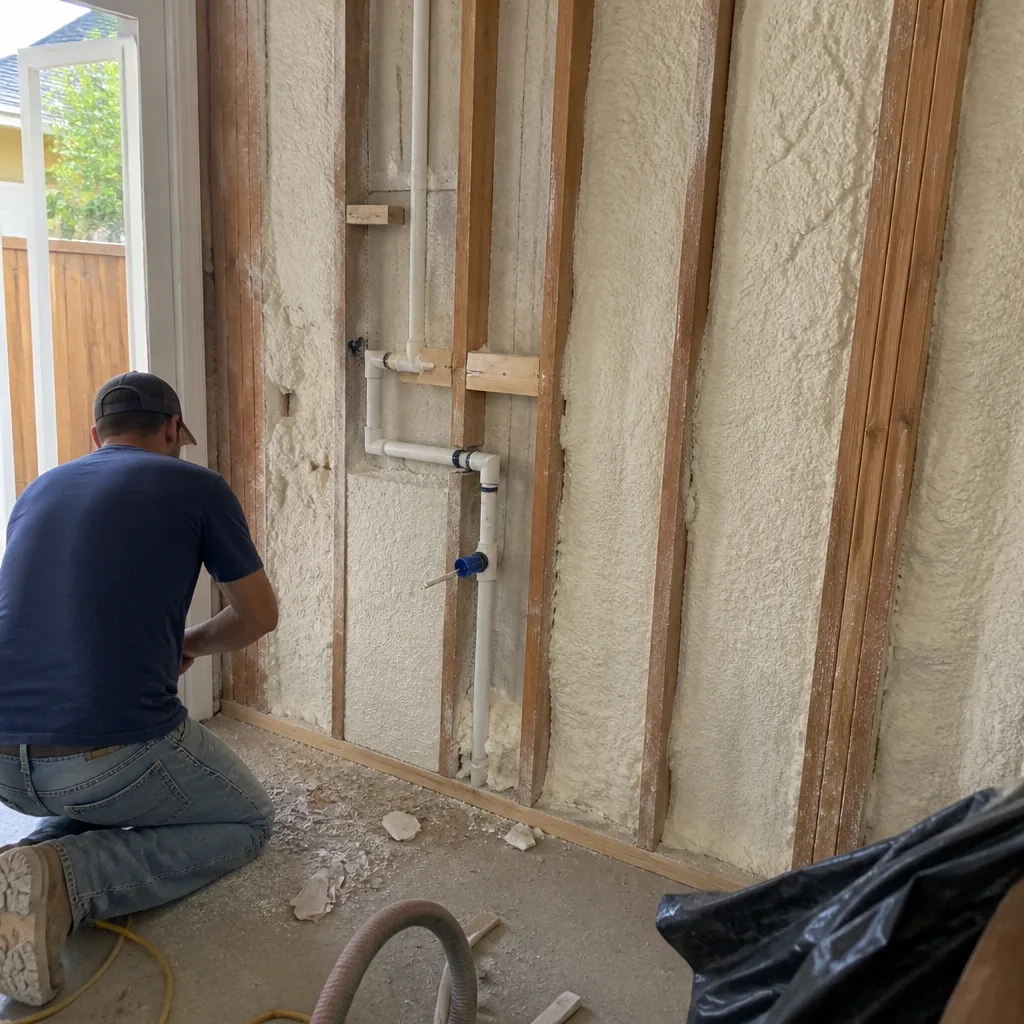 After
AfterAttic Baffles & Ventilation Prep Pricing in New Braunfels
Baffle installation and ventilation prep as a standalone service in New Braunfels typically runs between $280 and $650 for a standard single-story home with 40 to 60 rafter bays and accessible soffits. When it’s part of a full Attic Insulation services project – which is how most customers encounter this work – the baffle labor is built into the project price rather than quoted separately.
| Scope | Typical Range (New Braunfels) |
|---|---|
| Baffle installation only, 40-60 bays (standard single-story) | $280 – $420 |
| Baffle installation + air sealing prep, no insulation | $420 – $650 |
| Baffle + air sealing + blower-door test (before/after) | $650 – $950 |
| Baffle + air sealing + blown-in insulation (full project) | $1,400 – $3,200 depending on R-value target and attic SF |
| Ventilation balance assessment only (documented report) | $120 – $180 |
What moves the number up or down in New Braunfels specifically:
- Rafter bay count and accessibility. A hip roof – common in the Creekside and Meyer Ranch neighborhoods – has more complex framing at the hips and valleys, which adds baffle time compared to a simple gable roof of the same square footage.
- Existing baffle condition. If prior baffles are partially collapsed or displaced, they need to be removed before new ones go in. That’s labor that adds to the project time.
- Soffit vent condition. Painted-over or clogged soffit screens are common in older New Braunfels homes and in neighborhoods with HOA-repainted exteriors. Clearing or replacing them is priced separately if it’s outside the standard baffle scope.
- Attic height and temperature. In midsummer, attic temps in New Braunfels regularly exceed 140°F by 10 a.m. We schedule attic work for early morning starts on hot days; jobs that require longer access time may carry a scheduling note in the written scope.
We don’t do verbal estimates. You’ll receive a written price before any work starts – that’s not a sales line, it’s how every job works here. If you have a written estimate from another contractor, bring it to us. We offer a Free Second Opinion on any written estimate and will read through it with you line by line.
FAQs – Attic Baffles & Ventilation Prep
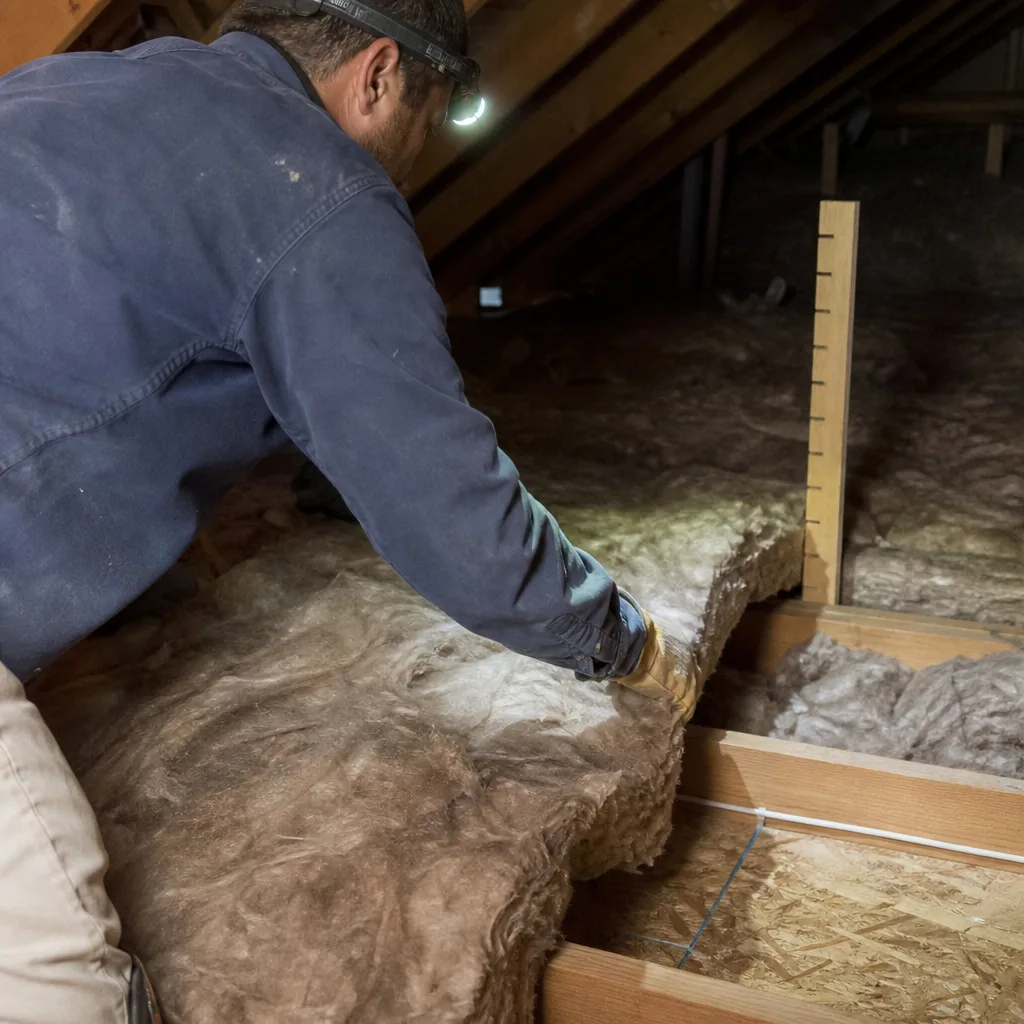
What exactly is an attic baffle and why does it matter in New Braunfels?
An attic baffle is a rigid channel – typically cardboard, foam board, or formed polystyrene – installed in each rafter bay between the top of the exterior wall and the attic air space. Its job is to hold the soffit-vent opening clear of insulation so outside air can enter at the eaves, move along the underside of the roof deck, and exit at the ridge. In New Braunfels, where attic air can exceed 140°F in July and ambient humidity from the Comal River valley creates significant moisture load from November through April, this airflow path is the primary mechanism for keeping the roof deck dry and reducing radiant heat gain into the living space. Without Attic Batt Insulation baffles, blown-in insulation – whether cellulose like GreenFiber or fiberglass like Owens Corning ProPink – fills the rafter bays completely and eliminates that pathway. The result is a hotter attic, a harder-working air conditioner, and accelerated sheathing deterioration that most homeowners don’t notice until they’re looking at a re-roof estimate.
Can’t I just install insulation without baffles if my soffit vents are already there?
No – the soffit vents being present doesn’t mean they’re accessible to the attic air space after insulation is added. Soffit vents introduce air at the very lowest point of the eave, which is also where blown-in insulation is deepest and most likely to pile up. Without a baffle creating a physical channel, the insulation simply covers the interior face of the soffit vent within the rafter bay, and the vent becomes an intake to nowhere. We’ve measured attics in New Braunfels with intact, code-compliant soffit vents where the net free area reaching the attic air space was effectively zero because there were no baffles. Installing insulation in that condition isn’t something we do – the sequence exists for a reason, and it starts with making sure the ventilation path works before adding material that would block it.
How do I know if the baffle work was actually done correctly?
The Documented Photo Record we provide on every visit is the direct answer to this question. Before we install a single baffle, we photograph every rafter bay at the eave line so you can see the starting condition. After installation, we photograph the same bays with baffles in place. The photos are timestamped and labeled by bay location. You don’t need to take our word for it – you have a visual record of the work. On jobs where we also run a blower-door test before and after air sealing, you additionally receive two CFM50 readings showing the measured change in envelope air leakage. That’s the documentation package you walk away with, and it’s included in the job cost, not an upgrade. Under the 365-Day Done Right Promise, if a photo shows a gap and you call us about it, we address it – that commitment is written into your project documents before work starts.
What’s the difference between ventilation prep and air sealing – aren’t they the same thing?
They address opposite sides of the attic floor. Air sealing – sealing top plates, can lights, plumbing penetrations, and HVAC boots – controls conditioned air moving from the living space up through the attic floor. Ventilation prep – baffles, soffit clearance, ridge vent continuity – controls outdoor air moving through the attic space above the insulation. Both have to be correct for the attic assembly to perform as intended, but they’re solving different problems with different materials and different diagnostic methods. A well-ventilated attic with poor air sealing is still losing conditioned air through every can light and top-plate gap; a well-sealed attic with blocked soffits is still accumulating heat and moisture in the rafter bays. We address both on every full attic project because doing one without the other produces a job that looks complete but isn’t. On applicable jobs, the blower-door readings we provide before and after sealing give you a number – not a feeling – showing how much the air sealing actually changed the envelope’s performance.
Why Topside Attic Insulation New Braunfels for This Work
Since 2016, Envelope Insulation Co. has completed work in more than 9,000 homes – every one with a written price before work started and a Documented Photo Record when the crew left. In New Braunfels, we work regularly in neighborhoods like Gruene, Creekside, Meyer Ranch, and the older streets near Landa Park, and we’ve built up a clear picture of the construction patterns that create ventilation problems in this specific market: hip roof framing with tight rafter bays, HOA-directed repaints that plug soffit screens, and tract-home construction from the late 1990s where baffles were sometimes installed only at the first bay from the gable end.
Wes Okafor leads the work at Topside Attic Insulation New Braunfels and has structured the company specifically so that the documented-evidence approach described on this page isn’t a differentiator pitch – it’s just how the jobs run. You get a written scope, a written price, a before-and-after photo record, and blower-door readings on applicable jobs. Materials sourced from manufacturers like Johns Manville and GreenFiber are chosen for the application, not because of a supply arrangement. And if something isn’t right after we leave, the 365-Day Done Right Promise is in writing in your project documents, not a verbal reassurance.
If you want to understand how baffle and ventilation prep work fits into a full attic project, the home page gives you the complete service picture. If you’re ready to get a written price for your attic in New Braunfels specifically, call (830) 243-6352. A live person answers – no voicemail, no callback window. We’ll schedule an inspection, document what we find, and give you a written price before anything else happens.
Written by Wes Okafor, Owner at Topside Attic Insulation New Braunfels, serving New Braunfels since 2016.