
Rockwool Crawl Space Encapsulation: The New Braunfels Owner’s Guide
Rockwool crawl space encapsulation in New Braunfels typically runs $2,800-$5,400 installed for a standard 1,200-1,800 sq ft crawl space, and we stock the full Rockwool Comfortboard, Comfortbatt, and Safe’n’Sound lines for same-day or next-day starts on most jobs. Most homeowners in New Braunfels realize their Rockwool encapsulation system is failing when they notice musty odors returning after a dry spell, find fiberglass batting sagging below the Rockwool rigid boards, or spot condensation beading on the foil face of their vapor barrier during our humid spring months.
Which Rockwool Models This Applies To
Rockwool doesn’t sell a branded “encapsulation kit,” so we’re talking about the Rockwool products that get spec’d into crawl space assemblies: Comfortboard 80 and 110 rigid boards for perimeter walls and band joists, Comfortbatt for rim joist cavities, and Safe’n’Sound where fire-rated separation matters. The critical compatibility gotcha in New Braunfels is thickness matching to existing framing: Comfortboard 80 comes in 1″, 1½”, and 2″ depths, but many local builders from the 2015-2020 boom used 2×6 band joists with a 1½” board and no air gap, which traps moisture against the sill plate when our Guadalupe Valley humidity spikes above 70%.
We verify the right product by checking what’s stamped on the foil facing (if preserved) or measuring the residual board thickness against the joist depth. OEM Rockwool from a certified distributor carries the density rating and R-value per inch printed on each board; aftermarket mineral wool can match the spec but often runs 10-15% lower density, which matters when you’re counting on the board’s rigidity to stay put against a foundation wall without mechanical fastening every 8 inches. We stock both on the truck, but we’ll show you the sample boards and explain the price difference before we unload either one.
Signs Your Rockwool Crawl Space Encapsulation Is Failing
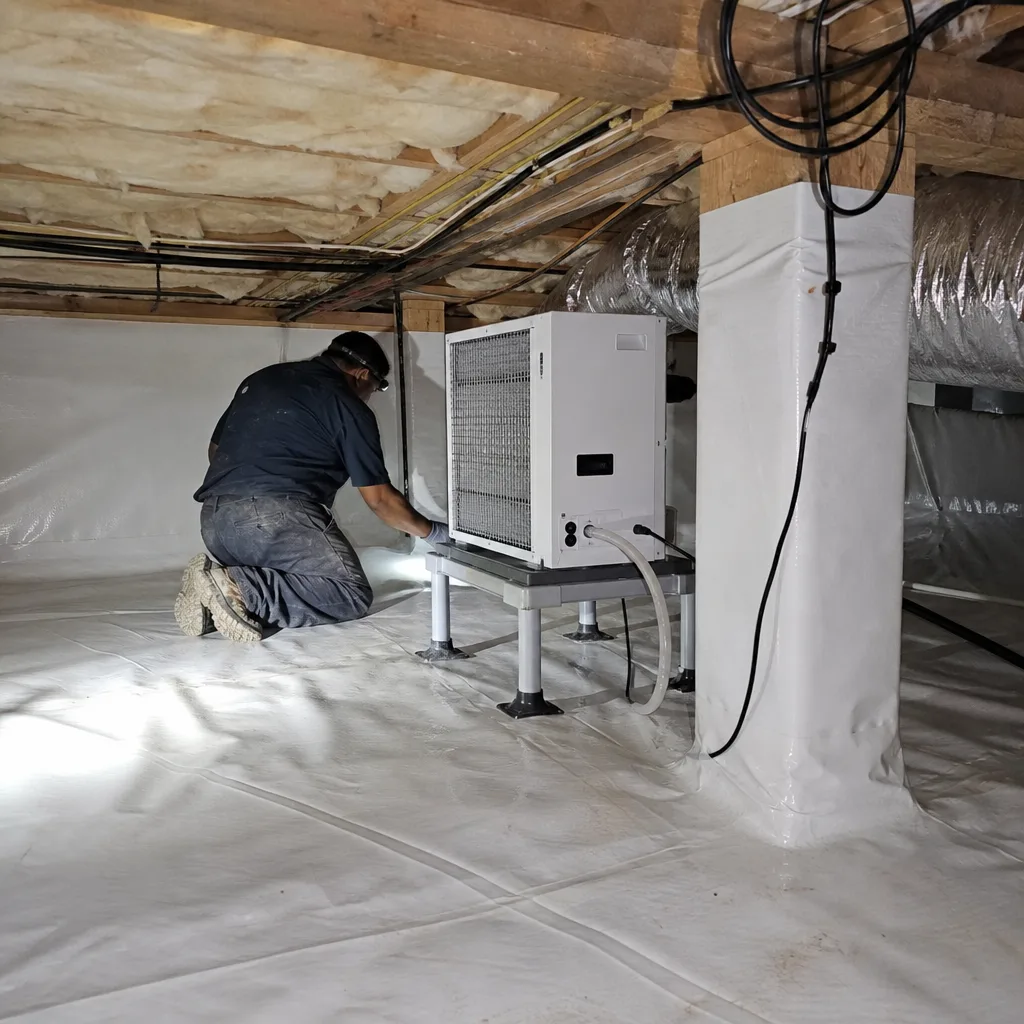
- Musty odors that worsen after rain. Rockwool is hydrophobic and won’t hold water like fiberglass, but if the vapor barrier seam tape has delaminated or the board edges aren’t sealed to the wall with proper acrylic adhesive, humid New Braunfels air bypasses the insulation and condenses on cool foundation walls. The smell is mold metabolites, not the Rockwool itself.
- Comfortboard sagging or pulling away from band joists. This happens when the original installer used friction fit alone in a 2×8 cavity with a 6″ board, or when summer heat cycling degrades the adhesive bond. Rockwool’s weight is higher per square foot than XPS, so inadequate fastening always fails eventually.
- Increased energy bills with no HVAC changes. A failing encapsulation lets unconditioned crawl air leak into the envelope through plumbing penetrations and subfloor gaps. In New Braunfels, where slab homes dominate and the crawl is often the primary thermal bypass, this shows up as a 15-25% heating penalty in January.
- Condensation on ductwork or pipes. When the dewpoint of crawl air rises above the surface temperature of supply ducts, you get sweating. Rockwool encapsulation is supposed to keep the crawl within 10°F of conditioned space; if it’s not, either the insulation R-value has degraded from moisture or the air sealing layer has failed.
- Pest activity in previously sealed areas. Rodents don’t eat mineral wool, but they’ll push through a loose board to nest behind it. We find this most often on the River Road corridor in older New Braunfels homes where the original install didn’t seal the board perimeter with mesh-reinforced acrylic.
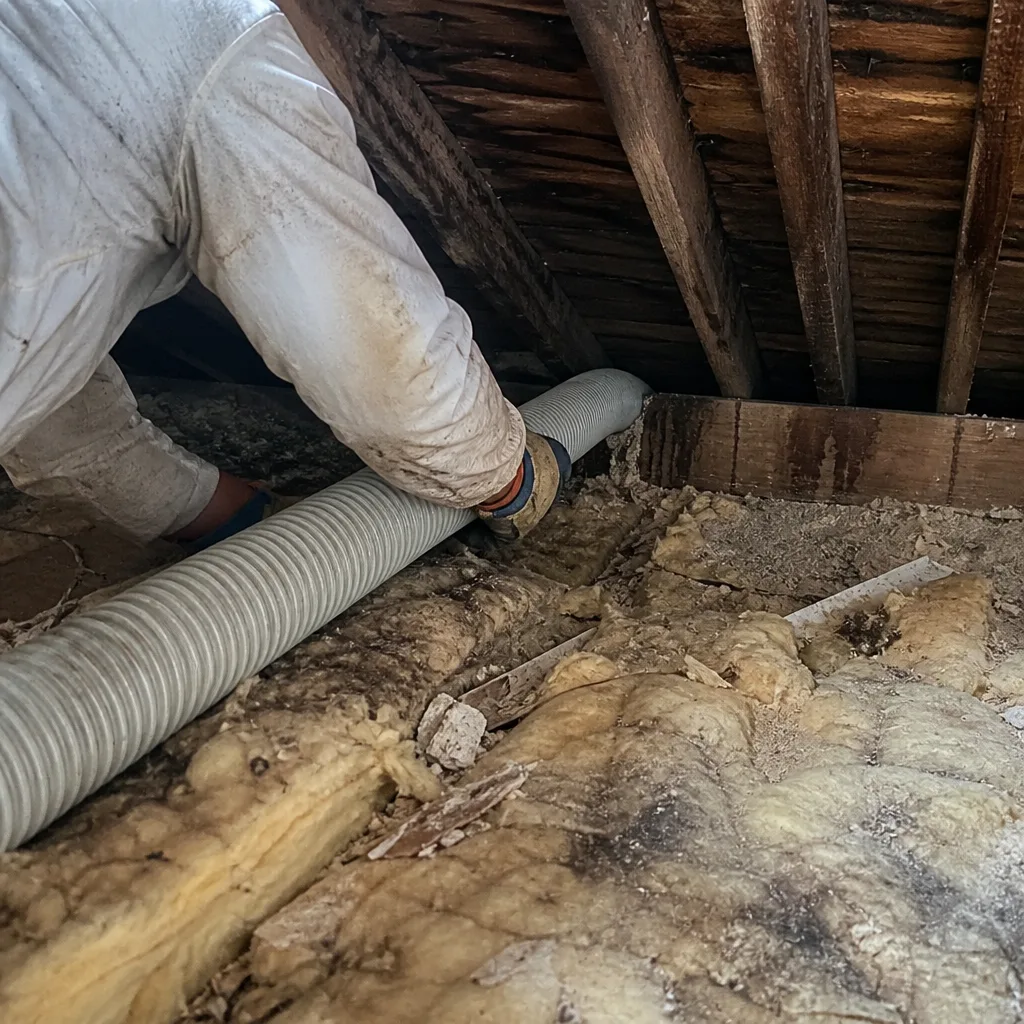 Before
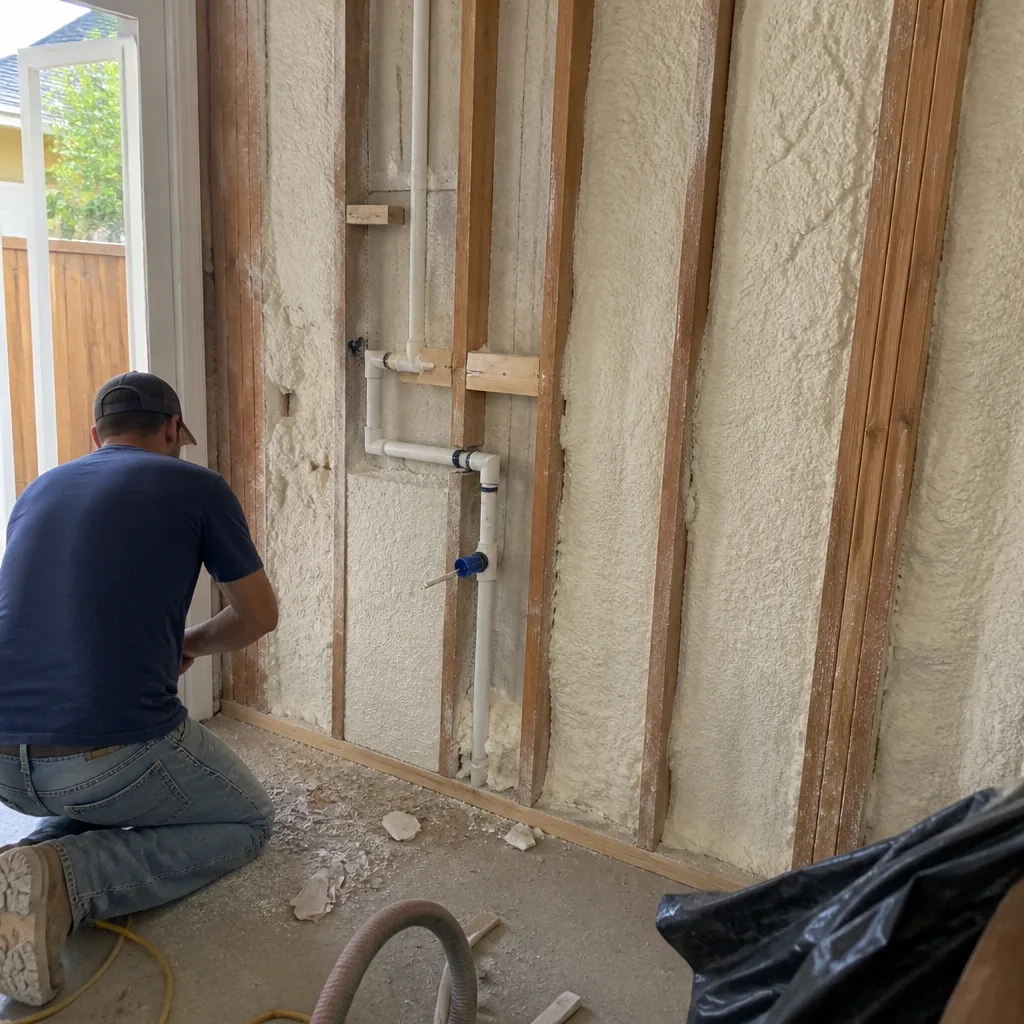 After
AfterReplacement Cost & What’s Included
Most full Rockwool crawl space encapsulation replacements in New Braunfels fall between $2,800 and $5,400 for the complete assembly: removal of compromised material, air sealing of all penetrations and sill plate gaps, new Rockwool board or batt installation, and a 12-mil reinforced polyethylene vapor barrier with sealed seams and mechanical attachment to walls. The lower end covers a clean 1,200 sq ft crawl with straightforward access; the upper end reflects larger footprints, restricted headroom below 18″, extensive mold remediation prep, or replacement of rotted band joist framing we discover after removal.
What drives the range: existing material disposal volume, whether we need to bring in a negative air machine for containment, and the condition of the original air sealing layer. We don’t guess. You’ll get a written price before any work starts, with line-item breakdown of material, labor, and any contingencies. The 365-Day Done Right Promise covers the installation; Rockwool’s product warranty runs 50 years against manufacturing defect. We document everything: before-and-after photos, blower-door readings if the crawl connects to conditioned space through bypasses, and a written scope you keep.
DIY or Call Us?
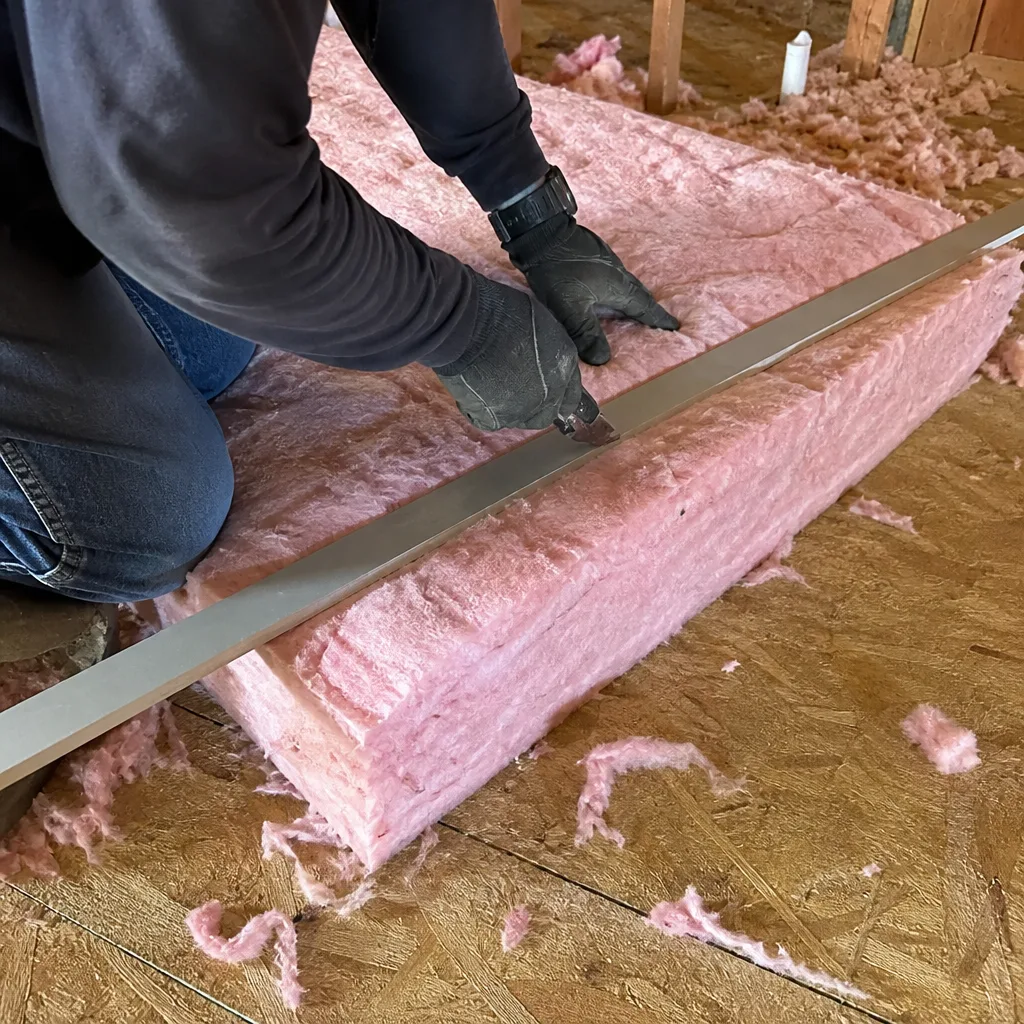
Here’s what you can safely check yourself: verify your crawl space access is clear, photograph any sagging or wet boards for our review, and confirm whether your HVAC ducts run through the space (this changes how we sequence the work). What goes wrong fast in DIY: removing old Rockwool without respiratory protection, misdiagnosing a vapor barrier failure as an insulation failure, or installing new boards over active moisture sources. In New Braunfels, we regularly find homeowners who added new Rockwool over a damp foundation wall and trapped enough moisture to rot a sill plate within two years.
We’re not affiliated with Rockwool, but we’ve installed their products in enough Comal County crawl spaces to know the common failure modes. If you want a second opinion on another contractor’s quote, bring it in; we’ll read it with you. Call (830) 243-6352 for a free estimate with a written price before any work starts.
FAQs
Properly installed Rockwool mineral wool itself is rated for the life of the building, but the encapsulation system, including vapor barrier and air sealing, typically needs assessment after 15-20 years in our climate. The combination of alkaline soil moisture against foundation walls and UV degradation through crawl vents (even “sealed” ones) eventually compromises the acrylic adhesives and seam tape. Call (830) 243-6352 for an inspection if your install is approaching that age.
Partial repair works if the failure is isolated to one wall or a specific moisture event, but only if the remaining system tests intact with a smoke pencil or blower-door verification. In practice, we find that spot repairs in New Braunfels often reveal adjacent areas where the vapor barrier was compromised by the same installation deficiency. We’ll test and show you the numbers before recommending either approach.
Most residential crawl spaces in New Braunfels take two to three days: one day for removal and air sealing prep, one day for Rockwool installation and vapor barrier placement, and a partial third day for detail sealing and documentation. Restricted access, active moisture remediation, or framing repairs add time. We give you a day-by-day schedule in writing before starting.
We stock Comfortboard 80 in 1″ and 2″ thicknesses, Comfortbatt in standard 16″ and 24″ widths, and the acrylic adhesives and mesh tapes specified for crawl space applications. Less common thicknesses or Safe’n’Sound for fire-rated separations we pull from our San Antonio distributor with 24-hour notice. Call (830) 243-6352 to confirm availability for your specific job.
The number on the blower-door printout tells you what the insulation did. Everything else is just talk.
Written by Wes Okafor, Owner, Topside Attic Insulation New Braunfels at Topside Attic Insulation New Braunfels, serving New Braunfels and nearby areas.