
Johns Manville Radiant Barrier Installation: The New Braunfels Owner’s Guide
We install Johns Manville-compatible radiant barrier systems in New Braunfels homes for $1.80 to $2.40 per square foot of attic deck, with most single-story jobs running $1,400 to $2,200 complete. Same-day installation is available when we have your square footage and attic access details by 10 a.m. Most homeowners in New Braunfels realize their radiant barrier is failing when summer attic temperatures climb past 130°F and the second floor won’t cool below 78°F despite the AC running continuously.
Which Johns Manville Models This Applies To
Johns Manville produces radiant barrier products under the AP Foil-Faced line, most commonly the AP Foil-Faced Polyiso board and the ComfortTherm batts with reflective facing. The critical compatibility point is the facing type: AP Foil-Faced uses a reinforced aluminum scrim rated for exposed attic applications, while ComfortTherm’s lighter reflective facing is designed for cavity walls and should not be substituted in vented attics where dust accumulation will degrade performance within two Texas summers.
To identify what you have, check the printed label on the foil-facing edge for the JM logo and product code (APF-XXXX series for polyiso, CT-XXXX for batts). Measure the thickness at a cut edge: AP Foil-Faced polyiso comes in 1/2-inch, 1-inch, and 2-inch thicknesses with R-values of 3.0, 6.5, and 13 respectively. The 1-inch APF-6500 is what we see most often in New Braunfels homes built 2015 to 2022, particularly in the Copper Ridge and Veramendi subdivisions where builders spec’d it as a standard upgrade.
We are an independent service provider with no affiliation to Johns Manville. We stock Johns Manville-compatible foil-faced polyiso and can source OEM material through our distributor in San Antonio with a two-day lead time when a specific JM SKU is required for warranty continuity.
Signs Your Johns Manville Radiant Barrier Installation Is Failing
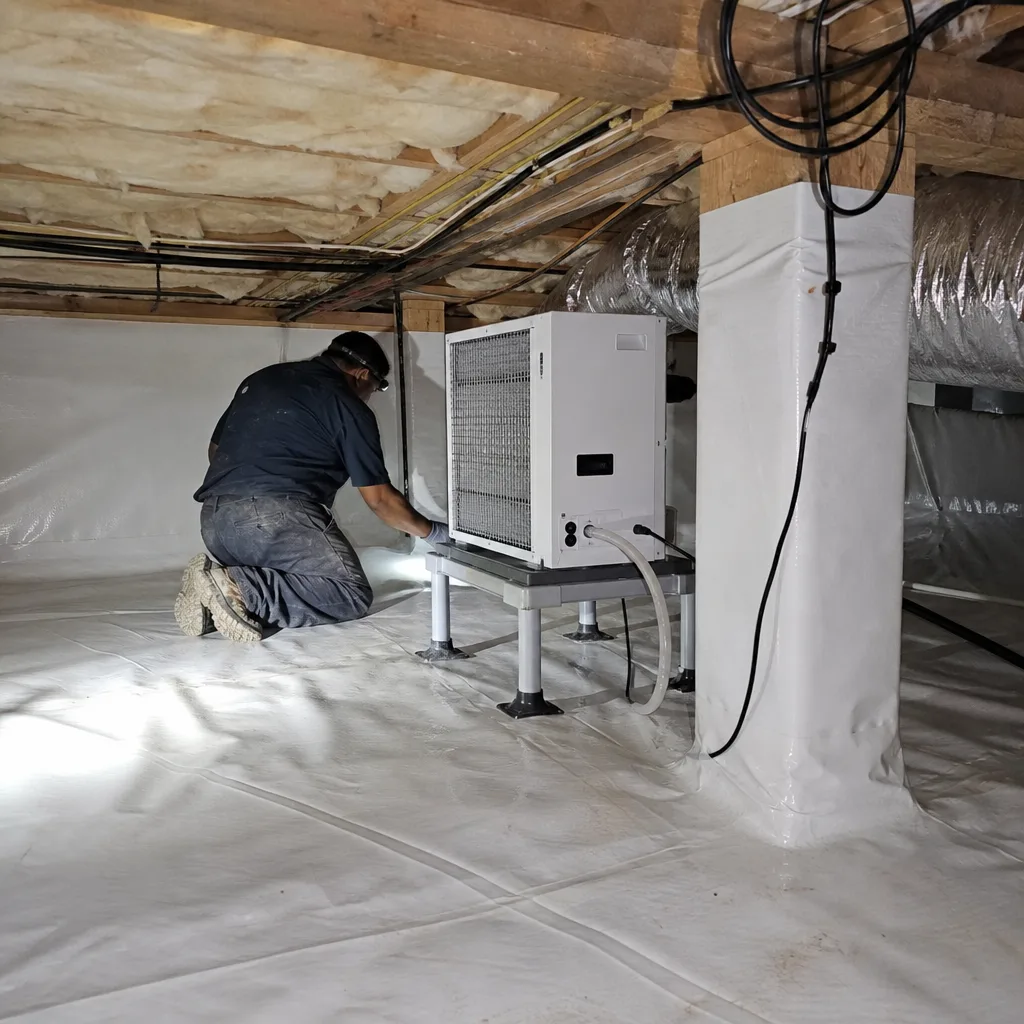
- Attic temperature spikes 15-20°F higher than previous summers. The aluminum facing on JM radiant barrier degrades when attic dust settles and oxidizes the reflective surface. In New Braunfels, our caliche dust is particularly fine and abrasive; we regularly find the reflective value of a seven-year-old install has dropped from 97% emissivity to below 70%.
- Second-floor rooms stay hot until after 10 p.m. This indicates the radiant barrier is no longer blocking infrared heat transfer from the roof deck. The thermal mass of your framing and drywall stores that heat all day and releases it into living space after sunset.
- Visible tears, delamination, or sagging in the foil facing. JM’s AP Foil-Faced polyiso relies on a fiberglass-reinforced scrim bonded to the foam core. When attic humidity exceeds 70% regularly, as it does in New Braunfels during September and October before the first cold front, that bond fails and the facing separates.
- Energy bills climb 20% or more year-over-year with no rate change. This is the symptom that usually drives the call. We pull the blower-door numbers from comparable jobs in Oak Run and Vintage Oaks and show the homeowner exactly how much conditioned air they’re now losing through a compromised envelope.
- Water staining on the foil surface or foam edges. This is not a radiant barrier problem alone; it’s a roof leak or condensation issue that will destroy the R-value of polyiso within weeks. The foam core acts like a sponge once the facing is breached.
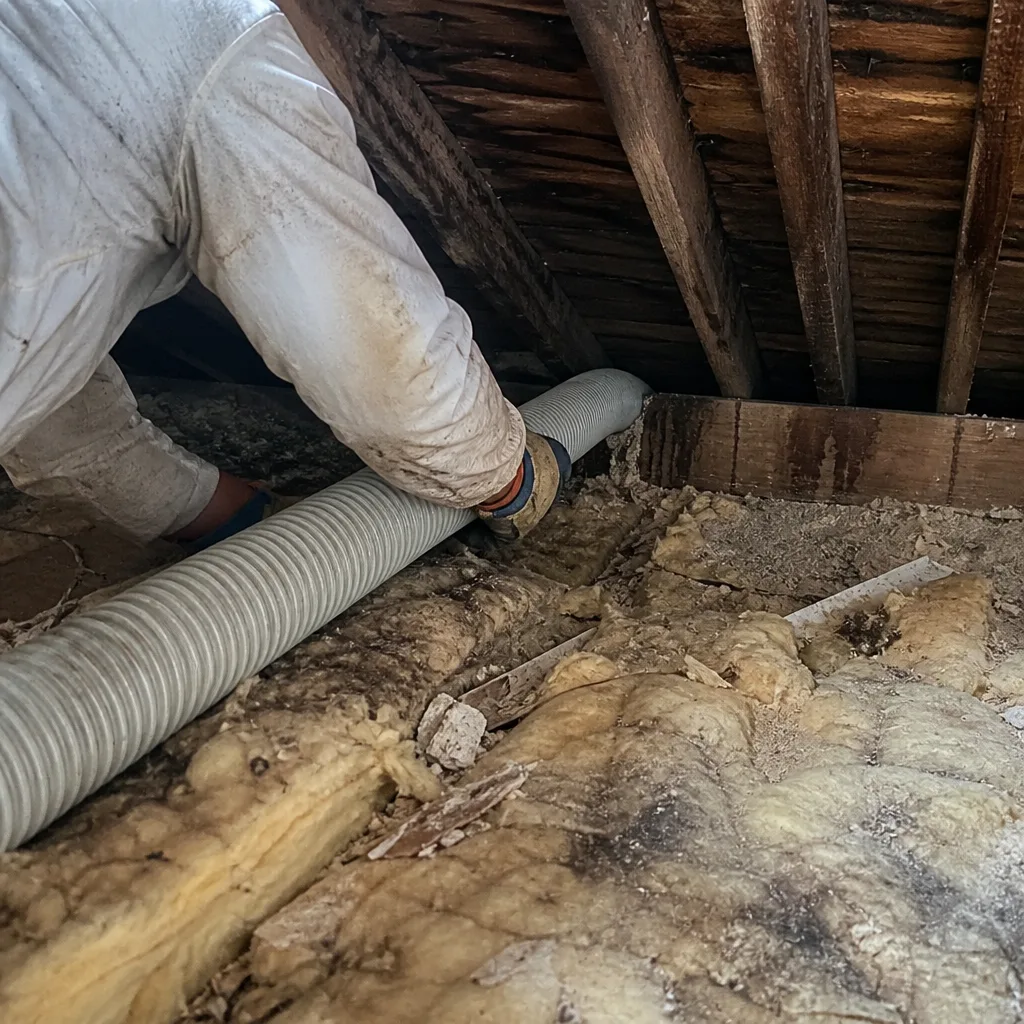 Before
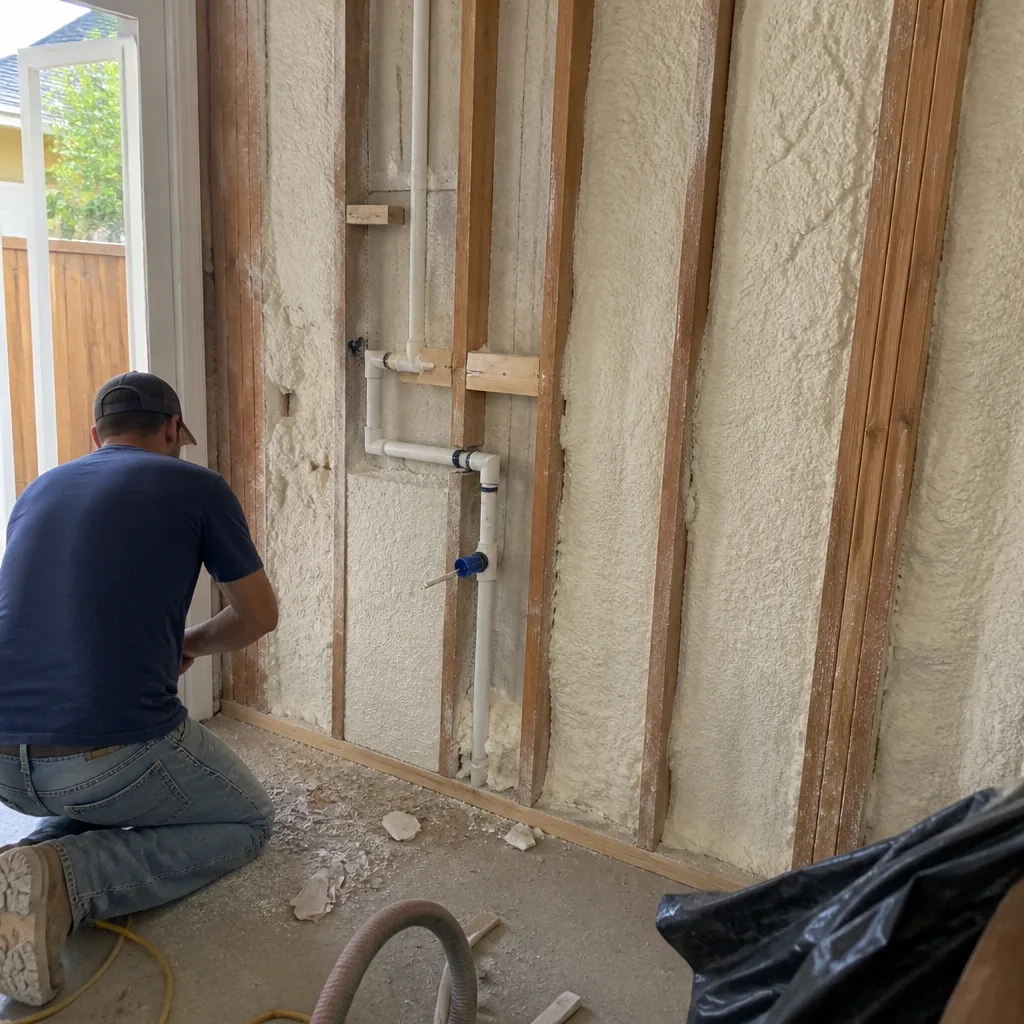 After
AfterReplacement Cost & What’s Included
Most Johns Manville radiant barrier replacements in New Braunfels run $1,400 to $2,200 for attics under 2,000 square feet of deck, scaling to $2,800 to $3,600 for larger homes or complex rooflines with multiple dormers. The range reflects three variables: whether we can layer over existing material or must remove degraded polyiso (removal adds $0.45 per square foot), how much air sealing of top plates and penetrations is needed before the new barrier goes in, and whether the attic has safe decking for crew access or we need to install temporary walkboards.
Every replacement includes the new JM-compatible foil-faced material, mechanical fastening per manufacturer spec, sealed seams with aluminum tape, and a Documented Photo Record of the completed installation. On jobs where we’re also air sealing, you’ll receive before-and-after blower-door readings printed and filed by address. The 365-Day Done Right Promise applies: if the attic temperature doesn’t perform as scoped, we return and make it right.
We also stock Reflectix radiant barrier products for homeowners who need a lighter-duty solution or are matching an existing Reflectix install.
DIY or Call Us?
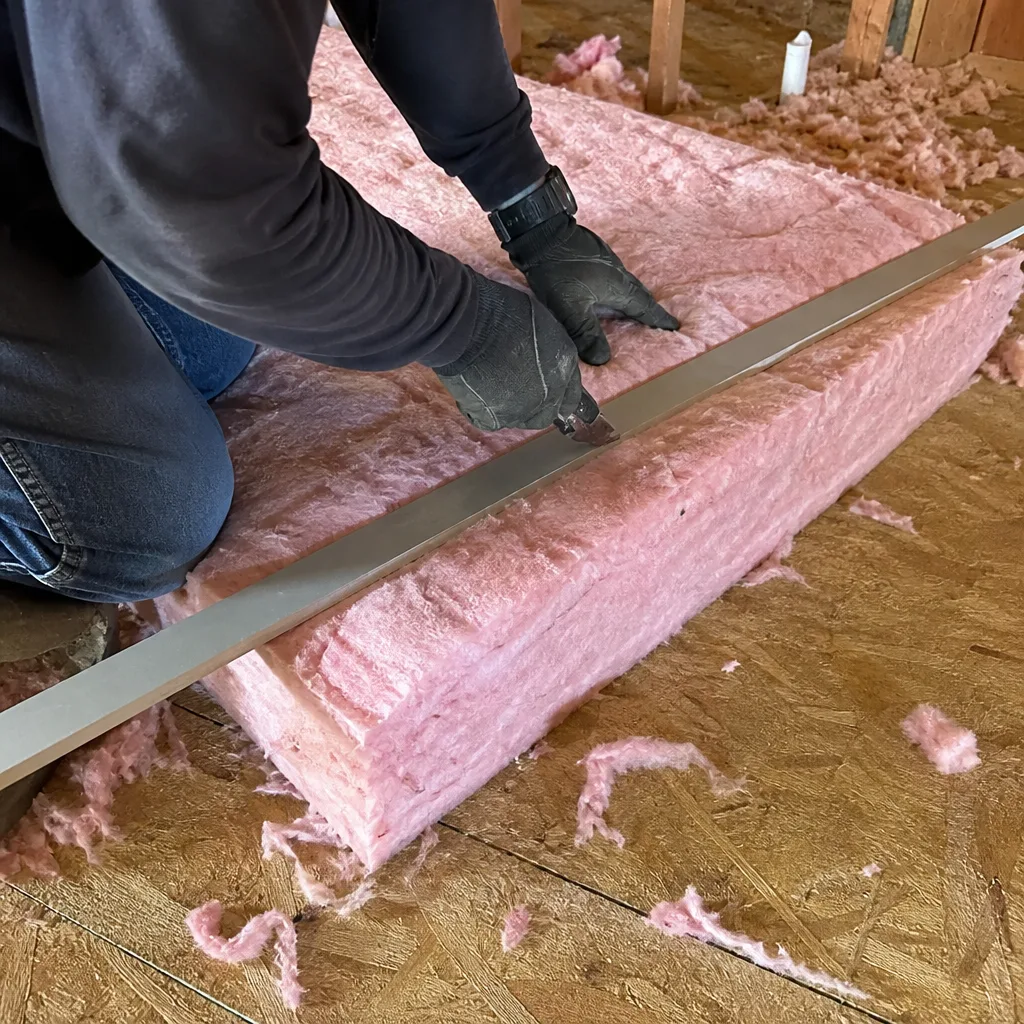
There’s no high-tension danger in radiant barrier work, but there are two ways DIY goes wrong in New Braunfels attics. First, installing over unsealed air leaks: blowing or laying radiant barrier over a leaky attic floor is like putting a windbreaker over a screen door. The conditioned air escapes, the barrier doesn’t get the temperature differential it needs to function, and you’ve spent money for a 5°F improvement instead of 25°F. Second, compressing or leaving gaps in the material: polyiso loses R-value when compressed at edges, and even a 2% gap in coverage can reduce overall performance by 15% due to thermal bridging through the exposed structure.
What you can safely check: verify your attic ventilation is clear (soffit vents unblocked, ridge vents intact), measure attic temperature at 3 p.m. on a sunny day, and photograph any visible damage to existing material for our review. For everything else, call (830) 243-6352 and we’ll scope it properly.
FAQs
In New Braunfels conditions, a properly installed JM AP Foil-Faced radiant barrier maintains effective performance for 10 to 15 years before dust accumulation and oxidation reduce emissivity below useful levels. Homes near construction or unpaved roads in areas like the River Road corridor may see that shorten to 8 years due to heavier caliche dust loads. Call (830) 243-6352 for an attic inspection and we’ll measure what you’re actually getting from your current install.
Localized tears can be patched with aluminum foil tape if the core foam is dry and intact, but this is a temporary fix. Once the reflective facing has oxidized across more than 30% of the surface, replacement is the only cost-effective option because the material’s emissivity, not its physical presence, is what does the work. We offer free second opinions on any written estimate that recommends repair over replacement.
A standard 1,500-square-foot attic with clear access takes one crew day; removal of degraded material adds a half day. We arrive with the material on the truck for jobs scoped in advance, and we text when the technician is en route. The number on the blower-door printout tells you what the insulation did. Everything else is just talk.
We stock Johns Manville-compatible foil-faced polyiso in 1-inch and 2-inch thicknesses on every New Braunfels service vehicle, and we can source specific JM SKUs with a two-day lead time when warranty documentation requires the OEM part number. Most replacements proceed same-day with our in-stock material, which meets or exceeds JM’s published R-value and emissivity specs.
Ready to get your attic performance back? Call (830) 243-6352 for a written price before any work starts. Estimates are free, and we publish before-and-after blower-door numbers on every job so you know exactly what you paid for.
Written by Wes Okafor, Owner, Topside Attic Insulation New Braunfels at Topside Attic Insulation New Braunfels, serving New Braunfels and nearby areas.